Namdaemun Market Food Guide: Hotteok, Kalguksu & Prices
Key takeaways
Navigating food stalls at Seoul's Namdaemun Market requires knowing where to locate hidden alleys, how set meals work, and what prices to expect. In Kalguksu Alley, ordering a single main dish like barley rice automatically includes complimentary side bowls of knife-cut noodles and cold spicy noodles for ₩9,000 to ₩10,000 KRW as of late 2026. Carrying small cash bills is essential, as outdoor stalls frequently cannot process foreign credit cards.
Finding great food in this Namdaemun Market food guide comes down to knowing where to step off the main path. Inside Namdaemun Market, some of the best meals sit behind unmarked sliding doors, inside crowded alleyways, or at fast-moving street carts where ordering a single main dish brings two extra side dishes at no additional charge. This guide covers the market's famous food alleys, signature dishes, 2026 menu prices, cash requirements, and basic counter etiquette for international visitors.
Navigating Namdaemun Market: Where Are the 3 Famous Food Alleys?
Namdaemun Market (남대문시장) in Jung-gu, Seoul, has operated continuously since 1414. While more than 10,000 vendors sell apparel, kitchenware, and imported goods across the sprawling district, its food culture is clustered inside three distinct alleys. Spotting these dining spots requires looking for specific street gates and building signs rather than large overhead restaurant banners.
Unlike modern open-air market spaces detailed in our Gwangjang Market vs Mangwon Market comparison guide, Namdaemun tucks many of its top food counters inside covered corridors behind retail stalls. Central pedestrian paths run through the market, anchored by Market Gates 1 through 8.
For easy access, arrive via Hoehyeon Station (Seoul Subway Line 4). Exit 5 leads straight onto the main path toward the market's primary food clusters:
- Kalguksu Alley (칼국수 골목): A covered indoor lane specializing in handmade knife-cut wheat noodles and multi-bowl set meals.
- Galchi Jorim Alley (갈치조림 골목): A narrow passage of small diners serving spicy braised cutlassfish stew in worn brass pots.
- Gate 2 Street Food Hub (야채호떡 코너): An open-air street corner famous for savory deep-fried vegetable pancakes (Yachae Hotteok).
Namdaemun Kalguksu Alley: The 1-Dish Multi-Course Meal Explained
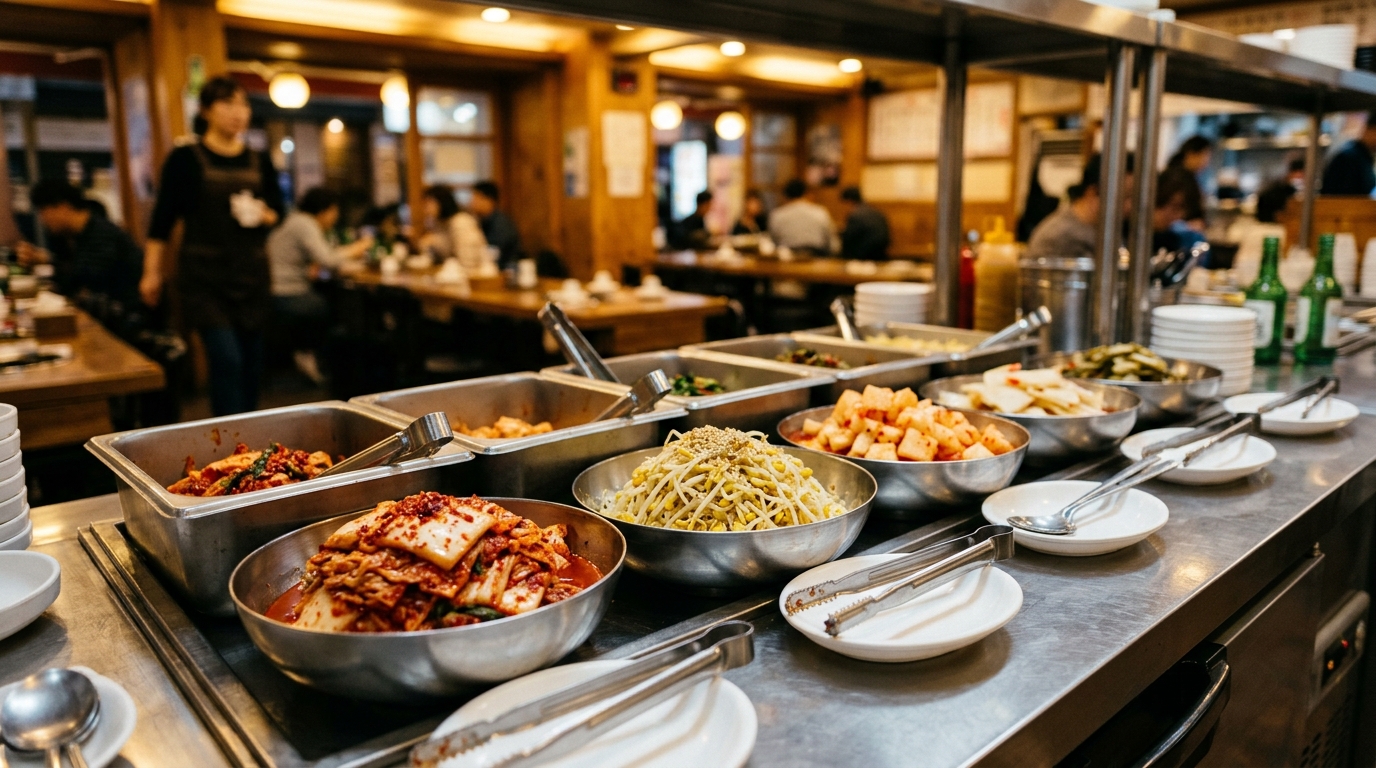
Kalguksu Alley sits right near Hoehyeon Station Exit 5. The entrance is an unmarked, opaque plastic sliding door situated next to Segye-ro Eyeglasses (세계로안경). Pushing past the heavy plastic curtain reveals a long corridor packed with steam and continuous counter seating.
Dining here comes with a built-in bonus: ordering one main dish automatically includes generous extra bowls of complementary noodles at no extra cost. Long wooden benches stay filled with locals and tourists while cooks (often addressed as Imo or Ajumma) roll out fresh noodle dough right behind the counters.
[Customer Orders Anchor Dish]
       │
       ├─► Option A: Barley Rice Bowl (Boribap) ──► Includes FREE Hand-cut Noodles + FREE Cold Spicy Noodles
       │
       └─► Option B: Knife-cut Noodles (Kalguksu) ──► Includes FREE Cold Spicy Noodles + Seasoned Rice
How the Multi-Bowl Set System Works
Order a bowl of Boribap (보리밥 - barley rice topped with fresh wild greens, sesame oil, and spicy red pepper paste), and the cook hands over the rice bowl right away. A minute or two later, a full bowl of Kalguksu (칼국수 - knife-cut noodles in hot anchovy broth with deep-fried tofu skin) follows. Finally, a small bowl of Bibim-naengmyeon (비빔냉면 - chilled spicy buckwheat noodles) lands on the counter to complete the set.
As of late 2026, a full Boribap set in Kalguksu Alley costs ₩9,000 to ₩10,000 KRW (roughly $6.50 to $7.50 USD). A standalone bowl of Kalguksu costs ₩8,000 to ₩9,000 KRW and comes with a side bowl of cold spicy noodles.
Yachae Hotteok: How to Find, Order, and Eat Namdaemun's Famous Snack
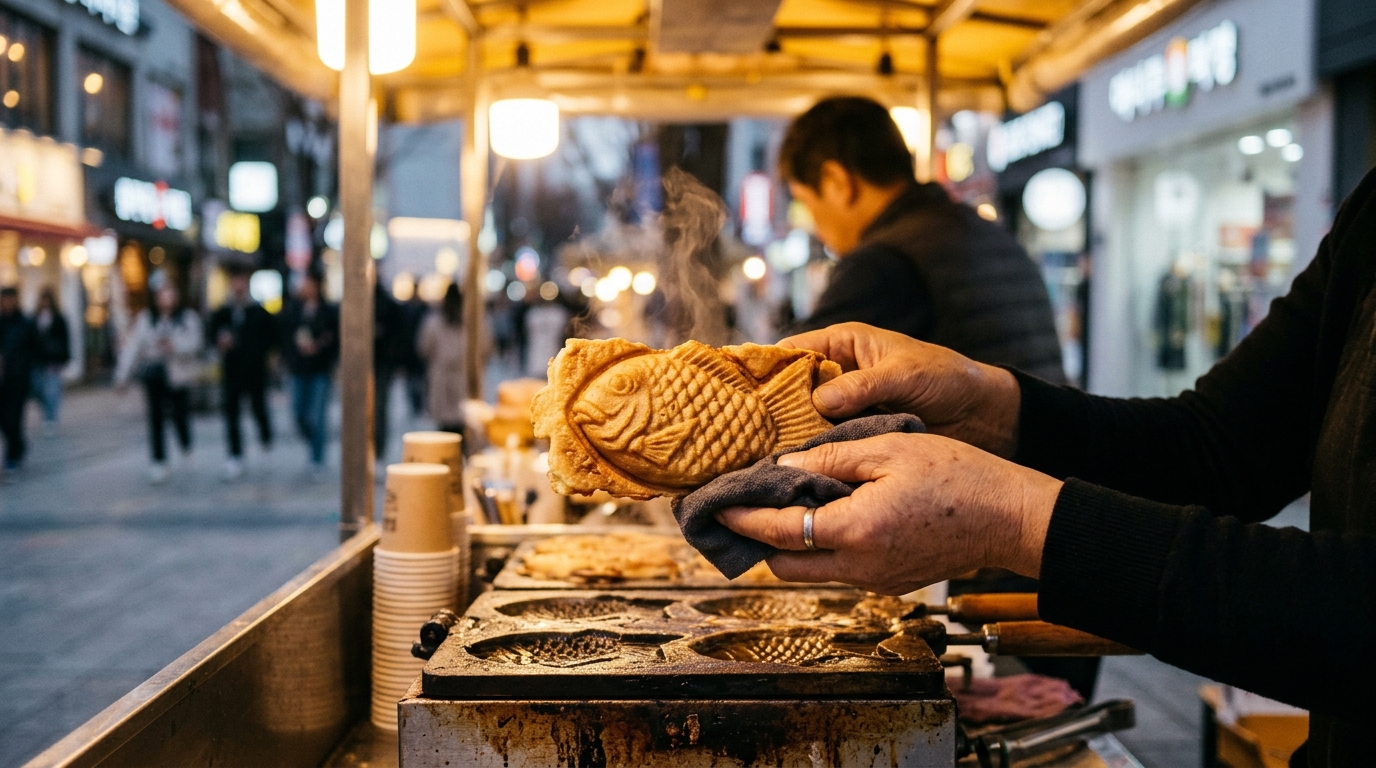
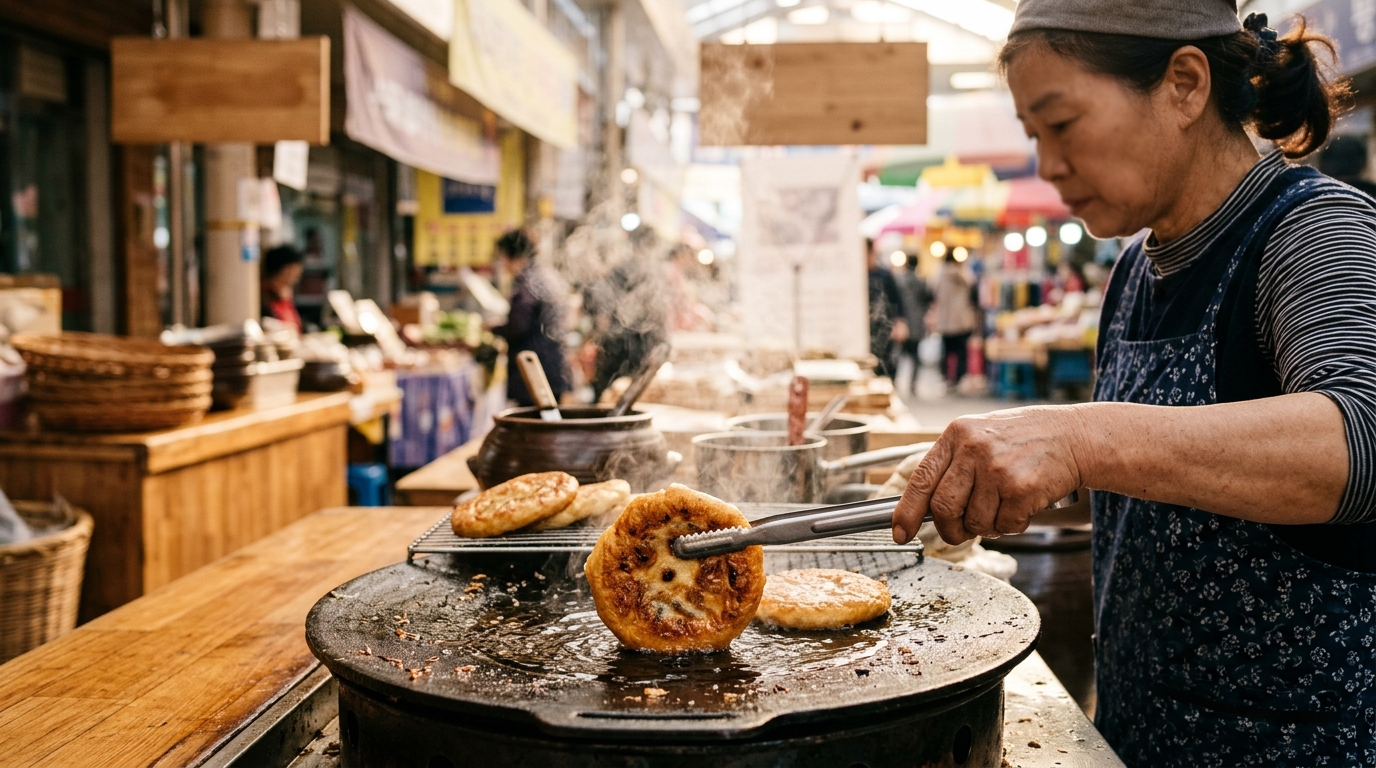
Sweet hotteok stuffed with brown sugar and cinnamon is common across South Korea, but Namdaemun Market is known for Yachae Hotteok (야채호떡), a savory version packed with seasoned fillings.
Positioned near Gate 2 right outside the Industrial Bank of Korea (IBK) building, the main hotteok cart keeps a steady queue moving throughout the day. The filling features glass noodles (japchae), chopped chives, onions, and carrots wrapped inside a chewy yeast dough made of wheat and rice flour.
[Dough Ball Stuffed with Japchae] ──► [Shallow Fried in Hot Oil] ──► [Brushed with Fruit Soy Sauce] ──► [Served in Thick Paper Cup]
Ordering and Eating Rules for Yachae Hotteok
- Price: As of late 2026, one Yachae Hotteok costs ₩2,500 to ₩3,000 KRW. Standard honey hotteok (Ggul Hotteok) at the same cart costs ₩2,000 to ₩2,500 KRW.
- Soy Sauce Application: After receiving your hotteok in a folded paper cup, look for the container of dark soy sauce on the counter ledge. Use the wooden brush provided to glaze the hotteok exterior with the sauce, which is infused with apples and onions for a sweet and savory finish.
- Temperature Warning: The glass noodle filling traps intense steam inside the dough shell. Take light bites around the outer edge first to let steam escape before biting into the middle.
If you want to compare seasonal snacks, explore our overview in the Korean winter street food guide.
Galchi Alley and Street Snacks: Menu Options and 2026 Price Table
Near Gate 3 lies Galchi Jorim Alley (갈치조림 골목), a maze of small restaurants focused on spicy braised cutlassfish. Cooks simmer the fish in aluminum pots alongside thick radish chunks, soy sauce, and red pepper powder (gochugaru).
Orders arrive bubbling hot with steamed rice, side dishes (banchan), and crispy fried cutlassfish fins. Most restaurants require a minimum order of two portions for table service.
Outside the dedicated alleys, open-air carts sell steamed giant dumplings, sugar-dusted twisted doughnuts, and hot fishcake skewers. Average prices across Namdaemun Market are detailed below.
| Snack Item | Korean Name | Portion Size | Average Price (KRW, Late 2026) | Key Characteristics |
|---|---|---|---|---|
| Yachae Hotteok | 야채호떡 | 1 piece | ₩2,500 - ₩3,000 | Deep-fried savory vegetable & glass noodle pancake |
| Kalguksu Set | 칼국수 세트 | 1 person set | ₩8,000 - ₩10,000 | Includes knife-cut noodles + cold spicy noodles |
| Boribap Set | 보리밥 세트 | 1 person set | ₩9,000 - ₩10,000 | Barley rice + knife-cut noodles + cold spicy noodles |
| Galchi Jorim | 갈치조림 | 1 portion (min 2) | ₩12,000 - ₩14,000 | Spicy braised cutlassfish stew with radish |
| Wang Mandu | 왕만두 | 5 pieces | ₩5,000 - ₩6,000 | Steamed giant pork or kimchi dumplings |
| Kkwabaegi | 꽈배기 | 3 pieces | ₩2,000 - ₩3,000 | Twisted cinnamon-sugar twisted doughnuts |
| Eomuk Skewers | 어묵 | 1 skewer | ₩2,000 - ₩2,500 | Skewered fishcake served with free piping hot broth |
Cash vs. Card Payments: What Foreign Visitors Need to Prepare
Payment processing at Namdaemun Market varies depending on whether you sit down inside an established shop or buy from street carts. Carrying physical cash in small bill denominations remains essential for a smooth food tour across Namdaemun Market.
Payment Method Guidelines
Best Times to Visit, Directions, and Market Dining Etiquette
Planning your arrival time and understanding local counter habits makes eating at Namdaemun Market straightforward and enjoyable.
Operating Hours and Best Timing
- Food Alley Hours: 06:00 to 21:00 daily (varies by individual stall).
- Peak Visiting Window: 10:00 to 15:00 (Monday through Saturday).
- Sunday Closures: Most wholesale retail shops close on Sundays, but around 30% to 40% of food vendors remain open. For the full selection, visit from Monday through Saturday.
Transport and Directions
Take Seoul Subway Line 4 to Hoehyeon Station. Exit 5 leads to the northern entrance of Kalguksu Alley. Exit 6 offers direct access to the main pedestrian lane leading toward Gate 2 (Hotteok) and Gate 3 (Galchi Alley).
Cultural Dining Etiquette at Market Counters
Market food stalls run on practical shared customs:
- Bench Sharing: Seating in Kalguksu Alley uses shared benches. Move over to make room for new arrivals when the counter owner asks.
- Fast Turnover: Counter space is limited. Enjoy your meal promptly and clear your seat once finished.
- Handling Payments: Hand cash or cards to vendors using both hands as a standard polite gesture. Review more regional customs in our guide to Korean dining etiquette.
- Water and Side Dish Refills: Kimchi and broth refills are free. Set your empty side bowl on the elevated counter shelf, and the cook will refill it for you.
Frequently asked questions
Q. Is Namdaemun Market food cash only?
Namdaemun Market street food stalls and Kalguksu Alley counters primarily require cash from foreign tourists. While major sit-down market restaurants accept international credit cards, small outdoor carts selling hotteok, dumplings, and skewers often lack foreign credit card processing capabilities. Visitors should carry ₩20,000 to ₩30,000 KRW in small cash bills per person.
Q. How do I find Kalguksu Alley in Namdaemun Market?
Kalguksu Alley is located near Hoehyeon Station (Line 4) Exit 5. Look for an unmarked plastic sliding door situated directly next to Segye-ro Eyeglasses (세계로안경). Passing through the door leads into a narrow covered alley filled with noodle counter stalls.
Q. What is Yachae Hotteok and how much does it cost?
Yachae Hotteok is a savory deep-fried Korean pancake stuffed with glass noodles (japchae), chives, onions, and carrots. As of late 2026, it costs between ₩2,500 and ₩3,000 KRW at the main Gate 2 stall in Namdaemun Market.
Q. Is Namdaemun Market open on Sunday for food?
Namdaemun Market food stalls partially operate on Sundays, but overall activity is reduced. While wholesale retail shops close completely on Sundays, roughly 30% to 40% of food vendors remain open. Visiting Monday through Saturday between 10:00 and 15:00 yields the best selection.
Q. What is the difference between Gwangjang Market and Namdaemun Market food?
Gwangjang Market is famous for bindaetteok (mung bean pancakes), raw beef tartar (yukhoe), and night market dining. Namdaemun Market specializes in handmade knife-cut noodles (kalguksu), savory vegetable hotteok, and braised cutlassfish stew (galchi jorim), operating mainly as a daytime market.