Gwangjang Market vs Mangwon Market: Which Seoul Food Spot Fits You?
Key takeaways
When deciding between Gwangjang Market vs Mangwon Market, choose Gwangjang for historic sit-down dining, raw beef (yukhoe), and mung bean pancakes in central Seoul. Opt for Mangwon Market for lower prices, trendy bite-sized snacks, relaxed takeaway corridors, and proximity to western Seoul cafe districts. Both markets require physical KRW cash for open street stalls, while credit cards work at permanent brick-and-mortar storefronts.
Picking between Gwangjang Market vs Mangwon Market depends on whether you want a high-energy historic atmosphere centered around classic sit-down dishes or a relaxed neighborhood feel filled with budget-friendly street snacks. Both traditional markets in Seoul offer memorable food stops, but their dining setups, crowd levels, typical costs, and accepted payment methods differ in practical ways.
While first-time visitors often head straight for long-standing historic spots, many travelers now compare classic market hubs against neighborhood markets. Knowing how each market runs helps you match your visit to your budget, dietary needs, and daily schedule.
What Should You Expect at Gwangjang Market, Seoul's Historic Street Food Giant?
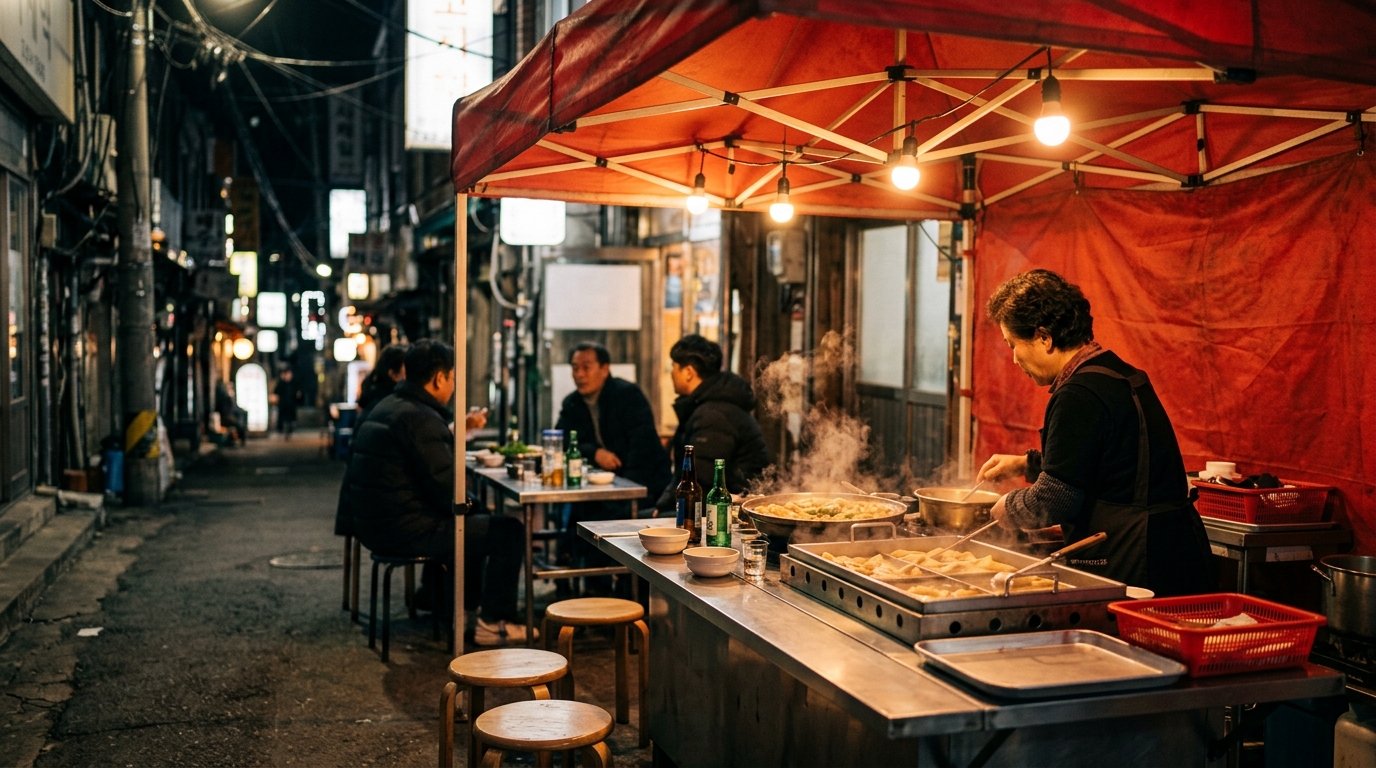
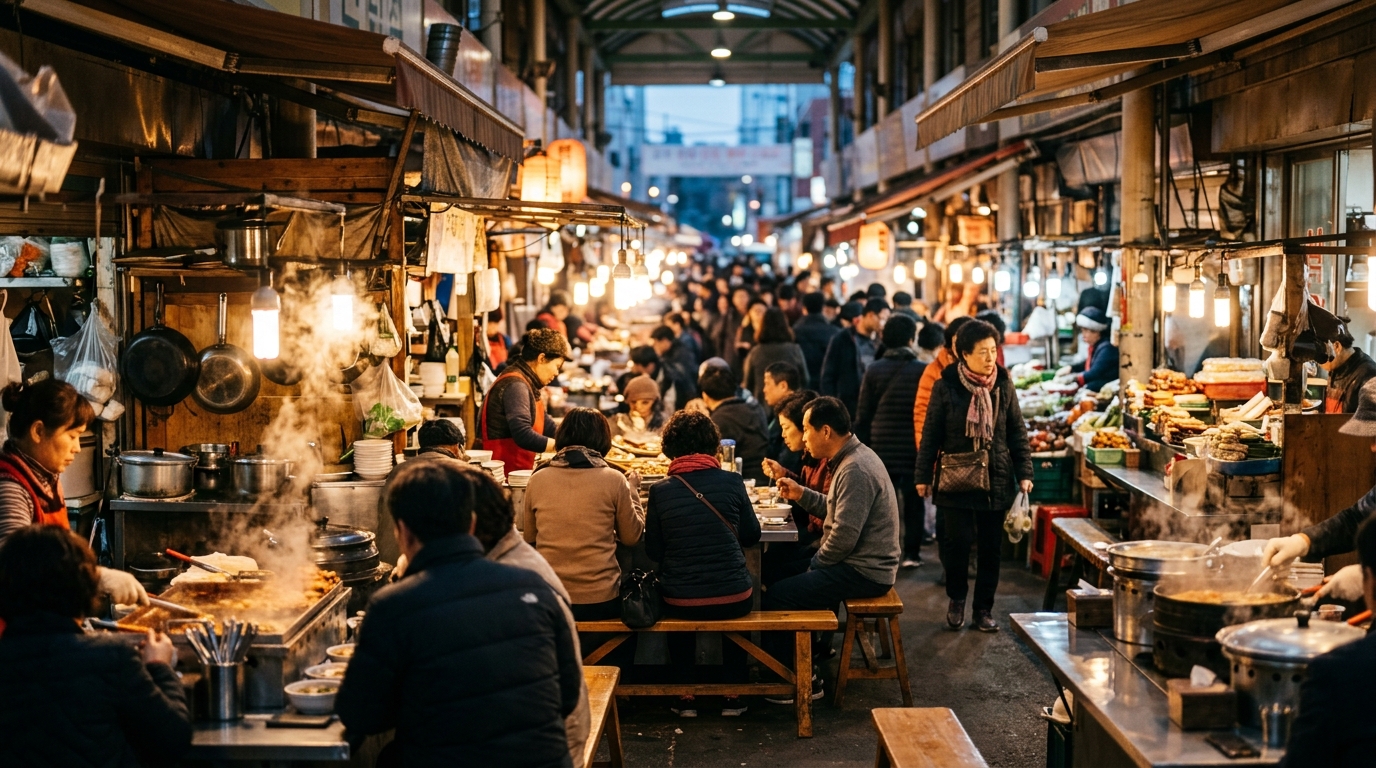
Gwangjang Market (광장시장) provides an energetic traditional dining environment where visitors sit on shared wooden benches around bubbling oil griddles and warm food vats. Founded in 1905 as South Korea's first permanent daily market, this venue remains one of Seoul's busiest food hubs.
The main market aisles feature packed clusters of open stalls run by veteran cooks. Space is tight, so expect to sit close to neighboring diners on long benches. Steam, sizzling oil, and constant chatter fill the air during lunch and dinner rushes.
To address past visitor concerns about price clarity and portion sizes, market authorities established a mandatory Posted Price System (Gagyeok Pyo-si-je, 가격표시제). As of 2026, central food vendors display set price menus with standard item weights in English, Japanese, and Chinese.
Signature Dishes and Standard Pricing at Gwangjang Market
- Crispy Mung Bean Pancake (Bindaetteok, 빈대떡): Coarsely ground mung beans mixed with bean sprouts, scallions, and pork, ground on site and fried until golden brown. Average cost: ₩5,000 to ₩6,000 KRW per large pancake.
- Korean Beef Tartare (Yukhoe, 육회): Seasoned raw beef prepared with sesame oil, soy sauce, and garlic, served over sweet Korean pear with a raw egg yolk. Average cost: ₩19,000 to ₩21,000 KRW per plate.
- Mini Seaweed Rolls (Mayak Gimbap, 마약김밥): Small rice rolls packed with pickled radish and carrots, brushed with sesame oil and paired with a tangy mustard sauce. Average cost: ₩3,000 to ₩4,000 KRW per portion.
- Hand-Cut Knife Noodle Soup (Kalguksu, 칼국수): Fresh wheat noodles served in warm anchovy or chicken broth with dumplings (mandu, 만두). Average cost: ₩7,000 to ₩9,000 KRW per bowl.
Why Is Mangwon Market Trending as a Local Street Food Hub?
Mangwon Market (망원시장) offers an easygoing street food route with wide covered walkways, takeaway stalls, and modern snack options. Located in Mapo-gu near Hongdae, the market has served nearby residents for over 40 years while attracting visitors looking for a casual outing.
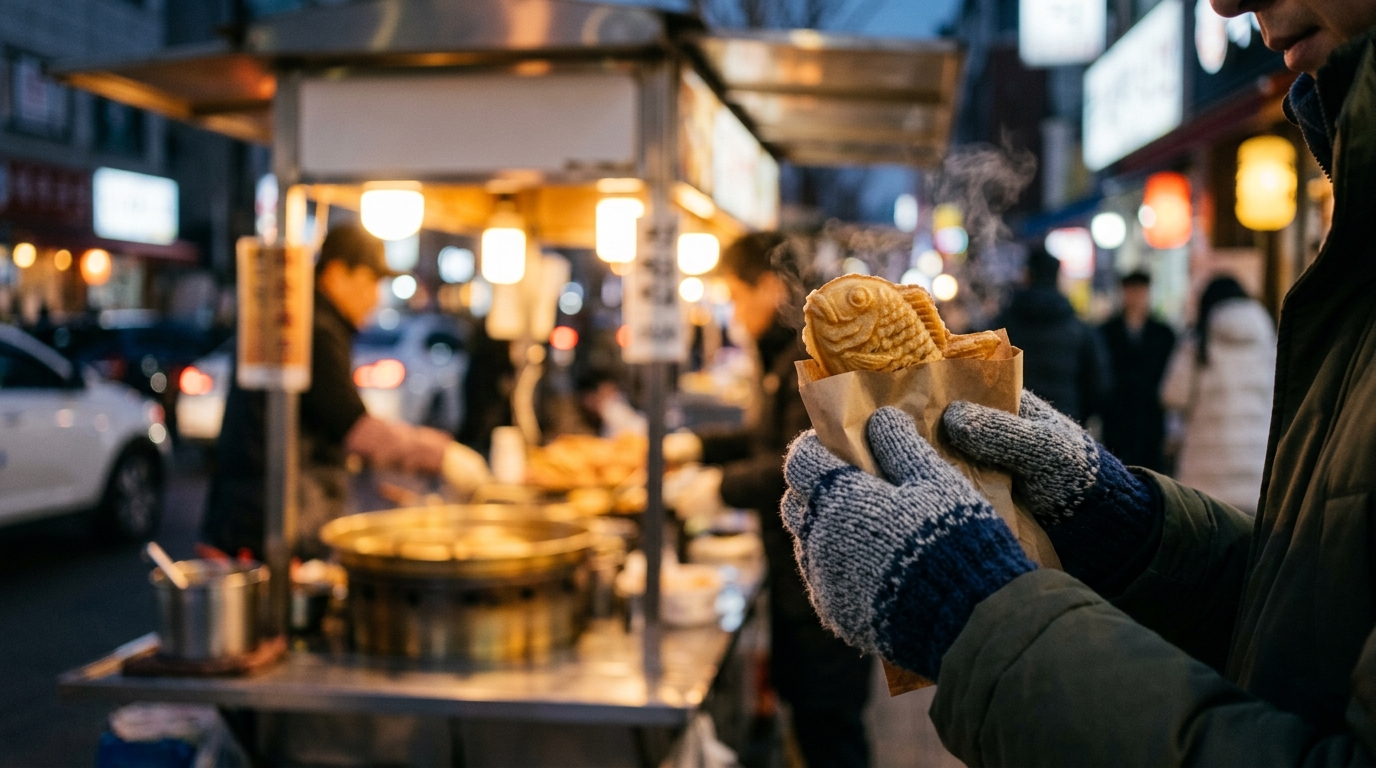
Unlike older markets built around central bench counters, Mangwon Market relies mostly on a grab-and-go setup. Stalls line a straight indoor arcade where shoppers purchase small portions to eat on the move or carry to nearby outdoor seating areas.
The environment matches routine neighborhood life. Local residents buy daily groceries alongside visitors picking up popular snacks, leading to manageable foot traffic and simpler navigation.
Signature Dishes and Standard Pricing at Mangwon Market
- Stuffed Fried Chili Peppers (Gochu-twigim, 고추튀김): Large green peppers stuffed with seasoned pork and tofu, battered and double-fried. Prominently sold at signature shops like U-I-Rak (우이락). Average cost: ₩11,000 KRW for a set of 3.
- Sweet and Spicy Seasoned Fried Chicken (Dakgangjeong, 닭강정): Crispy boneless chicken bites tossed in glazes such as garlic soy, sweet spicy, or cheese powder. Average cost: ₩5,000 to ₩10,000 KRW depending on box size.
- Traditional Hand-Cut Noodles (Kalguksu, 칼국수): Filling noodle bowls served in quick-service indoor eateries along the main aisle. Average cost: ₩5,000 to ₩6,000 KRW per bowl.
- Handmade Doughnuts and Twisted Pastries (Kkwabeogi, 꽈배기): Freshly fried dough twisted and coated in sugar or cinnamon. Average cost: ₩1,000 to ₩2,000 KRW per piece.
Gwangjang vs. Mangwon: Which Market Should You Choose?
Choose Gwangjang Market if you want sit-down counter service, historic market heritage, and iconic dishes like yukhoe or bindaetteok; choose Mangwon Market if you prefer lower prices, grab-and-go snacks, easier walking space, and proximity to youth-oriented cafe districts.
When comparing Gwangjang Market vs Mangwon Market, consider how each fits your meal preferences, budget, group size, and itinerary. The details below show how the two venues contrast on the ground.
| Feature / Metric | Gwangjang Market (광장시장) | Mangwon Market (망원시장) |
|---|---|---|
| Primary Vibe | Historic, high-energy, crowded, theatrical | Modern local, relaxed, residential, trendy |
| Dining Setup | Counter bench seating at open stalls | Grab-and-go stalls, takeaway, small indoor diners |
| Average Snack Crawl Cost | ₩20,000 – ₩30,000 KRW ($15–$22 USD) | ₩12,000 – ₩20,000 KRW ($9–$15 USD) |
| Famous Must-Try Foods | Bindaetteok, Yukhoe, Mayak Gimbap | Stuffed Chili Peppers, Dakgangjeong, Kalguksu |
| Peak Visitor Hours | 12:00 PM – 2:00 PM & 6:00 PM – 8:30 PM | 3:00 PM – 7:00 PM |
| Nearest Subway Station | Jongno 5-ga (Line 1) or Euljiro 4-ga | Mangwon Station (Line 6, Exit 2) |
| Crowd Density | Extremely high; narrow aisles | Moderate; wide covered pedestrian arcade |
This breakdown highlights which market suits specific travel plans:
| Travel Profile | Recommended Market | Primary Reason |
|---|---|---|
| First-Time Visitors to Seoul | Gwangjang Market | Delivers iconic Korean market visuals and classic historical street dishes. |
| Budget Travelers & Students | Mangwon Market | Lower food pricing per item and affordable noodle stalls stretch travel funds. |
| Solo Travelers | Mangwon Market | Easy takeaway options avoid awkward single-occupancy counter seating pressure. |
| Raw Beef & Seafood Fans | Gwangjang Market | Famous specialized Yukhoe Alley offers high-turnover raw beef dishes. |
| Cafe Hoppers & Park Walkers | Mangwon Market | Sits adjacent to Mangnidan-gil street and Mangwon Hangang Park. |
Credit Cards, Cash, or T-Money: How Do Payment Options Work at Market Stalls?
Physical Korean Won (KRW) cash is necessary for open vendor counters in both traditional markets, whereas foreign credit cards generally work at permanent, indoor storefronts. Payment services such as Apple Pay see limited support at smaller stalls.
Physical cash is mandatory for central open-air stalls, so carry at least ₩20,000 to ₩30,000 KRW per person in small bills when visiting market stalls. Relying only on cards or transit passes can lead to declined payments at smaller stands.
Practical Payment Rules by Merchant Type
- Open Central Stalls (Street Counters): Plan on paying with cash. These vendors rarely carry card readers, so handing over exact cash upon receiving food is standard practice.
- Permanent Brick-and-Mortar Market Shops: Credit cards (Visa, Mastercard) are accepted. Larger options, including major yukhoe restaurants in Gwangjang or the main U-I-Rak store in Mangwon, use standard point-of-sale terminals.
- Bank Transfers (Gyejwa-iche, 계좌이체): Local Korean customers frequently pay through domestic bank transfer apps. Foreign banking apps do not link to this network, making cash essential for international tourists.
How Do You Navigate Counter Seating, Dietary Constraints, and Etiquette?
Eating at Seoul's traditional markets requires following standard counter etiquette, shared space norms, and menu ingredient limits. Keeping these simple rules in mind makes ordering and dining hassle-free.
At busy Gwangjang Market counters, guests are expected to finish their food promptly so waiting visitors can sit. Vendors managing bench seating also maintain minimum order guidelines for seated customers.
Market Dining Etiquette Rules
- Minimum Ordering: When taking a seat on a counter bench at Gwangjang, each adult guest should order at least one item or beverage. Sharing one dish among three or four seated adults is frowned upon during peak hours.
- Personal Belongings: Keep bags on your lap or beneath bench seating. Narrow market paths mean bulky luggage can block vendors and walking visitors.
- Trash Disposal: Return trash to the specific stall where you purchased your item. Public street trash cans are rare in Seoul, but vendors accept skewers, paper cups, and napkins from items bought at their counters.
Navigating Dietary Restrictions
Spotting vegetarian, vegan, or strict Halal choices in traditional markets takes extra attention because pork lard, stock bases, and seafood seasonings are common across Korean cooking.
- Vegetarian Considerations: Traditional bindaetteok batter at Gwangjang Market is often fried in lard or contains ground pork. Ask vendors directly if pork (dwaejigogi, 돼지고기) is used. Plain rice rolls (gimbap) or hand-cut noodles (kalguksu) in vegetable broth offer safer choices, though noodle broths frequently rely on anchovy (myeolchi, 멸치).
- Halal Considerations: Pork cross-contamination often occurs on shared cooking surfaces. Visitors seeking Halal-friendly foods usually stick to seafood items, fresh fruit, or sweet options like kkwabeogi pastries.
How Can You Pair Market Visits with Nearby Neighborhood Itineraries?
Combining a market meal with neighboring sight-seeing routes makes a practical half-day outing in Seoul. Both locations sit near major subway stations for straightforward transfers.
According to official travel guides from VisitSeoul.net, pairing street market meals with local walking tours offers a balanced way to experience nearby sights.
Itinerary Option 1: Gwangjang Market Historic City Center Loop
Located in central Seoul (Jongno-gu), Gwangjang Market sits within walking distance of historic sites, public walking paths, and major shopping areas.
Itinerary Option 2: Mangwon Market West Seoul Trendy Crawl
Mangwon Market is located in Mapo-gu, serving as a good starting point to explore western Seoul's independent shops, coffee spots, and riverside parks.
Frequently Asked Questions About Seoul Traditional Markets
Is Gwangjang Market considered a tourist trap now?
While Gwangjang Market attracts high tourist numbers and busy crowds, it remains a genuine historic market deep in Seoul's culinary culture. Mandatory price posting systems help prevent overcharging, keeping prices consistent across stalls.
What is the best time of day to visit traditional markets in Seoul?
To avoid dense crowds and long lines, visit Gwangjang Market between 10:00 AM and 11:30 AM, or during mid-afternoon around 3:00 PM. Mangwon Market works best between 2:00 PM and 5:00 PM when stalls are open and neighborhood foot traffic remains steady.
Can I find vegetarian food options at Gwangjang or Mangwon Market?
Vegetarian choices exist but require careful checking. Mung bean pancakes often use pork lard or minced pork in the batter. Safer alternatives include sweet rice cakes (tteok), twisted doughnuts (kkwabeogi), or plain vegetable gimbap. Mention dietary needs to stall owners before ordering.
How do I get to Mangwon Market using the Seoul Subway?
Take Seoul Subway Line 6 to Mangwon Station. Leave via Exit 2, turn right onto the main street (World Cup-ro 13-gil), and walk straight for about 300 meters (5 minutes) until reaching the covered entrance on the left.
Which market is better for solo travelers?
Mangwon Market suits solo travelers well thanks to its takeaway food options and small individual portions. Gwangjang Market's counter benches can feel cramped during busy meal hours.
Frequently asked questions
Q. Is Gwangjang Market a tourist trap now?
While heavily visited by foreign tourists, Gwangjang Market remains an authentic historic market. Mandatory price posting rules ensure fixed pricing, though crowds remain dense during peak dining hours.
Q. Can I pay with a credit card or T-Money at Seoul market stalls?
Physical KRW cash is required for open-air market stalls. Credit cards work at permanent brick-and-mortar market stores, but T-Money cards cannot be used for market food purchases.
Q. Which market is cheaper: Gwangjang or Mangwon?
Mangwon Market is generally cheaper, offering lower item prices, affordable noodle shops, and bite-sized takeaway snacks compared to Gwangjang's larger sit-down food portions.
Q. Which market is better for solo travelers?
Mangwon Market is ideal for solo travelers thanks to its grab-and-go snack model, whereas Gwangjang Market's shared counter benches can feel crowded during peak hours.