Korean Pojangmacha Guide: How to Order & Street Bar Rules
Key takeaways
A Korean pojangmacha is a traditional street tent bar serving drinks and savory side dishes under temporary tarps. Planning ahead requires knowing unwritten street customs, carrying physical cash, and using nearby public restrooms.
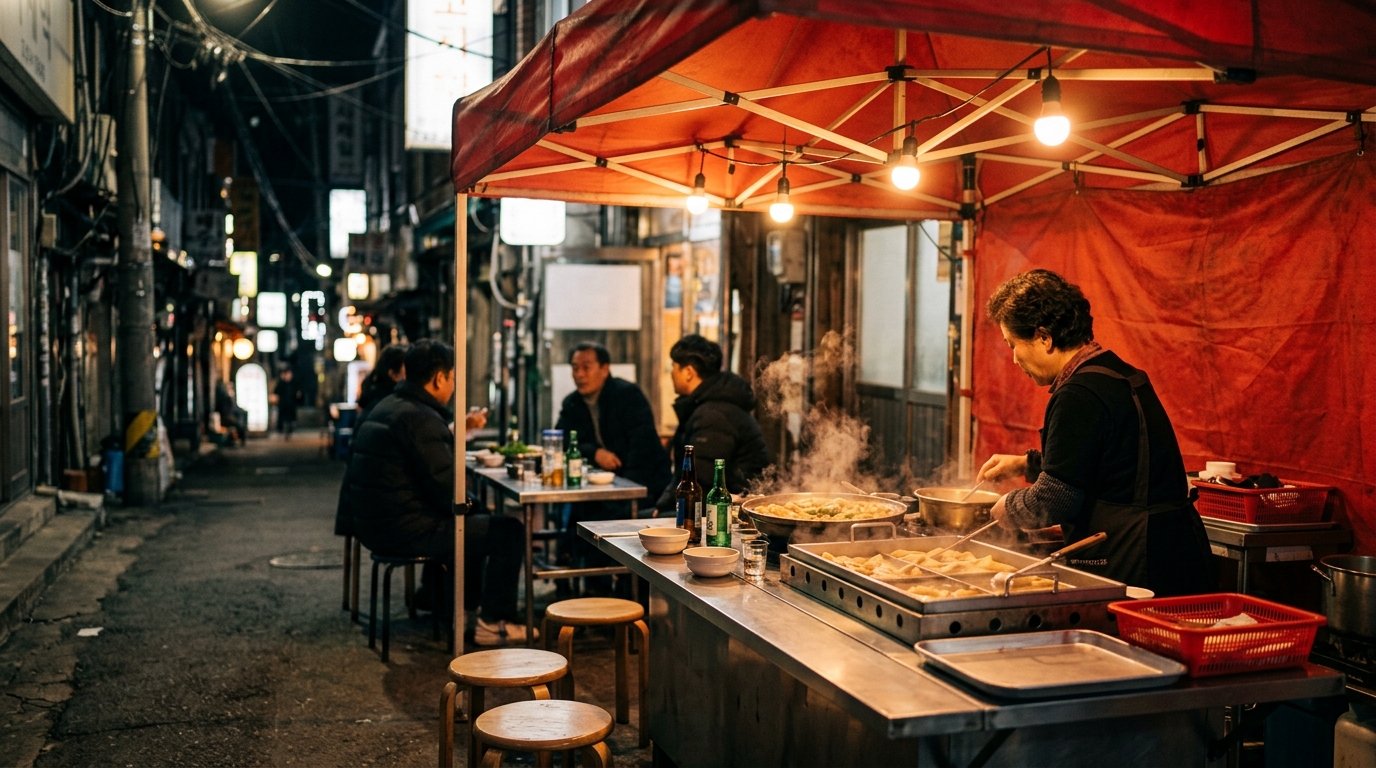
A Korean pojangmacha (포장마차)—often shortened to "pocha" (포차)—is a staple of South Korea's late-night drinking scene. Famous from K-dramas, these bright orange or clear plastic street tents serve savory food alongside cold drinks in a cozy, nostalgic setup. Still, sitting down at a real street-side Korean pojangmacha comes with unwritten social norms, payment rules, and menu expectations that can catch visitors off guard.
Knowing how these street bars work helps ensure a hassle-free night out without unexpected bill surprises or awkward moments.
What Is a Korean Pojangmacha? (Street Tents vs. Indoor Pochas Explained)
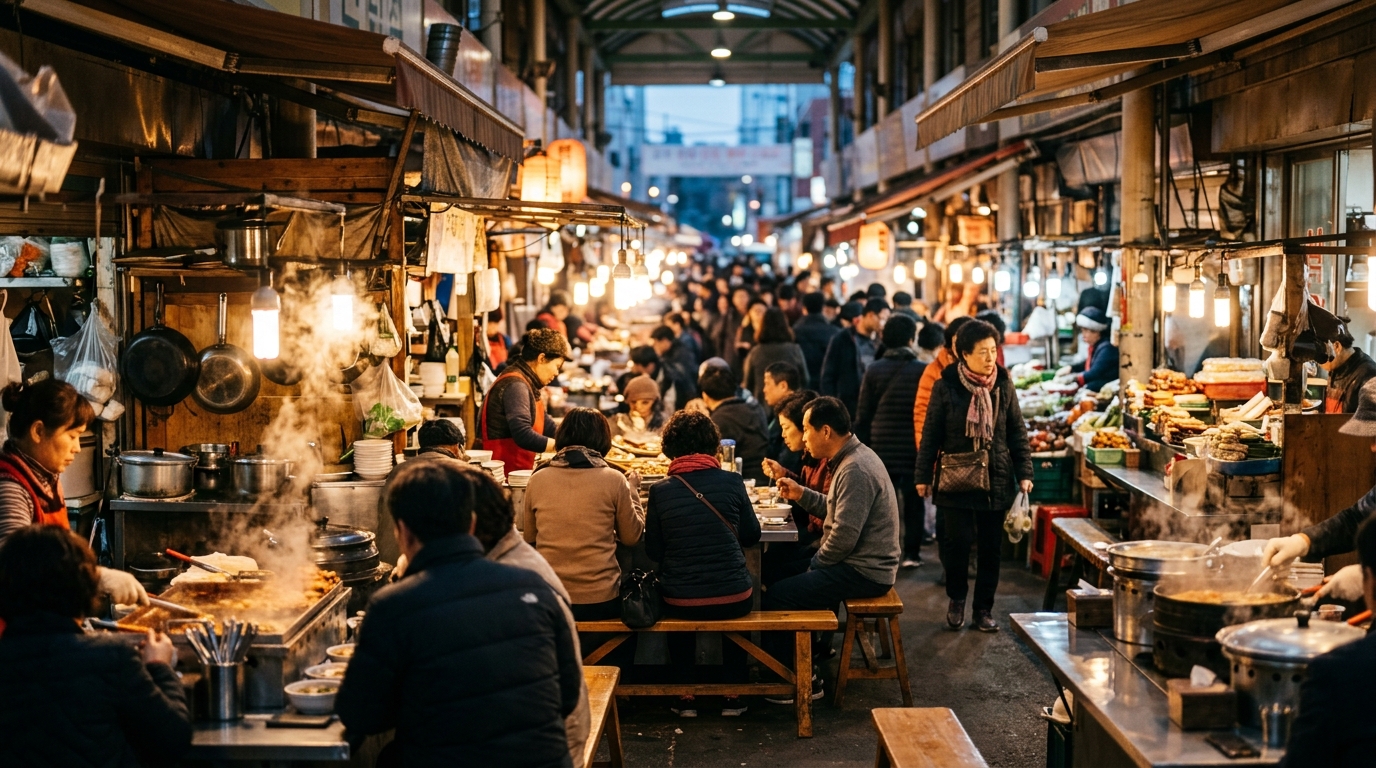
A pojangmacha translates literally to a "covered wagon," referring to a mobile tent bar that serves alcohol and late-night snacks. While historically these began as small food carts selling warm snacks to workers heading home, today they split into two main formats: traditional street-side tents and permanent indoor retro bars.
Traditional street-tent pojangmachas operate as outdoor pop-ups relying on physical cash, while modern indoor pochas function as licensed restaurants that accept foreign credit cards. Outdoor tents set up on sidewalks late each afternoon and pack up before sunrise. In contrast, indoor pochas borrow the red tarp, plastic stools, and retro aluminum tables for decor, but sit inside permanent commercial spaces equipped with modern kitchens, fixed tax registration, and customer restrooms.
| Feature | Outdoor Street Pojangmacha (포장마차) | Indoor Retro Pocha (실내포차) |
|---|---|---|
| Location | Sidewalks, alleyways, train station exits | Commercial retail buildings, upper floors |
| Payment Methods | Cash (KRW) or local mobile bank transfer | Credit cards, mobile payments, cash |
| Restroom Access | Public facilities, subway stations nearby | On-site private commercial bathrooms |
| Operating Hours | 5:00 PM – 3:00 AM (approximate) | Standard restaurant hours (often until 4:00 AM) |
| Seating Capacity | Very limited (3 to 6 small tables) | Moderate to large seating space |
| Atmosphere | Authentic street vibe, seasonal weather | Air-conditioned / heated indoors |
Where Are the Top Pojangmacha Hotspots in Seoul?
Seoul has several dedicated street bar clusters, ranging from lively student nightlife zones to traditional working-class alleys. Picking the right neighborhood comes down to what kind of crowd, atmosphere, and seating availability you want.
According to travel guides on Jongno 3-ga Street, the most famous outdoor tent stretches line subway exits across central and northeastern Seoul. Reaching these spots is easy using Seoul's subway system and a standard T-money card.
| District | Nearest Subway Station | Exit Numbers | Atmosphere & Notable Vibe |
|---|---|---|---|
| Jongno 3-ga | Jongno 3-ga Station (Line 1, 3, 5) | Exits 3, 4, 5, and 6 | Highly popular, bustling mixed crowd, vibrant night alley |
| Euljiro 3-ga | Euljiro 3-ga Station (Line 2, 3) | Exits 3 and 4 | Known for pub and hof establishments (formerly Nogari Alley), industrial retro vibe |
| Yeongdeungpo | Yeongdeungpo Station (Line 1) | Exit 6 | Traditional local feel, older crowd, authentic seafood focus |
| Chang-dong | Chang-dong Station (Line 1, 4) | Exit 1 | Neighborhood street atmosphere, lower tourist density, affordable |
How Much Does a Night at a Pojangmacha Cost and Why Is It Cash-Only?
Expect to spend between ₩15,000 and ₩35,000 per person at an outdoor tent, depending on what you order and how much you drink. While street food stalls elsewhere often mean cheap quick bites, Korean street tent bars are sit-down drinking spots with full dishes priced similarly to standard neighborhood pubs.
Following late 2023 price-gouging controversies, vendor associations voluntarily adopted price-display systems to ensure transparent pricing for visitors. Before these guidelines took effect, small portions occasionally led to price disputes in busy tourist areas. Modern reputable stalls keep laminated menus with clear Korean Won (KRW) prices on display.
| Item Category | Average Price Range (KRW) | Description / Notes |
|---|---|---|
| Staple Noodles | ₩4,000 – ₩6,000 | Warm udon (우동) or banquet noodles (잔치국수) |
| Standard Anju Dishes | ₩15,000 – ₩20,000 | Korean omelets, stir-fried pork, chicken gizzards |
| Seafood Anju Dishes | ₩20,000 – ₩25,000 | Grilled hagfish, sea squirt, fresh oysters, clams |
| Domestic Alcohol | ₩5,000 – ₩6,000 | Standard 360ml bottles of Soju or domestic bottled beer |
| Soft Drinks / Water | ₩2,000 – ₩3,000 | Canned sodas; bottled drinking water |
Because temporary tents lack registered addresses, tax terminal hardware, or landline connections, they cannot take foreign credit cards, Apple Pay, or T-money transit cards. You must pay in physical Korean Won (KRW) cash or via local Korean bank transfer apps.
What Is Essential Pocha Etiquette and Unwritten Rules?
Street tents follow a distinct set of social customs. Knowing what vendors—often called Imo (이모), meaning "auntie"—expect prevents awkward misunderstandings.
Because street tents rely entirely on liquor margins to survive, ordering at least one food dish per pair and purchasing alcohol is socially expected. Setting up a temporary street tent costs vendors significant time and effort, so table volume directly determines whether they make a profit.
Unwritten expectations to keep in mind:
- Minimum Order Requirement: Stalls expect pairs of diners to order at least one main food dish (anju) alongside drinks. Groups of 3 or 4 should order at least two main dishes.
- Alcohol Primacy: Stalls can turn away groups that only want non-alcoholic snacks during prime drinking hours (8:00 PM to 11:00 PM).
- Peak Seating Allocation: If you are alone or in a pair sitting at a four-person table during busy hours, staff may ask you to move to counter stools to free up space.
- Complimentary Broth Culture: Every customer sitting down at a traditional street tent receives a complimentary bowl of piping hot fishcake broth that can be refilled free of charge. Known as odeng gukmul (오뎅국물), this warm broth acts as an immediate starter while your food is prepared.
What Should You Order? Best Anju Food & Drink Pairings
Food served alongside alcohol in Korea is known as anju (안주). Tent menus focus heavily on items cooked fast over small gas burners—usually stir-fried, grilled, or boiled.
Detailed food rundowns from sources like Namane Card point to fresh seafood as a signature offering. Vendors display options like sea squirts (mungge / 멍게), sea cucumbers (haesam / 해삼), and hagfish (ggomjangeo / 꼼장어) over crushed ice along the front counter.
Practical Survival Guide: How to Handle Restrooms, Language Barriers, and Solo Dining
Visiting an outdoor street bar presents a few practical hurdles if you do not speak Korean or know the local setup.
Finding Restrooms Near Outdoor Tents
Without plumbing, outdoor tents cannot house their own restrooms. When you need a facility, use this simple routine:
Overcoming Language Barriers
While many street tent owners are older vendors who speak little English, ordering is manageable using practical strategies from Epickor Street Food Resources:
- Point directly to the display of raw seafood or ingredients arranged on the counter.
- Show clear photo examples of dishes like rolled omelet (gyeoran-mari) or noodles (udon) on your phone.
- Use basic ordering phrases:
- "Soju han-byeong, maekju han-byeong juseyo." (One bottle of soju, one bottle of beer, please.)
- "Eolmae-yeyo?" (How much is it?)
- "Kaeshi" / "Hyeon-geum" (Cash payment context).
Navigating Solo Travel in Street Tents
Solo visitors sometimes worry about being turned away. Because tents have limited tables, vendors favor groups ordering multiple dishes and drinks. If you are dining alone, head out early between 5:30 PM and 7:00 PM, take a seat at the counter bar, and order a full dish along with a beverage.
Frequently asked questions
Q. What is a Korean pojangmacha?
A pojangmacha (포장마차) is a street-side tent bar on wheels serving Korean drinks and savory food dishes called anju.
Q. Do street pojangmachas accept foreign credit cards?
No, outdoor street tents lack tax network hardware and require physical South Korean Won (KRW) cash or local mobile transfers, though modern indoor pochas accept cards.
Q. Where do you go to the bathroom at an outdoor street pocha?
Outdoor tents do not have internal toilets, so patrons use nearby public subway station restrooms or facilities in adjacent commercial buildings.
Q. Can you visit a pojangmacha as a solo traveler or without drinking alcohol?
Solo travelers can visit during early hours to grab counter stools, but ordering a main food dish and drinks is expected since stalls rely heavily on alcohol sales.