Solo Dining in Korea: How to Eat K-BBQ Alone (Honbap)
Key takeaways
Mastering solo dining korea honbap allows travelers to navigate single K-BBQ, solo restaurants, and order kiosks across Seoul smoothly. While single-person households account for over 34% of Korean homes as of 2026, traditional K-BBQ spots often enforce a 2-serving minimum. Visitors can easily dine alone by using specialized single-grill chains like Hongojip, ordering two meat portions, timing visits off-peak, and navigating local apps like CatchTable Global and Naver Map.
Solo dining korea honbap culture makes exploring South Korea's renowned food scene straightforward for single travelers, even at group-centric Korean BBQ joints. Eating alone was once socially awkward across Korea. That changed as single-person households surged to over 34% of all domestic homes by late 2026, exceeding 10 million households. Today, solo eating—known locally as honbap—is standard practice. This breakdown explains how the culture shifted, how to avoid turn-aways at K-BBQ spots, which navigation tools to use, and where to find tested solo-friendly spots in Seoul.
Understanding Honbap: Korea's Solo Dining Revolution
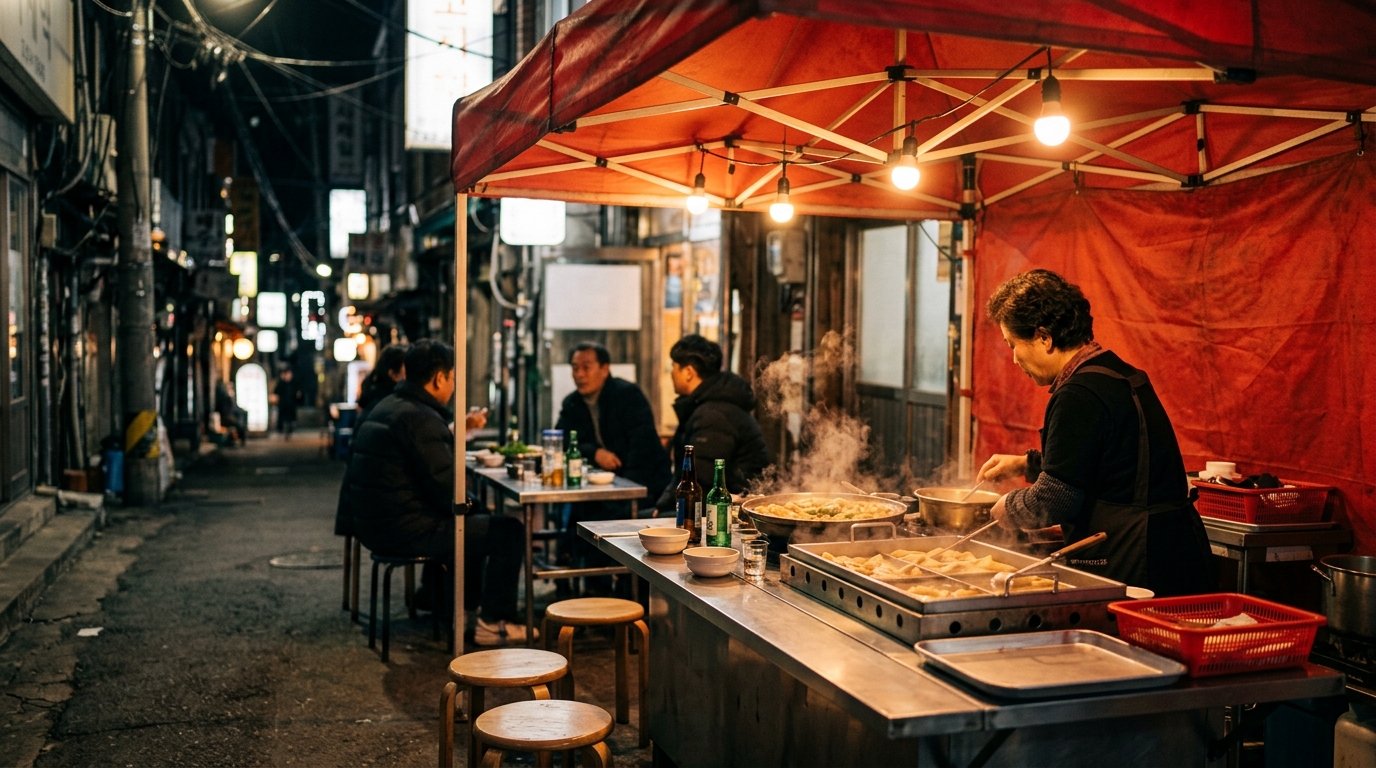
Honbap (혼밥) blends honja (alone) and bap (meal). Traditional Korean dining centered on group tables packed with shared stews, meats, and side dishes. Eating alone used to draw awkward glances or pity from surrounding tables.
Demographics flipped that dynamic. By late 2026, official data showed single-person households making up over 34% of total households nationwide. That demographic shift forced restaurants to adapt. Modern locals regularly eat alone between work shifts or errands, driving the expansion of solo counter seats, individual tabletop burners (1-in hwaro), and automated ordering screens.
Local vloggers and food creators regularly document the shift from feeling self-conscious in public dining spaces to enjoying the privacy of solo meals. Casual venues like bunsik snack bars, noodle stalls, and quick-service diners welcome single guests without hesitation. Higher-end sit-down meals, including K-BBQ, braised pork (bossam), and hot pots (jeongol), require a few simple operational adjustments for solo patrons.
Is It Rude or Socially Awkward to Eat Alone in South Korea?
Solo travelers often wonder if walking into a venue alone violates local etiquette. It does not. Eating alone is completely normal in modern Korean cities, supported by a food industry that caters to over 10 million single households.
Korean internet culture breaks solo dining down into the informal eight-tier "Honbap Hierarchy":
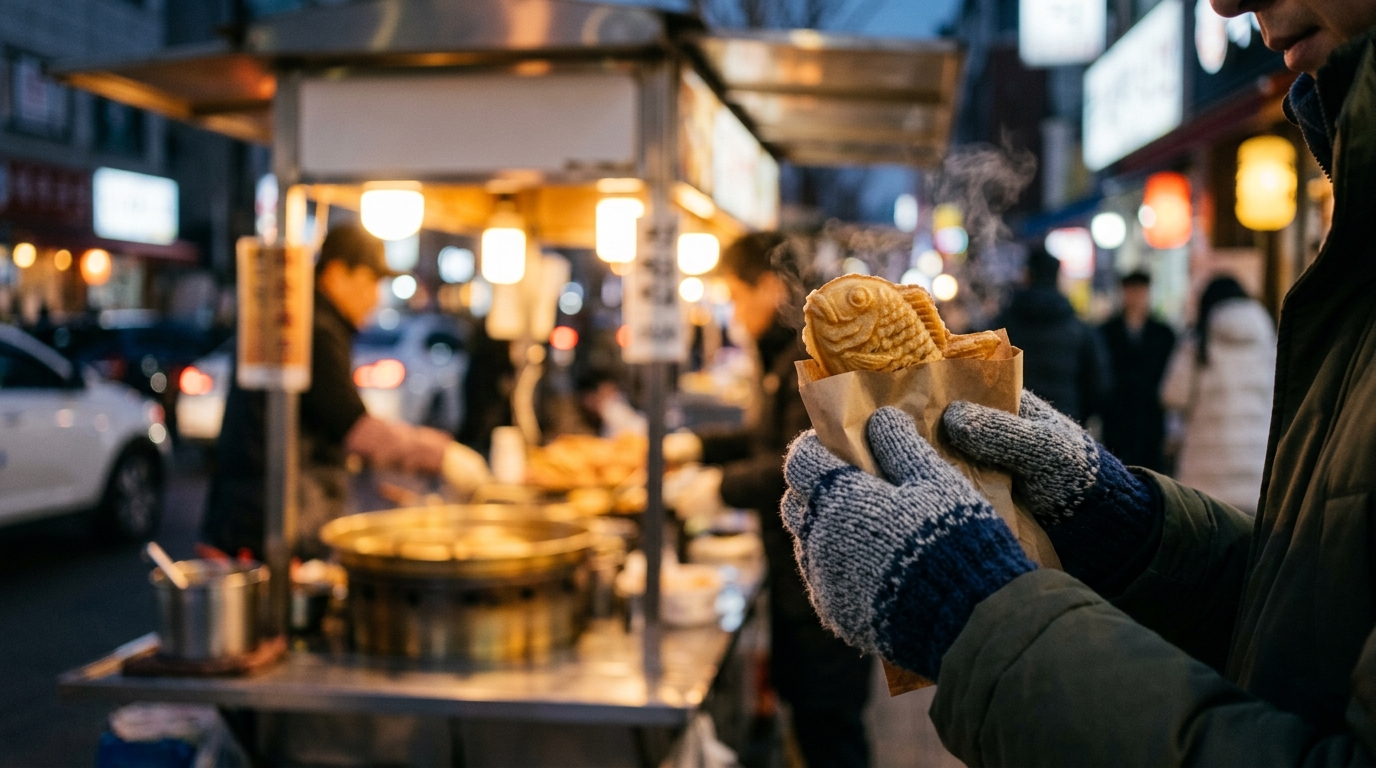
- Level 1: Convenience stores (pyeon-ui-jeom) and street food stalls.
- Level 2: Fast-food chains and bunsik snack bars.
- Level 3: Casual soup (gukbap), noodle, and ramen shops.
- Level 4: Fast-casual diners, Chinese restaurants, and food courts.
- Level 5: Japanese curry joints, franchise diners, and casual pasta spots.
- Level 6: Traditional Korean stews (jjigae) and family-style restaurants.
- Level 7: Buffet restaurants and casual pub spaces (honsul).
- Level 8: Solo K-BBQ (hongogi) and multi-serving meat houses.
Levels 1 through 5 require zero extra planning. Levels 6 through 8 simply require understanding restaurant economics and using specific ordering tactics.
Why Traditional K-BBQ Places Refuse Single Diners
Traditional Korean BBQ venues turn away single diners because of tight operational costs, not out of personal bias. Understanding these business overheads makes navigating venue rules simple.
- Fixed Fuel and Fire Costs: Igniting charcoal or running gas burners costs the exact same amount of fuel and labor for one guest as it does for four.
- Free Side Dish (Banchan) Refills: Venues serve free refills of side dishes, wrap vegetables, garlic, and sauces. Preparing a full spread for one order cuts deeply into slim operating margins.
- Table Capacity During Peak Hours: Floor plans feature large tables built for groups of 4 to 6 people. Occupying a 4-person table with a single meat order during rush periods creates direct revenue loss for owners.
Korea Consumer Agency data shows the average price for a standard 200g portion of samgyeopsal (pork belly) in Seoul reached approximately ₩21,321. Because profitability relies on beverage sales and multi-portion orders, host staff prioritize larger parties during busy shifts.
3 Proven Strategies to Eat K-BBQ Alone Without Rejection
Single travelers who want standard K-BBQ without getting turned away can use three reliable approaches.
               ┌─────────────────────────────────────────────────┐
               │    How to Enjoy K-BBQ as a Solo Traveler       │
               └────────────────────────┬────────────────────────┘
                                        │
         ┌──────────────────────────────┼──────────────────────────────┐
         ▼                              ▼                              ▼
┌─────────────────┐           ┌──────────────────┐           ┌──────────────────┐
│ Strategy 1:     │           │ Strategy 2:      │           │ Strategy 3:      │
│ Dedicated Solo  │           │ The 2-Portion    │           │ Off-Peak Hour    │
│ Grill Chains    │           │ Order Rule       │           │ Visits           │
│ (1-Person Sets) │           │ (2인분 주문)      │           │ (2 PM - 5 PM)    │
└─────────────────┘           └──────────────────┘           └──────────────────┘
Strategy 1: Visit Dedicated Single-Grill Restaurants
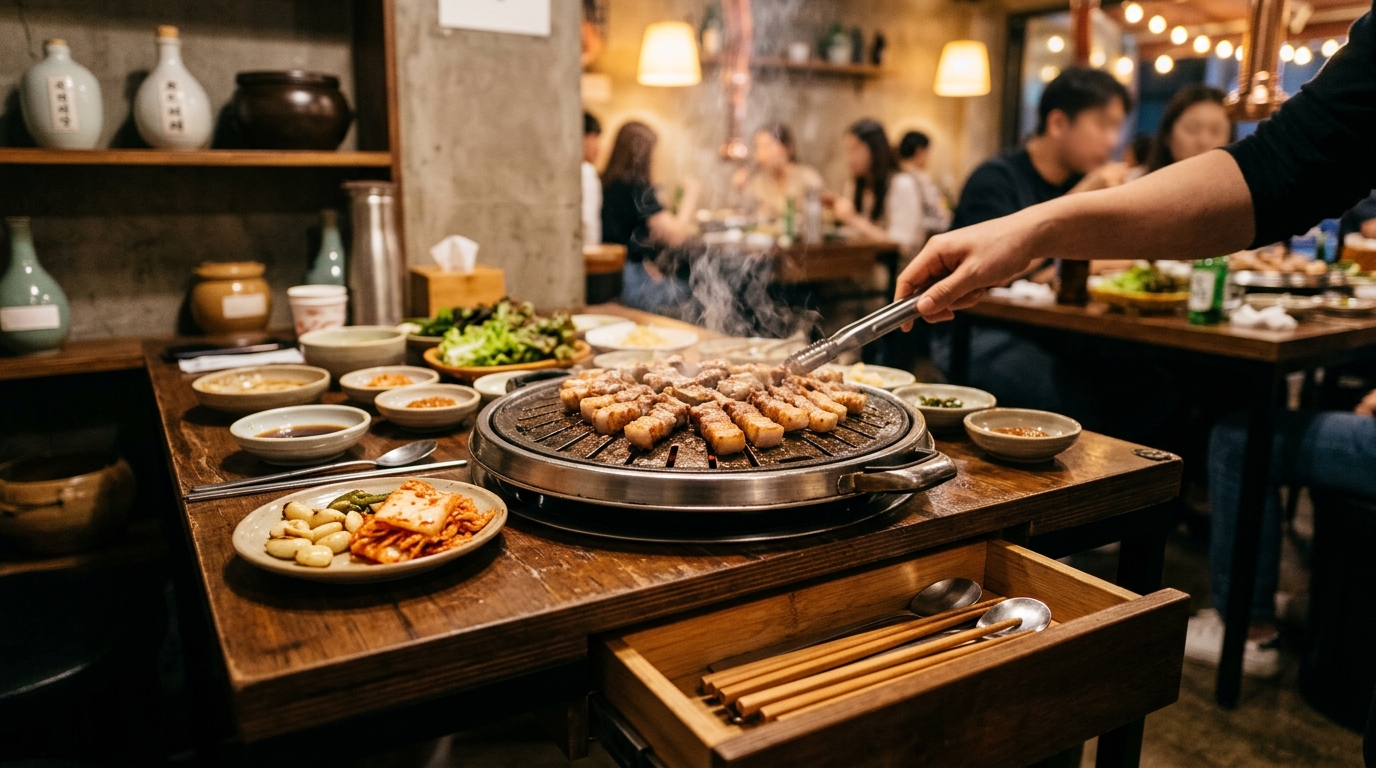
Seoul houses dedicated solo K-BBQ chains built for single diners. These locations feature individual counter seats equipped with personal smokeless grills, touch-screen menus, and single-person meat sets (150g to 200g) served alongside individual rice, soup, and sides. Brands like Hongojip (혼고집)—including branches at Yongsan I'Park Mall—offer comfortable setups with individual grills and set prices from ₩9,900 to ₩18,900.
Strategy 2: Use the Two-Portion Ordering Rule
At classic neighborhood BBQ spots, apply the two-portion rule (2inbun sang jumun, 2인분 이상 주문). Menu prices reflect single portions (150g–200g of meat). When entering, tell the host you intend to order two servings of meat for yourself. Ordering two portions of pork belly or beef satisfies the restaurant's minimum order requirement while providing a thoroughly satisfying 300g–400g meal for a hungry traveler. Based on October 2026 Korea Consumer Agency figures, a 200g portion of samgyeopsal in Seoul averages ₩21,321, placing a two-portion meal around ₩42,000.
Strategy 3: Time Your Visit for Off-Peak Hours
Timing makes a major difference at non-chain K-BBQ spots. Avoid lunch rushes (11:30 AM – 1:30 PM) and dinner crowds (6:30 PM – 8:30 PM). Arriving between 2:00 PM and 5:00 PM, or after 8:30 PM, significantly improves acceptance rates. Staff have open tables and can accommodate single diners easily.
Best Solo K-BBQ and Honbap Chains in Seoul
This breakdown covers reliable solo-friendly dining chains across Seoul along with their signatures and price points:
| Restaurant / Chain Name | Korean Name | Meal Specialty | Typical Cost Range (KRW) | Solo Setup Style |
|---|---|---|---|---|
| Hongojip | 혼고집 | Personal Charcoal K-BBQ Sets | ₩9,900 – ₩18,900 | Individual grill counter booths |
| Ssaum-ui Gosu | 싸움의고수 | Single-serving Bossam & Jokbal | ₩7,000 – ₩12,000 | Bento-style individual tables |
| Yeokjeon Hoegwan | 역전회관 | Single Korean Beef Slices | ₩15,000 – ₩25,000 | Partitioned dining tables |
For additional neighborhood breakdowns across Seoul, review Korea Plug's solo K-BBQ guide for specific venue listings.
How Much Does Solo Dining and K-BBQ Cost in Seoul?
Pricing shifts based on whether you visit casual fast-food chains, dedicated single-grill spots, or traditional BBQ venues using the two-portion rule.
This cost comparison outlines average meal expenses based on official pricing data:
| Solo Dining Format | Expected Cost Range (KRW) | What Is Included in the Meal? | Best Suited For |
|---|---|---|---|
| Solo BBQ Chains (e.g., Hongojip) | ₩9,900 – ₩18,900 | 150g–200g meat, rice, soup, personal banchan | Quick, low-cost individual grill experience |
| Standard K-BBQ (2-Portion Strategy) | ₩35,000 – ₩45,000 | 300g–400g pork belly/beef, full table banchan | Hungry travelers wanting traditional charcoal BBQ |
| Solo Bossam Set (e.g., Ssaum-ui Gosu) | ₩7,000 – ₩12,000 | Sliced boiled pork, rice, kimchi, side items | Quick lunch or budget-friendly dinner |
| Casual Soup / Stew (Gukbap / Haejang-guk) | ₩8,000 – ₩11,000 | Individual stoneware soup pot, rice, kimchi | Comfort food without minimum order requirements |
| Premium Beef K-BBQ (Yeokjeon Hoegwan) | ₩15,000 – ₩25,000 | Single-serving high-grade Korean beef (Hanwoo) | Higher-end dining without group minimums |
How to Find Solo-Friendly Spots Using Naver Map and CatchTable
Finding options on the go requires native apps, as global options like Google Maps often miss updated hours and local business listings.
Searching Naver Map with Korean Keywords
Naver Map works best for local discovery. While the interface handles English, searching with Korean terms generates far better results.
Examine venue photos in customer reviews. Look for individual counter seating (bar-teible), partition screens, or self-service kiosks.
Bypassing Waitlists with CatchTable Global
Seoul's popular dining spots rely heavily on digital queue systems. Foreign travelers previously struggled with these tools because they required local Korean phone numbers (+82).
Look for a tablet stand near the restaurant entrance. Open CatchTable Global, scan the QR code on the screen, or enter your email address to register. The app sends live status updates when your table opens up.
Step-by-Step Naver Map Neighborhood Blueprints for Solo Diners
Use these neighborhood search blueprints to locate solo-friendly dining spots across Seoul:
- Magok & Gangseo-gu Blueprint: Search
마곡 혼밥or마곡 1인 화로on Naver Map. This area contains specialized solo BBQ locations with individual smokeless table burners and gyukatsu setups built for solo diners. - Yongsan Blueprint: Search
용산 아이파크몰 혼밥or혼고집 용산아이파크몰점. Malls like Yongsan I'Park Mall feature dedicated solo-dining outlets where counter seats offer personal samgyeopsal and yakiniku sets starting at ₩9,900. - Hongdae & Sinchon Blueprint: Search
홍대 1인분 가능or신촌 혼밥in university areas. These student districts provide wallet-friendly single-serving Korean meals ranging from ₩7,000 to ₩12,000. - Gangnam & Business District Blueprint: Search
강남역 1인 화로or역삼 혼밥. Visiting these office areas slightly outside main lunch hours (1:30 PM to 3:00 PM) opens access to comfortable, partitioned counter setups designed for local office workers.
How to Handle Kiosks, Card Payments, and Table Ordering
Ordering at solo venues is largely digital, making language barriers non-existent.
Workarounds for Korean Group Dishes Beyond K-BBQ
Several popular Korean foods are traditionally cooked in large communal pots for two or more guests. Solo diners can enjoy these meals through single-serving alternatives:
- Army Stew (Budae Jjigae, 부대찌개): Traditional venues enforce a 2-person pot minimum. Workaround: Head to student districts or fast-casual bunsik spots serving 1-in budae jjigae in individual stoneware pots (ttukbaegi).
- Spicy Stir-Fried Chicken (Dakgalbi, 닭갈비): Large table pans complicate single orders. Workaround: Search for dakgalbi deopbap (spicy chicken over single-serving rice bowls) or visit department store food courts (such as Hyundai or Shinsegae).
- Pork Bone Soup (Gamjatang, 감자탕): Typically served as a shared pot. Workaround: Order Haejang-guk (해장국). It uses identical pork bone broth and tender meat in a single-portion bowl.
- Boiled Pork Wraps (Bossam, 보쌈): Large shared platters start around ₩35,000. Workaround: Visit chains like Ssaum-ui Gosu, which sell single bento trays featuring sliced pork belly, kimchi, rice, and fresh wrap greens under ₩10,000.
For official travel advisories and dining background, check Visit Korea's travel guide or read Know About Korea's solo dining article.
Essential Korean Vocabulary and Etiquette for Solo Diners
A few basic phrases and etiquette standards ensure a seamless meal anywhere in South Korea.
Key Solo Dining Vocabulary
- "Hon-ja wa-sseo-yo." (혼자 왔어요) — "I came alone."
- "1-in-bun dwae-na-yo?" (1인분 되나요?) — "Is a single portion available?"
- "2-in-bun ju-se-yo." (2인분 주세요) — "Please give me two portions."
- "Mul-un sel-phu-in-ga-yo?" (물은 셀프인가요?) — "Is water self-service?"
- "Gye-san-hae ju-se-yo." (계산해 주세요) — "Please give me the check / bill."
Basic Solo Dining Etiquette Tips
- Water is Almost Always Self-Service: Look for a stainless steel water dispenser or a small refrigerator filled with plastic water bottles labeled 셀프 (sel-phu). Grab a metal cup and serve yourself.
- Locate Utensils Under the Table: If you do not see chopsticks or spoons on top of the table, pull open the sliding wooden drawer hidden underneath the side edge of the table. You will find chopsticks, spoons, napkins, and wet wipes inside.
- Call Staff with the Service Button: Many casual Korean tables feature a small plastic doorbell button on the top corner. Press it once to summon staff when you are ready to order or pay; shouting across the room is unnecessary.
- No Tipping Expected: Tipping is not practiced anywhere in South Korea. The price listed on the menu includes all taxes and service fees. Leaving cash on the table will result in staff chasing you down the street to return your forgotten money.
Understanding these cultural habits, taking advantage of automated ordering, and leaning on dedicated single-grill locations lets solo travelers enjoy South Korea's food scene with total confidence.
Frequently asked questions
Q. Is it weird or rude to eat alone at a restaurant in South Korea?
No, eating alone is not weird or rude in South Korea. Solo dining is known locally as honbap (혼밥) and is widely accepted due to single-person households exceeding 34% nationwide as of late 2026. While casual eateries and kiosks welcome solo diners, high-demand K-BBQ venues simply require ordering two portions.
Q. Can a single person eat Korean BBQ (K-BBQ) alone in Seoul?
Yes, a single person can easily eat K-BBQ alone in Seoul. Solo diners can visit dedicated 1-person grill chains like Hongojip with individual set menus starting around ₩9,900, or visit standard BBQ venues off-peak (2 PM–5 PM) and agree to order two meat portions (300g–400g total).
Q. Why do traditional Korean BBQ restaurants turn down solo diners?
Traditional K-BBQ restaurants turn down solo diners due to operational costs, not social prejudice. Lighting charcoal, preparing multiple complimentary banchan side dishes, and occupying 4-person tables during peak hours creates financial losses on a single 150g meat order. Ordering two portions resolves these overhead concerns.
Q. How do I find solo-friendly honbap restaurants on Naver Map?
To find solo-friendly spots on Naver Map, paste Korean keywords into the search bar: 혼밥 (honbap for solo dining), 1인 화로 (1-person grill), or 삼겹살 1인분 (single pork belly). Look at customer review photos to verify individual counter seats or touchscreen order kiosks.
Q. Do foreign tourists need a Korean phone number to use CatchTable?
No, foreign tourists do not need a Korean phone number to join restaurant waitlists using CatchTable. Download the CatchTable Global app on iOS or Android, which allows international visitors to register and receive queue notifications using an email address, Google account, or Apple ID.