Korean Winter Street Food Guide: Bungeoppang, Hotteok & Local Tips
Key takeaways
This Korean Winter Street Food Guide covers essential seasonal treats like bungeoppang, hotteok, and eomuk skewers. Learn current 2025–2026 prices, cash payment rules, vendor-tracking apps, and key dining etiquette for exploring Seoul's winter food carts.
As sub-zero winds sweep across South Korea, mobile food carts (pojangmacha 포장마차) pop up along sidewalk corners. Steaming iron molds and hot griddles fill the air with toasted cinnamon, sweet red bean, and savory seafood stock. Grabbing a warm bite from these carts is a daily winter habit across Korean cities.
This guide outlines the core street snacks to look for, current local prices, vendor-tracking tools, and practical etiquette rules for eating on the go.
Why Is Winter Street Food a Cultural Ritual in Korea?
Sub-zero temperatures turn sidewalk stalls into quick stopovers from late October through April. The tradition stems from simple practical comfort and familiar routine.
Stepping up to a hot griddle gives commuters a quick way to warm cold hands during frozen evening walks. In Korea, carrying a few thousand-won bills in winter coat pockets is considered an essential seasonal survival skill.
Most winter food carts operate as temporary pop-ups. Operators set up heavy vinyl enclosures near subway exits, bus stops, and neighborhood markets. These temporary shelters allow people to step out of the wind, grab a paper cup of hot broth, and wait while their food cooks.
What Are the Essential Snacks in This Korean Winter Street Food Guide?
The main winter lineup includes fish-shaped filled pastries, sugar pancakes, skewered fish cakes in broth, egg bread, and roasted sweet potatoes. Each offers distinct batters, heat levels, and local variations.
Bungeoppang (붕어빵) and Ingeoppang (인어빵)
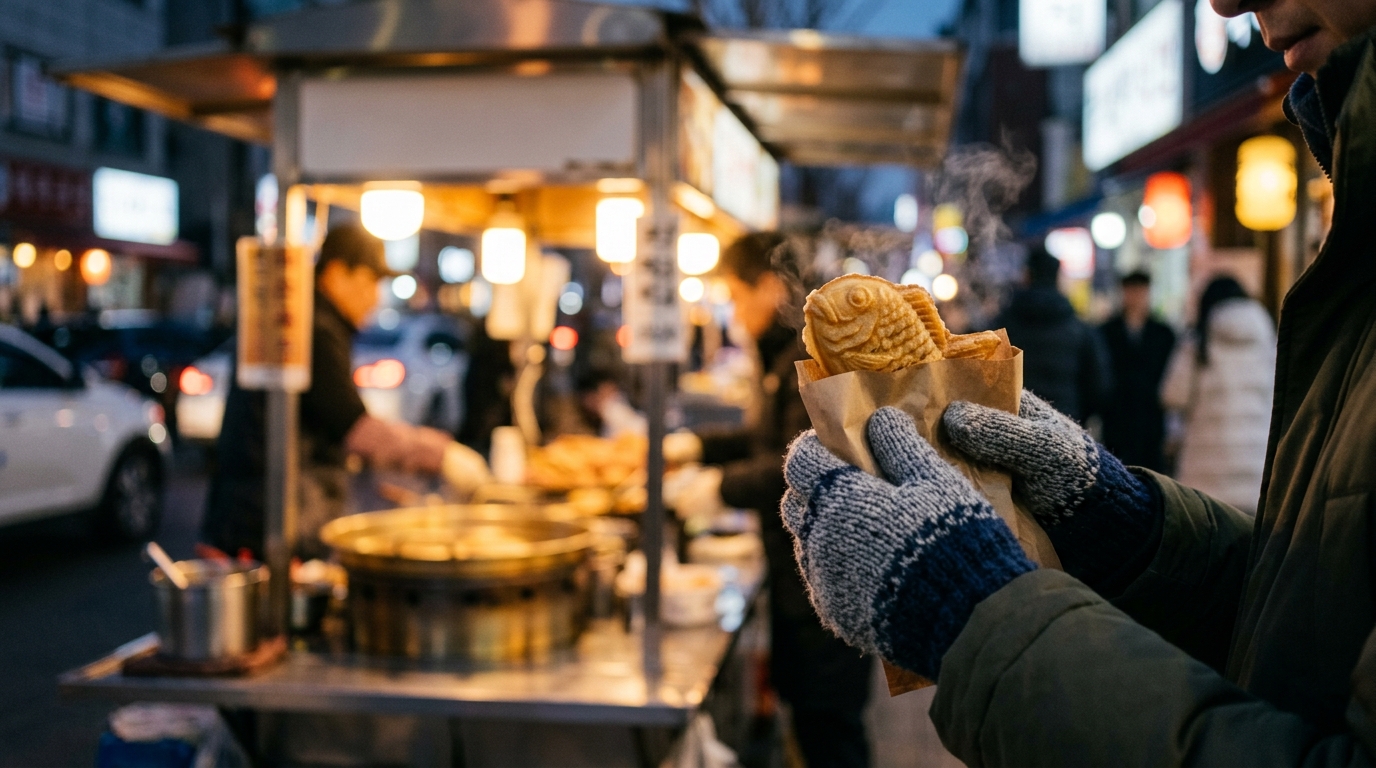
Bungeoppang (붕어빵) is a fish-shaped pastry made with sweet fillings. The name translates to "crucian carp bread," though the batter contains no seafood. Standard fillings are sweetened red bean paste (danpat 단팥) and vanilla custard (shukrem 슈크림).
You will also spot a related version called ingeoppang (인어빵). While standard bungeoppang uses a simple cake-flour batter for a soft, sponge-like bite, ingeoppang includes butter or oil directly in the mix. While traditional bungeoppang uses a basic cake flour batter, ingeoppang incorporates oil or butter directly into the mixture for a noticeably thinner, crunchier crust that stays crispy longer.
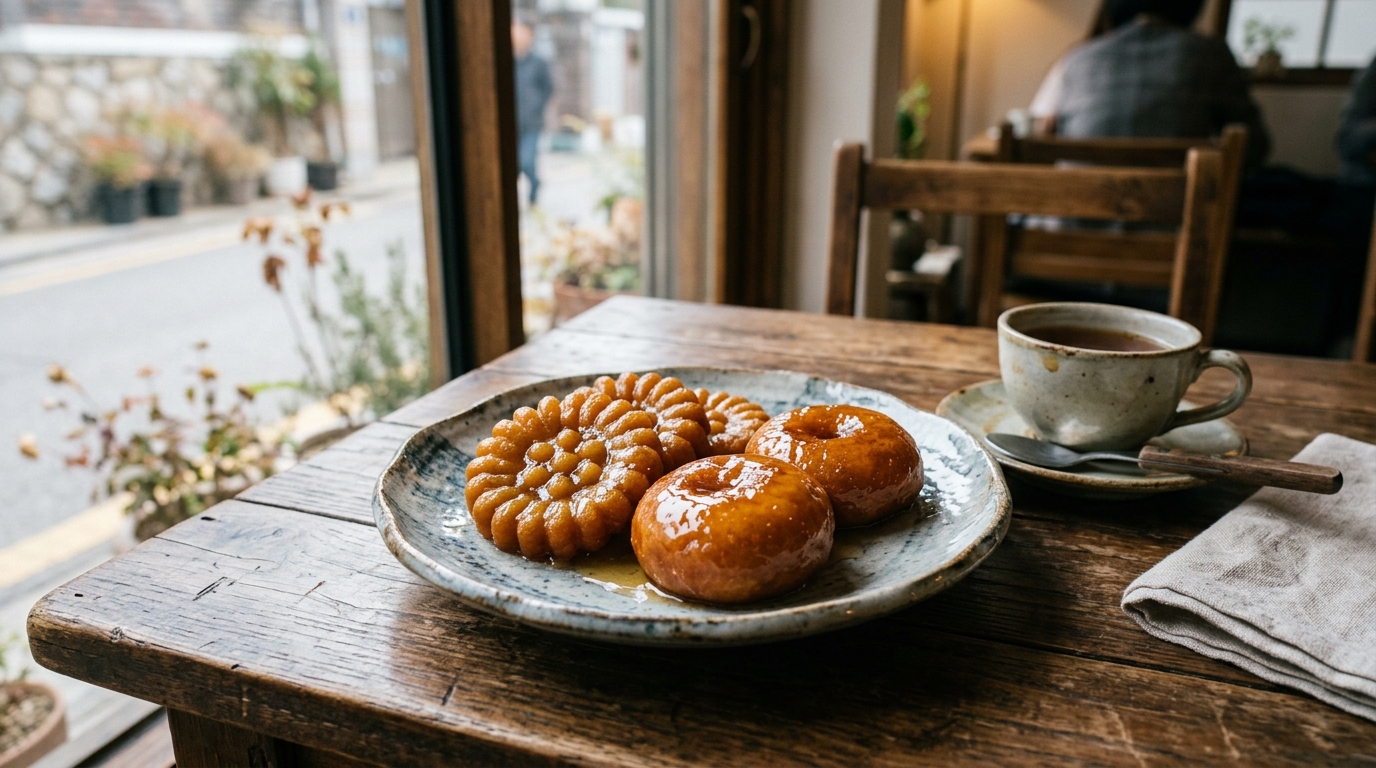
Some vendors also make fusion variations filled with chocolate, cream cheese, pizza toppings, or sweet potato. Other stalls fry dough rings inside fish molds to create waffle-like edges around a soft center.
Hotteok (호떡)
Hotteok (호떡) is a fried dough pancake stuffed with dark brown sugar, cinnamon, and chopped nuts like peanuts, sunflower seeds, or walnuts. Cooks press dough balls flat onto a greased griddle using a circular steel press. As it fries in oil or margarine, the brown sugar center melts into syrup.
Common styles include:
- Kkul-hotteok (꿀호떡): Standard street pancake filled with spiced liquid sugar.
- Ssiat-hotteok (씨앗호떡): Popularized in Busan, this style is sliced open after frying and stuffed with toasted pumpkin seeds, sunflower seeds, and pine nuts.
- Yachae-hotteok (야채호떡): A savory version packed with glass noodles (japchae 잡채) and minced vegetables, usually brushed with soy sauce.
Eomuk (어묵) / Odeng (오뎅)
Eomuk (어묵), also known as odeng (오뎅), consists of folded fish-cake sheets folded onto wooden skewers. They simmer inside large metal tubs filled with broth made from dried kelp (dashima 다시마), radish (mu 무), anchovies, and green onions.
Customers choose skewers straight from the broth and use disposable paper cups to scoop out hot soup (gukmul 국물). The broth comes free when buying skewers, offering an easy way to warm up while waiting for fried items.
Gyeoran-bbang (계란빵) and Gun-goguma (군goguma)
Gyeoran-bbang (계란빵) is an egg-topped bread cooked in oval metal trays. A slightly sweet wheat flour batter holds a whole egg, yielding a hot, sweet-and-savory breakfast item.
Gun-goguma (군고구마) refers to sweet potatoes slow-roasted in iron drums. Dry heat caramelizes the natural sugar inside, producing a soft center under charred skin.
| Snack Name | Korean Name | Key Ingredients | Texture Profile | Popular Variations |
|---|---|---|---|---|
| Bungeoppang | 붕어빵 | Flour batter, sweet red bean, custard | Soft interior, crispy tail/fins | Red bean, custard, cream cheese, chocolate |
| Ingeoppang | 인어빵 | Butter/oil batter, red bean, cream | Chewy, thin, extra-crispy exterior | Red bean, custard, pizza, sweet potato |
| Hotteok | 호떡 | Yeast dough, brown sugar, cinnamon, nuts | Crispy outer crust, molten sweet center | Classic sugar, Busan seed (ssiat), vegetable |
| Eomuk | 어묵 | Skewered fish cake, kelp-radish broth | Tender, savory, warm | Classic folded skewer, spicy broth skewer |
| Gyeoran-bbang | 계란빵 | Flour batter, whole fresh egg, butter | Fluffy, moist, savory-sweet | Plain egg, cheese-topped, bacon-topped |
How Much Does Korean Street Food Cost in 2025–2026?
Prices for the 2025–2026 winter season range between 1,000 KRW and 4,000 KRW per item depending on ingredients and neighborhood location. Higher ingredient costs for wheat flour, red beans, and cooking oil have slightly raised base prices across the country.
Reporting from koreatimes.co.kr notes that neighborhood stalls keep prices modest for local commuters, while heavy-foot-traffic tourist hubs like Myeongdong and Hongdae add noticeable markups.
| Item | Residential Neighborhood Stalls | Tourist Zones (Myeongdong / Hongdae) | Pricing Pattern / Quantity |
|---|---|---|---|
| Classic Bungeoppang | 2,000 KRW for 2–3 pieces | 3,000–5,000 KRW for 2 pieces | Red bean & custard fillings |
| Specialty Bungeoppang | 1,500–2,000 KRW per piece | 2,500–4,000 KRW per piece | Nutella, cream cheese, kimchi fillings |
| Classic Hotteok | 1,500–2,000 KRW per piece | 3,000–4,000 KRW per piece | Fried brown sugar pancake |
| Seed / Veggie Hotteok | 2,000–2,500 KRW per piece | 3,500–5,000 KRW per piece | Busan-style seed or savory stuffed |
| Eomuk Skewer | 1,000–1,500 KRW per skewer | 2,000–3,000 KRW per skewer | Includes unlimited cup of free broth |
| Gyeoran-bbang | 1,500–2,000 KRW per piece | 3,000–4,000 KRW per piece | Whole baked egg bread |
| Gun-goguma | 3,000–5,000 KRW (per bag) | 5,000–7,000 KRW (per bag) | Usually 2–3 roasted sweet potatoes |
How Can You Track Down Unmapped Vendors Like a Local?
Because pop-up stalls lack fixed storefront addresses or business registrations, standard applications like Google Maps or Naver Maps do not index them. Vendors adjust locations depending on weather, local traffic, and local regulations.
Locals rely on specialized crowdsourced tracking applications to locate open carts, as documented by street food guides on storiesofkorea.com.
What Money, Logistics, and Etiquette Rules Should Visitors Know?
Buying street snacks requires cash in small denominations along with basic courtesy regarding shared sauces and trash.
Payment Logistics: Why Cash Is Mandatory
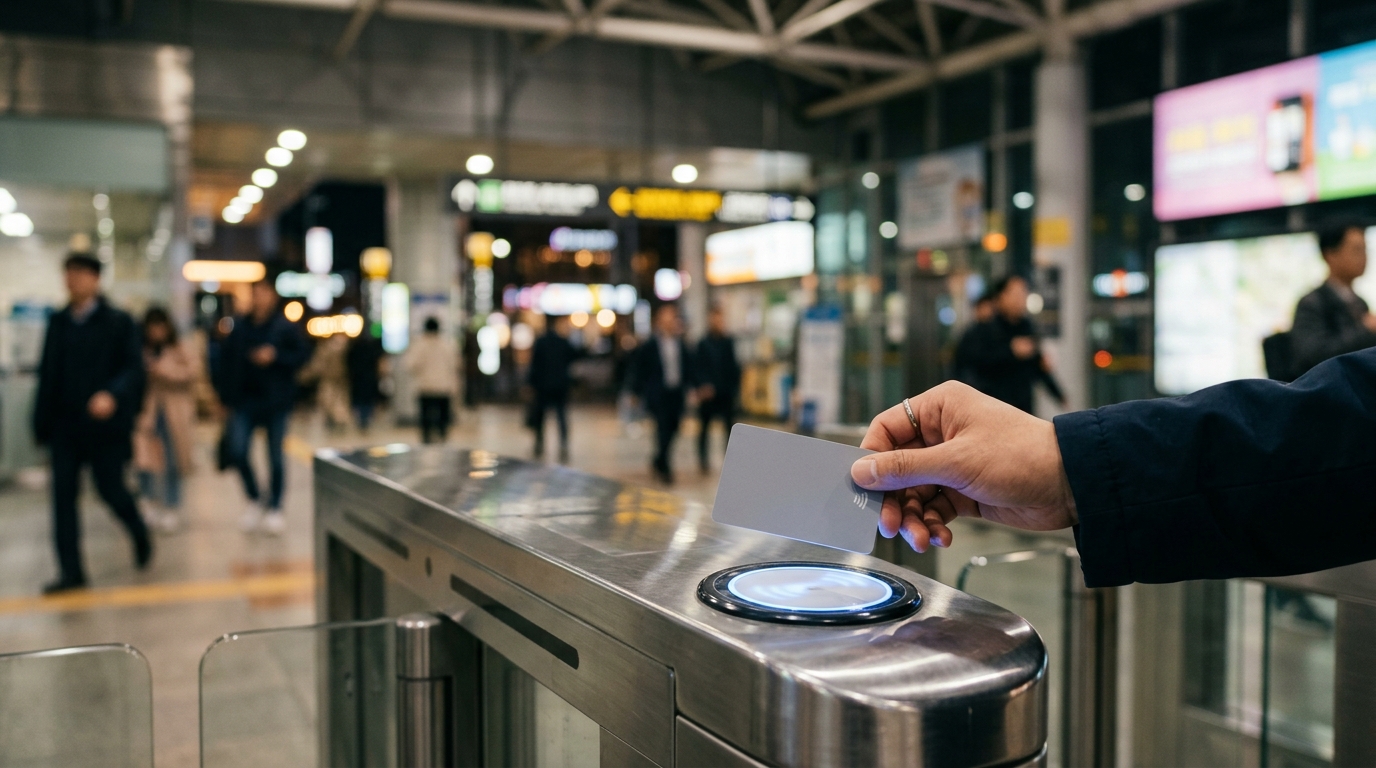
International credit cards, foreign debit cards, foreign Apple Pay, and Google Pay do not work at basic mobile stalls. Vendors lack card reader hardware. While local residents often use instant Korean bank transfers (gyejwa-iche 계좌이체), foreign tourists cannot access this option without a domestic bank account.
Carry 1,000 KRW, 5,000 KRW, and 10,000 KRW notes when setting out. Foreign credit cards, international mobile wallets, and foreign banking apps fail at small street carts, requiring visitors to carry small Korean cash notes. Keep cash ready in an easily accessible pocket to keep lines moving smoothly in cold weather.
Vendor Etiquette and Hygiene Rules
Follow standard hygiene rules when dining at street stalls, as outlined in visitor guides on creatrip.com:
- Sauce Dipping Rules: Stalls serving eomuk, fried items, or savory pancakes provide soy sauce or spicy glaze. Dipping a skewer or snack back into a shared sauce container after taking a bite is considered a major hygiene breach across all Korean street food stalls. Use provided pastry brushes or spray bottles to apply sauce before taking a bite.
- Broth Self-Service: Help yourself to fish cake broth (gukmul). Take a paper cup, ladle out broth from the vat, and sip while standing nearby. Never dip cups directly into the vat or drink straight from the shared ladle.
- Space and Flow: Cart space is limited. Order, receive your item, and step slightly to the side if standing inside the vinyl enclosure. Avoid blocking access to broth tubs for other waiting customers.
- Trash Disposal: Public trash bins are rare along Korean streets. Return paper cups, wooden skewers, and paper wraps directly to the vendor's trash box when finished. If leaving with food, hold onto your trash until reaching a subway station or convenience store.
Frequently asked questions
Q. Can I use credit cards or Apple Pay at Korean street food stalls?
No, foreign credit cards, debit cards, and foreign Apple Pay/Google Pay do not work at mobile street carts. While locals use domestic bank transfers, foreign visitors must pay with physical cash in local Korean Won (KRW) notes.
Q. Is Myeongdong street food worth it, or is it a tourist trap?
Myeongdong offers convenience and diverse fusion snacks, but prices are double or triple those of residential neighborhood stalls. For better prices and authentic local flavors, visit traditional markets like Gwangjang or Mangwon, or check university districts like Hongdae and Sinchon.
Q. How do I find bungeoppang vendors if they aren't on Google Maps?
Locals use crowdsourced Korean mapping apps like '3,000 Won in My Pocket' (가슴속3천원) or the winter snack layer on Karrot Market (당근마켓). You can also find active carts by exploring subway station exits, traditional markets, and busy residential thoroughfares.
Q. Is the eomuk (fish cake) broth free?
Yes, fish cake broth (gukmul) is complimentary when you buy street food at the stall. You can ladle broth into a paper cup and enjoy unlimited refills while standing at the cart.
Q. What is the difference between bungeoppang and taiyaki?
While both are fish-shaped pastries derived from the Japanese taiyaki tradition, Korean bungeoppang is modeled after a crucian carp, features a lighter and softer batter, and traditionally emphasizes sweet red bean or vanilla custard fillings rather than coarse azuki paste.