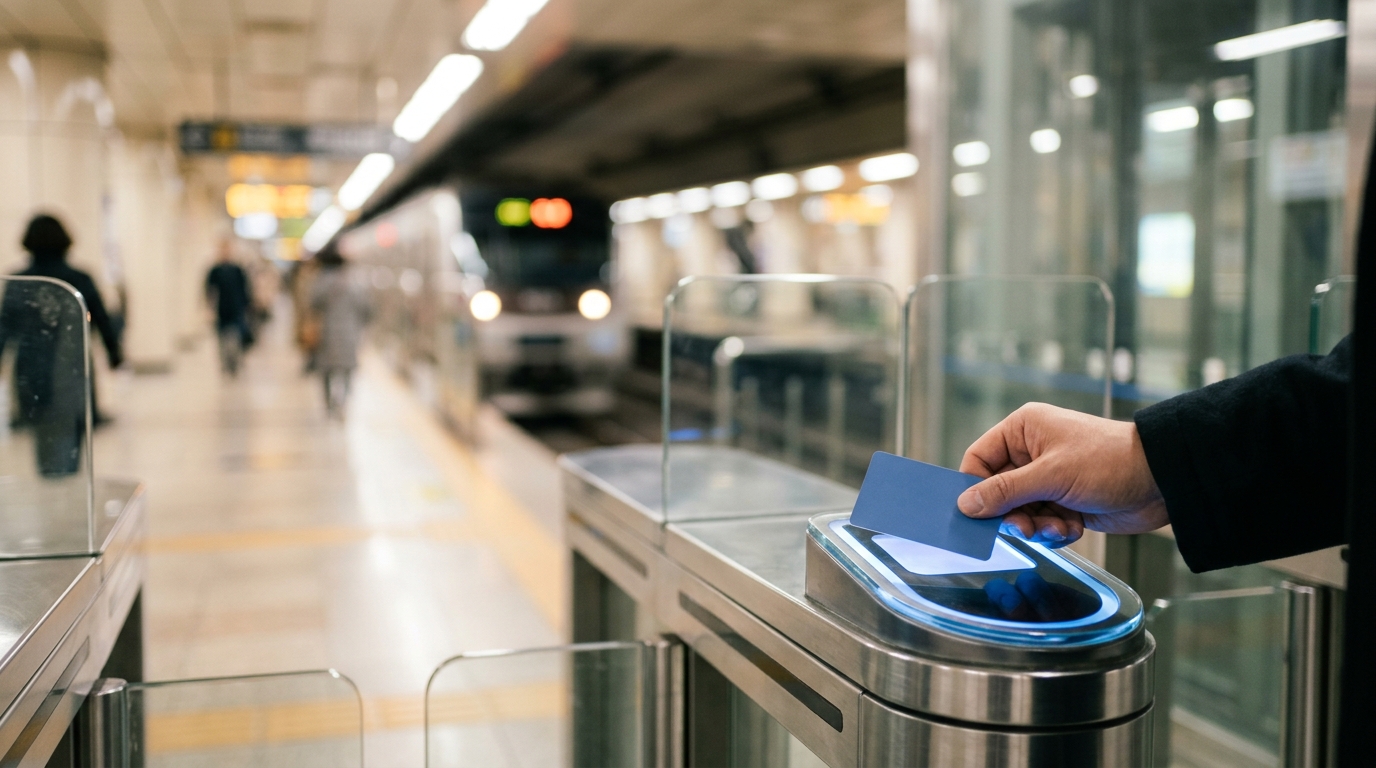
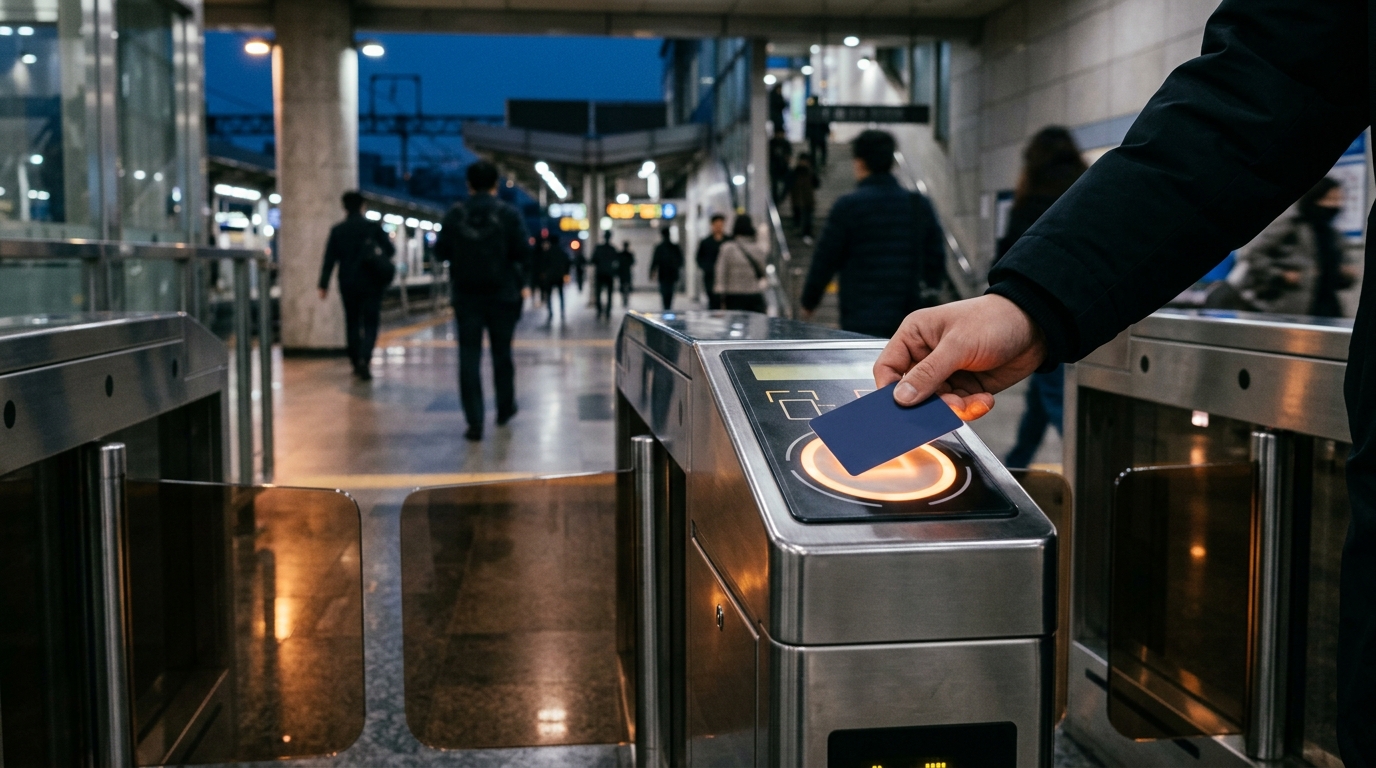
Short-Term Climate Card Seoul: Unlimited Transit Pass Guide
Key takeaways
The Short-Term Climate Card Seoul gives international travelers unlimited transit rides across Seoul subways and buses for 1 to 7 days, starting at ₩5,000 daily. Foreign credit card top-ups are supported across Lines 1–8 as of 2026. While cost-effective for active sightseeing, riders should remember to tap out at every exit for system tracking, though short-term passes are exempt from missed tap-out penalties.
Seoul's public transit network makes getting around South Korea's capital exceptionally easy, but tapping a pay-as-you-go card for every single trip adds up quickly. For short-term international visitors, the Short-Term Climate Card Seoul (기후동행카드) offers flat-rate, unlimited rides on subways and buses across the city. If you plan to take three or more subway or bus rides a day, the Short-Term Climate Card Seoul almost always saves you money compared to standard T-money fare cards. Knowing how to purchase, top up, and use this tourist pass—including where foreign credit cards are accepted and which lines fall outside coverage—will help you travel without unexpected costs or gate delays.
What Is the Short-Term Climate Card Seoul? (Overview & Rules)
The Short-Term Climate Card Seoul is an unlimited transit pass created by the Seoul Metropolitan Government specifically for foreign tourists and temporary visitors. It covers Seoul subway lines, city buses, and local village buses for consecutive durations ranging from 1 to 7 days.
While local 30-day resident passes were restructured between August and September 2026, short-term tourist passes remain fully available to foreign travelers. You buy a blank physical card for a non-refundable ₩3,000 fee at station customer service centers or convenience stores, then select and load your pass duration at station ticket kiosks.
Timing is everything when activating your pass. Unlike standard 24-hour rolling passes, all Climate Card passes operate on a fixed daily calendar system that resets every morning at 04:00 AM. Activating a 1-Day pass at 8:00 PM on Friday means it will expire at 04:00 AM on Saturday morning—not 8:00 PM Saturday. To get the maximum value, top up or activate your card first thing in the morning.
| Pass Duration | Total Price (KRW) | Daily Equivalent Cost (KRW) | Recommended Tourist Profile |
|---|---|---|---|
| 1-Day Pass | ₩5,000 | ₩5,000 | Layover visitors & 1-day city sightseers |
| 2-Day Pass | ₩8,000 | ₩4,000 | Weekend getaway travelers |
| 3-Day Pass | ₩10,000 | ₩3,333 | Short trip / 3-day itinerary visitors |
| 5-Day Pass | ₩15,000 | ₩3,000 | Standard vacation tourists |
| 7-Day Pass | ₩20,000 | ₩2,857 | Long-stay travelers exploring multiple districts |
Climate Card vs. T-money: Which Pass Saves You Money?
Deciding between standard T-money and the Short-Term Climate Card comes down to your daily trip count. Standard subway rides in Seoul start at ₩1,500 with a rechargeable card, while city buses cost between ₩1,200 and ₩1,500 depending on the line.
At a baseline fare of ₩1,500 per ride, a ₩10,000 3-Day pass breaks even after 7 total subway trips over three days (about 2.3 rides per day). With a ₩20,000 7-Day pass, you reach break-even at 14 rides total (2 rides per day).
| Transit Card Type | Card Purchase Price | Fare Structure | Best Suited For |
|---|---|---|---|
| Short-Term Climate Card | ₩3,000 (Non-refundable) | Unlimited fixed daily rates (₩5,000 for 1 day, up to ₩20,000 for 7 days) | Active tourists taking 3+ rides daily within Seoul boundaries |
| Standard T-money Card | ₩3,000–₩5,000 (Non-refundable) | Pay-per-ride (Base subway fare ₩1,500 + distance surcharges) | Casual travelers taking 1–2 rides per day or traveling frequently out-of-province |
| Korea Tour Card | ₩4,000 (Non-refundable) | Pay-per-ride + merchant discount perks | Visitors seeking shopping/attraction discounts who travel light |
For sightseers staying within city limits and hitting multiple attractions each day, the Climate Card offers predictable costs and saves you from calculating distance surcharges across long rides.
Where to Buy & How to Recharge (With Foreign Card Support)
International visitors without Korean bank accounts or local mobile registration will need the physical card. You can pick one up for ₩3,000 cash at Seoul Metro customer service desks (Lines 1–8) or at major convenience stores (GS25, CU, 7-Eleven, Emart24) near subway stations.
Loading transit passes used to require Korean cash, but recent updates changed that setup. Official updates from the Seoul Metropolitan Government and T-money Official Service confirm that as of March 17, 2026, foreign Visa and Mastercard cards are accepted at updated kiosks across 273 stations on Lines 1 through 8. This means visitors no longer need to locate an ATM just to top up their transit passes.
Coverage Map & Line Exclusions (Avoiding Gate Traps)
The Climate Card covers vast areas of Seoul, but keeping track of strict boundaries will keep you from getting stuck at subway gates.
The pass fully covers Seoul Metro Lines 1 through 9, the Ui-Sinseol LRT, Sillim LRT, Gyeongui-Jungang Line (within Seoul), Suin-Bundang Line (within Seoul), and Gyeongchun Line (within Seoul). It also includes all Seoul city buses (blue and green) and local neighborhood (maeul) buses.
You can use the Climate Card to ride from central Seoul and exit at Incheon Airport, but you cannot board or start a journey at Incheon Airport using this pass. When arriving at Incheon Airport, travelers should purchase a single-journey AREX train ticket or use a standard T-money card to travel into central Seoul, then activate their Climate Card at a Seoul Metro station. Route details and coverage updates are regularly documented on Lacha Korea Guide and general international travel portals like Klook Travel Guide.
Essential Etiquette & Rules for Seoul Public Transit
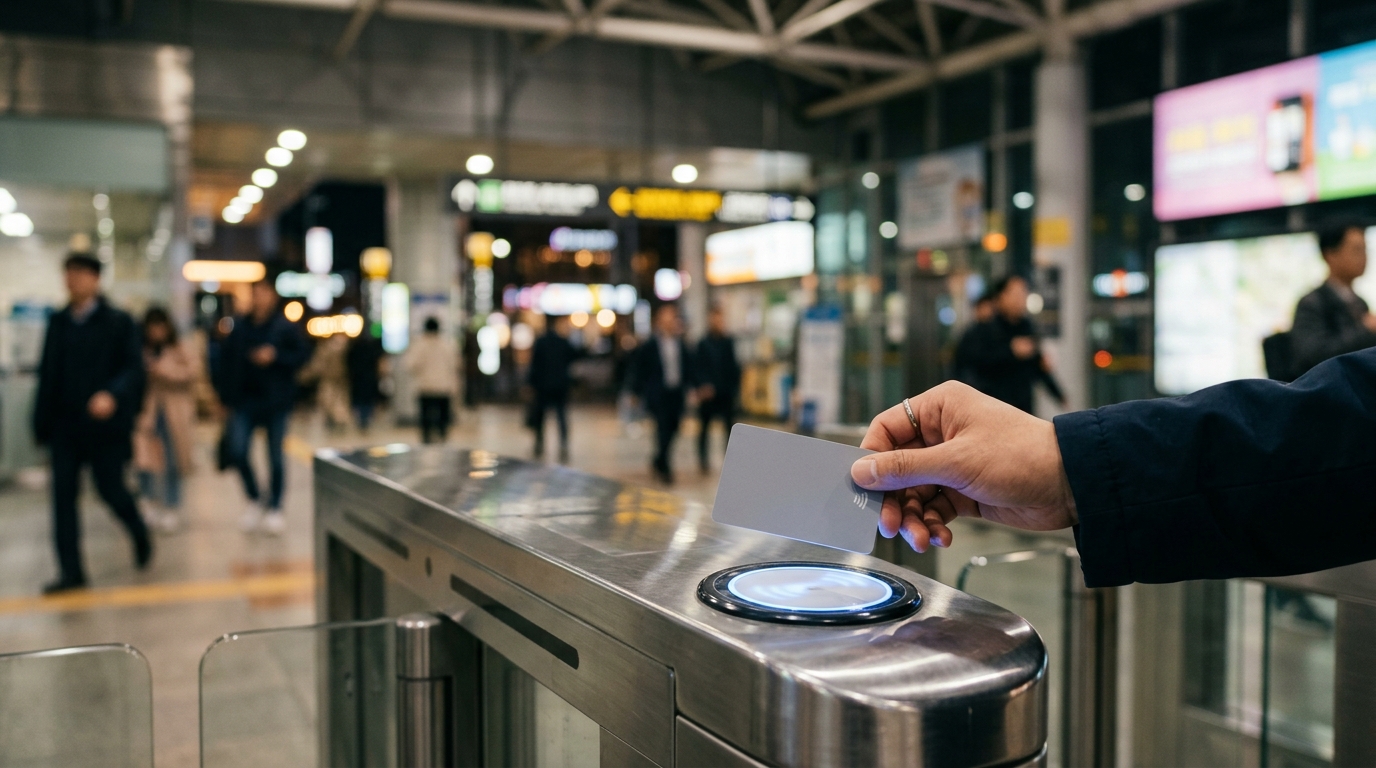
Seoul's transit system is quiet, clean, and runs smoothly, provided riders follow local rules and technical requirements. The single most important rule is always tapping off when exiting subways and buses.
Unlike resident passes, short-term tourist passes are exempt from the 24-hour suspension penalty for missed tap-outs, though tapping out is still required for system tracking. Even if you forget to tap out when exiting, short-term passes will not trigger a 24-hour service suspension, allowing you to continue using your pass normally.
Following standard passenger etiquette ensures a comfortable ride for everyone:
- Keep noise low: Avoid loud phone calls or speakerphones in subways and buses.
- Respect priority seating: Pink seats are for pregnant passengers (leave them open even on crowded trains). Yellow and blue corner seats are reserved for elderly and disabled riders.
- No open food or drinks: City buses prohibit unsealed beverages (like takeout coffee without sealed lids) and open snacks.
- Queue in line: Wait behind the floor markers on subway platforms and allow passengers to exit before boarding.
Frequently asked questions
Q. Can I buy the Climate Card at Incheon Airport and take the train into Seoul?
You can buy the physical card at airport convenience stores, but you cannot board the train or AREX at Incheon Airport using the Climate Card pass. However, exiting at Incheon Airport when traveling from central Seoul is allowed.
Q. Does the Short-Term Climate Card work on the Shinbundang Line or Red Buses?
No, the Climate Card excludes the Shinbundang Line, GTX, Red Express regional buses, and Airport Limousine buses because they operate outside Seoul's municipal fare structure.
Q. Can I use my foreign Visa or Mastercard to recharge the Climate Card at stations?
Yes, foreign Visa and Mastercard credit and debit card payments are supported at updated kiosks across 273 stations on Seoul Metro Lines 1 through 8 as of March 2026.
Q. Does the tourist short-term Climate Card include Ttareungi public bicycles?
No, short-term tourist passes (1 to 7 days) exclude Ttareungi public bicycle access. Bicycle integration is reserved for specific 30-day resident passes.
Q. Can I share one Short-Term Climate Card with my travel companion?
No, every traveler must tap their own individual Climate Card. Sharing a single pass across multiple passengers at gates or bus doors is not permitted.