What Is Halmaenial? 5 Modern Takes on Korean Halmaenial Desserts
Key takeaways
Halmaenial reflects a trend in South Korea where young consumers embrace traditional grandmother-style flavors alongside modern cafe concepts. From honey-glazed Yakgwa paired with ice cream to Gaeseong Juak rice donuts and roasted grain beverages, retro treats have taken hold across Seoul. This guide covers top retro sweets, where to sample them, and practical travel guidelines.
Crumble a sticky, honey-glazed royal pastry over cold vanilla ice cream, and the syrup quickly sets into a crunchy shell. This balance between classic baking and contemporary cafe culture drives Korean Halmaenial desserts, a movement that has shifted bakery menus and cafe counters across Seoul.
The word Halmaenial combines halmae—a regional Korean word for grandmother—with millennial. It refers to younger generations adopting traditional, retro flavors that once belonged to ancestral rituals or older pantries. Young food lovers now line up outside city bakeries for fried pastries, drink roasted grain lattes, and share dessert pairings online. Exploring this shift gives a clear look into how modern Korean food culture adapts its culinary roots.
What Is the Halmaenial Craze in South Korea?
The Halmaenial movement represents a shift where young consumers in South Korea embrace retro foods, earthy flavors, and classic presentation styles. Rather than dismissing heritage sweets as old-fashioned, younger buyers celebrate them as Jeontong-Hip (hip tradition). They share clean dessert photos on social channels and choose snacks with balanced, nutty profiles.
Several elements fueled this movement between 2020 and 2026. Urban living prompted interest in gentle, satisfying snacks using ingredients like black sesame (heukimja, 흑임자), mugwort (ssuk, 쑥), and sweet red bean (pat, 팥) instead of heavy buttercreams. According to coverage on Korean traditional food trends, classic wrapping details, rustic ceramics, and patterned pastry molds drove strong visual interest online. Starting around 2020 and 2021, the trend expanded into wide-scale dessert adaptations from 2022 to 2024 across Seoul's specialty shops.
Pop culture continues to keep these classic flavors visible. In February 2024, singer Bibi’s track Bam Yang Gang (chestnut red bean jelly) sparked a wave of interest, pushing traditional jelly sales higher across Seoul convenience stores overnight. Large food manufacturers followed with retro fusion lines. Between late 2025 and 2026, Lotte Wellfood's collaboration ice cream 'Space Tteokzip Black Sesame Injeolmi' sold 500,000 units within five days of launch.
What Are the 5 Modern Takes on Korean Halmaenial Desserts?
Five primary adaptations highlight this trend: ice-cream-topped Yakgwa, glazed Gaeseong Juak, black sesame and mugwort drinks, Injeolmi rice cake waffles, and updated Yanggang red bean jellies. Each item adjusts classic preparation methods with distinct texture combinations and updated presentation.
1. Modernized Yakgwa (약과)
Historically served at holiday banquets, Yakgwa is a fried wheat pastry soaked in grain syrup (jocheong), ginger, and honey. In Korean, yak means medicine, reflecting early beliefs in the restorative qualities of honey and ginger. Today, pastry makers have refreshed the recipe. The high demand surrounding these pastries generated the term "Yak-keting"—a blend of Yakgwa and ticketing—describing fast online sellouts and early morning store queues for popular batches from artisanal makers such as Jangin Yakgwa, Cookienehouse, and Half Pound, along with outlets like Olive Young.
Modern menus feature Yakgwa topped with cream cheese, filled with chocolate ganache, or crushed warm over vanilla ice cream. The temperature shift between warm pastry syrup and cold ice cream creates a firm, crisp shell. Readers can find background details on the pastry's history in this guide to Yakgwa's revival.
2. Gaeseong Juak (개성주악)
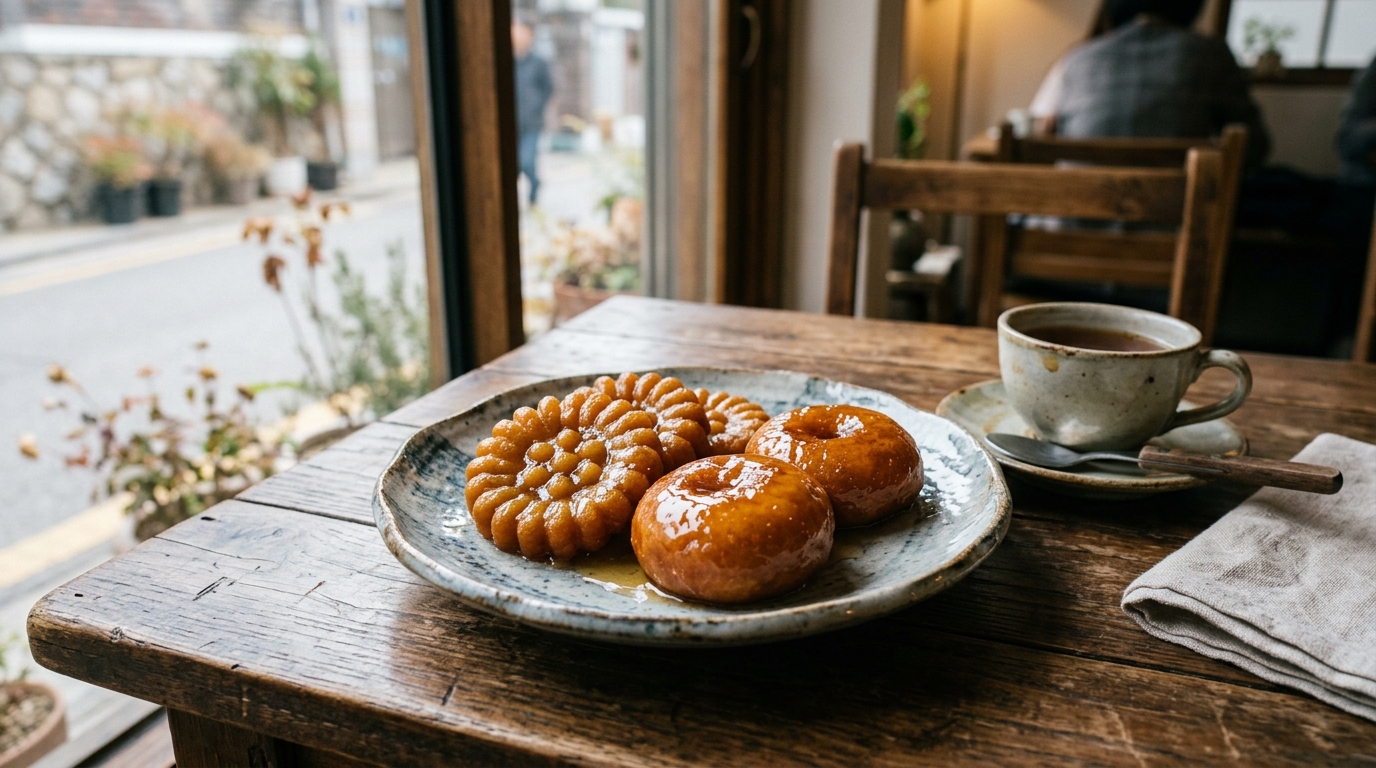
Originating from the historic city of Gaeseong, Gaeseong Juak is a small dough ball made from glutinous rice flour and makgeolli (unfiltered rice wine). Once fried golden, it goes straight into ginger honey syrup. The process creates a smooth exterior that gives way to ginger syrup upon biting.
Seoul dessert shops now garnish Gaeseong Juak with fresh figs, strawberries, candied walnuts, gold leaf, or Earl Grey cream. This turns a simple regional snack into a gift item priced between ₩3,000 and ₩4,500 each.
3. Black Sesame (Heukimja) & Mugwort (Ssuk) Drinks and Cakes
Toasted black sesame (heukimja) and Korean mugwort (ssuk) were long viewed as standard cooking ingredients associated with older tastes. Baristas now blend black sesame paste into thick cream layered over espresso, or steam ground mugwort into herbal lattes.
Bakers also add these powders to burnt cheesecakes, macarons, and roll cakes, producing a subtle bittersweet flavor profile that offers an alternative to sweeter Western pastries.
4. Injeolmi (인절미) Waffles and Croffles
Injeolmi is a chewy rice cake coated in roasted soybean powder (konggaru). Cafes press soft injeolmi pieces in waffle irons until the exterior turns crisp while the center stays pliable. Drizzled with condensed milk or honey and finished with sliced almonds, Injeolmi waffles and Injeolmi croffles remain popular across Seoul entertainment hubs, generally running between ₩7,000 and ₩10,000 per plate.
5. Yanggang (양갱): Reimagined Red Bean and Chestnut Jellies
Yanggang is a firm jelly prepared with red bean paste (pat), agar, and sugar. Previously considered a simple market staple, specialty confectioners now set Yanggang in clear geometric shapes flavored with green tea, citrus (yuja), chestnut, or dried persimmon. Wrapped in textured hanji paper, these updated jellies serve as gifts and travel keepsakes.
The table below details ingredients, textures, price ranges, and shelf life for popular modern retro items.
| Dessert Name | Primary Ingredients | Texture Profile | Average Price (KRW) | Freshness Window |
|---|---|---|---|---|
| Yakgwa (약과) | Wheat flour, honey, grain syrup, ginger | Dense, chewy, sticky, sweet | ₩2,500 – ₩4,000 per piece | 1 to 2 weeks (Room temp) |
| Gaeseong Juak (개성주악) | Glutinous rice flour, makgeolli, honey syrup | Crispy skin, juicy, sticky interior | ₩3,000 – ₩4,500 per piece | 24 hours max (Best fresh) |
| Black Sesame Latte | Espresso, milk, toasted black sesame cream | Thick, velvety, nutty, bittersweet | ₩6,000 – ₩7,500 per drink | Consume immediately |
| Injeolmi Waffle | Glutinous rice cake, roasted soybean powder | Crispy exterior, stretchy & gooey inside | ₩7,000 – ₩10,000 per plate | Consume immediately |
| Artisanal Yanggang | Sweet red bean paste, agar, chestnut, yuja | Firm, smooth, silky jelly | ₩2,500 – ₩5,000 per bar | 2 to 4 weeks (Refrigerated) |
What Is the Difference Between Yakgwa and Gaeseong Juak?
Although both items are deep-fried and syrup-soaked, Yakgwa and Gaeseong Juak differ in their primary flours, physical textures, dough preparation, and shelf stability.
Yakgwa uses wheat flour combined with sesame oil, honey, and rice wine. The dough is pressed into decorative molds before slow frying. This forms a layered structure that absorbs syrup well and remains stable at room temperature for up to two weeks. Gaeseong Juak relies on glutinous rice flour mixed with makgeolli. The dough balls expand in the fryer, forming a thin outer shell over a tender interior filled with ginger syrup. These are best eaten within 24 hours so the skin stays crisp.
The summary table compares key characteristics for both items.
| Feature | Yakgwa (약과) | Gaeseong Juak (개성주악) |
|---|---|---|
| Main Flour | Wheat flour (jo-mil) | Glutinous rice flour (chap-ssal) |
| Leavening / Liquid Agent | Sesame oil, honey, rice wine | Makgeolli (unfiltered rice wine) |
| Biting Experience | Dense, multi-layered, fudge-like chew | Crispy outer shell with juicy syrup burst |
| Shelf Life | 1 to 2 weeks at room temperature | 24 hours maximum (eaten fresh) |
| Ideal Serving Method | Chilled, room temp, or crushed on ice cream | Freshly glazed at room temperature |
| Average Price | ₩2,500 – ₩4,000 per piece | ₩3,000 – ₩4,500 per piece |
Where Are the Top Spots in Seoul to Taste Premium Halmaenial Sweets?
Visitors can sample retro desserts in boutique gift shops, historic districts, and local convenience stores across Seoul. Districts like Hannam-dong, Seongsu-dong, Ikseon-dong, and Anguk-dong feature noticeable concentrations of specialty dessert cafes.
In Hannam-dong, Golden Piece specializes in gift-packaged Yakgwa. Their retail space offers gift tins filled with vanilla, chocolate, green tea, and sesame variations. Single pieces cost around ₩3,500 to ₩4,500, while themed tins range from ₩23,000 to ₩60,000.
For a traditional setting, cafes in Anguk-dong or Ikseon-dong serve fresh Gaeseong Juak alongside teas in renovated hanok buildings. Travelers looking for low-cost options can stop at local CU, GS25, or Seven-Eleven stores for packaged red bean jellies, soybean ice cream, and injeolmi snacks priced between ₩1,500 and ₩3,500.
The following table outlines notable locations in Seoul for retro desserts.
| Location / Shop | Neighborhood | Best Known For | Price Range (KRW) | Travel Tip |
|---|---|---|---|---|
| Golden Piece | Hannam-dong, Yongsan-gu | Luxury packaged Yakgwa gift tins | ₩23,000 – ₩60,000 | Arrive early; gift boxes often sell out by late afternoon. |
| Anguk Hanok Cafe District | Anguk-dong, Jongno-gu | Gaeseong Juak & hand-drip black sesame tea | ₩6,000 – ₩12,000 | Located near Bukchon Hanok Village; line up before 1:00 PM. |
| Seongsu Boutique Bakeries | Seongsu-dong, Seongdong-gu | Injeolmi croffles & cream cheese Yakgwa | ₩7,000 – ₩14,000 | Walkable from Seongsu Station (Line 2); very popular on weekends. |
| Seoul Convenience Stores | Nationwide (CU, GS25) | Packaged Yanggang, retro ice creams | ₩1,500 – ₩3,500 | Open 24/7; great for low-cost late-night snack sampling. |
How Can International Visitors Order, Queue, and Transport K-Desserts Home?
Popular bakeries in Seoul often rely on digital waiting tools. Knowing how local queues, cards, and packing rules work helps simplify the process.
Queuing and Reservations
Many high-demand bakeries use digital kiosks near their entrances. If a tablet is mounted outside, visitors need to log in to hold a place in line. While local lines usually require a Korean phone number, overseas travelers without one can register using the Catchtable Global app or ask store staff to enter an email address.
Payment and Foreign Cards
Seoul cafes generally take foreign credit cards like Visa and Mastercard. Travelers can also load funds onto tourist transit cards such as WOWPASS or NAMANE at airport kiosks, using them to pay on transport lines and at retail counters.
Luggage Rules and Shelf-Life Guidelines
When bringing edible souvenirs on flights, keep storage times and baggage rules in mind:
- Yakgwa: Well suited for travel. Standard honey pastries stay fresh at room temperature for 1 to 2 weeks and fit easily in carry-on or checked bags.
- Gaeseong Juak: Made with fresh rice flour and honey glaze. It is best eaten within 24 hours, as extended travel makes the outer layer soft.
- Fresh Rice Cakes (Tteok): Unpackaged Injeolmi firm up within 24 to 48 hours. For travel, commercial vacuum-sealed versions hold up better than fresh cafe portions.
Are Halmaenial Desserts Vegan, Vegetarian, or Gluten-Free?
Travelers with specific diets should verify ingredient lists, as wheat flour, honey, and dairy products feature heavily in both classic and modern options.
Standard Yakgwa recipes use wheat flour, so it is not gluten-free. Its glaze relies on honey (kkul) and grain syrup, making it suitable for lacto-ovo vegetarians but not strict vegans. Gaeseong Juak and Injeolmi rely primarily on glutinous rice flour (chap-ssal), which is naturally gluten-free, though shared equipment in kitchens remains a factor. Modern fusion variations frequently add butter, cream cheese, or milk. Yanggang red bean jelly is typically vegetarian and gluten-free, relying on plant-derived agar (hancheon) rather than animal gelatins.
The summary table highlights key dietary considerations for each item.
| Dessert | Vegetarian | Vegan | Gluten-Free | Key Ingredients / Considerations |
|---|---|---|---|---|
| Yakgwa | Yes | No | No | Wheat flour, sesame oil, honey, grain syrup |
| Gaeseong Juak | Yes | No | Naturally gluten-free flour | Glutinous rice flour, makgeolli, honey syrup |
| Injeolmi Waffle | Yes | Depends on topping | Naturally gluten-free flour | Glutinous rice cake, soybean powder; may contain dairy toppings |
| Artisanal Yanggang | Yes | Yes (if pure plant syrup used) | Yes | Sweet red bean paste, plant-derived agar-agar |
Frequently asked questions
Q. What does Halmaenial mean in Korean food culture?
Halmaenial joins halmae (a regional word for grandmother) with millennial. It refers to younger consumers enjoying retro traditional foods—like Yakgwa, red bean jelly, black sesame, and mugwort—served in modern cafe settings.
Q. What is the difference between Yakgwa and Gaeseong Juak?
Yakgwa is a wheat-flour pastry fried and soaked in honey and grain syrup, producing a dense interior. Gaeseong Juak is a deep-fried dough ball made from glutinous rice flour and makgeolli, featuring a crisp skin filled with ginger honey syrup.
Q. Can I bring Korean Yakgwa back home on an airplane?
Standard boxed or packaged Yakgwa lasts 1 to 2 weeks at room temperature and is generally permitted in carry-on and checked luggage under international food import rules.
Q. Do Seoul cafes accept foreign credit cards for buying retro desserts?
Yes, standard cafes and shops in Seoul accept major international credit cards like Visa and Mastercard, along with prepaid travel cards like WOWPASS.