Tourist Climate Card Seoul vs T-Money: Which Card Saves Money?
Key takeaways
The Seoul Tourist Climate Card offers unlimited rides for travelers making three or more transit trips daily in central Seoul. Pairing it with a standard T-Money card ensures complete coverage across all subway, bus, and regional transit lines.
Picking the right transit card in Seoul comes down to a quick calculation: how many times will you ride the metro or bus each day? If you take three or more trips daily inside the city, the Tourist Climate Card (기후동행카드) usually wins. If you travel light or plan to leave Seoul, the standard pay-as-you-go T-Money card (티머니) stays the practical pick.
Should You Get the Tourist Climate Card or T-Money in Seoul?
Get the Tourist Climate Card if you plan to take at least three metro or bus rides every day within Seoul. Choose T-Money if you make fewer trips or plan to visit cities outside Seoul.
The T-Money card has long served as South Korea's default transit payment method. To cater to short-term travelers, the Seoul Metropolitan Government introduced dedicated Tourist Climate Pass options in 1, 2, 3, 5, and 7-day durations. Although resident 30-day passes were phased out in September 2026, short-term tourist passes remain fully available. Visitors can buy them without a Korean phone number, residency status, or identity check.
| Feature | T-Money Card (티머니) | Tourist Climate Card (기후동행카드) |
|---|---|---|
| Payment Type | Pay-as-you-go fare | Fixed price unlimited pass |
| Card Purchase Fee | ₩2,500 – ₩4,000 | ₩3,000 |
| Pass Durations | N/A (Pay per ride) | 1, 2, 3, 5, or 7 days |
| Nationwide Coverage | All South Korea (Busan, Jeju, etc.) | Seoul city proper only |
| Base Adult Fare | ₩1,500 per ride | Unlimited within duration |
| Target Traveler | Casual riders, multi-city trips | Active sightseeing within Seoul |
What Is the Break-Even Math for the Tourist Climate Card Seoul?
A 1-day pass breaks even at four rides a day, while 3-day and 5-day passes require three rides per day to start saving money compared to T-Money.
Base adult subway and city bus fares in Seoul start at ₩1,500 with T-Money. The physical Tourist Climate Card costs ₩3,000 non-refundable, similar to the ₩2,500 to ₩4,000 card fee for T-Money. Once charged, the pass grants unlimited rides across participating Seoul subways and buses.
Transit data published by Trip Plan Korea shows that a 3-Day pass costing ₩10,000 works out to about ₩3,333 per day. Taking four subway rides in an afternoon (₩6,000 on T-Money) creates immediate savings. However, if your daily plan is just one round trip between your hotel and a sight (two rides total), T-Money is cheaper.
| Duration Option | Total Pass Cost | Daily Equivalent Cost | Break-Even Rides Required |
|---|---|---|---|
| 1-Day Pass | ₩5,000 | ₩5,000 per day | 4 rides per day |
| 2-Day Pass | ₩8,000 | ₩4,000 per day | 3 rides per day |
| 3-Day Pass | ₩10,000 | ~₩3,333 per day | 3 rides per day |
| 5-Day Pass | ₩15,000 | ₩3,000 per day | 2 to 3 rides per day |
| 7-Day Pass | ₩20,000 | ~₩2,857 per day | 2 rides per day |
Where Does the Climate Card Work and Where Will You Get Trapped?
The Climate Card works on Seoul Subway Lines 1 through 9, local Seoul city buses, and public bikes (Ttareungyi). It excludes express trains, red intercity buses, and regional lines like the Sinbundang Line.
Knowing network boundaries prevents turnstile errors. On the Airport Railroad Express (AREX), you can exit at Incheon International Airport if you boarded an All-Stop train in Seoul using the Climate Card. However, you cannot tap in at Incheon Airport bound for Seoul with it. The high-speed direct AREX train is completely excluded.
| Transit Type | Climate Card Included? | T-Money Included? |
|---|---|---|
| Seoul Metro Lines 1–9 | Yes | Yes |
| Seoul Blue & Green Buses | Yes | Yes |
| Sinbundang Line (신분당선) | No | Yes |
| GTX & Red Intercity Buses | No | Yes |
| AREX All-Stop (To Airport) | Yes (Exit only at Incheon) | Yes |
| AREX Express Direct Train | No | No (Requires special seat ticket) |
| Transit Outside Seoul | No (Busan, Gyeonggi, Jeju) | Yes |
How Does Calendar-Day Validity Compare to a 24-Hour Timer?
Tourist Climate Cards run on service calendar days that reset at 3:59 AM every night, not on a 24-hour clock from activation.
If you first tap a 1-day pass at 8:00 PM on Tuesday, it expires at 3:59 AM on Wednesday. That gives you 8 hours of use rather than 24. To get maximum value, activate new passes during your first morning trip.
Where to Buy and How to Top Up Using Foreign Credit Cards?
Buy physical cards for ₩3,000 cash at convenience stores (CU, GS25, Seven-Eleven) or subway customer service centers, then top them up at station kiosks using cash or foreign credit cards.
Official details reported by Korea JoongAng Daily state that as of March 17, 2026, travelers can recharge short-term passes at Seoul Subway Lines 1–8 kiosks using overseas Visa or Mastercard cards (subject to a ~3.7% fee). Korean Won cash remains accepted at all kiosks without fees.
Why Do Overseas Visitors Need a Dual-Card Strategy?
Carrying an unlimited Tourist Climate Card alongside a T-Money card loaded with a small cash reserve keeps your travel smooth when crossing boundary lines.
Analysis from DlyMake Guide notes that carrying both cards eliminates gate hassle. If a turnstile blocks your Climate Card on a border line, tapping T-Money lets you keep moving immediately.
What Are the Critical Tap-Out Rules and Bus Etiquette?
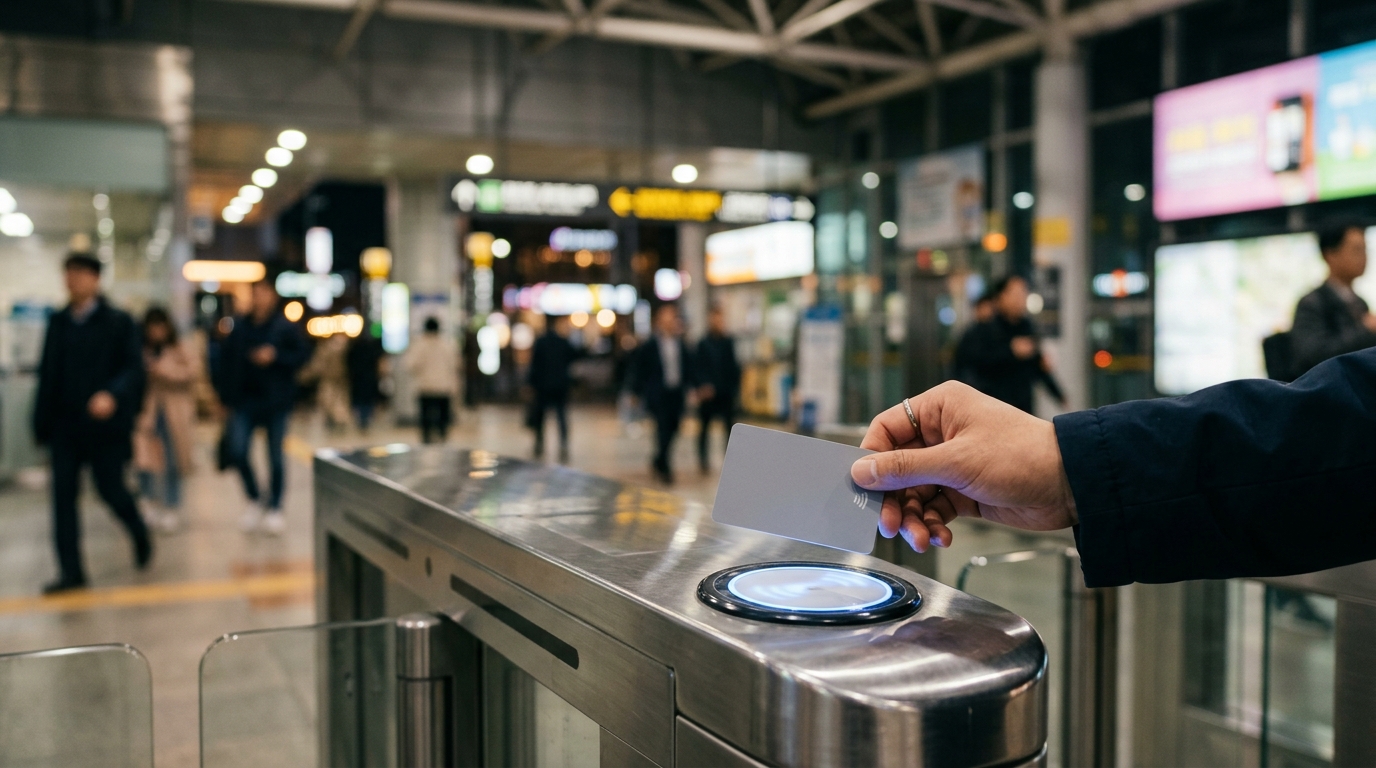
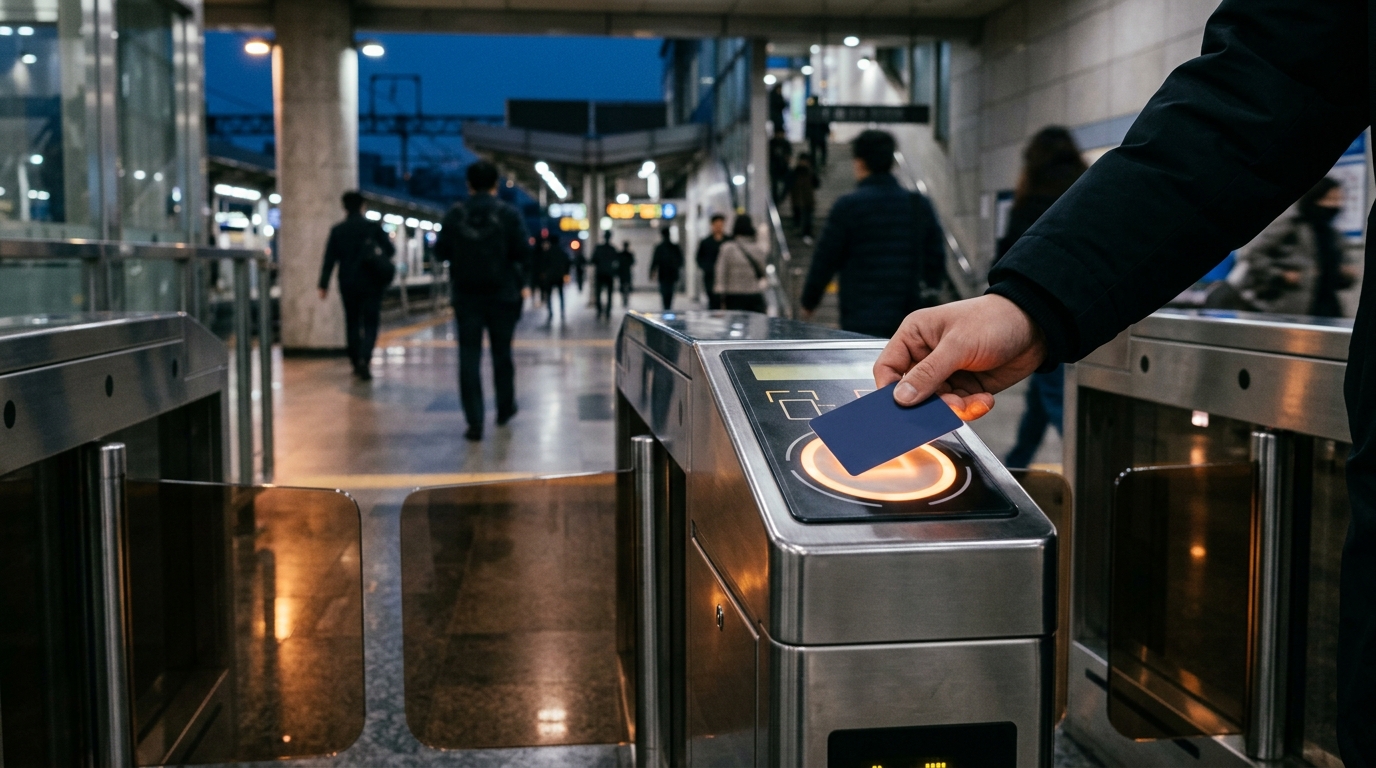
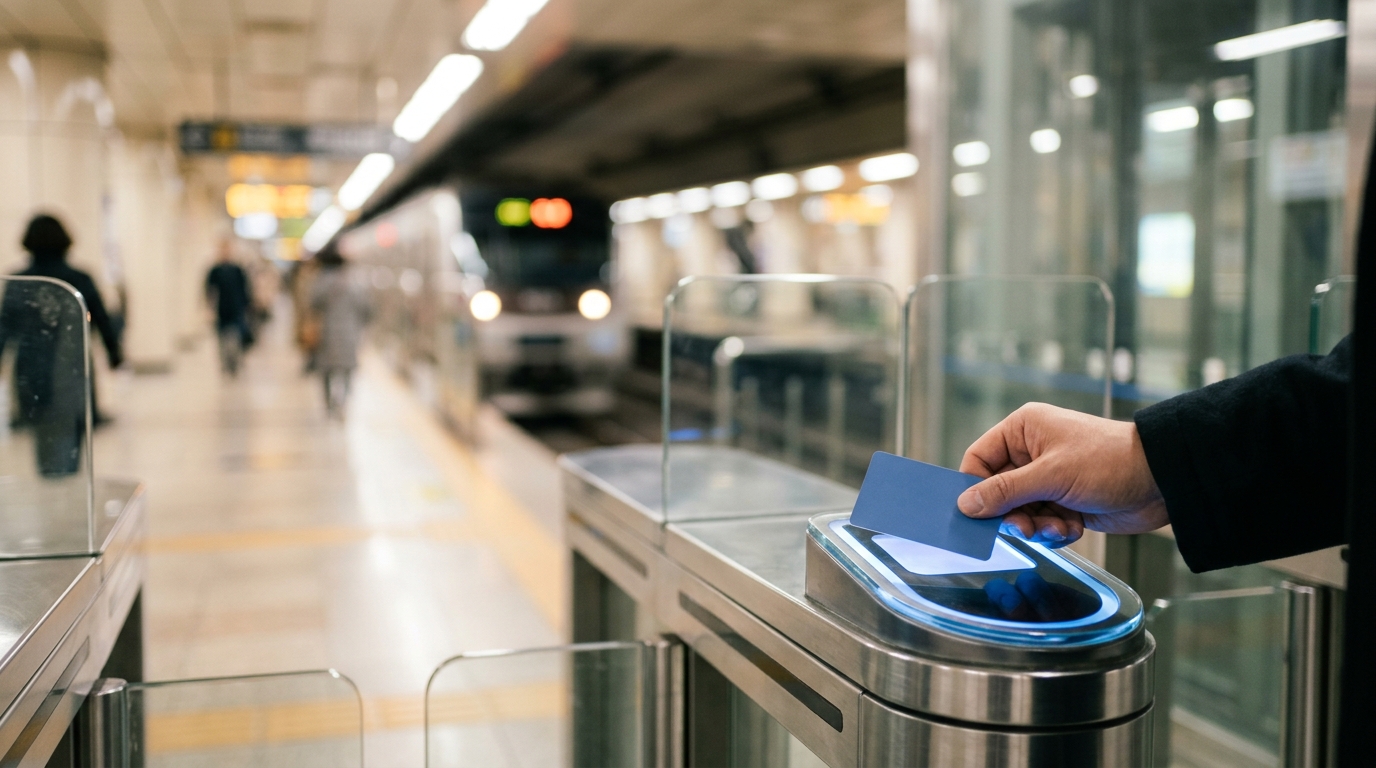
You must tap your card upon both entering and exiting subways and buses, even when using an unlimited pass. Skipping a tap-out on a bus triggers a penalty and blocks pass activation on your next ride.
When boarding a bus, tap near the driver door. When getting off, tap near the exit door. On Climate Cards, failing to tap out twice within a pass cycle results in a 24-hour card suspension from the time of violation.
Can Two People Share a Single Climate Card or T-Money Card?
No, each passenger must carry and tap their own individual card when passing through subway gates or boarding buses.
While T-Money allows multi-person fare payments on certain city buses by notifying the driver beforehand, subway turnstiles require one card per person. The Tourist Climate Card relies on automated gate tracking and will trigger an error if tapped back-to-back.
Does the Tourist Climate Card Work in Busan, Nami Island, or Outside Seoul?
No, the Tourist Climate Card covers only local transit networks inside Seoul's municipal boundaries. It does not work in Busan, Jeju, or on regional routes to places like Nami Island.
When traveling outside Seoul—such as day trips to Suwon or regional travel to Busan, Gyeongju, or Jeju—use a T-Money card or single-ride fares. T-Money operates nationwide across South Korea.
Frequently asked questions
Q. Does the Tourist Climate Card work from Incheon Airport to Myeongdong?
You can use the Climate Card to exit at Incheon Airport when traveling on the AREX All-Stop train from Seoul, but you cannot use it to board the AREX train at Incheon Airport when heading into the city. Use T-Money for your initial trip from the airport into Seoul.
Q. Can two travelers share one Tourist Climate Card or T-Money card?
No. Every passenger must tap their own individual Climate Card or T-Money card when entering and exiting subway turnstiles and buses.
Q. Can I use the Tourist Climate Card in Busan or Jeju?
No, the Climate Card is strictly limited to transit networks within the Seoul municipal boundary. For transit in Busan, Jeju, or Gyeongju, use a T-Money card.
Q. Does the Climate Card cover the Sinbundang Line?
No, the Sinbundang Line (a privately operated subway line connecting Gangnam to southern suburbs) is excluded from the Climate Card network. Use T-Money when riding this line.