Seoul Climate Card Tourist Pass: Is Unlimited Transit Worth It?
Key takeaways
The Seoul Climate Card Tourist Pass provides visitors unlimited travel on Seoul subways, city buses, and public bikes for 1 to 7 days starting at ₩5,000. Non-residents must purchase a physical ₩3,000 card, but reloads can be completed at subway kiosks using foreign credit cards or cash. It offers strong value for itineraries with 3 or more daily trips inside Seoul, though regional routes and airport departures are excluded.
Getting around Seoul on subway or bus is quick and inexpensive, but me choosing the right transit pass can streamline your travel budget. The Seoul Climate Card Tourist Pass gives international visitors unlimited rides across Seoul's subways, city buses, and public bicycles for durations between 1 and 7 days. While long-term 30-day commuter options for residents shifted to separate municipal programs in late 2026, short-term tourist passes remain fully active.
If your plans involve frequent hops across town from Myeongdong to Hongdae, knowing how the pass operates and where its pricing breaks even will prevent unexpected expenses.
What Is the Seoul Climate Card Tourist Pass and What Changed in 2026?
The Seoul Climate Card Tourist Pass (기후동행카드 관광패스) is a flat-rate transit pass built for short-stay visitors in the Seoul metropolitan area. Created by the Seoul Metropolitan Government, it provides unlimited rides on eligible subway lines, Seoul city buses, and Ttareungyi (따릉이) public bicycles.
While the domestic 30-day resident pass transitioned into separate municipal discount programs as of October 1, 2026, short-term tourist passes (1, 2, 3, 5, and 7-day tiers) continue operating for international visitors. In addition, around 440 upgraded ticketing kiosks with black frames were installed across Seoul Metro stations as of March 17, 2026. These kiosks let non-residents buy and reload passes using overseas Visa and Mastercard credit cards (subject to a 3.7% service fee), removing the long-standing requirement to carry cash for reloads according to T-Money official guides.
Climate Card vs. T-Money vs. WOWPASS: Which Transit Card Should You Choose?
Your choice among Seoul's transit cards depends mainly on whether your daily travel stays inside Seoul or extends into nearby regions like Gyeonggi-do or Incheon. Standard T-Money is a pay-as-you-go card accepted across Korea. WOWPASS combines a currency exchange debit card with an embedded T-Money chip. The Climate Card, meanwhile, functions strictly as a flat-rate time pass.
Here is how the three main options compare as of October 2026:
| Feature | Seoul Climate Card Tourist Pass | T-Money Card | WOWPASS |
|---|---|---|---|
| Best For | Heavy daily travel within Seoul | Multi-city Korea trips & light transit | Shopping, FX cash exchange & transit |
| Pricing Model | Flat-rate unlimited daily pass | Pay-as-you-go per trip | Pay-as-you-go per trip |
| Initial Card Fee | ₩3,000 (Non-refundable physical card) | ₩3,000 – ₩5,000 (Non-refundable) | ₩5,000 (Card issuance fee) |
| Pass Durations | 1, 2, 3, 5, or 7 Calendar Days | No expiration | No expiration |
| Coverage Area | Seoul Metro subway & Seoul city buses | Nationwide (Subways, buses, taxis) | Nationwide (Subways, buses, taxis) |
| Incheon Airport | Excluded (Tap-out only on AREX All-Stop) | Covered (AREX All-Stop & express buses) | Covered (AREX All-Stop & express buses) |
| Reload Method | Cash or foreign credit card at station kiosks | Cash only at stations & convenience stores | Foreign currency cash or mobile app |
The Break-Even Math: Is an Unlimited Pass Worth Your Money?
To see if the Seoul Climate Card Tourist Pass makes financial sense, compare your expected daily rides against base transit rates. Following mid-2025 fare adjustments, Seoul subway base fares start at ₩1,550 for trips up to 10 km, while Seoul city buses cost ₩1,500.
Because the physical card requires a non-refundable ₩3,000 fee, your overall cost equals that card fee plus the chosen pass price. The table below outlines the break-even math comparing pass costs to single-ride fares, based on travel breakdowns from The Korea Tips:
| Pass Duration | Pass Price (KRW) | Daily Equivalent Fare | Trips Needed Per Day to Break Even |
|---|---|---|---|
| 1-Day Pass | ₩5,000 | ₩5,000 / day | 4 trips / day |
| 2-Day Pass | ₩8,000 | ₩4,000 / day | 3 trips / day |
| 3-Day Pass | ₩10,000 | ₩3,333 / day | 3 trips / day |
| 5-Day Pass | ₩15,000 | ₩3,000 / day | 2 to 3 trips / day |
| 7-Day Pass | ₩20,000 | ₩2,857 / day | 2 trips / day |
If your itinerary spans multiple neighborhoods each day—for instance, taking the subway from Insadong to Seongsu for shopping, heading to Gangnam for dinner, and returning to Hongdae late at night—you easily hit 4 or 5 rides. In that scenario, the 3-day, 5-day, or 7-day Climate Card delivers clear savings.
Where Does It Work? Covered Lines and Rules Tourists Always Miss
The Climate Card covers a broad network, but its geographic boundaries are firm. Knowing where the card works—and where it stops working—prevents unexpected gates locking on you.
Covered Transit Networks
- Seoul Subway Lines 1 through 9: All stations within Seoul boundaries.
- Designated Seoul Urban Lines: Gyeongui-Jungang Line, Suin-Bundang Line, Gyeongchun Line, Ui-Sinseol Line, Sillim Line, and the AREX All-Stop train (Seoul stations only).
- Seoul City Buses: Blue urban buses, green local buses, village buses (maeul bus), and night buses (Olbaemi bus).
- Ttareungyi Bicycles: Unlimited 1-hour rentals per session (requires card registration in the Ttareungyi app).
Excluded Lines & Boundary Traps
- Shinbundang Line (신분당선): Privately operated; completely excluded.
- Intercity & Express Buses: Red express buses and regional buses going into Gyeonggi-do are excluded.
- Suburban Stations Outside Seoul: Tapping out at stations outside Seoul city limits (such as Seongnam, Suwon, or Goyang) is not permitted on standard lines.
If you board inside Seoul and try to exit at an uncovered station beyond the boundary, the turnstile will flash an error code and stay locked. Station staff will ask you to pay the full cash fare from your starting station.
Step-by-Step Guide: How to Buy and Reload Using Foreign Credit Cards
Mobile Climate Cards require a Korean Android device linked to a Korean resident identification number and local bank account. Because of this requirement, international tourists and all iPhone users need to use a physical card.
Common Tourist Pitfalls & Etiquette for Riding the Seoul Subway
To keep your transit smooth through Seoul's subway system, keep these rules and local customs in mind:
- Calendar-Day Expiration: Validity follows service calendar days rather than a 24-hour clock. A 1-Day Pass activated at 3:00 PM expires at 04:00 AM the next morning, not 3:00 PM the following day.
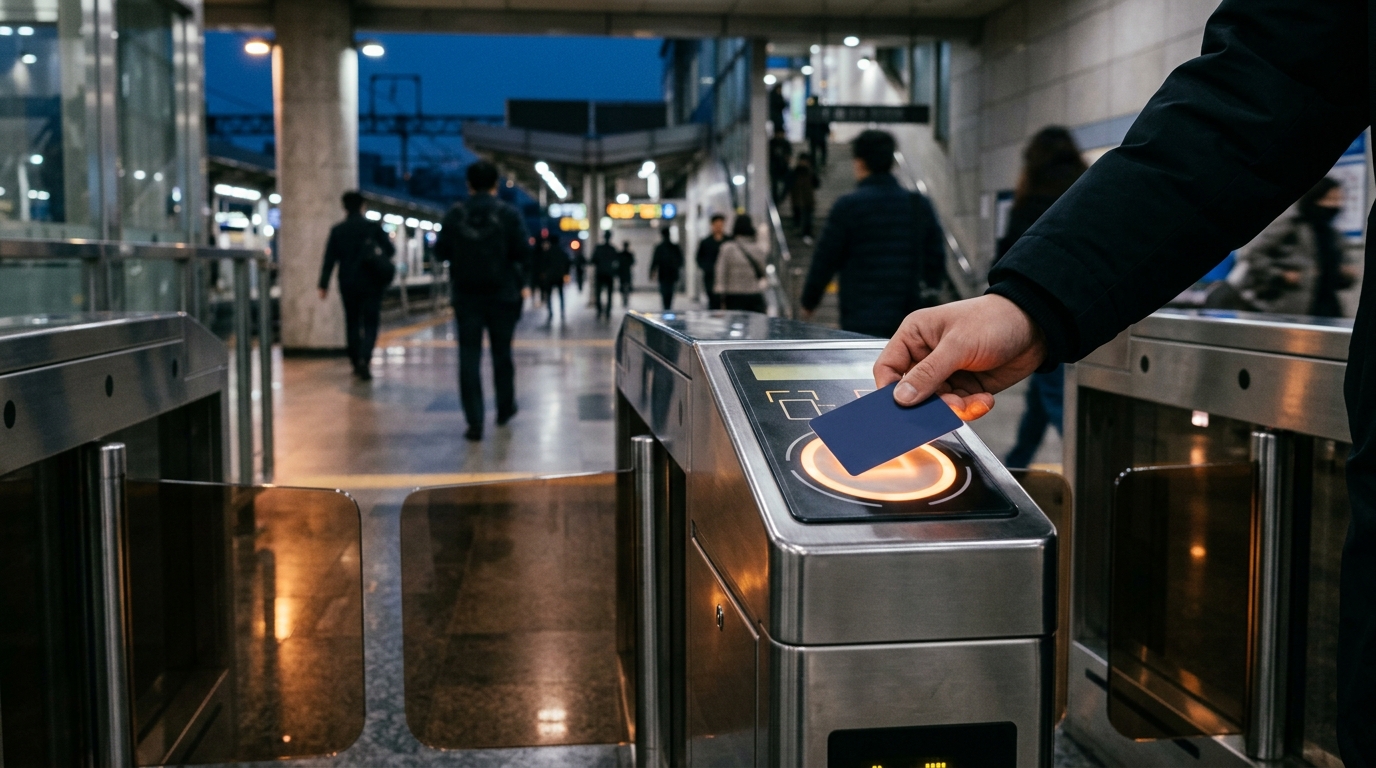
- Always Tap Out (Ha-cha): You must tap your physical card against the sensor gate when entering (seung-cha - 승차) and exiting (ha-cha - 하차). Missing a tap out locks the pass and requires station staff assistance.
- No Card Sharing: Every rider needs an individual card. Tapping the same pass twice at a gate to let a companion through is blocked by the system.
- Priority Seating Etiquette: Dark blue or clearly labeled priority seats at the ends of train cars (Noyakjaseok - 노약자석) are set aside for elderly passengers, pregnant women, and people with disabilities. Leave these seats open even on crowded trains.
- Silent Commuting Culture: Keep conversations quiet, use headphones for audio, and avoid phone calls inside subway cars.
Frequently asked questions
Q. Should I buy the Climate Card Tourist Pass or standard T-Money / WOWPASS?
If you plan to stay inside Seoul and take 3 or more subway or bus trips per day, the Climate Card Tourist Pass offers better value through unlimited rides. If you plan to travel across multiple cities in Korea or make few daily rides, standard T-Money or WOWPASS is more economical.
Q. Will I actually save money using the Seoul Climate Card Tourist Pass?
Yes, provided you ride public transit frequently. With base fares at ₩1,550 for subways and ₩1,500 for buses, pass options like the 3-day (₩10,000) or 7-day (₩20,000) pass break even at just 2 to 3 trips per day.
Q. Does the Climate Card work from Incheon Airport when I arrive?
No. You cannot tap in to board transit at Incheon Airport using a Climate Card. However, you can tap out at Incheon Airport Station on the AREX All-Stop train if your journey originated within Seoul.
Q. Can I load or reload the Climate Card using my overseas credit card?
Yes. Upgraded black-framed ticket kiosks at over 440 Seoul Metro stations accept foreign Visa and Mastercard credit cards with a ~3.7% processing fee, alongside standard cash payments in Korean Won.
Q. Does a 1-Day Climate Card Pass last for 24 hours from my first tap?
No. Passes run on service calendar days and expire at 04:00 AM on the morning following your last covered day, regardless of what time of day you first tap the card.