Korea Autumn Foliage Guide: 2026 Peak Timing & Top Spots
Key takeaways
The 2026 autumn foliage season in South Korea runs from late October through mid-November, peaking first at Seoraksan before reaching Seoul and southern parks like Naejangsan. Travelers should rely on local transit networks, download Naver Map for navigation, carry cash to reload T-money transit cards, and book competitive attractions like the Changdeokgung Secret Garden in advance.
Planning an autumn journey across South Korea comes down to getting your timing right. The nationwide wave of vibrant leaf color moves fast, starting in northern mountains before sweeping down the peninsula in about three to four weeks. Based on official projections from the 2026 Autumn Foliage Peak Forecast, maple leaves turn deep red and ginkgos shift to gold in late October up north. By early November, that vivid canopy covers Seoul and southern national parks. This breakdown covers regional peak dates, key viewing locations, public transit options, ticket reservation rules, and practical ground logistics.
How Does Autumn Foliage Work in Korea: Danpung vs. Eunhaeng
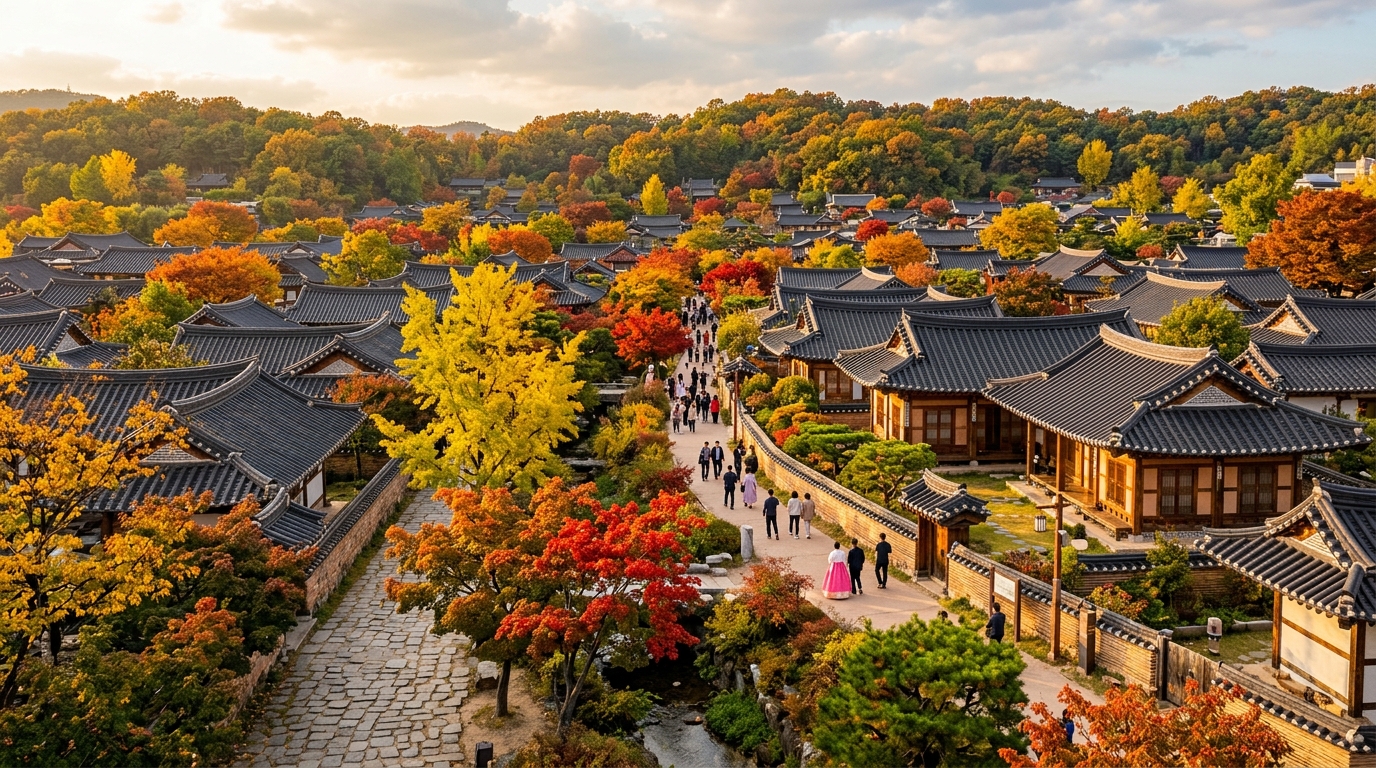
Fall leaf season in South Korea centres on two main trees: crimson maples, known as danpung (단풍), and golden ginkgos, called eunhaeng (은행). Official meteorological standards define the start of foliage season when 20% of a mountain's canopy turns color. Peak foliage arrives when 80% of the canopy changes, usually 10 to 14 days later.
The color migration begins in the high altitudes of northern Gangwon-do province and moves south at roughly 20 to 25 kilometers each day. Cooler temperatures on upper mountain slopes trigger early chlorophyll breakdown. Because late-summer weather has stayed slightly warmer in recent years, foliage peaks across lower elevations now stretch into mid-November.
| Attribute | Maple Foliage (Danpung / 단풍) | Ginkgo Foliage (Eunhaeng / 은행) |
|---|---|---|
| Primary Color | Deep scarlet, orange, crimson | Vibrant golden yellow |
| Key Environment | Mountain national parks, deep valleys, river basins | City avenues, ancient temple yards, palace grounds |
| Peak Progression | Starts early at high altitudes; moves down mountain slopes | Peaks slightly later in urban flatlands and street corridors |
| Iconic Locations | Seoraksan, Naejangsan, Bukhansan, Jirisan | Sungkyunkwan Myeongnyungdang, Nami Island, Seoul Forest |
What Is the 2026 Autumn Foliage Peak Forecast Across Korea?
According to official seasonal projections summarized in the Haps Korea Foliage Forecast, the 2026 Autumn Foliage Peak Forecast puts Seoraksan National Park at peak color between October 20 and October 25, 2026. Central Seoul and southern areas like Naejangsan follow shortly after, reaching peak conditions between November 4 and November 15, 2026.
Mountain microclimates differ from valley floors. Lower elevations and cable car base areas often retain rich color for several days after higher ridge lines begin dropping their leaves. Expected dates across major regions follow historical forestry records as of October 2026.
| Region | Location / Mountain | First Foliage (20%) | Peak Foliage (80%) | Recommended Experience |
|---|---|---|---|---|
| Gangwon-do | Seoraksan (설악산) | Late September | Oct 20 – Oct 25, 2026 | Biseondae Rocks & Cable Car ride |
| Gangwon-do | Odaesan (오대산) | Early October | Oct 17 – Oct 22, 2026 | Woljeongsa Fir Forest needle path |
| Seoul Metropolitan | Bukhansan (북한산) | Mid October | Nov 4, 2026 | Baegundae peak hike or fortress trail |
| Seoul Metropolitan | Seoul Palaces & Parks | Late October | Nov 5 – Nov 15, 2026 | Secret Garden walk & Deoksugung stone path |
| Jeollabuk-do | Naejangsan (내장산) | Late October | Nov 5 – Nov 11, 2026 | Uhwajeong Pavilion & maple tunnel |
| Gyeongsang-do | Gayasan (가야산) | Late October | Nov 5, 2026 | Haeinsa Temple Haein-sori road |
| Jeju Island | Hallasan (한라산) | Oct 31, 2026 | Nov 6 – Nov 13, 2026 | Yeongsil trail basalt cliff autumn views |
How to Visit Top Foliage Spots Outside Seoul Without Renting a Car?
Visiting foliage destinations outside Seoul is simple using Korea's high-speed rail (KTX) and express buses. Public transit lets travelers skip highway traffic jams and parking head-aches. Detailed transit instructions mapped out in resources like the Roamlore Seoraksan Guide show how efficiently regional connections run.
Seoraksan National Park (Sokcho)
To reach Seoraksan from Seoul, take an intercity express bus from Seoul Express Bus Terminal to Sokcho Express Bus Terminal. The ride takes roughly two hours and ten minutes. Right outside Sokcho Terminal, catch local City Bus No. 7 or 7-1 directly to the entrance of Seoraksan Outer Park (Oesorak).
- Seoraksan Cable Car Rule: Tickets for the Gwongeumseong Cable Car cost around 16,000 KRW for adults. Tickets cannot be purchased online in advance. They are sold only on-site at the lower cable car station on a first-come, first-served basis. During peak foliage, afternoon tickets often sell out completely before 10:00 AM.
Naejangsan National Park (Jeongeup)
Known for its delicate baby-maple foliage (agidanpung), Naejangsan stands out as a prime destination in southern Korea, as noted in the Kosmedi Naejangsan Park Guide.
What Are the Best Autumn Foliage Spots and Advance Reservation Rules in Seoul?
Staying in Seoul offers plenty of colorful foliage without leaving the city subway system. Centuries-old ginkgos and maples line palace courtyards, historical shrines, and mountain parks across the capital.
Changdeokgung Palace Secret Garden (Huwon)
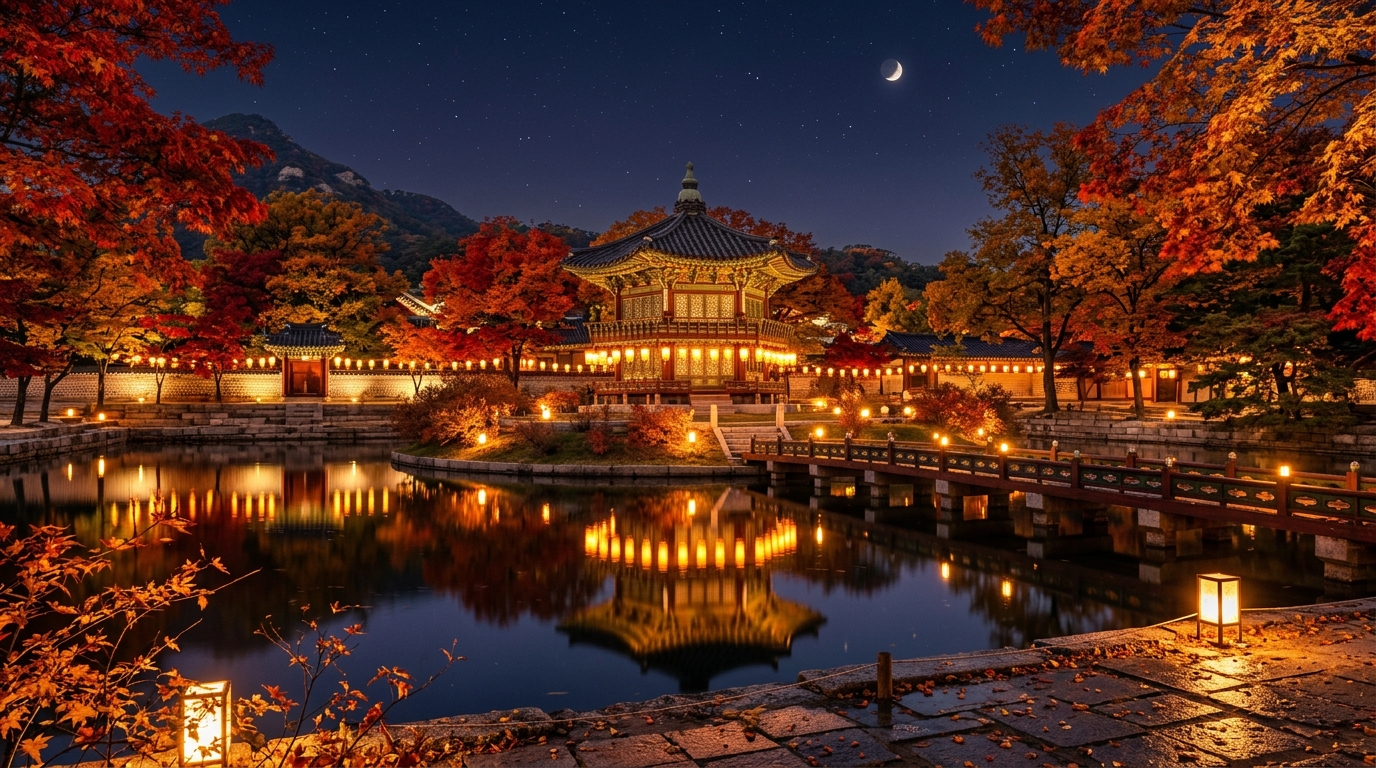
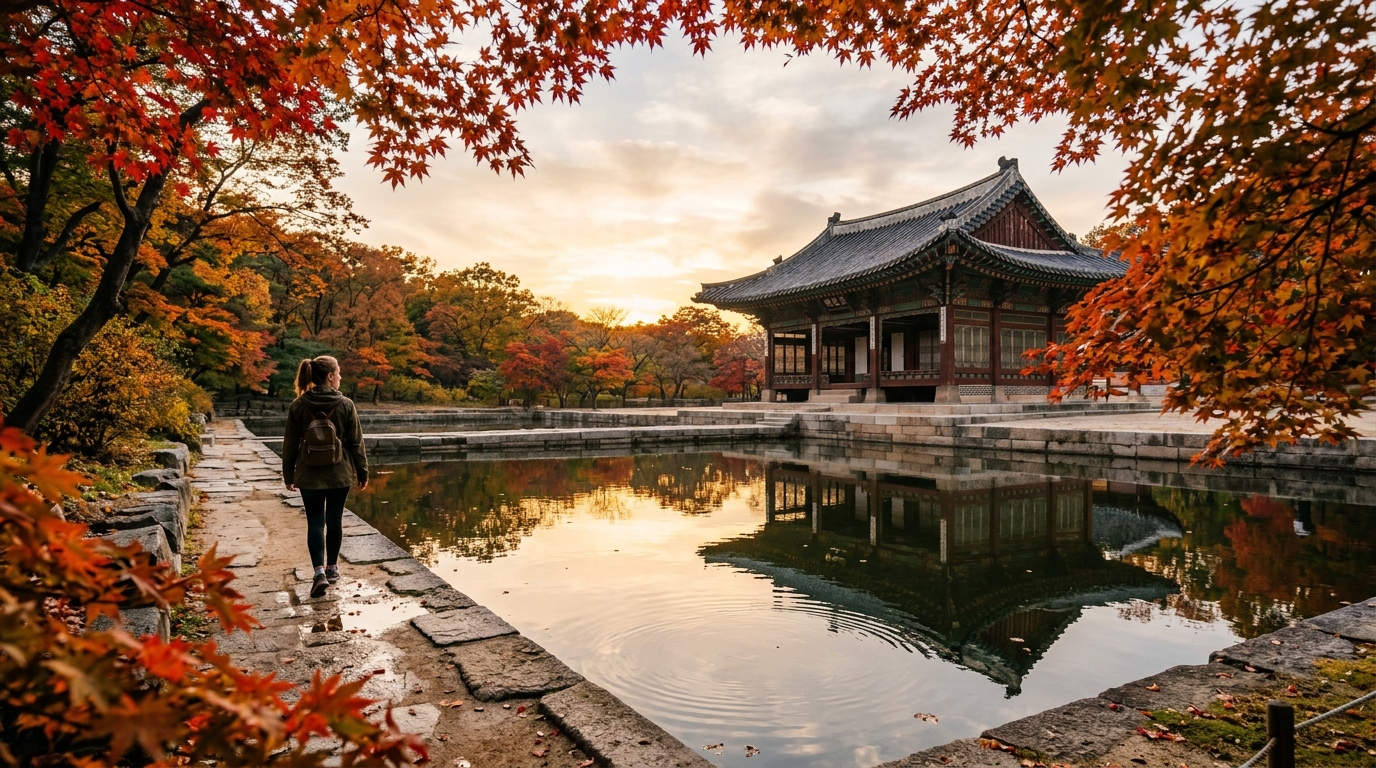
The Secret Garden (Huwon / 후원) inside Changdeokgung Palace delivers one of Seoul's most picturesque fall settings. Entry is controlled through guided walking tours with daily visitor limits to protect the site.
- Reservation Rules: Secret Garden entry costs 5,000 KRW in addition to the 3,000 KRW palace admission fee. Online ticket reservations for foreign visitors open six days in advance at 10:00 AM Korean Standard Time (KST) on the Cultural Heritage Administration portal. You must provide a valid passport number when booking.
- On-Site Walk-Ups: A small quota of same-day tickets opens at the ticket counter at 9:00 AM, though lines start forming as early as 7:30 AM during peak November days.
Top Seoul Foliage Locations Compared
| Location | Dominant Foliage | Key Highlight | Best Subway Access | Entry Fee (KRW) | Reservation Required? |
|---|---|---|---|---|---|
| Changdeokgung Secret Garden | Crimson maples & reflection ponds | Juhamnu Pavilion & Buyongji Pond | Anguk Station (Line 3), Exit 3 | 8,000 KRW total | Yes (Strict advance timed tickets) |
| Deoksugung Stone Wall Path | Golden ginkgo foliage | Historic tree canopy along stone wall | City Hall Station (Line 1/2), Exit 1 | Free (Street) / 1,000 KRW (Palace) | No |
| Sungkyunkwan Myeongnyungdang | Giant 500-year-old ginkgo trees | Historic Joseon academy courtyard | Hyehwa Station (Line 4), Exit 4 | Free | No |
| Seoul Forest Park | Ginkgo forest tree tunnel | Walking path surrounded by gold canopy | Seoul Forest Station (Suin-Bundang), Exit 3 | Free | No |
| Bukhansan National Park | Mountain maple ridges | Panoramic city views through colorful peaks | Gupabal Station (Line 3), Exit 1 + Bus | Free (Park entry) | No |
What Practical App and Cash Logistics Must Foreign Visitors Know?
Getting around South Korea smoothly requires knowing a few local rules regarding apps and payment systems. Travelers can review detailed connectivity tips through guides like the MobiMatter Autumn Guide to maintain data access while exploring.
Navigation Apps: Why Google Maps Fails
National security laws in South Korea limit foreign map data export, meaning Google Maps cannot provide turn-by-turn walking or driving routes. Relying on Google Maps for foot transit between stations will result in missing or inaccurate directions.
- Download Naver Map (네이버 지도): The most accurate app for walking routes, bus schedules, subway transfers, and store hours. Fully supports English, Simplified Chinese, and Japanese.
- Download KakaoMap (카카오맵): A reliable alternative providing turn-by-turn walking directions and live bus location updates.
Transit Cards and Cash Requirements
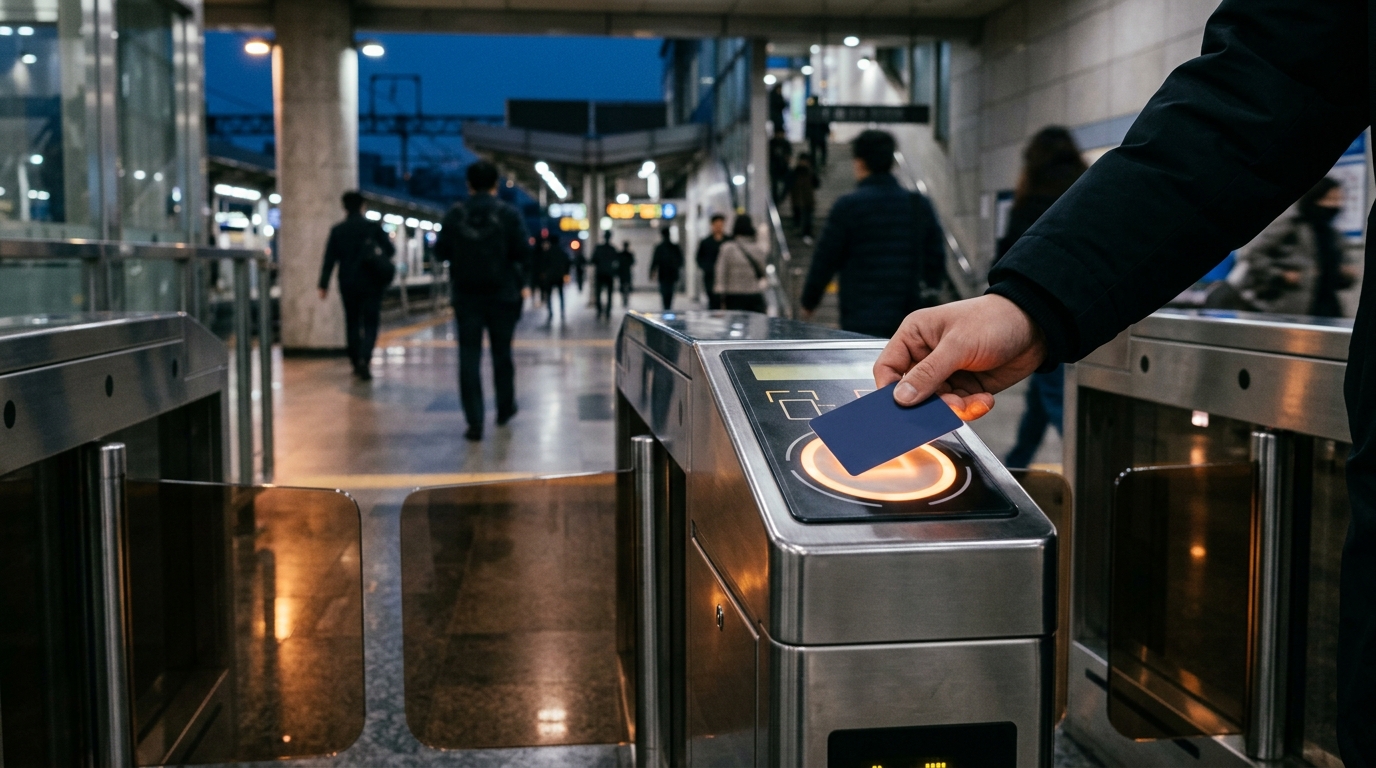
Public transportation runs on unified contactless payment cards, mainly the T-money card (티머니). Cards are available for 3,000 to 5,000 KRW at airport convenience stores like CU, GS25, or Seven-Eleven.
- The Cash Top-Up Rule: While credit cards work at almost every restaurant, café, and shop in Korea, T-money transit cards cannot be reloaded using credit cards. Station kiosks and store counters strictly accept physical Korean Won (KRW) cash for top-ups.
- Currency Strategy: Keep 50,000 to 100,000 KRW in cash on hand from an international ATM for transit top-ups.
Frequently asked questions
Q. Is Google Maps useless in South Korea?
Google Maps cannot provide turn-by-turn driving or walking directions in South Korea due to national security map laws. Travelers should download Naver Map or KakaoMap for accurate English walking, transit, and route directions.
Q. How do I pay for public transit if I only have an international credit card?
While international cards work at restaurants and shops, T-money public transit cards can strictly only be loaded using physical Korean Won cash at subway station kiosks or convenience store counters.
Q. Can I buy Seoraksan Cable Car tickets online in advance?
No, Seoraksan Cable Car tickets cannot be reserved online. They are sold strictly on-site at the cable car station on a first-come, first-served basis, often selling out early during peak autumn weekends.
Q. When is the peak autumn foliage window for Seoraksan and Seoul in 2026?
Seoraksan National Park is expected to peak between October 20 and October 25, 2026. Seoul city center and historic palaces peak later, between November 5 and November 15, 2026.