How to Pick Sweet Shine Muscat Grapes: 3 Brix Selection Criteria
Key takeaways
To pick delicious Shine Muscat grapes, check for a yellowish-green tint, an ideal bunch weight of 500-700g, and ripeness at the bottom berries. This guide introduces 3 criteria for selecting high-sweetness grapes (17-18 Brix or higher) without a refractometer, along with a 90-day unwashed storage method and room-temperature ripening tips.
Have you ever spent good money on Shine Muscat grapes, only to take a bite and feel disappointed by a bland, tasteless grape? To enjoy their signature mango aroma and bursting juiciness, you need an eye for sweetness (Brix) and maturity right at the store. Premium, well-ripened grapes usually measure 17~18 Brix or higher, delivering a much richer sweetness than ordinary green grapes (12~14 Brix).
However, due to early harvesting, grapes with sweetness under 15 Brix are frequently found on market shelves. As cultivation areas expanded, inconsistent quality led to growing consumer dissatisfaction. Here is a comprehensive guide covering 3 criteria for picking high-Brix grapes at the grocery store without a refractometer, along with room-temperature ripening tricks, long-term storage, and damage-free washing methods.
1. 3 Criteria to Determine Sweet Shine Muscat Grapes (Brix)
By carefully checking the color, bunch weight, and the condition of the bottom berries, you can accurately pick grapes with a high sweetness of 17~18 Brix or above without using a refractometer. While regular green grapes hover around 12~14 Brix, well-ripened Shine Muscats reach 17~18 Brix or higher and give off a rich mango fragrance.
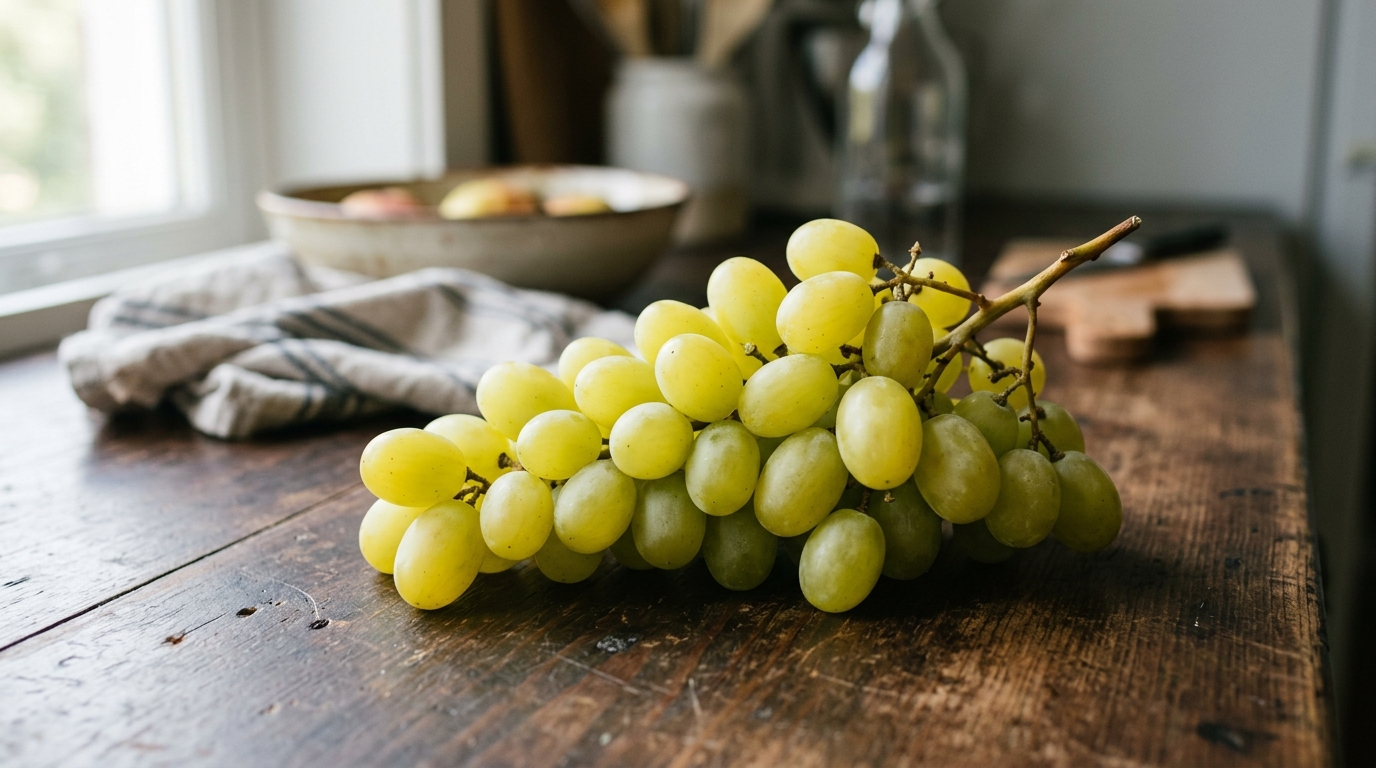
First is berry color. Grapes with a deep emerald green color are more likely to have high acidity and lower sweetness. As they mature, the color shifts from deep green to a yellowish-green tint. High sweetness and peak flavor are achieved precisely when the grapes reach this yellowish-green stage.
Second is ideal bunch weight. If a bunch is too large, nutrients from the vine are dispersed across too many berries, lowering overall sweetness. The ideal size is 500g~700g per bunch. When individual berries weigh around 15g~18g each, the sweetness is uniform, and the skin remains tender for a crisp crunch.
Third is checking the berries at the very bottom of the bunch. Grapes ripen from the top of the stem down to the bottom. Therefore, if the bottommost berries show a yellowish-green hue and feel firm, you can trust that the entire bunch has ripened evenly to over 17 Brix. If tasting is allowed, sampling a berry from the bottom is a surefire way to avoid disappointment.
Detailed quality comparison by maturity and color is shown in the table below.
| Category | Unripe (Green) | Ripened (Yellowish-Green) | Overripe (Deep Yellow) |
|---|---|---|---|
| Sweetness (Brix) | 13~15 Brix or lower | 17~19 Brix or higher | 19 Brix or higher (flavor degrades) |
| Texture | Firm with low sweetness | Juicy and crunchy | Soft and mushy |
| Aroma | Green grape aroma (high acidity) | Rich mango fragrance | Overripe sweet smell |
2. In-Store Checklist and Berry Size Comparison
Shine Muscat bunches that are excessively large and densely packed may look impressive, but they carry a high risk of low sweetness.
When berries are tightly clustered, sunlight cannot reach the inner core, resulting in uneven ripening. Furthermore, oversized bunches weighing over 1kg exceed the vine's nutrition supply capacity, often tasting bland.
According to research from the Rural Development Administration Agricultural Technology Portal, 500~700g bunches harvested with controlled crop loads tested 2~3 Brix higher in average sweetness and offered far superior flavor compared to oversized bunches.
Stem freshness is another critical element when selecting grapes in person. A moist, vibrant green stem indicates a recent harvest with minimal moisture loss. Conversely, dry and brown stems suggest the grapes have been sitting for a long time after harvest, so it is best to avoid them.
| Bunch Size | Sweetness Uniformity | Mango Aroma Intensity | Skin Texture |
|---|---|---|---|
| 500g ~ 700g (Recommended) | Very High | Rich | Tender and crisp |
| 700g ~ 900g | Moderate | Moderate | Acceptable |
| 1kg or more (Oversized) | Low (low sweetness at bottom) | Faint | Thick and tough |
3. Ripening Guide to Boost Sweetness in Underripe Grapes
If your purchased grapes taste more sour and less sweet than expected, room-temperature ripening can significantly boost perceived sweetness.
Harvested grapes cannot produce new absolute sugar. However, leaving them at room temperature for 1~2 days allows the sour organic acids to naturally decompose, making the sweet flavor much more prominent. During this process, volatile compounds responsible for the mango aroma are activated, creating a deeper flavor profile.
Fruit experts also recommend short room-temperature ripening for 1~2 days to reduce acidity and maximize aroma before refrigerating.
4. Long-Term Storage for Freshness and How to Wash Whole Grapes
Shine Muscat grapes boast exceptional shelf life, staying fresh for up to 2~3 months in cold storage if humidity is well regulated.
The key to long-term storage is keeping them unwashed. Contact with water washes away the protective natural bloom, making the grapes prone to mold and softness. Wrap the dry bunch in paper towels or newspaper, place it in an airtight container, and store it in the vegetable crisper at 0~5°C to effectively prevent moisture loss and decay.
Since these grapes are eaten skin-on, thorough washing is important. Using baking soda or vinegar helps effectively clean away residual pesticides from every corner of the bunch.
Please refer to the chart below for freshness duration according to storage environment.
5. Quality Standards and Brix Labeling Trends for Shine Muscat Grapes
In the past, a rapid increase in farms led to early harvesting of unripe grapes, causing widespread consumer dissatisfaction. When low-quality products under 15 Brix sparked controversy, key municipalities and growers began implementing strict quality control measures.
According to a report by The Korea Economic Daily, in response to issues regarding early shipments of low-sweetness crops, major producing regions such as Gimcheon introduced Brix labeling systems—setting standards at 16 Brix for standard grade and 18 Brix for premium grade—to restore consumer trust.
As of 2026, premium grapes sold at major supermarkets and Hanaro Marts often feature non-destructive sweetness certification stickers (17~18 Brix or higher), so checking for these labels is a great tip when shopping.
6. Frequently Asked Questions (FAQ) About Seeds and Stem Color
Here are answers to frequently asked questions when buying Shine Muscat grapes.
Q1. Why do Shine Muscat grapes occasionally contain seeds?
Shine Muscat is originally a seeded grape variety. Gibberellin treatment is applied during cultivation to make them seedless, but depending on weather conditions or treatment timing, seeds may remain in some berries. Even if seeds are present, it does not affect sweetness or freshness, so you can eat them without concern.
Q2. Does a brown stem mean the grapes are no longer fresh?
Stem color is a clear indicator of freshness. A fresh green stem indicates moisture retention right after harvest, whereas a dried brown stem means moisture has evaporated over an extended storage period. While sweetness itself may be preserved in grapes with brown stems, the texture can become soft and lose its crunchiness, making green-stemmed bunches the better choice.
Frequently asked questions
Q. Will low-sweetness Shine Muscat grapes get sweeter if left at room temperature?
While total sugar content does not increase after harvest, keeping them at room temperature for 1 to 2 days reduces acidity and enhances the mango aroma, noticeably boosting perceived sweetness.
Q. Are larger and more densely packed Shine Muscat bunches better?
Not necessarily. If a bunch exceeds 1kg and berries are packed too tightly, sunlight and nutrients cannot reach evenly, resulting in lower sweetness and inconsistent berry quality.
Q. Should I wash Shine Muscat grapes before long-term storage?
No, you should always store them unwashed. Moisture damages the natural protective bloom on the skin and encourages mold growth, so it is best to wrap dry bunches in paper towels and keep them sealed in the refrigerator.
Q. How can I cleanly remove pesticide residues when eating grapes skin-on?
Soak the whole bunch in water with baking soda or a few drops of vinegar for 3 to 5 minutes, then rinse thoroughly under running water between the berries for safe consumption.