Insadong Dojang Stamp Engraving: Make a Custom Korean Seal
Key takeaways
Insadong dojang stamp engraving lets visitors create custom Korean stone seals in 15 to 90 minutes, with options ranging from ₩10,000 to ₩70,000 as of October 2026. Travelers can carve their own Hangeul seal in guided classes or purchase a hand-carved piece directly from master artisans in Seoul's historic craft district.
Creating a personal Korean name stamp through insadong dojang stamp engraving gives travelers a personalized piece of Korean craftsmanship for official sign-offs or personal keep. Carved by hand in soft stone within 15 to 90 minutes, these custom seals feature your name in phonetic Hangeul or Latin letters with traditional motifs. Foreign visitors can make their own seal in a class or commission a finished piece from a master craftsman in Seoul's historic arts district. Understanding the engraving styles, pricing, and options helps you pick the right shop for your schedule.
What is a Dojang? Korea's Name Stamp Tradition
A dojang (도장) is a signature seal used across East Asia for centuries to sign official documents, letters, artwork, and contracts. Modern South Korea accepts handwritten signatures for daily transactions, but personal seals are still standard for major events like opening bank accounts, buying real estate, or executing legal contracts.
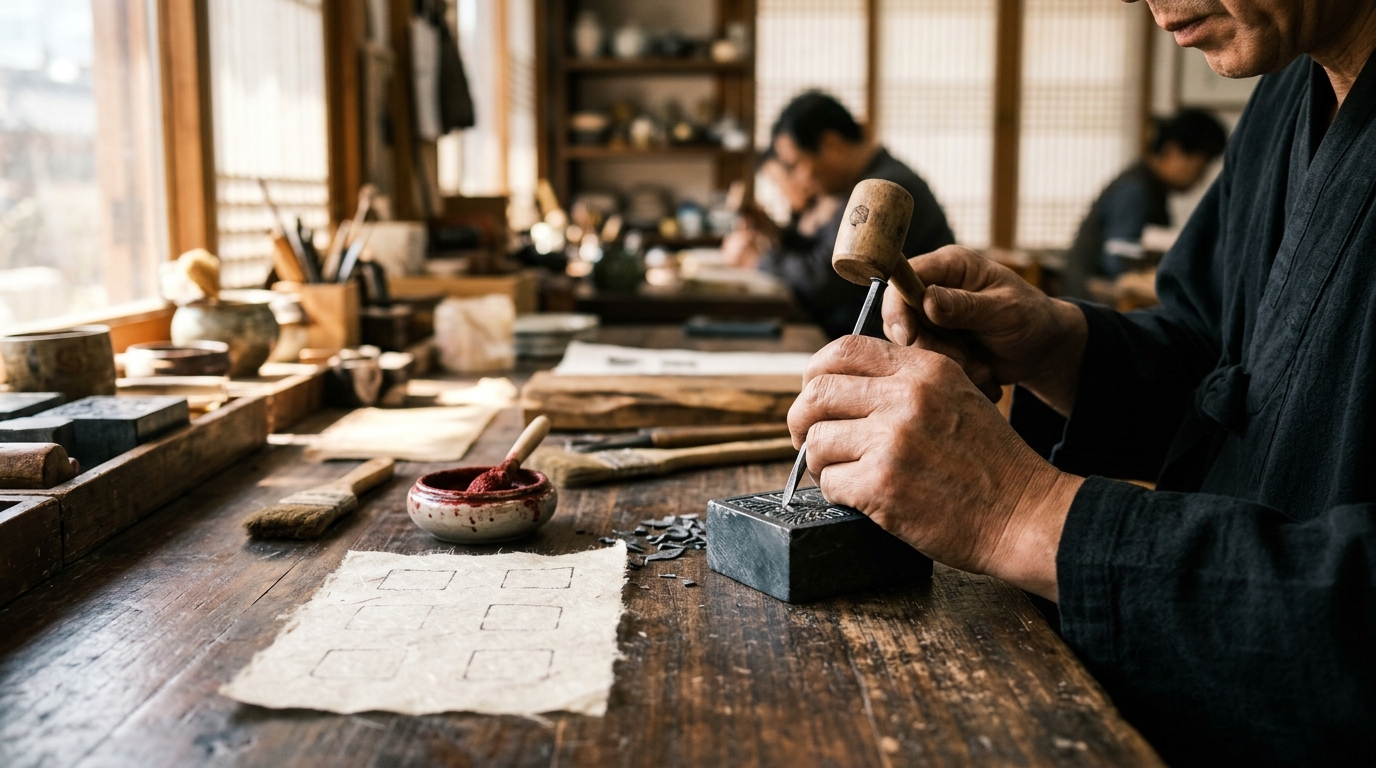
Traditional hand carving of stone seals is called jeongak (전각). The process transforms soft mineral stone—typically soft seal stone (in-seok) from regional quarries—into a functional seal using small steel chisels called jokak-do (조각도).
Official Legal Seals vs. Personal Souvenir Stamps
- Ingam-dojang (인감도장): An officially registered legal seal bound to a resident's government filing. Foreign residents registered with an Alien Registration Card (ARC) can register an official seal at local community centers (Jumin Center).
- Souvenir Dojang: A decorative or everyday personal seal used for journals, letters, artwork, or gifts. Souvenir stamps require no government registration.
For international visitors, a custom seal offers a practical memory of Korean lettering. Local studios convert foreign phonetic names into Korean Hangeul script, preserving pronunciation in a mark designed to last for years.
DIY Workshop vs. Master Carver: Choosing Your Experience
Visitors to Insadong can make their own stone seal in a workshop or purchase a custom piece directly from a master carver. The decision comes down to time, budget, and how much hands-on crafting you want to do.
| Feature | DIY Craft Workshop | Master Carver Purchase | Machine Engraving Shop |
|---|---|---|---|
| Average Cost (KRW) | ₩25,200 – ₩38,000 | ₩30,000 – ₩70,000 | ₩10,000 – ₩20,000 |
| Time Required | 45 to 90 minutes | 15 to 30 minutes | 5 to 10 minutes |
| Personal Involvement | High (you carve the base) | Low (consultation only) | None (automated) |
| Craft Quality | Personal & unique | Master artisan grade | Uniform & precise |
| Best For | Couples, families, DIY fans | Souvenir shoppers, rush trips | Budget travelers |
For those wanting an interactive session, DIY workshops walk you through every step. Instructors touch up small mistakes and finish the polishing so everyone leaves with a clear, working stamp.
Design Rules: Hangul Translation and Engraving Styles
Designing a dojang requires two choices: turning your name into Korean script and selecting between relief or intaglio carving methods.
Translating Foreign Names into Hangeul
Most visitors engrave their phonetic Hangeul name on the bottom stamp face. Studio staff help non-Korean speakers break down English, European, or Asian names into standard phonetic Hangeul blocks. For example, "Sarah" translates to "사라" (Sa-ra), while "Michael" becomes "마이클" (Ma-i-keul). Using three or fewer Hangeul syllables creates the cleanest stamp mark on standard 1.5 cm stone bases.
Engraving Technique: Yanggak vs. Eumgak
The final stamped mark looks different depending on which part of the stone face is cut away:
- Eumgak (음각 / Intaglio): The letters are carved directly into the stone face. Stamping creates white letters against a solid red ink background. Intaglio suits long English names or Latin lettering because carving out line grooves avoids leaving thin stone walls that might chip over time.
- Yanggak (양각 / Relief): The background area around the letters is carved away, leaving raised characters. Stamping produces red letters on a white background. Relief style creates a bold look suited for short Korean Hangeul characters, though it demands steady carving.
Choosing Your Engraving Technique
- Choose Eumgak (Intaglio) if: You are carving Latin scripts, complex graphics, or detailed foreign full names.
- Choose Yanggak (Relief) if: You are carving 2-3 Hangeul characters and want a traditional bold look.
Step-by-Step: What Happens During a Workshop
Attending a jeongak class in Insadong follows a simple, structured process for beginners.
Top Dojang Studios and Shops in Insadong
Insadong Street (Insadong-gil) in Jongno-gu, Seoul, holds the main cluster of traditional stone seal artisans in South Korea. These studios provide established seal-carving options:
Yhlayuen Jeongak Academy (어라연전각연구소)
Near Anguk Station, this specialized studio focuses on traditional seal carving instruction. Staff provide English guidance sheets alongside basic spoken directions. Classes cater to small groups and solo visitors, with custom side patterns like bamboo, cherry blossoms, or cloud motifs.
Saegimsori (새김소리)
Located along the central Insadong pedestrian street, Saegimsori features modern, colorful hand-carved stone designs. Visitors with tight schedules can request custom stamps carved on site while browsing the display counters.
Feel So Good Calli Studio & K-Art Center
These Insadong workshop locations combine Korean calligraphy (seoye) with seal carving. Guests practice brush strokes on paper before carving their names into stone.
Myung Sin Dang (명신당필방)
Operating for decades as a traditional calligraphy supply shop, Myung Sin Dang emphasizes classic hand carving. Historically known for crafting seals presented to visiting foreign leaders, this shop suits buyers looking for traditional craftsmanship.
Visitor Logistics: Prices, Booking, and Local Navigation
Planning a trip requires checking current costs, booking channels, and local map compatibility.
Updated Pricing and Duration Guide
As of October 2026, prices across central Insadong studios and craft shops fall into these ranges:
- Standard DIY Workshop: ₩25,200 to ₩38,000 (~$19–$28 USD) per person, including standard soapstone, tool use, test paper, and a storage pouch.
- Premium DIY Workshop (Side Carving + Pouch): ₩40,000 to ₩55,000 (~$30–$41 USD).
- Custom On-Site Master Engraving: ₩30,000 to ₩70,000 (~$22–$52 USD) depending on stone quality and side design detail.
- Machine-Cut Budget Stamp: ₩10,000 to ₩20,000 (~$7–$15 USD).
Booking Methods
DIY workshops recommend advance bookings during peak travel months in spring (April–May) and autumn (September–November). Reservations can be made through platforms like GetYourGuide, Klook, Trazy, or local Korean booking sites like Frip. Walk-ins are common at retail carving shops, though afternoon wait times on weekends can reach 30 to 60 minutes.
Transportation and Access
To get to the Insadong crafting area using the Seoul Metropolitan Subway:
- Anguk Station (Line 3): Exit 6. Walk 100 meters straight, then turn left onto Insadong-gil. This is the closest stop for Yhlayuen Jeongak Academy.
- Jongno 3-ga Station (Lines 1, 3, 5): Exit 5. Walk 5 minutes toward the southern entrance of Insadong Street.
Stone Care and Maintenance Rules
Natural soapstone seals are made of soft mineral rock, making them vulnerable to drops, harsh chemicals, and moisture. Following standard care practices keeps the stone edges clean and intact.
Using Traditional Inju Ink
Standard rubber ink pads sold in office supply stores do not transfer well from smooth stone faces. Traditional Korean stamp ink, known as inju (인주), is a thick, oil-based paste composed of refined cinnabar or red pigment mixed with castor oil and mugwort fibers. ==Dabbing the stone face lightly into inju paste without dragging creates sharp, deep red impressions on paper.==
For stamping on dark paper, white and gold oil-based inks are sold at stationery shops in Insadong. Clean the stone face completely with a dry cloth before using a new ink color to avoid mixing shades.
Frequently asked questions
Q. Can I put my English name on a Korean dojang stamp?
Yes, visitors can engrave an English name on a Korean dojang stamp. Instructors recommend using intaglio (Eumgak) carving, which incises the letters directly into the stone face, or translating the name into phonetic 2–3 syllable Hangeul script for a cleaner visual finish on standard 1.5 cm stone bases.
Q. How much does a custom dojang stamp cost in Insadong?
As of October 2026, hands-on DIY workshops cost between ₩25,200 and ₩38,000 (~$19–$28 USD) per person. On-site hand engraving commissioned directly from master carvers ranges from ₩30,000 to ₩70,000 (~$22–$52 USD) based on stone material quality and side-handle carving complexity.
Q. Do I need to book an Insadong stamp workshop in advance?
Booking an Insadong stamp workshop in advance is highly recommended for DIY workshops during peak travel months (April–May and September–November) via platforms like GetYourGuide or Klook. Walk-ins are generally accepted at retail carver shops, though weekend wait times can reach up to one hour.
Q. What is the difference between Yanggak and Eumgak carving?
In Korean stamp engraving, Yanggak (relief) carves away the background stone, leaving raised letters that print red text on a white background. Eumgak (intaglio) cuts the text lines into the stone face, printing white text on a solid red background, which works best for intricate English script.
Q. How long does an Insadong dojang stamp engraving experience take?
A DIY stamp-carving class in Insadong takes 45 to 90 minutes from stone selection to final testing. Direct custom engraving orders by master carvers take 15 to 30 minutes, allowing visitors to pick up finished seals while exploring Insadong Street.