Kimjang Season in Korea: How to Join a Kimchi Class
Key takeaways
Kimjang season runs from mid-November to early December, but tourists can join English kimchi classes in Seoul all year. Major venues such as Museum Kimchikan and Seoul Kimchi Academy offer hands-on workshops for 40,000 to 60,000 KRW. Remember to pack homemade kimchi in checked luggage, as airport security restricts carry-on liquid containers over 100 ml.
What Is Kimjang? Understanding Korea's UNESCO Heritage
Kimjang (김장) is the traditional Korean practice of preparing large batches of kimchi in late autumn to sustain households through the long winter. In December 2013, UNESCO officially inscribed Kimjang on the Representative List of the Intangible Cultural Heritage of Humanity.
Far more than simple food preservation, Kimjang is a social tradition that brings families and communities together. Historically, entire neighborhoods gathered to wash hundreds of heads of napa cabbage (baechu - 배추), slice daikon radish (mu - 무), and mix garlic-chili seasoning pastes. While modern refrigeration and year-round grocery stores have scaled down the quantities made in private homes, the seasonal spirit remains strong. Cultural spots like Museum Kimchikan—celebrating its 40th anniversary with foreigner-friendly cooking programs—keep this custom accessible. Joining a guided class lets international visitors experience this culinary tradition firsthand.
When Is Kimjang Season in Korea?
In central South Korea and Seoul, traditional Kimjang season starts in mid-November and runs through early December. This timing depends on outdoor temperatures dropping below 4°C (39°F), which creates the ideal conditions for slow fermentation without freezing.
If you visit outside late autumn, specialized cooking schools and cultural venues offer indoor classes year-round using climate-controlled workstations and pre-fermented ingredients. Official guidance from the Korea Tourism Organization notes that seasonal outdoor festivals peak between mid-November and early December, while commercial academies maintain fixed schedules every month.
Here is how seasonal outdoor Kimjang compares to year-round cooking classes in Seoul.
| Feature | Seasonal Kimjang Event (Autumn) | Year-Round Cooking Class |
|---|---|---|
| Primary Months | Mid-November to Early December | January through December |
| Location | City plazas, temple grounds, community centers | Dedicated cooking academies, cultural museums |
| Atmosphere | Massive outdoor gatherings, festival mood | Small group, focused indoor instruction |
| Kimchi Output | Large batches (5 kg – 10 kg+) | Tourist-friendly portions (1 kg – 2 kg) |
| Booking Channel | Municipal event sign-ups or festival booths | Travel platforms (Klook, Trazy, official websites) |
What Happens Inside a Korean Kimchi Making Class?
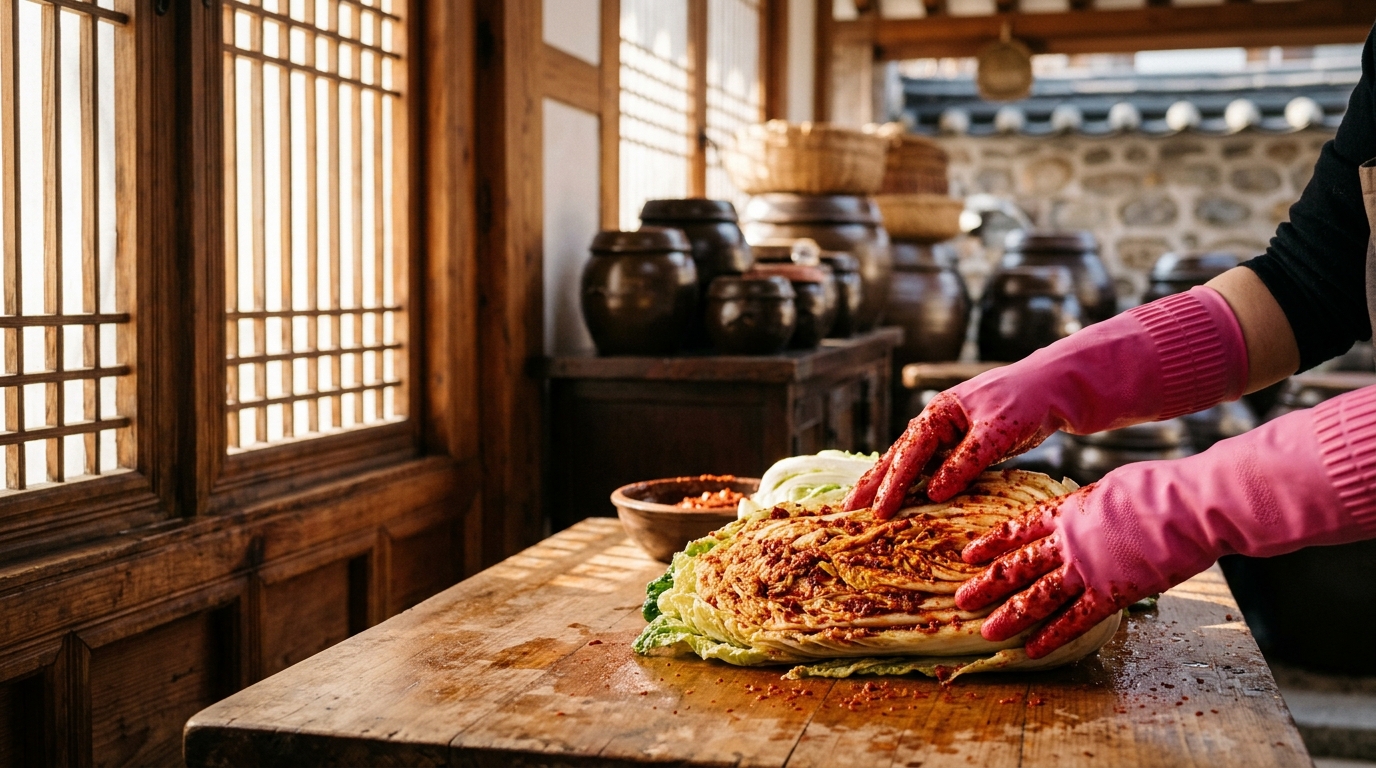
A standard hands-on workshop takes 60 to 90 minutes and walks you through each stage of making traditional cabbage kimchi (baechu-kimchi - 배추김치).
Since traditional salting (jeorim - 절임) requires 6 to 12 hours, classes supply pre-salted napa cabbage leaves that are already softened and rinsed. You focus on building the seasoning paste (sok - 속) from scratch using red pepper powder (gochugaru - 고춧가루), minced garlic, ginger, salted shrimp (saeujeot - 새우젓), and fish sauce (aetjeot - 액젓). Instructors often introduce variations like Mak-kimchi (easy chopped kimchi) alongside full-leaf Baechu-kimchi.
Most workshops end with a tasting where you try your freshly made kimchi alongside side dishes or savory kimchi pancakes (kimchijeon - 김치전).
Best Kimchi Making Classes in Seoul for International Visitors
Seoul has several culinary venues designed for English-speaking travelers wanting clear instruction without language barriers. Prices and course formats vary depending on whether the session includes market tours or wearing traditional clothing (hanbok - 한복).
Prices and schedules listed below reflect standard rates as of late 2026.
| Venue | Location | Approx. Cost (KRW) | Key Highlights | Dietary Options |
|---|---|---|---|---|
| Museum Kimchikan | Insadong, Jongno-gu | 40,000 – 50,000 KRW | Interactive museum, certified instructors, vacuum packaging service | Vegan options available upon advance request |
| Seoul Kimchi Academy | Myeongdong, Jung-gu | 45,000 – 60,000 KRW | Central tourist spot, includes Hanbok photo session | Vegetarian substitute pastes available |
| O'ngo Culinary Korea | Anguk / Jongno | 70,000 – 90,000 KRW | Professional chef instruction, small group size, full meal included | Custom dietary accommodations on request |
| K-Style Hub / HiKR Ground | Jung-gu, Seoul | Free – 30,000 KRW | Government-supported seasonal workshops | Varies by rotating seasonal instructor |
At established institutions such as Museum Kimchikan, basic foreigner-friendly classes cost around 40,000 KRW, while regular courses at Seoul Kimchi Academy cost approximately 48,000 KRW. Classes are taught in English and Japanese, with fully equipped stations that include gloves, aprons, and sealable containers.
Do You Need to Speak Korean to Join a Kimchi Class?
You do not need any Korean language skills to join international kimchi workshops in Seoul. Instructors at major academies speak fluent English, Japanese, and Mandarin.
Classes cater specifically to foreign visitors, providing multilingual recipe cards, visual demonstrations, and direct assistance at each prep station. Instructors explain key terms like gochugaru (red pepper powder) and jeorim (salting) in clear English as they demonstrate each step.
Can Vegetarians and Vegans Join a Kimchi Class in Seoul?
Vegetarians and vegans can participate by requesting plant-based seasoning alternatives when booking. Traditional recipes rely on fermented seafood, such as salted shrimp (saeujeot) and anchovy fish sauce (aetjeot), to build deep umami flavor.
Most English-friendly kimchi classes in Seoul provide full plant-based substitutes for seafood pastes if requested at least 48 hours in advance. Academies swap fermented seafood for kelp broth, mushroom extracts, or extra salt paste to maintain a rich garlic-chili profile.
Here is how traditional and plant-based seasoning formulas compare in tourist classes.
| Feature | Traditional Kimchi Paste | Vegan / Vegetarian Kimchi Paste |
|---|---|---|
| Seafood Base | Salted shrimp (saeujeot), fish sauce (aetjeot) | Kelp broth, soy sauce, or vegetable extract |
| Flavor Profile | Deep, savory umami with fermented marine notes | Clean, crisp, garlic-and-chili focused flavor |
| Availability | Standard default at all Seoul academies | Available upon advance booking request (24–48 hours) |
| Shelf Life | Fermentable long-term with rich aging | Ferments smoothly; best enjoyed fresh or medium-aged |
How to Book a Kimchi Class Without a Korean Phone Number
Booking experiences in South Korea can feel tricky for foreign visitors because domestic platforms like Naver Booking require local phone verification.
To skip this step, use international reservation platforms or direct booking forms on official English websites. Foreign travelers can bypass local Korean verification hurdles by booking directly through international travel platforms like Klook or Trazy.
Airport Security Rules: How to Safely Bring Fresh Kimchi Home
Taking fresh kimchi on an international flight requires following strict aviation security rules regarding liquids, aerosols, and gels (LAGs).
According to aviation security data cited by Food Republic, Incheon International Airport security officers confiscated over 10.7 tonnes of kimchi in 2024 alone from carry-on bags. Because kimchi contains brine and liquid paste, airport security treats containers over 100 ml as restricted liquids, making carry-on transport strictly illegal.
Follow these packing guidelines to keep your homemade kimchi safe for travel:
Packing Kimchi in Checked Luggage
- Double-Bubble Wrap or Vacuum Seal: Seal kimchi in a thick plastic container, wrap it in multiple plastic bags, and wrap with bubble wrap for impact protection.
- Leave Room for Gas Expansion: Fermentation releases carbon dioxide gas. Avoid filling rigid containers to the very top, as pressure changes during flights can break seals.
- Duty-Free Airport Purchase: To carry kimchi into the cabin, buy pre-packaged commercial kimchi inside the airport duty-free zone after security. Staff will seal it in an official Tamper-Evident Bag (STEB) allowed on direct flights.
For additional transport rules and packing methods, check the Kimjang Experience Travel Guide.
Preparation and Etiquette Tips for Your Kimchi Workshop
Attending a cooking workshop in Korea involves basic kitchen preparation to protect your clothes and keep the session running smoothly.
What to Wear and Bring
- Avoid Light-Colored Clothing: Gochugaru (red pepper powder) stains easily. Wear dark clothing even though workshops provide aprons.
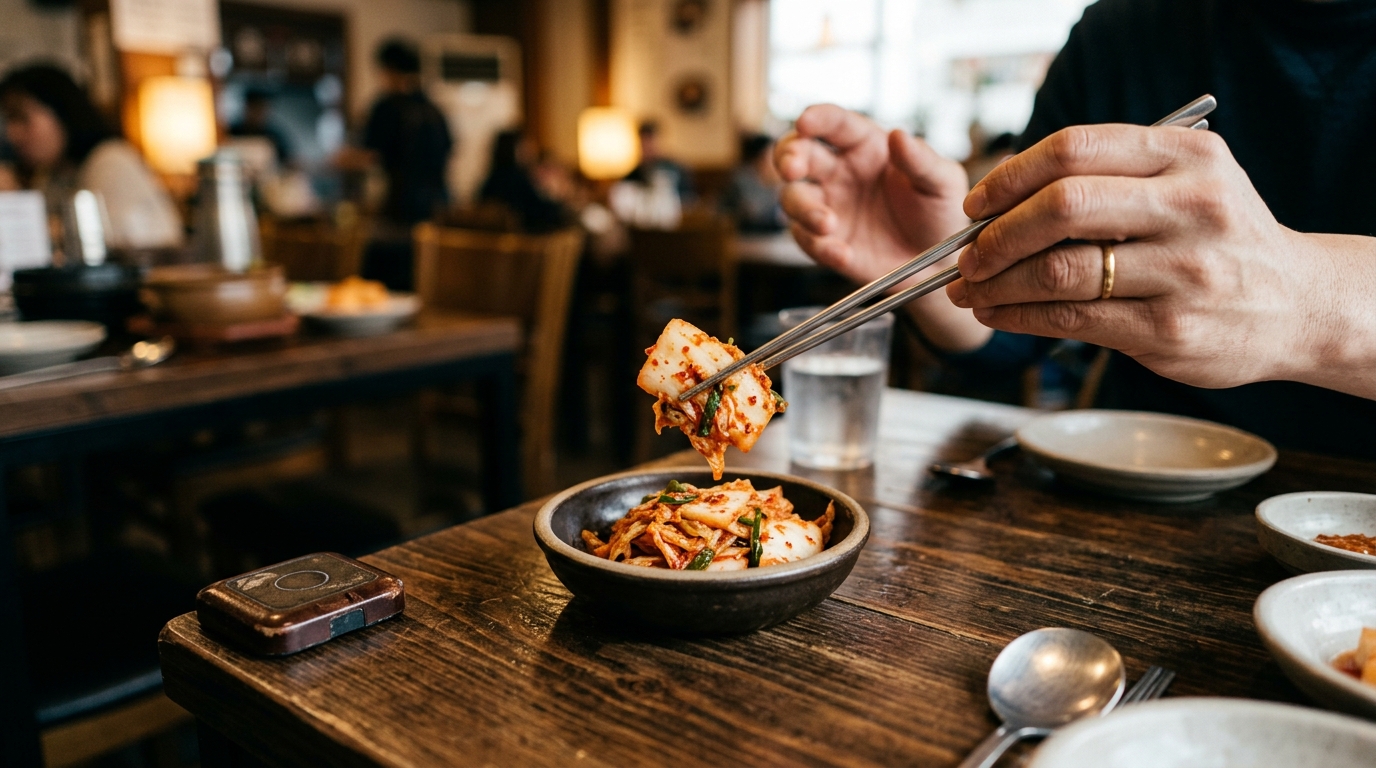
- Remove Jewelry and Rings: Rings and bracelets can tear rubber gloves or trap spice paste.
- Keep Short Fingernails: Working spice paste into cabbage layers is easier and more hygienic with trimmed nails.
- Arrive 15 Minutes Early: Classes start promptly, and late arrivals can disrupt group demonstrations.
Frequently asked questions
Q. Is Kimjang season the only time I can take a Kimchi class in Seoul?
No, while traditional outdoor Kimjang festivals take place from mid-November to early December, culinary academies in Seoul host indoor English classes year-round.
Q. Can I bring my homemade kimchi on the plane back home?
Yes, but you must pack it in checked luggage, vacuum-sealed and well-wrapped. Airport security prohibits kimchi containers over 100 ml in carry-on bags due to liquid limits.
Q. Do I need to speak Korean to join a Kimchi making class?
No, major tourist academies like Museum Kimchikan and Seoul Kimchi Academy conduct full classes in English or Japanese with clear visual steps.
Q. Can vegetarians or vegans participate in a Kimchi class?
Yes, many venues offer vegan seasoning pastes free of fish sauce or salted shrimp if requested when booking.
Q. How do I book a Kimchi making class without a Korean phone number?
You can book using global travel sites like Klook or Trazy, or use official English booking forms on venue websites that accept foreign cards without local phone verification.