How to Order and Use the Call Button in Korean Restaurants
Key takeaways
Korean restaurant service relies on an on-demand system where servers leave diners undisturbed until called via a table call button (hochulbel), touchscreen, or verbal request. Basic vegetable side dishes come with free refills, while premium protein sides carry a fee. Displayed menu prices legally include tax and service fees, making tipping unnecessary across South Korea.
How Does the Korean Restaurant Call Button (Hochulbel) Work and How Should You Use It Politely?
The Korean restaurant call button (hochulbel / 호출벨) signals waitstaff only when pressed, sending a chime or table number to a wall monitor or staff wrist receiver. Servers generally leave diners alone between requests rather than stopping by every few minutes.
First-time visitors to South Korea might find this quiet approach surprising at first. In Korean dining culture, privacy during meals takes priority, and servers often view unprompted table check-ins as an unnecessary interruption. A guide on Korean call bell etiquette notes that pressing the button is expected, not rude—it simply signals that you need water, extra side dishes, or are ready to order.
Buttons are usually attached to table tops, napkin holders, or nearby walls. Some feature dedicated buttons for specific requests:
- Call (호출 / Order): General assistance or ordering.
- Water (물): Requesting a water pitcher or refill.
- Beer (맥주) / Soju (소주): Quick drink reorders common in pubs and barbecue spots.
- Cancel (취소): Canceling an accidental press.
If your table lacks a physical bell, raise a hand slightly and call out clearly. Common phrases include Jeogiyo (저기요 - "Excuse me"), Sajangnim (사장님 - "Manager" or "Boss"), or Imo-nim (이모님 - "Auntie", used warmly for older female staff).
How Are Table-Ordering Touchscreens Replacing Call Buttons in Modern Eateries?
Interactive touchscreens—often using systems like t'order (티오더) or Catch Table Order—are steadily replacing traditional bells in newer eateries. These tablets let you browse full visual menus, adjust spice options, and send orders directly to the kitchen without talking to staff.
Most tablets offer language toggles (marked with country flags) to switch the interface into English, Japanese, or Chinese. They also include service buttons for non-food items like extra wet wipes, grill grate changes, or fresh aprons.
The table below compares the three primary ways you will order food in Korean restaurants today:
| Ordering Method | Where Found | Language Support | Best For |
|---|---|---|---|
| Call Button (Hochulbel) | Casual diners, older eateries, K-BBQ spots | Korean (spoken) | Quick service, verbal ordering |
| Table Touchscreen (t'order) | Modern urban restaurants, pub chains | Multilingual (EN/JP/ZH) | Visual menus, customized orders, quiet dining |
| Verbal Call (Jeogiyo) | Traditional markets, soup houses, small stalls | Korean phrases | Small eateries without tech infrastructure |
Digital tablets eliminate ordering errors caused by language barriers. Once you select your items, tap the order button (ju-mun-ha-gi, 주문하기). The order transmits immediately to the kitchen staff, and a running total tracks your bill in real time.
What Are the Rules for Banchan Refills and Which Side Dishes Cost Extra?
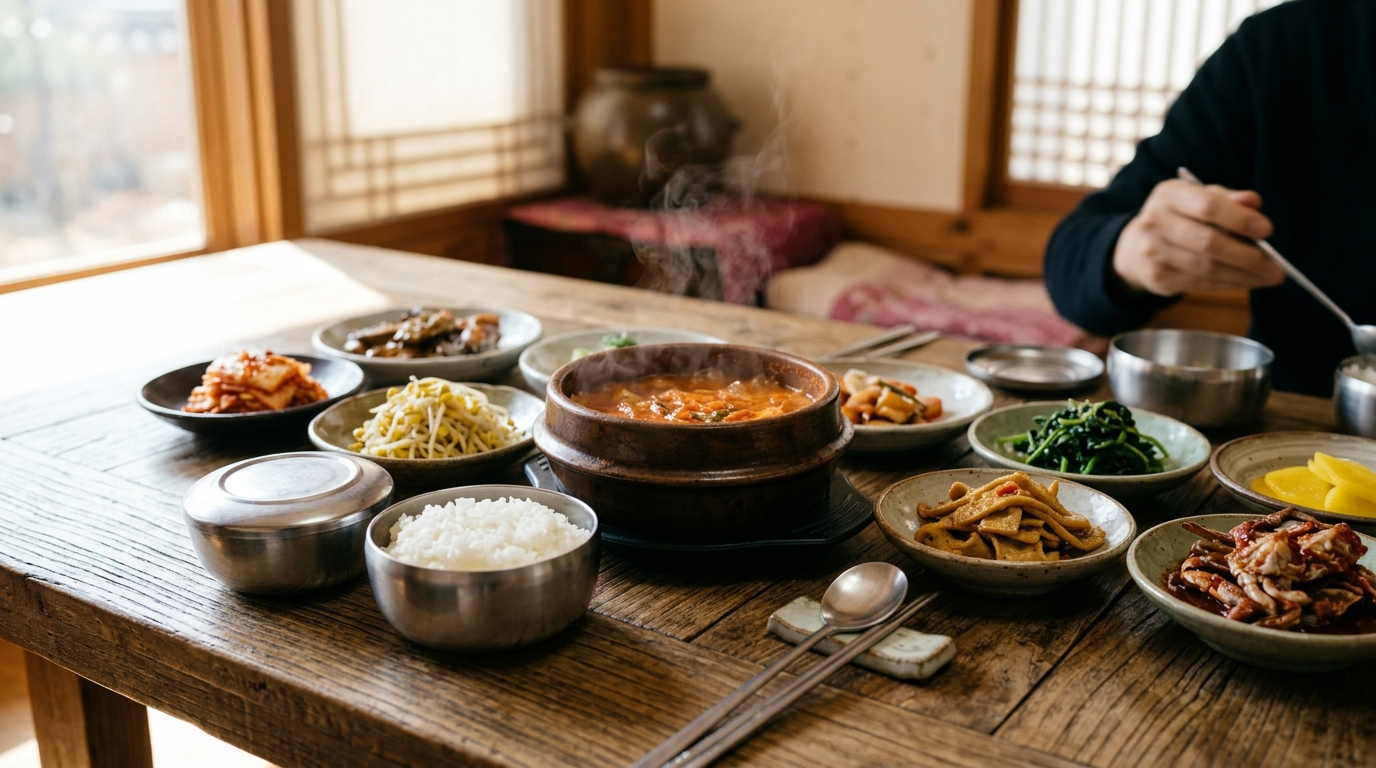
Standard vegetable side dishes (banchan / 반찬) come complimentary with main meals and include unlimited free refills, reflecting local traditions of hospitality (jeong / 정). Premium protein items, however, carry an extra fee.
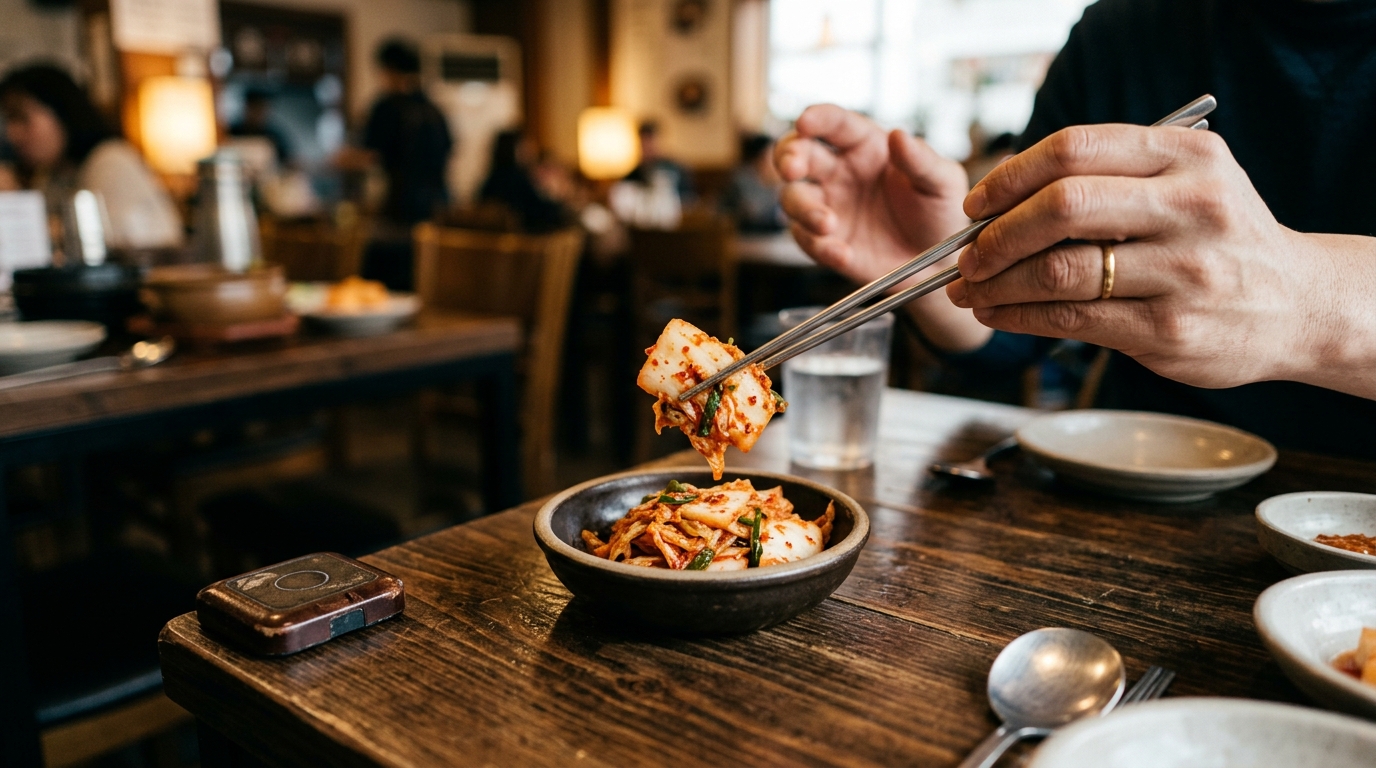
Your initial spread typically brings staples like cabbage kimchi (baechu-kimchi, 배추김치), seasoned bean sprouts (kongnamul-muchim, 콩나물무침), pickled radish, and sautéed fish cakes (eomuk-bokkeum, 어묵볶음). While basic vegetable banchan can be refilled free of charge, high-value protein sides like raw crab or meat toppings carry an additional menu fee. Detailed breakdowns from Kimbap Life's guide on banchan refills clarify which items are complimentary versus paid.
| Side Dish Category | Common Examples | Refill Policy |
|---|---|---|
| Complimentary Vegetables | Kimchi, bean sprouts, pickled radish, potato salad | Unlimited free refills |
| Complimentary Table Basics | Lettuce wraps, garlic, ssamjang dip, shredded green onion | Unlimited free refills |
| Premium Protein Sides | Raw marinated crab (gejang), grilled fish, steamed egg (gyeran-jim) | Paid reorder (typically 2,000 to 5,000 KRW) |
| Specialty Main Additions | Extra cheese, ramen noodle bricks, rice cake supplements | Paid menu add-on |
To ask for a refill from staff, hold up your empty dish slightly or point to it while saying "[Dish Name] deeo ju-se-yo" (더 주세요 - "Please give me more"). If you do not know the dish name, pointing and saying "I-geot deeo ju-se-yo" (이것 더 주세요 - "More of this, please") works just as well.
How Do You Use Self-Service Banchan Bars Under Updated Hygiene Regulations?
At self-service side dish stations marked "Self Bar" (셀프바) or Mul-eun Self (물은 셀프 - "Water is self-service"), staff bring initial side dishes, but refills are strictly self-serve from the central buffet counter.
Under updated food safety rules enforced by South Korea's Ministry of Food and Drug Safety, self-service banchan stations must maintain strict sanitary controls. Food containers must feature physical protective covers, individual serving tongs assigned exclusively to each specific dish, and sanitary sneeze guards.
To comply with sanitation guidelines and respect local dining norms, customers must always use the dedicated tongs assigned to each specific banchan dish at self-service counters. Korean society places a strong social emphasis on reducing food waste. Some restaurants post friendly notice signs warning that unconsumed side dishes may incur a small environmental waste fee of 2,000 to 3,000 KRW, though this is primarily meant as a psychological deterrent to encourage thoughtful portioning.
What Table Mechanics, Hidden Customs, and Payment Etiquette Should Visitors Know?
Most Korean dining tables store utensils and napkins inside a built-in drawer beneath the tabletop edge. Checking this side drawer saves you from having to ask staff for chopsticks or napkins.
Inside the drawer, you will find flat stainless steel chopsticks (jeotgarak, 젓가락), long-handled metal spoons (sutgarak, 숟가락), and paper napkins. One diner usually sets up cutlery for the table by laying utensils on top of a paper napkin placed on the wood.
As outlined in Seonsaengnim's Korean restaurant ordering guide, table service in Korea operates under transparent pricing laws. Under the Enforcement Rule of the Food Sanitation Act, all displayed menu prices legally include a 10% Value Added Tax (VAT) and all service charges.
Because all food and beverage prices displayed on Korean menus legally include 10% Value Added Tax and service fees, tipping waitstaff is never expected and can create confusion. Leaving cash behind on a restaurant table will almost always result in a server running down the street after you to return the "forgotten" money.
How Do Foreign Credit Cards and Solo Dining (Honbap) Restrictions Work in Korean Restaurants?
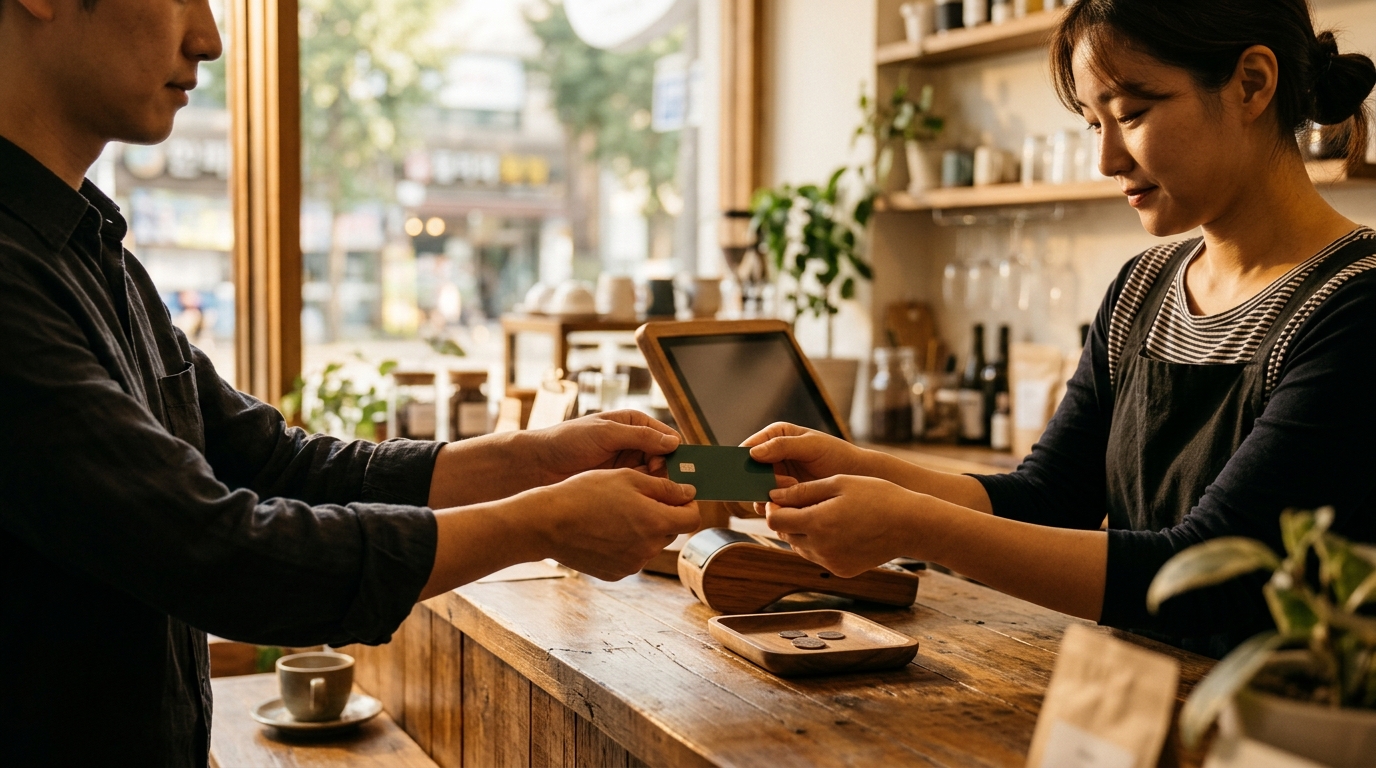
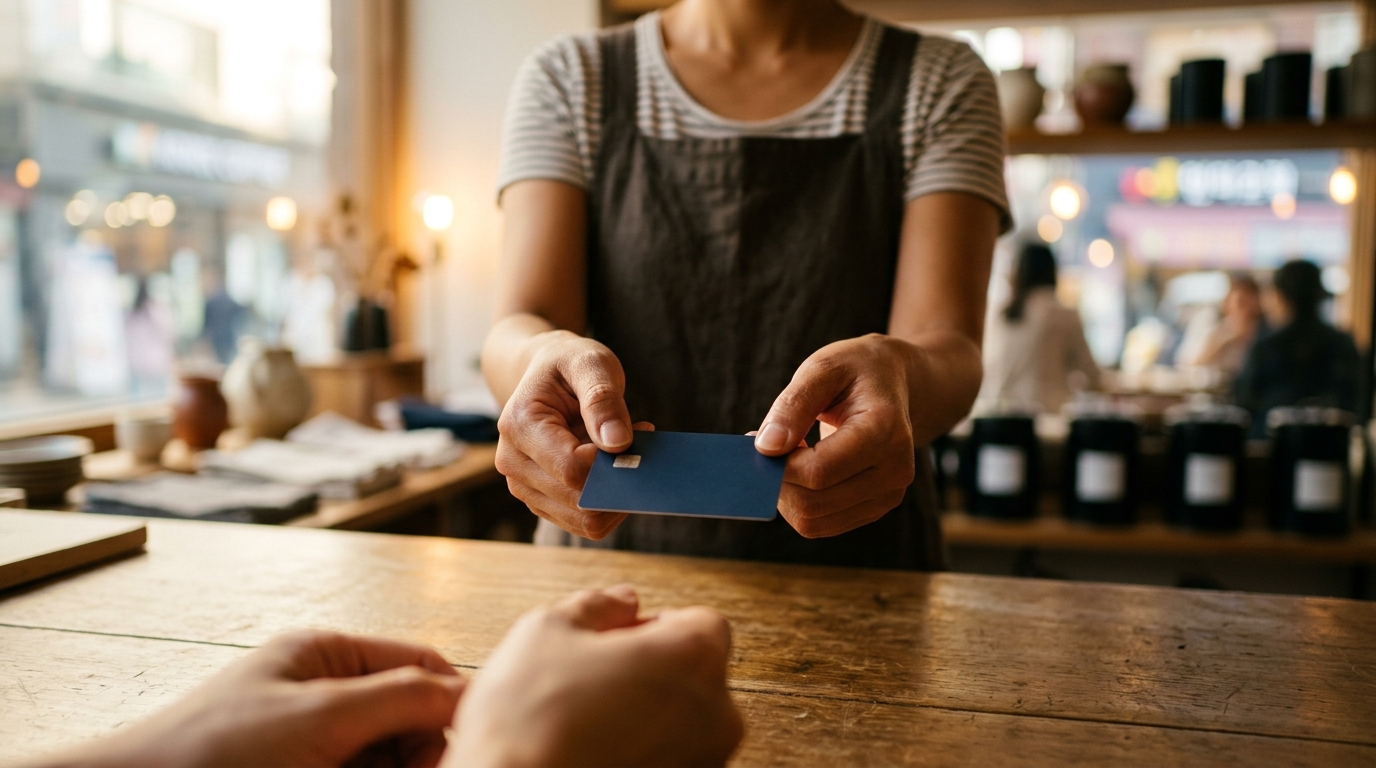
International Visa, Mastercard, and American Express cards work smoothly across South Korea, though tabletop tablet pay readers sometimes reject foreign cards due to local payment network requirements.
Some standalone table ordering terminals process transactions through localized mobile pay networks like Kakao Pay or Naver Pay, which require a domestic Korean card or bank account. If your foreign card fails to process at a table tablet reader, simply select the option to pay at the register (kyesandae gyeol-je, 계산대 결제) and settle the bill at the main exit cashier counter using a standard card machine.
Solo dining (honbap / 혼밥) is widespread at casual soup shops (gukbap), noodle joints (bunsik), and fast-food kiosks. However, Korean barbecue venues (gogi-jib) and hot pot spots usually enforce a two-serving minimum per table to offset the cost of heating table grills.
When dining alone at a barbecue establishment, expect to order at least two portions of meat (e.g., two servings of pork belly, samgyeopsal). You are allowed to eat both portions yourself as a solo diner, provided you meet the two-serving billing threshold required by the house rules.
The reference table below summarizes common dining scenarios, card compatibility, and solo dining expectations across popular Korean restaurant formats:
| Restaurant Type | Foreign Card Success | Solo Dining (Honbap) Friendly? | Ordering Style |
|---|---|---|---|
| Casual Soup / Noodle Shop | 99% (Register or Kiosk) | Highly Friendly (1 portion OK) | Self-service kiosk or verbal |
| Korean Barbecue (Gogi-jib) | 98% (Main Register) | Requires 2-portion minimum | Call button or tablet ordering |
| Modern Pub / Izakaya | 95% (Register preferred) | Moderate (Small plates OK) | Table tablet (t'order) |
| Traditional Market Stall | Cash / Credit (90%) | Highly Friendly | Direct verbal ordering |
Frequently asked questions
Q. Is pushing the table call button considered rude in South Korea?
No, pressing the table call button (hochulbel) once is standard Korean dining etiquette that notifies waitstaff you need assistance. Pressing it repeatedly or holding it down, however, is considered impolite.
Q. Are banchan refills always free in Korean restaurants?
Complimentary refills apply to basic vegetable side dishes such as kimchi, bean sprouts, and pickled radish. Premium protein side dishes like grilled fish or raw marinated crab usually incur an additional menu charge for extra servings.
Q. How do I request water or extra side dishes if there is no call button?
If there is no call button or ordering tablet, raise your hand slightly and say Jeogiyo (저기요 - 'Excuse me') or address staff as Sajangnim (사장님 - 'Boss'). You can also check if the venue has a self-service bar for water and refills.
Q. Do foreign credit cards work on table ordering touchscreens in Korea?
Most foreign credit cards work on tablet payment readers, though localized network payment screens occasionally reject non-domestic cards. If an error occurs, select the option to pay at the main register (kyesandae) when leaving.