Why Korean Cashiers Use Two Hands to Pass Your Card: Etiquette Guide
Key takeaways
Korean two-hand etiquette (du-son ye-jeol) is a customary practice rooted in Confucian values that communicates respect, focus, and hospitality during daily exchanges. While cashiers use it to show care and service quality, international visitors are given grace if they forget. Understanding the simple hand mechanics and payment customs ensures smooth, respectful interactions anywhere in South Korea.
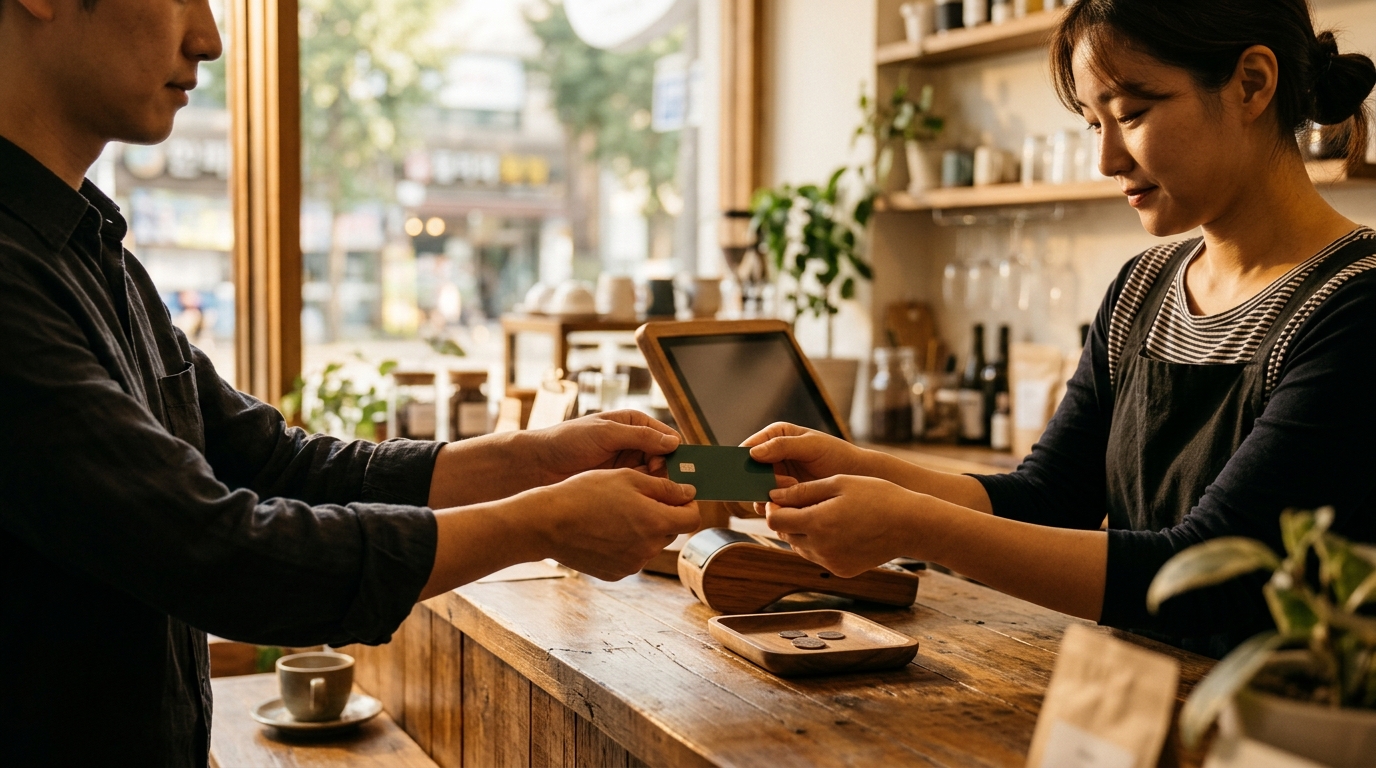
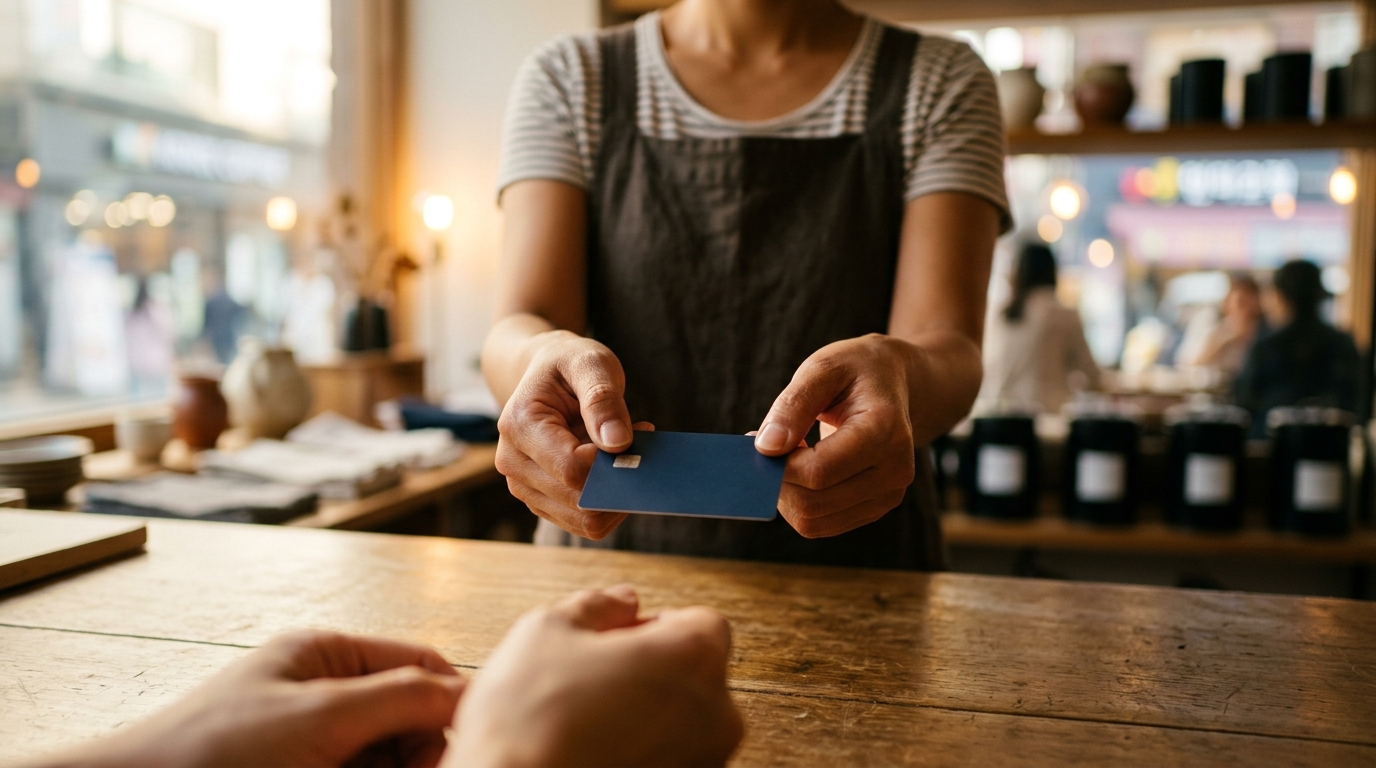
When you order coffee in Seoul or pick up a snack at a neighborhood convenience store, you will notice a distinct habit at the register: cashiers hand back payment cards using both hands. It is not a coincidence, nor is your credit card heavy. It is a daily demonstration of Korean two hand etiquette, a social practice that turns quick transactions into small moments of mutual courtesy.
Understanding this subtle body language offers clear insight into Korean social values. For visitors traveling through South Korea, knowing when and how to use two hands—and recognizing why retail staff do it—helps you handle daily interactions smoothly and respectfully.
What Is Korean Two-Hand Etiquette (Du-Son Ye-jeol)?
Korean two-hand etiquette, known locally as du-son ye-jeol (두손 예절), is a traditional social custom where items are passed and received using both hands. Rooted in Neo-Confucian values, this practice places strong emphasis on social harmony, respect for age, and consideration for others.
Historically, using two hands showed that a person had no hidden weapons or concealed motives, serving as an open gesture of goodwill. Over time, it became a standard form of politeness across all levels of society. According to cultural documentation by KoreanClass101 Etiquette Breakdown, passing an object with a single hand—especially to an older person or a superior—was historically considered dismissive or careless.
In modern South Korea, the core message remains the same: using two hands signals that the person you are interacting with is worthy of your full attention and respect.
How Do You Master the Physical Mechanics of Korean Two Hand Etiquette?
You do not always need to grip an object firmly with both sets of fingers to practice this etiquette properly. Depending on the size of the item and your posture, locals use three practical physical variations to show respect.
Learning these adjustments helps you adapt naturally whether you are handing over a payment card, pouring a drink, or accepting a gift.
The choice between these variations depends on how formal the situation is and how close you are standing to the other person.
| Gesture Style | Physical Execution | Common Daily Use Cases | Level of Formality |
|---|---|---|---|
| Double-Hand Hold | Both hands directly hold the item symmetrically | Exchanging business cards (myeong-ham), giving gifts | High / Formal |
| Wrist / Forearm Support | Right hand holds item; left hand supports right wrist or arm | Passing payment cards, handing money, pouring drinks | Moderate / Standard Courtesy |
| Right Hand Dominance | Right hand extends item; left hand held near waist/chest | Casual retail checkouts, fast food counters | Casual / Respectful |
Why Do Cashiers Use Two Hands, and Why Should You Reciprocate?
Cashiers in South Korea use two hands to pass your payment card as part of standard service hospitality (go-gaek-man-jok, 고객만족), showing that they value you as a customer and treat your personal belongings with care. Service workers in department stores, convenience stores, and restaurants undergo customer service training where proper card delivery is emphasized.
In Korean retail culture, a customer's credit card or money represents trust. Sliding, flicking, or dropping a credit card onto the counter is widely considered rude behavior. By offering your card with both hands—or supporting your right wrist—you acknowledge the cashier's service with equal courtesy.
Reciprocating this gesture creates a positive exchange. When a cashier offers your card back to you with two hands, receiving it with both hands completes a brief cycle of mutual respect that brightens daily transactions.
Will You Offend Someone if You Accidentally Use One Hand in Korea?
Accidentally handing over payment with one hand will not cause severe offense, as Koreans generally afford international visitors a gracious "foreigner allowance" (oegugin grace period). Local residents understand that visitors are unfamiliar with subtle Korean customs.
Context matters in daily life. If your left hand is holding shopping bags, an umbrella, or a smartphone, nobody expects you to drop your belongings to perform a two-handed gesture. In those situations, extending your right hand with a slight nod of the head is perfectly polite.
According to guidance from official tourism portals like the Visit Seoul Etiquette Guide, intent and genuine effort matter far more than technical perfection. As long as you do not intentionally throw items or act aggressively, small social slip-ups are readily forgiven.
How Does Etiquette Apply to Drinking Culture, Business Cards, and Gifts?
Two-hand etiquette extends beyond retail counters into dining, workplace interactions, and gift-giving, serving as a foundational gesture for showing respect across personal encounters.
Drinking Culture (Sul-Yejeol)
When dining with colleagues, friends, or hosts in South Korea, social drinking rules (sul-yejeol, 술예절) strictly observe two-hand mechanics:
- Pouring Drinks: Hold the bottle with your right hand while supporting the middle of the bottle or your right wrist with your left hand.
- Receiving Drinks: Hold your glass with both hands while an elder or companion pours for you.
- Turning Away: When taking a sip in front of someone senior in age or status, turn your head and body slightly away to drink discreetly.
Business Card Exchange (Myeong-ham)
Exchanging business cards (myeong-ham, 명함) is a structured formal ritual in Korean professional life. Detailed reports by the Korea Herald Cultural Report highlight that mistreating a business card can negatively impact professional relationships.
Giving and Receiving Gifts (Seon-mul)
Whether presenting a housewarming gift (jib-du-ri gift) or receiving souvenirs from friends, always use both hands to pass and accept gifts. Accepting a gift with two hands demonstrates sincere gratitude for the effort and thought behind the gesture.
What Is the Practical Payment Guide for Visitors in Korea?
Paying for purchases in Korea requires understanding card-dominant systems, transit card reloading rules, and basic checkout counter phrases. South Korea boasts one of the highest cashless payment rates globally, making card transactions simple for tourists.
Visitors can choose between several payment methods when traveling through Korean cities:
| Payment Method | Where to Obtain | Best Used For | Key Limitations |
|---|---|---|---|
| International Credit Card | Visa / Mastercard from home | Shopping malls, hotels, cafes, taxis | May incur foreign conversion fees |
| WOWPASS Prepaid Card | Airport & subway kiosks | Retail stores, dining, built-in T-money | Requires cash or app top-up |
| T-money Transit Card | Convenience stores (CU, GS25, Seven-Eleven) | Subway, city buses, taxis, small convenience purchases | Reloadable with KRW Cash only at subway stations/stores |
| Korean Cash (KRW) | ATMs, currency exchange desks | Traditional street markets, small food stalls | Decreasing acceptance at unmanned kiosks |
Navigating Unmanned Self-Checkout Kiosks (Mu-in Kiosk)
In modern urban Korea, person-to-person register interactions are increasingly supplemented by unmanned self-checkout kiosks (mu-in kiosk, 무인 키오스크). When using a self-checkout terminal in fast-food chains or unmanned stores, two-handed etiquette is naturally unnecessary, but operating the touchscreens requires selecting English options or recognizing basic interface buttons.
Essential Korean Phrases for Checkout Counters
When paying at registers, combining two-handed card delivery with simple spoken Korean creates a pleasant interaction:
| Phrase (Hangul) | Romanization | English Translation | Context / When to Use |
|---|---|---|---|
| 안녕하세요 | An-nyeong-ha-se-yo | Hello | Greeting as you approach the register |
| 카드로 할게요 | Ka-deu-ro hal-ge-yo | I'll pay by card | Indicating payment method |
| 영수증 버려주세요 | Yeong-su-jeung beo-ryeo-ju-se-yo | Please throw away the receipt | Declining paper receipt |
| 봉투 필요해요 | Bong-tu pil-yo-hae-yo | I need a shopping bag | Requesting a plastic/paper bag |
| 감사합니다 | Gam-sa-ham-ni-da | Thank you | Concluding the transaction |
By practicing Korean two hand etiquette—whether by holding your card with both hands or supporting your wrist—you connect with local culture in a meaningful way that goes far beyond standard tourism.
Frequently asked questions
Q. Why do Korean cashiers hand back cards with two hands?
Korean cashiers use two hands as a standard of professional hospitality (go-gaek-man-jok) to show respect to customers and demonstrate that they are treating your personal card with care and undivided attention.
Q. Is it offensive if I use one hand to pay in South Korea?
No, it is not severely offensive. South Koreans afford international visitors a gracious 'foreigner allowance' (oegugin grace period), understanding that tourists may be unfamiliar with local customs. However, using two hands is appreciated.
Q. What should I do if my other hand is holding bags or a smartphone?
If your hands are full, simply hand over your card with your right hand while offering a slight head nod and eye contact. You do not need to drop your belongings to perform a two-handed gesture.
Q. Do foreign credit cards work at Korean payment registers?
Yes, major international credit cards like Visa and Mastercard are widely accepted across South Korea in cafes, restaurants, department stores, and taxis, though you may still need cash to reload transit cards like T-money.