Tipping in Korea Etiquette: Guide for Tourists
Key takeaways
Tipping in Korea etiquette dictates that tipping is not customary. Menu prices legally include taxes and service fees under the Food Sanitation Act, while taxi fares are meter-based. Leaving cash tips leads to staff returning money. Travelers should pay exact billed amounts without extra gratuities.
Tipping in Korea is not customary. Menu prices and taxi meters include taxes and service charges by law. Leaving cash on a restaurant table usually results in a server running after you to return money they think you forgot. This guide outlines how payment works across restaurants, taxis, hotels, and personal services so visitors can avoid uncomfortable misunderstandings.
While travelers accustomed to tipping 15% to 20% back home might feel an urge to add gratuity, doing so in Seoul, Busan, or Jeju often causes confusion. Korea's hospitality sector relies on fixed wages and all-inclusive pricing rather than voluntary tips.
Is Tipping Expected in South Korea? The Short Answer & Golden Rule
Tipping is not expected, customary, or required in South Korea for standard travel situations. Pay the exact amount shown on your bill or taxi meter, and leave no cash behind.
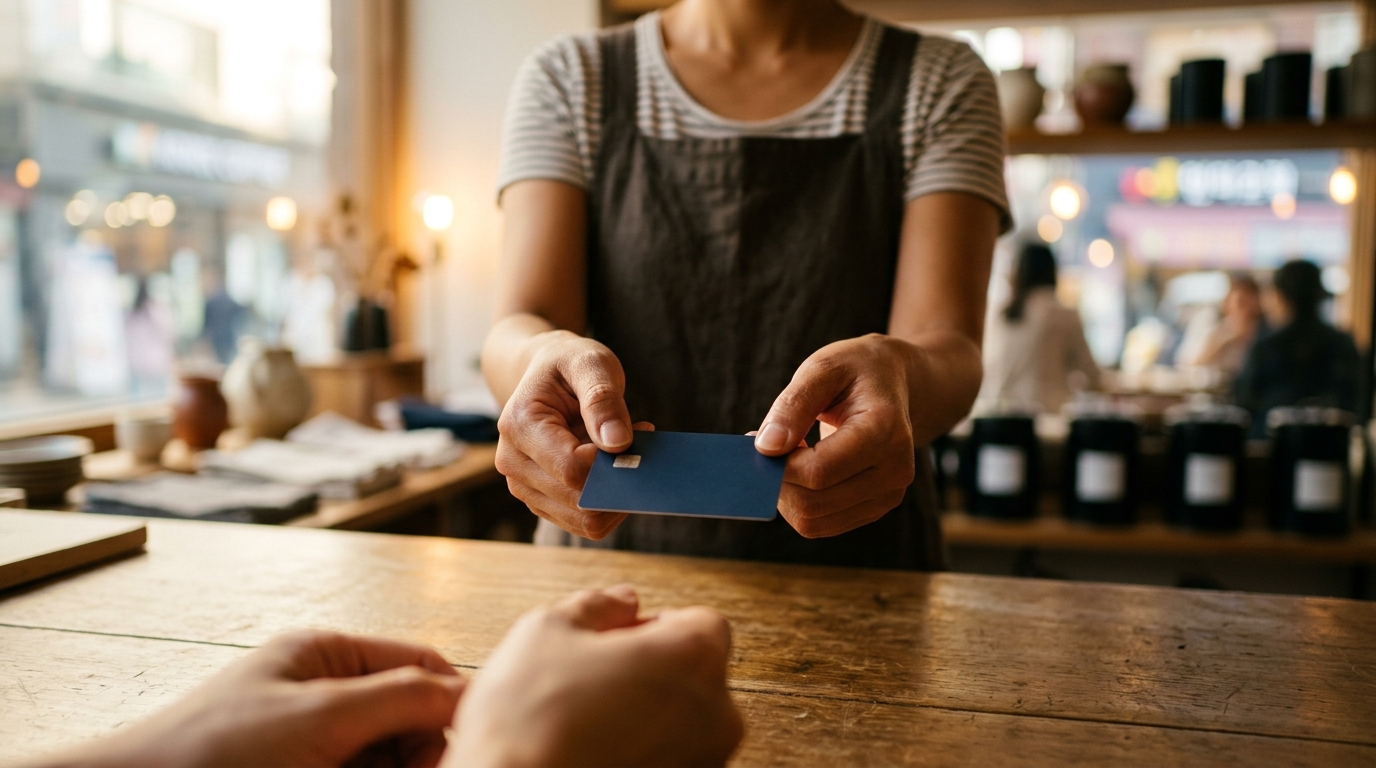
If you leave bills on a dining table or payment counter, staff usually assume you dropped the money by accident. Waiters frequently run out the front door to return the extra bill or coins. Payment terminals across the country do not offer tip screens; card payments process only the exact total charged.
A few Western-oriented cafes or high-end venues in tourist hubs like Itaewon have set out tip jars, but these remain rare exceptions. For 99% of daily transactions, zero tipping is the standard.
What Are the Legal and Cultural Reasons Behind Korea’s No-Tip System?
South Korea's no-tip environment stems from strict consumer protection regulations, statutory labor wages, and clear menu pricing.
The Final Price Display System (Food Sanitation Act)
Under Article 57 of the Enforcement Rules of the Food Sanitation Act (enforced January 31, 2013), food service establishments in South Korea must display the final price payable by the customer. Official guidelines mandate that this price includes 10% Value-Added Tax (VAT) and any standard service charges. Businesses cannot add unexpected fees or tax calculations at checkout.
Because the printed menu price is legally binding, adding voluntary cash tips complicates accounting and legal compliance for business owners. Travelers should consult the Ministry of Food and Drug Safety or local guidelines for specific commercial compliance details.
Guaranteed Minimum Wages vs. Tip Dependency
Korean hospitality employees earn statutory hourly wages rather than tip-dependent pay rates. Data from the Minimum Wage Commission of Korea shows the statutory hourly minimum wage was set at KRW 9,860 in 2024, KRW 10,030 in 2025, and KRW 10,320 in 2026. Because basic compensation is guaranteed by law, service workers do not rely on tips for income.
| Service Category | Typical Tipping Expectation | Standard Payment Method | Legal / Cultural Note |
|---|---|---|---|
| Standard Restaurants & K-BBQ | No tipping expected (0%) | Pay at front counter | Final price mandated by Food Sanitation Act |
| Cafes & Bakeries | No tipping expected (0%) | Kiosk / Counter pre-pay | Tip jars in tourist spots face public backlash |
| Seoul Taxis & Kakao T | No tipping expected (0%) | In-cab card / Kakao Pay | Fare strictly set by official city meter rate |
| Luxury Hotels (5-Star) | Optional / Built-in fee | Hotel room bill | 10% service charge is pre-included in room rate |
| Private Tour Guides | Optional (KRW 10,000–20,000) | Handed directly in cash | Only exception where voluntary tips occur |
Dining Etiquette: How Do You Pay at Restaurants, K-BBQ, Cafes, and Self-Kiosks?
Paying for a meal in Korea follows a straightforward routine that differs from Western table service.
Korean BBQ (Gogi-jip) Table Service
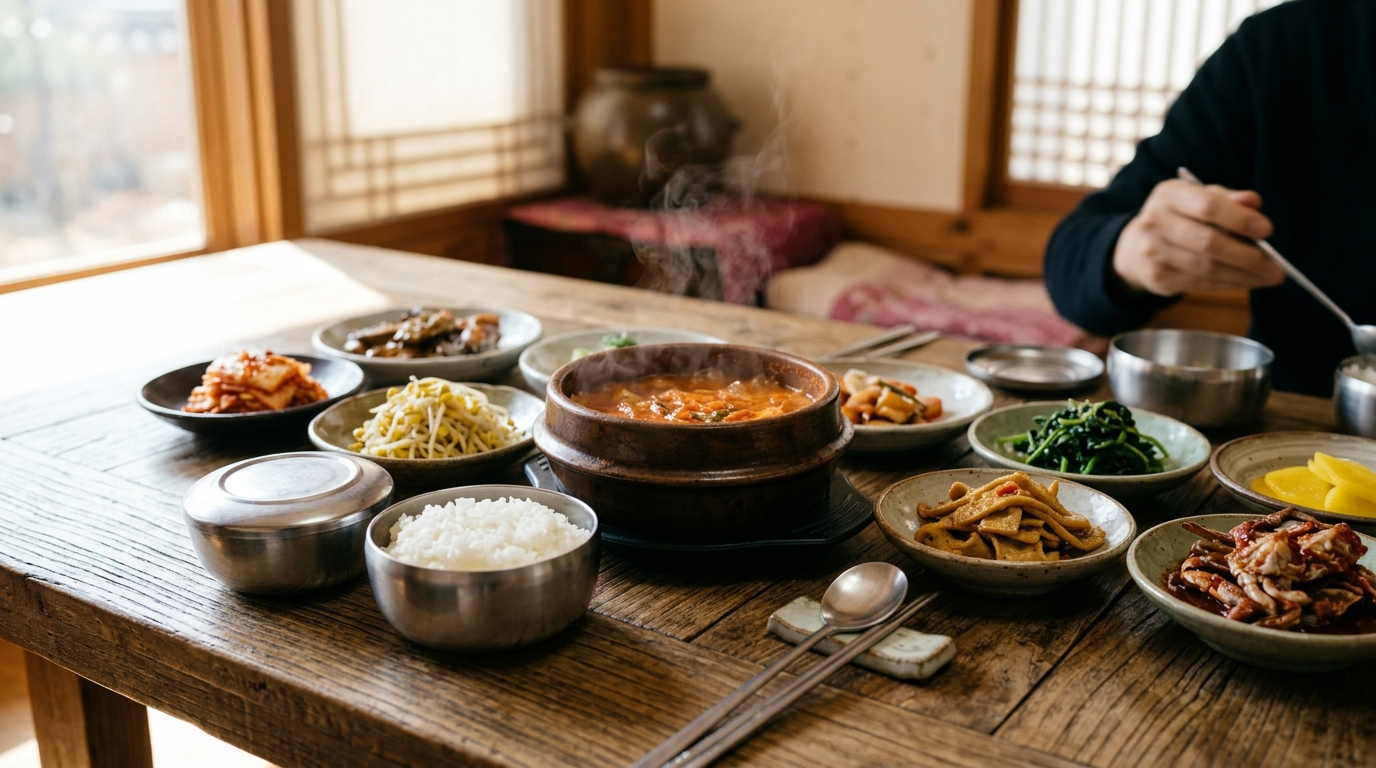
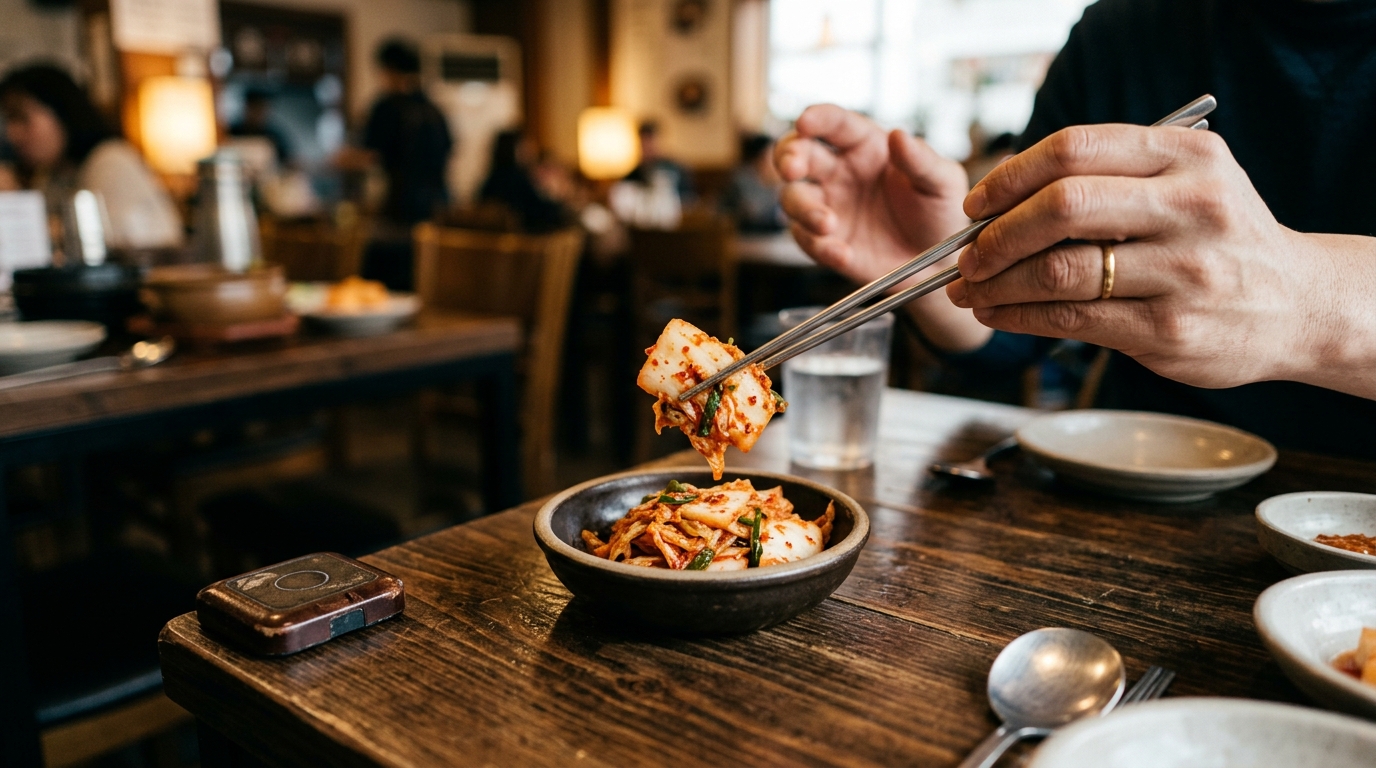
At traditional Korean barbecue restaurants (gogi-jip / 고기집), staff regularly stop by your table to tend the grill, trim meat, and refill side dishes (banchan / 반찬). Even if your server handles all the cooking, leave no cash on the table. Table side service is already included in the food price.
Self-Kiosks, Ordering Tablets, and Foreign Credit Card Terminals
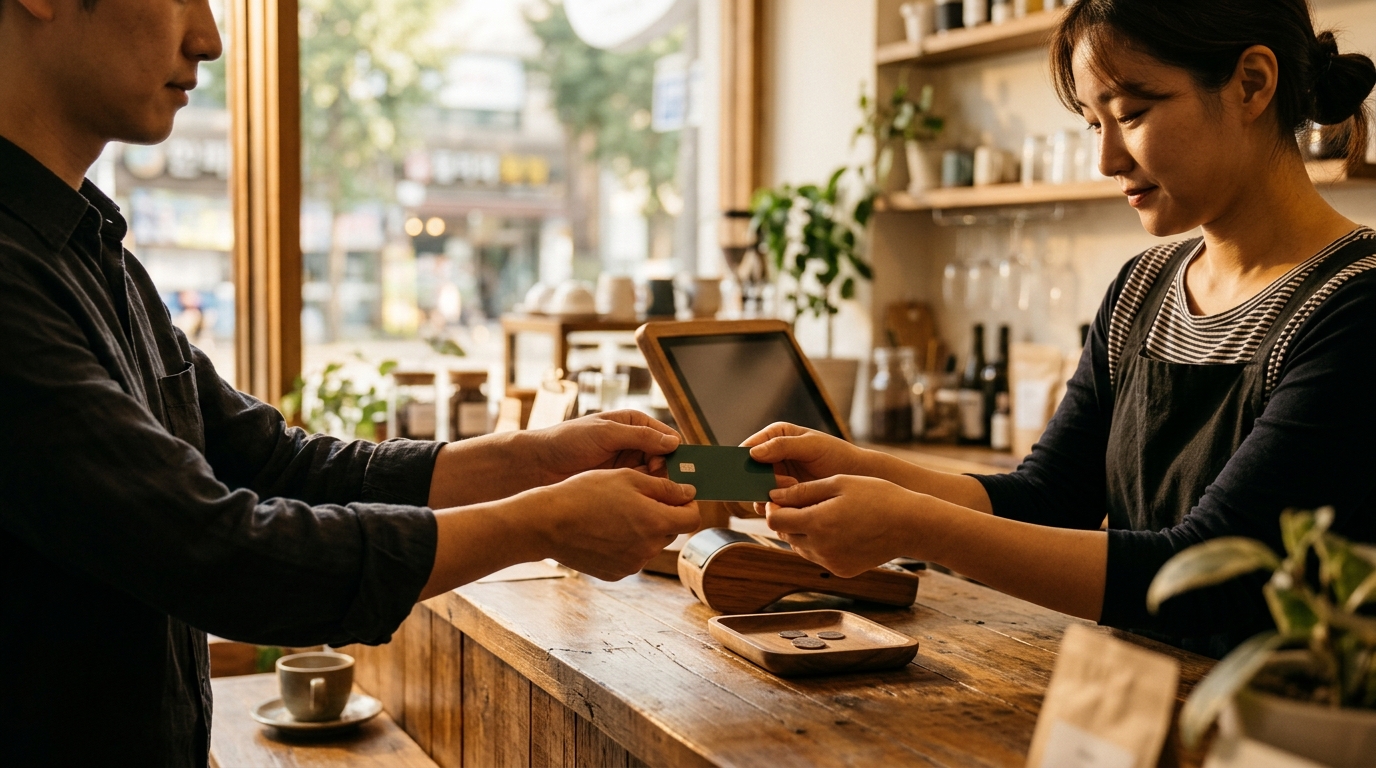
Many quick-service restaurants and cafes feature self-service digital kiosks (kiosk / 키오스크) or table ordering screens (table-order / 테이블오더). These systems calculate your total and bill your card directly without presenting tip prompts.
When paying with a foreign credit card (Visa, Mastercard, or American Express), card readers process transactions directly in South Korean Won (KRW). Receipts never include a line for written tips.
High-End Hanjeongsik and Fine Dining Exceptions
During formal corporate dinners at traditional fine dining establishments (hanjeongsik / 한정식) or high-end private rooms, hosts sometimes hand cash envelopes (bongtu / 봉투) to senior staff. This is an internal business custom reserved for private events. Tourists visiting luxury hotel dining rooms or Michelin-starred restaurants are not expected to tip beyond the final bill, which includes pre-calculated service charges.
Taxis, Public Transit, and Kakao T: Do You Tip Drivers in Seoul?
Taking a taxi in South Korea relies on regulated, meter-based pricing.
Street-Hailed Taxis and Meter Fares
When hailing a standard sedan (jung-hyeong taxi) in Seoul or Busan, drivers turn on the digital meter as the trip begins. As of early 2024, the Seoul mid-sized taxi base fare starts at KRW 4,800. You owe only the amount displayed on the meter when you reach your destination.
Rounding up when paying with cash is acceptable but unnecessary. If a fare comes to KRW 9,700, letting the driver keep KRW 300 from a KRW 10,000 bill (geodon-don eun dwaesseoyo / 거스름돈은 됐어요) is viewed as polite, though most riders use credit cards or T-money transit cards for exact payment.
The Kakao T Tipping Feature Controversy
When Kakao T, operated by Kakao Mobility, tested an optional tipping option in July 2023 that prompted riders for a KRW 1,000 to KRW 2,000 tip for highly rated drivers, it sparked widespread public pushback. An independent consumer survey covered by The Korea Times showed that 71.7% of South Korean respondents opposed taxi tipping features over concerns about rising transportation costs.
Riders using Kakao T or hailing taxis on the street can skip optional app tip prompts without violating local norms.
What Is the Tipping Etiquette for Hotels, Spas, Salons, and Private Tour Guides?
While zero tipping applies to daily services, specific hospitality settings follow distinct customs.
   Standard Services (0% Tip)		 Standardized / Private Services (Optional)
 ┌──────────────────────────────┐     ┌──────────────────────────────────────────┐
 │ • Korean BBQ & Restaurants   │     │ • Private Tour Guides (KRW 10k-20k/day)  │
 │ • Seoul Taxis & Kakao T      │ ──► │ • Airport Transfer Van Drivers           │
 │ • Hair Salons & Beauty Clinics│     │ • 5-Star Hotel Porters (KRW 2k-5k/bag)   │
 │ • Cafes, Bakeries & Bars     │     │ • Private Customized Excursions          │
 └──────────────────────────────┘     └──────────────────────────────────────────┘
Luxury Hotel Porters and Concierge Services
Budget hotels, business chains (such as Toyoko Inn or Lotte City Hotel), and short-term rentals do not employ bellhops, and tipping is non-existent. International 5-star hotels (such as Four Seasons Seoul, The Shilla, or Grand Hyatt) add a 10% service charge and 10% VAT directly to room and dining bills.
If a porter carries heavy luggage to your room, giving KRW 2,000 to KRW 5,000 in cash is acceptable, though hotel staff do not expect it.
Hair Salons, Spas, and Aesthetic Clinics
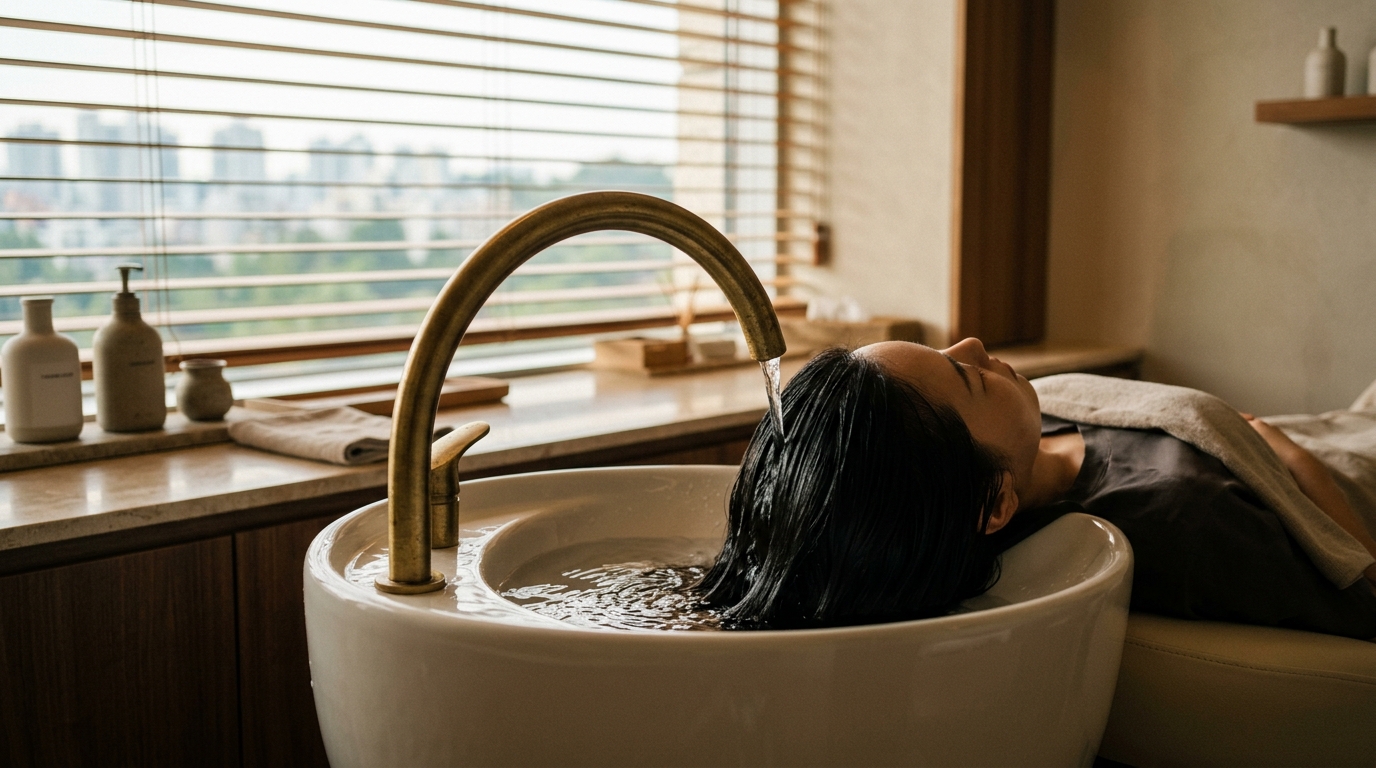
South Korea hosts extensive beauty tourism, from hair salons in Hongdae or Gangnam to skin clinics and traditional day spas (jjimjilbang / 찜질방). As noted in travel reports from The Soul of Seoul, prices for haircuts, treatments, and body scrubs are fixed. You pay the exact listed price at the front desk.
Private Tour Guides and Airport Transfer Services
Private day-tour guides and dedicated airport transfer drivers are among the few exceptions to Korea's no-tip norm. Because private guides manage custom day itineraries for small groups, voluntary cash tips are appreciated.
How Can You Show Appreciation Without Money Using Polite Korean Phrases?
Because cash gratuities create confusion, expressing appreciation in South Korea relies on verbal thanks and polite gestures.
Instead of leaving cash, use these polite Korean phrases when finishing meals or leaving services:
- Gamsahabnida (감사합니다): "Thank you." (Universal polite phrase for cashiers, servers, and drivers).
- Jal meog-eoss-seubnida (잘 먹었습니다): "I ate very well." (Said to restaurant staff when leaving your table or paying).
- Sugo-hasesseoyo (수고하셨습니다): "Thank you for your hard work." (Used when exiting a taxi or finishing a tour).
- Masissoyo (맛있어요): "It is delicious!" (A polite compliment for food stall owners and chefs).
Checking local transport app options and transit card guidelines before traveling helps keep payments simple and transparent across South Korea.
Frequently asked questions
Q. Is tipping illegal in South Korea?
In South Korea, tipping is not explicitly illegal for customers, but charging hidden mandatory service fees is prohibited under the Food Sanitation Act. Establishments must display final prices containing 10% VAT and any service fees. Leaving cash tips is allowed legally, but staff usually return the cash believing it was left by mistake.
Q. What happens if I leave money on the table in Seoul?
If cash is left on a table in Seoul, restaurant staff typically assume the customer forgot their change. Waitstaff will often run out of the building to hand the money back before the customer walks away.
Q. Do you tip Kakao Taxi drivers in Korea?
Kakao Taxi drivers in South Korea do not expect tips, as fares are calculated by official meters. Although Kakao T tested a tipping feature in 2023, over 71% of surveyed locals opposed it, and drivers expect only the exact meter fare.
Q. Are service charges included in Korean restaurant bills?
Service charges and 10% Value-Added Tax (VAT) are included in all South Korean restaurant menu prices under the Final Price Display System enforced since 2013. The listed menu price represents the final total due at checkout.
Q. Do you tip private tour guides in South Korea?
Tipping private tour guides in South Korea is optional but accepted for personalized service. For an exceptional full-day itinerary, offering KRW 10,000 to KRW 20,000 per group in cash at the end of the day is welcomed.