Korean Age Honorifics Etiquette: Social Rules for Visitors
Key takeaways
Navigating South Korean social hierarchy requires an understanding of age rules, honorific titles, and physical etiquette. Despite the June 2023 legal age standardization, social relationships remain anchored to birth years and seniority. This guide covers how to correctly use terms like oppa and hyung, proper bowing angles, dining protocols, and essential transit manners for travelers.
Within five minutes of meeting someone new in South Korea, you will almost certainly be asked, "How old are you?" or "What year were you born?" While Western culture often views personal questions about age as intrusive, understanding korean age honorifics etiquette reveals that this inquiry is fundamental to social harmony. Asking for your birth year is a gesture of respect designed to determine the precise grammatical register, body language, and social titles required to interact comfortably.
Learning how age seniority works alongside honorific titles and physical courtesy gives you the confidence to travel, dine, and connect naturally anywhere in South Korea.
Why Does Age Determine Everything in Korea?
Age dictates how language works in South Korea, setting the baseline for grammatical politeness and behavioral expectations in daily interactions.
Rooted in historic Neo-Confucian values, Korean culture emphasizes interpersonal hierarchy, filial piety, and social order. In the Korean language, you cannot easily speak to another person without choosing a specific level of politeness. Age, alongside workplace position or academic standing, determines whether you use formal, informal, or casual speech.
According to cultural research published by the International Relations Council, Korean speech falls into three primary registers:
- Formal Polite (Hapsho-che / 합쇼체): Used in official settings, broadcasting, business presentations, or when addressing public officials and complete strangers of equal or higher status. Verbs typically end in -sumnida (-습니다).
- Informal Polite (Haeyo-che / 해요체): The standard, versatile speech register used for daily interactions with acquaintances, older friends, service personnel, and colleagues. Verbs typically end in -yo (-요).
- Casual Speech (Banmal / 반말): Low-form, intimate language strictly reserved for close friends of the exact same age, younger individuals, or children. Using banmal with someone older or unfamiliar is considered a major breach of social manners.
Because language is intrinsically tied to age, establishing who is older immediately prevents awkward grammatical mistakes and clarifies social boundaries.
Even in modern corporate and social environments, speech registers maintain order. While young adults may bond quickly, dropping polite speech forms without mutual agreement—a transition known as banmal-hae—is viewed as overly aggressive or disrespectful unless initiated by the older party.
How Did the 2023 Age Law Change Social Reality in Korea?
South Korea officially unified its legal and administrative age system with the international standard (man nai) on June 28, 2023, though daily social interactions still rely heavily on birth-year hierarchy.
For centuries, South Korea operated with multiple age calculation methods. The traditional "Korean Age" (hanguk nai) assigned age 1 to a newborn baby at birth, and every citizen gained a year simultaneously on New Year's Day. Under this legacy system, a baby born on December 31 was considered 2 years old on January 1, despite being alive for only two days.
To eliminate legal ambiguity and financial disputes, the South Korean government passed the Unified Age Law. As of 2026, all legal documents, medical records, contracts, and administrative agencies exclusively use international age (man nai). For personal legal or administrative matters, always confirm specific age requirements directly with the relevant official agency.
Despite this administrative update, social customs change slowly. When establishing interpersonal hierarchy, Koreans still frequently look at calendar birth years (yeon nai or hanguk nai) rather than exact birthdays. If two people were born in the same calendar year, they are considered social equals (chingu / 친구, meaning "same-age friend"), even if their exact birthdays are months apart.
The table below contrasts how each age system functions in contemporary South Korea.
| Age System | Local Name | How It Is Calculated | Primary Real-World Application |
|---|---|---|---|
| International Age | Man nai (만 나이) | Starts at 0 at birth; turns 1 on your birthday. | Legal contracts, passports, medicine, legal drinking/smoking age boundaries. |
| Traditional Korean Age | Hanguk nai (한국 나이) | Starts at 1 at birth; adds 1 year every January 1st. | Social hierarchy, determining banmal vs. honorific speech among older generations. |
| Year Age | Yeon nai (연 나이) | Current calendar year minus birth year. | Military conscription eligibility, youth protection laws. |
When visiting Korea, if someone asks for your age, offering your birth year (e.g., "I was born in 1995") is the clearest, most unambiguous response.
How Should You Use Oppa, Hyung, Noona, and Unnie?
Kinship titles like oppa, hyung, noona, and unnie are saved for close friends, family members, or romantic partners, choosing the right term based on both the speaker's and the listener's gender.
In Western languages, you can address almost anyone by their first name once introduced. In Korean, calling an older person directly by their first name without a title is viewed as disrespectful. As detailed in the 90 Day Korean honorifics breakdown, specific social titles fill this gap.
These titles depend entirely on two factors: your gender and the gender of the older person you are addressing.
The following breakdown illustrates the four standard kinship titles used between older and younger peers.
| Speaker Gender | Older Person's Gender | Correct Title | Hangul | Literal Context |
|---|---|---|---|---|
| Male | Older Male | Hyung | 형 | "Older brother" used by males for older male friends or brothers. |
| Male | Older Female | Noona | 누나 | "Older sister" used by males for older female friends or sisters. |
| Female | Older Male | Oppa | 오빠 | "Older brother" used by females for older male friends, brothers, or boyfriends. |
| Female | Older Female | Unnie | 언니 | "Older sister" used by females for older female friends or sisters. |
Calling an older peer by their bare first name without an honorific title or suffix is considered a major breach of Korean social etiquette.
A common mistake made by foreign tourists and K-pop fans is using terms like oppa or unnie in workplace settings or with strangers. These titles convey emotional intimacy. In professional environments or when interacting with service personnel, workplace titles or gender-neutral honorifics must be used instead.
When dealing with professionals, business owners, or service workers, specific occupational honorifics replace age titles. The reference table below lists standard terms used in daily life.
| Situation / Target Person | Polite Title | Hangul | Usage Example |
|---|---|---|---|
| Restaurant or shop owner | Sajangnim | 사장님 | Used to call over restaurant owners or shop managers politely. |
| Taxi or bus driver | Gisanim | 기사님 | Used when addressing taxi drivers or bus drivers. |
| Teacher, doctor, expert | Seonsaengnim | 선생님 | Respectful term for teachers, doctors, or senior professionals. |
| Coworker or colleague | Name + Sshi / Job Title + Nim | ~씨 / ~님 | Used in workplace contexts (e.g., Minsoo-sshi or Bujang-nim). |
What Are the Core Rules for Bowing, Dining, and Drinking Etiquette?
Physical etiquette in South Korea reflects the same social hierarchy as language, using posture, hand placement, and seating order to signal respect.
Bowing is the standard physical greeting across South Korea, replacing handshakes in most daily interactions. Handshakes do occur in business environments, but they are typically initiated by the senior person, with the junior person supporting their right elbow or wrist with their left hand.
The table below outlines the standard bowing angles expected in South Korean etiquette.
| Bow Angle | Context & Audience | Appropriate Situation |
|---|---|---|
| 15° (Casual) | Friends, store clerks, passing acquaintances | Quick acknowledgments, passing through doors, casual thanks. |
| 30° (Standard) | Elders, superiors, teachers, customers | Official default bow for greetings, introductions, and everyday respect. |
| 45° (Deep) | High-ranking figures, deep gratitude, formal apologies | Expressing profound remorse, extreme gratitude, or formal ceremonies. |
| 90° / Kneeling | Ancestral rites (Jesa), traditional New Year's bows (Sebae) | Traditional family rituals, holiday observances, and sacred events. |
When receiving a drink, business card, or side dish from an elder, always use both hands to show proper respect and appreciation.
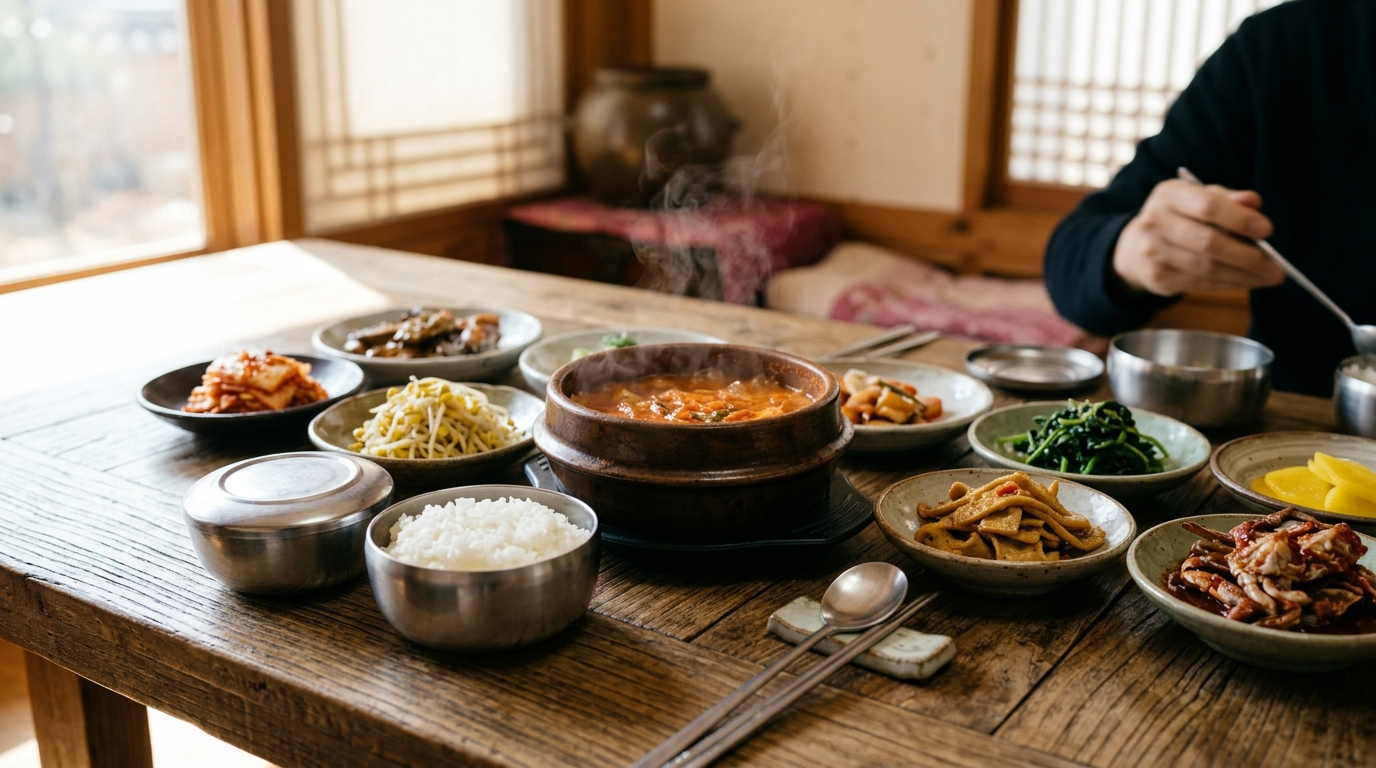
Dining and drinking etiquette follows equally precise guidelines when eating with older colleagues or hosts. When drinking alcohol with seniors, specialized protocols ensure everyone feels respected.
What Are the On-the-Ground Etiquette Rules for Transit and Dining Costs?
Navigating public transport and handling restaurant bills requires an understanding of South Korean public etiquette and cultural hospitality.
Public transportation in Seoul and other major cities operates under strict courtesy norms. On subways, specific seats are marked with pink badges for pregnant passengers, while designated priority seats (Nobyakja-seok) located at the extreme ends of train cars are reserved for the elderly, disabled, and injured.
Subway priority seats located at the ends of train cars must remain completely empty at all times, even during peak rush hour.
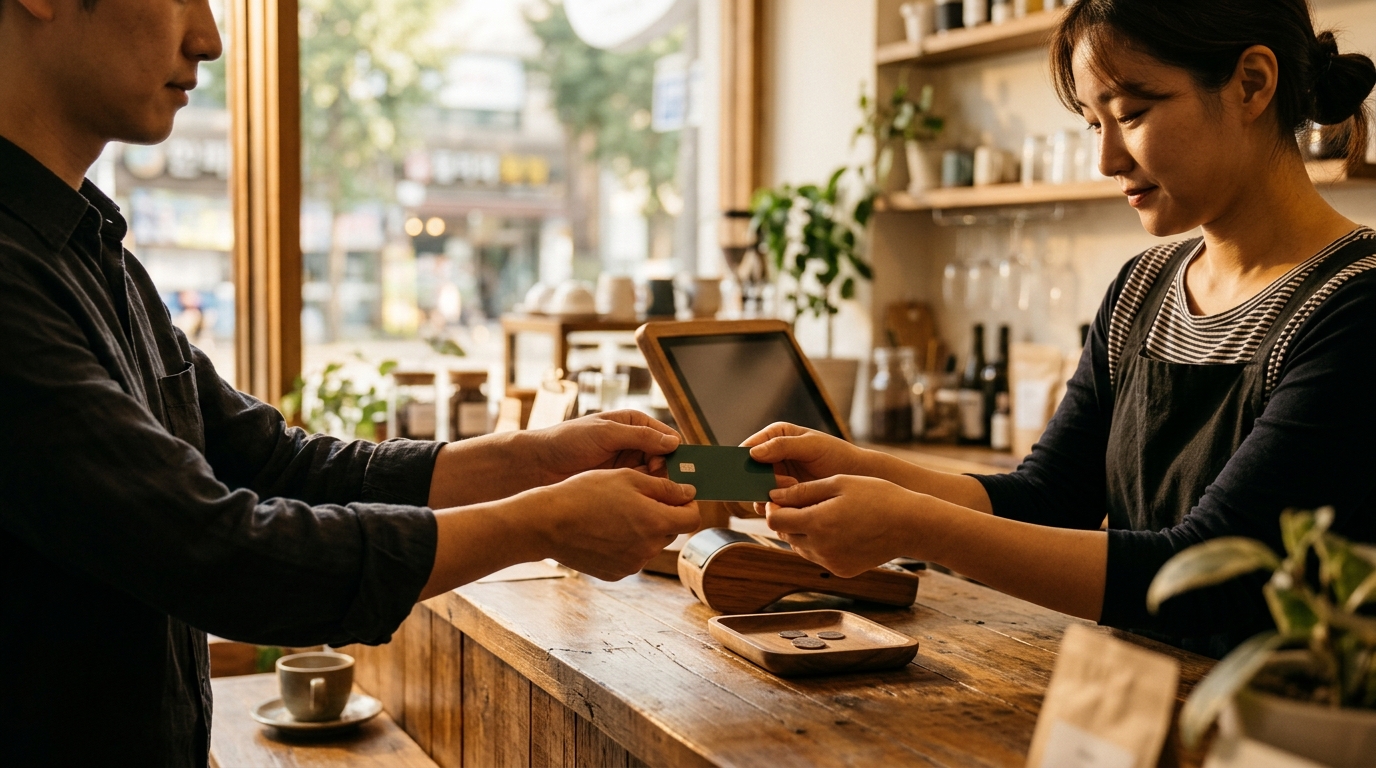
When paying for meals, South Korean dining culture operates under a round-based host system rather than splitting bills equally item-by-item. Typically, the oldest person or the host pays for the main meal (1cha / 1차). Younger guests or visitors show appreciation by offering to pay for the second round (2cha / 2차), such as coffee, dessert, or drinks at a secondary venue.
What Essential Polite Phrases Should Every Foreign Visitor Know?
Mastering a few fundamental polite phrases in the informal polite (haeyo-che) or formal polite (hapsho-che) register helps bridge cultural gaps smoothly.
When visiting stores, taking taxis, or dining out, using polite endings demonstrates immediate effort and respect. If you accidentally use casual speech (banmal) or mispronounce a title, politely apologizing resolves the issue right away.
Here are six high-utility phrases every traveler should memorize:
- Annyeong-haseyo (안녕하세요) — "Hello / How are you?" (Standard polite greeting).
- Gamsa-hamnida (감사합니다) — "Thank you" (Formal polite expression of gratitude).
- Sajangnim (사장님) — "Boss / Owner" (Polite way to call restaurant or store staff).
- Joesonghamnida (죄송합니다) — "I am sorry" (Formal apology if you make a etiquette mistake).
- Jeogiyo (저기요) — "Excuse me" (Polite phrase to get a waiter's attention at a table).
- Annyeonghi gese-yo (안녕히 계세요) — "Goodbye" (Said to a host/seller who is staying while you leave).
Frequently Asked Questions About Korean Etiquette
Does the 2023 age law change mean traditional Korean age is dead?
While the 2023 Unified Age Law officially standardizes civil and legal matters to international age (man nai), social hierarchy still defaults to birth calendar year (yeon nai or hanguk nai). South Koreans continue to use birth years to establish appropriate social registers and kinship titles.
Why do Koreans ask birth year right after meeting someone new?
Asking for birth year is a cultural prerequisite rather than personal nosiness. It provides the necessary social context to select the correct speech level (hapsho-che, haeyo-che, or banmal) and choose appropriate address terms without causing social awkwardness.
Can I call my boss or workplace manager Oppa or Unnie?
No. Kinship titles like oppa, hyung, noona, and unnie are restricted to close friends, family members, or romantic partners. In workplace environments, you should always address colleagues using their professional title followed by the honorific suffix -nim (e.g., Manager-nim) or Name + Sshi.
What should I do if an older Korean host insists on paying for the whole meal?
In South Korean hospitality culture, it is normal and expected for the senior person or host to pay for the primary meal (1cha). Attempting to split the bill item-by-item can cause embarrassment. Accept graciously with a bow and offer to purchase coffee, tea, or dessert (2cha) afterward as a gesture of appreciation.
Frequently asked questions
Q. Does the 2023 age law change mean I can ignore age hierarchy in Korea?
No. While the June 2023 law standardized legal and civil documents to international age (man nai), daily social etiquette and language registers still rely heavily on birth year seniority. You should still use polite speech and proper titles with anyone older than you.
Q. Is it okay for a foreigner to call a Korean friend Oppa or Hyung?
Yes, but only if you are genuinely close friends, you have confirmed they are older than you, and the gender pairing matches. Never use these titles with strangers, professional colleagues, or service staff.
Q. How do I respectfully address restaurant owners, staff, or drivers in Korea?
Address restaurant or shop owners as Sajangnim (사장님), taxi drivers as Gisanim (기사님), and general service staff or customers as Yeogiyo (여기요, 'over here') or Sonnim (손님, 'guest'). Avoid using casual personal titles like Oppa or Unnie.
Q. What happens if I make a mistake with Korean speech or bowing?
Koreans generally extend significant grace to foreign visitors who make minor etiquette slips. Apologize politely using 'Jweosonghamnida' and adjust your posture or speech level to restore respect.