Unmanned Shops in Korea: Night Entry & Self-Checkout Guide
Key takeaways
Unmanned shops in Korea require knowing how to bypass night security doors and pay at self-checkout kiosks. Physical foreign credit cards fail nearly 85% of outer night entry door locks, but travel cards like WOWPASS work seamlessly. This guide covers night door entry workarounds, payment compatibility, self-checkout kiosk steps, and legal tips to avoid accidental theft charges.
Unmanned shops in Korea run smoothly once you know how night door locks work and how to handle the self-checkout kiosks. Inside the store, foreign credit cards like Visa and Mastercard rarely run into issues. Out on the street after dark, however, it is a different story: outer door scanners rely on local clearing networks, causing physical foreign credit cards to fail about 85% of the time. This guide breaks down door verification workarounds, card acceptance rules, touchscreen navigation, and key steps to avoid accidental shoplifting claims.
What Are Unmanned Stores (Muin Jeompo) in Korea?
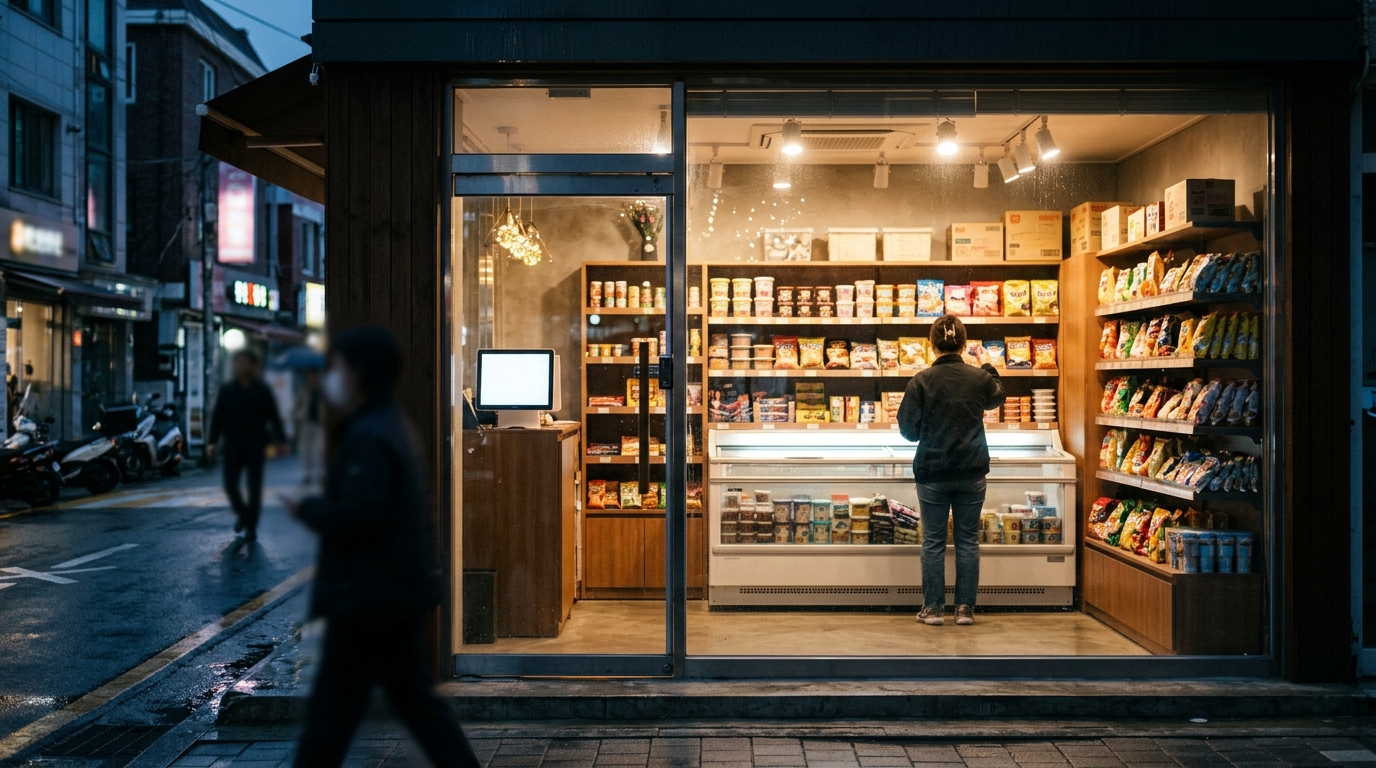
An unmanned store, called muin jeompo (무인점포) in Korean, is a fully automated shop operating without cashiers or floor staff. Driven by South Korea's minimum wage of ₩10,320 per hour as of 2026, over 12,000 unmanned stores operate nationwide across Seoul, Busan, Incheon, and smaller regional cities. Operating 24 hours a day, these self-service setups cover everyday essentials, late-night snacks, and specialized routine services.
You will encounter several distinct types of unattended shops:
- Ice Cream and Snack Shops (Muin Aiseukeurim): Neighborhood storefronts packed with chest freezers of Korean ice cream bars, imported chips, and bulk candies priced from ₩600 to ₩3,000.
- Unmanned Convenience Stores: Late-night conversions of major brands like CU, GS25, Seven-Eleven, and Emart24 where staff leave after 22:00, switching the shop to self-checkout mode.
- Self-Service Ramen Shops: Outlets equipped with automated instant ramen cookers, hot water units, and topping stations.
- Specialty Services: Photo booths like Life Four Cuts, 24-hour coin laundries, print shops, and pet treat boutiques.
Automated systems also cover public transit hubs. In March 2026, Seoul Metro finished deploying roughly 440 unmanned subway ticketing kiosks that take foreign credit cards for single-ride fares and Climate Cards. Daytime visits to neighborhood shops are simple, but visiting commercial spots after dark involves security locks that require foreign travelers to prepare ahead.
Night Door Entry: Unlocking Unattended Stores After Dark
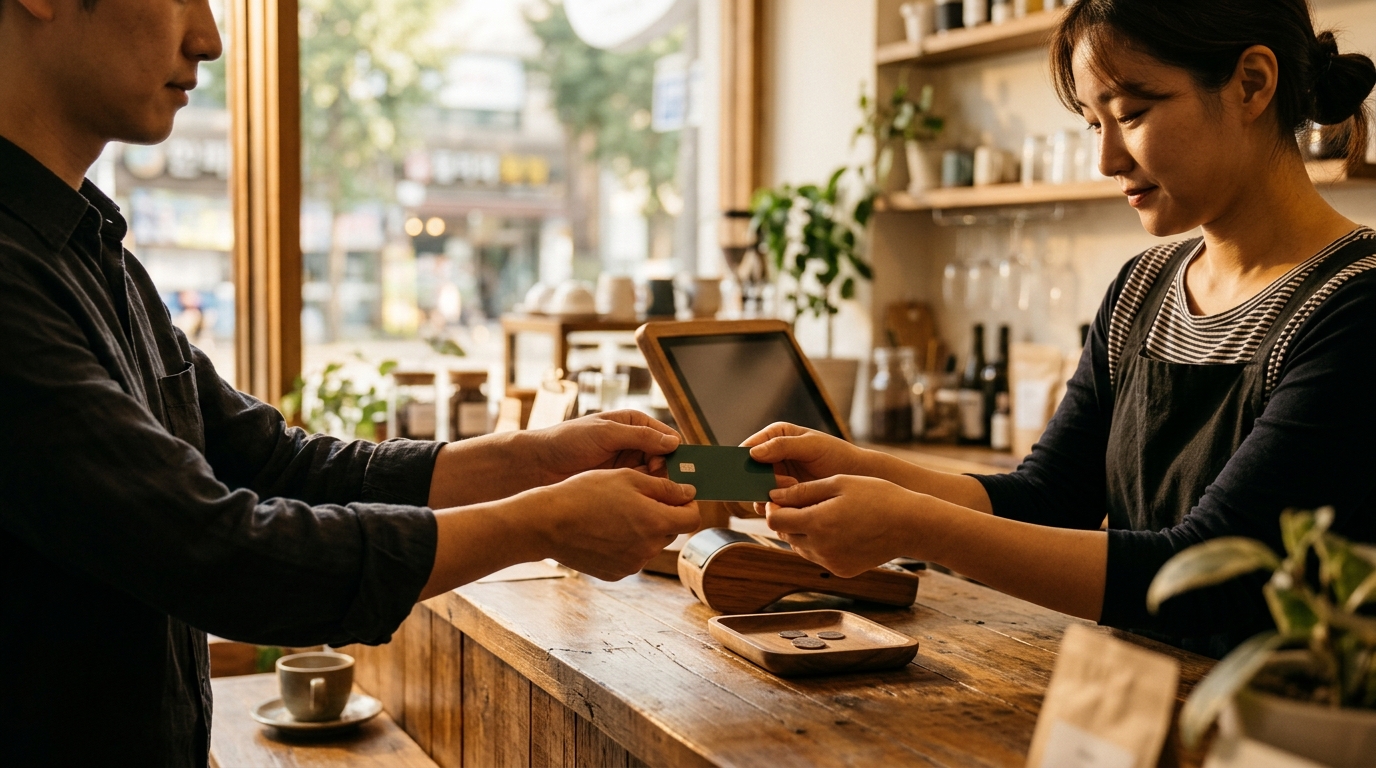
Between 22:00 and 06:00, convenience stores and independent retail shops switch on automated security locks to stop unauthorized entry. Opening the glass entry door requires tapping a bank card or scanning a QR code on the wall reader mounted beside the door frame.
For international visitors, this entrance reader presents the main bottleneck. Security scanners link directly to domestic card clearing networks (such as KICC, KSNET, or NICE) to check for a valid Korean identity record or local bank connection. Because of this setup, standard foreign-issued credit cards—including Visa, Mastercard, and American Express—regularly trigger an error tone at the door.
| Entry Method | Compatibility for Tourists | Success Rate | How It Works |
|---|---|---|---|
| Foreign Credit Card | Low | ~15% | Outer door scanners fail to process foreign IC chips on domestic networks. |
| WOWPASS Card | High | 99% | Pre-paid card processed on domestic networks; unlocks outer door security. |
| NAMANE Card | High | 99% | Custom transit/rechargeable card recognized instantly by Korean door scanners. |
| Alipay / WeChat Pay | Moderate | 80% | Supported on door scanners with dynamic QR code reader windows. |
| T-Money Card | Low | ~30% | Only accepted at select convenience store doors; ignored by ice cream shop locks. |
For smooth late-night access, use a prepaid transit card like a WOWPASS card that processes through domestic channels, or enter alongside a local shopper who taps in. In July 2026, a proposed amendment to the Retail Industry Development Act outlined plans for standardized identity verification readers and AI CCTV across unmanned storefronts nationwide. Once past the front door, payment processing follows different rules.
Step-by-Step Self-Checkout Guide: Navigating the Kiosk UI
Inside the shop, the self-checkout terminal operates independently from the outer door scanner. These internal kiosks process foreign payment methods far more reliably than the street lock.
Most modern Korean checkout terminals use straightforward touch software. Even without Korean language skills, screen navigation stays simple once you learn the standard layout.
Which Payment Methods Work at Self-Checkout Kiosks?
While door locks routinely turn away foreign credit cards, checkout screens inside unmanned stores accept international cards with high success. Knowing which payment types work where prevents checkout delays.
Acceptance rules differ between major unmanned convenience store chains and independent ice cream or ramen shops:
- Foreign Visa & Mastercard: Accepted at roughly 95% of internal self-checkout terminals across convenience stores and standalone shops, despite high outer door failure rates.
- WOWPASS & NAMANE Cards: 100% accepted at internal terminals and entry doors nationwide because they run on domestic Korean networks.
- T-Money Transport Cards: Fully supported at major convenience chains (CU, GS25, Seven-Eleven, Emart24). However, T-Money cards do not work at independent ice cream kiosks (Muin Aiseukeurim), which lack transport card hardware.
- Alipay & WeChat Pay: Supported on most modern terminals equipped with optical QR scanners.
- Cash (Korean Won): Most independent ice cream shops and unmanned convenience stores run cashless. A small number of older ice cream terminals accept ₩1,000, ₩5,000, and ₩10,000 bills, but rarely return coin change.
Travelers relying on T-Money transport cards should carry a secondary credit card or WOWPASS when visiting independent ice cream or ramen shops. For travelers using public transit, Seoul Metro's 440 unmanned ticketing kiosks expanded support in March 2026 to take foreign credit cards for single-ride tickets and Climate Card recharges.
| Payment Type | Outer Door Lock | Convenience Store Kiosk (CU/GS25) | Ice Cream / Snack Kiosk |
|---|---|---|---|
| Foreign Visa / Mastercard | ~15% Success | Supported | Supported |
| WOWPASS / NAMANE Card | 99% Success | Supported | Supported |
| T-Money Transit Card | ~30% Success | Supported | Not Supported |
| Alipay / WeChat Pay QR | 80% Success | Supported | Supported |
| Korean Won Cash | Not Accepted | Rarely Supported | Select Kiosks Only |
Can Tourists Buy Beer or Cigarettes at Unmanned Stores?
Tourists cannot purchase alcohol or tobacco products at unmanned stores during late-night staffless hours. Even though late-night storefronts display fully stocked beer fridges and tobacco cabinets, these areas are locked or disabled when staff leave.
South Korean age-verification regulations require sellers of restricted items to verify identity through a domestic Korean Resident Registration Card (ARC) or a mobile carrier identity app (PASS app). Self-checkout terminals are not configured to scan or verify foreign passports.
If you need alcohol or tobacco late at night, visit a staffed 24-hour convenience store where an on-duty clerk can check your physical passport.
How to Avoid Accidental Shoplifting and Theft Charges?
Using a self-checkout terminal comes with clear legal standards in South Korea. ==Under Article 329 of the South Korean Penal Code, theft (jeoldo) legally requires criminal intent, so an honest scanning mistake is not classified as theft.== Because these stores run without staff, operators rely on high-definition AI CCTV monitoring to track items moving from shelves to checkout.
Store operators check video footage whenever daily inventory counts fall short of kiosk payment records. Minor scanning errors—like missing a barcode chime or taking an item affected by a pricing glitch (such as a ₩5,000 item scanning as ₩500)—can prompt owners to report the issue directly to local police.
To prevent accidental theft claims, review your items before stepping away:
- Count Items Line by Line: Place items on the counter and match each physical product against the itemized line list on screen.
- Listen for Audio Beeps: Wait for the confirmation tone and on-screen price display before putting an item into your bag.
- Handle Pricing Glitches Promptly: If an item registers at an unusually low price (for instance, ₩5,000 showing as ₩500) or fails to scan, leave the product on the counter. Take photos of the barcode and kiosk screen, or text the operator contact number printed on the terminal frame.
- Retain Receipt Evidence: Always select "Print Receipt" at checkout. Keep the paper receipt or take a clear photo of the screen confirmation until you return to your hotel.
Unmanned Store Etiquette and Visitor Checklist
Keeping shared self-service spaces clean ensures unmanned shops stay operating smoothly. Self-service ramen shops and snack spaces depend on customers to maintain hygiene between operator visits.
When using microwave counters, hot water stations, or ramen cookers, throw packaging into designated sorting bins. Korean waste management rules mandate separating general trash (illan sseureogi), plastic containers, and liquid food leftovers. Do not leave broth or dirty paper bowls on counters or tables.
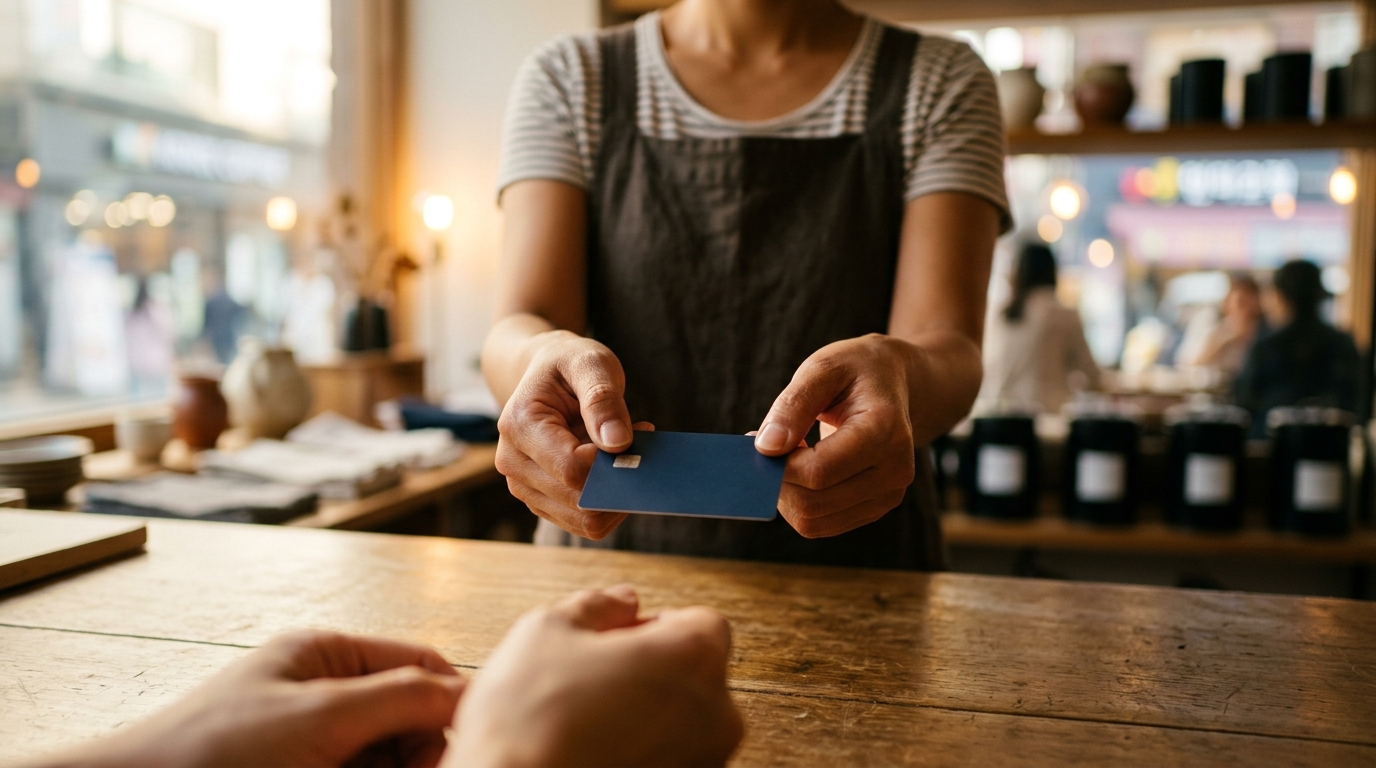
Also double-check your payment card before leaving. A common mistake at unmanned terminals is leaving credit cards or WOWPASS cards behind in the lit IC slot after checkout.
By taking the right payment card, double-checking scanned items, and saving receipts, international visitors can easily navigate South Korea's 24-hour unmanned shop network.
Frequently asked questions
Q. Do foreign credit cards work at unmanned stores in Korea?
Foreign Visa and Mastercard credit cards work at over 90% of self-checkout kiosks inside unmanned stores. However, physical foreign cards usually fail at the outer door authentication scanners used between 22:00 and 06:00. To enter locked stores late at night, tourists should use a prepaid WOWPASS card or mobile Alipay QR code.
Q. How do tourists unlock unmanned convenience store doors late at night?
To unlock an unmanned store door late at night in Korea, scan a domestic-compatible card or mobile app on the reader beside the door. Because foreign credit cards are often rejected by outer door readers, tourists can use a WOWPASS prepaid card, a NAMANE card, or Alipay QR code to gain entry.
Q. Can you pay with cash or a T-Money card at an unmanned ice cream shop?
Most independent unmanned ice cream shops accept physical Korean cash bills and credit cards, but they do not accept T-Money transit cards. T-Money cards for payment are generally restricted to self-checkout kiosks inside major convenience store chains like CU, GS25, and Seven-Eleven.
Q. What happens if you accidentally forget to scan an item at a Korean kiosk?
Accidentally missing an item at a Korean self-checkout kiosk can prompt store owners to report the issue to police for theft investigation, although theft under Article 329 legally requires criminal intent. Unmanned stores use AI cameras to record transactions, and store owners routinely request settlement fees of 30 to 50 times the item's retail value to drop charges.
Q. Can tourists buy beer or cigarettes at unmanned convenience stores in Korea?
No, tourists cannot buy alcohol or tobacco at unmanned stores during night hours. Automated kiosks require age verification via a Korean national ID or mobile telecom certificate (PASS app). Because kiosks cannot scan or verify foreign passports, age-restricted display cases remain locked during unmanned operating hours.