Korea Winter Weather (Samhan Sa-on): What to Pack & Expect
Key takeaways
Korea winter weather between December and February is defined by the Samhan Sa-on cycle, where three days of freezing Siberian air alternate with four milder, dustier days. Seoul temperatures average highs of 2.1°C to 5.1°C and lows of −5.5°C to −3.2°C based on 30-year climate normals. Layering removable clothing is crucial to navigate cold streets and heated indoor spaces.
Korea winter weather catches many travelers off guard because of a distinct weather pattern known as Samhan Sa-on. Sub-zero Siberian wind gusts regularly push Seoul temperatures below −10°C, only to give way a few days later to milder, dustier conditions. Understanding how this meteorological cycle works makes it much easier to pack the right clothes and stay comfortable between freezing streets and heavily heated indoor spaces.
What Is Samhan Sa-on? The Science Behind Korea’s Winter Climate
Samhan Sa-on (삼한사온) translates literally to "three cold days, four warm days." It describes a traditional meteorological cycle driven by the Siberian High-Pressure system moving over the Korean Peninsula throughout winter.
During the cold phase, massive continental air masses push icy Arctic winds down from Siberia through Northern China and into Korea. Ambient temperatures drop sharply, and high wind chill makes outdoor conditions feel much colder than the thermometer indicates. During the four warmer days that follow, the high-pressure system weakens, letting gentler westerly air currents drift in from China and nudge temperatures up.
While historical records show this seven-day cycle ran regularly for decades, recent climate shifts have altered the pattern. Travelers today often experience cold fronts lasting 5 to 7 days uninterrupted before a sudden warm spell arrives.
What Is Samhan Sa-mi and Why Do Warm Days Bring Fine Dust?
Local meteorologists and residents often use the term Samhan Sa-mi (삼한사미), meaning "three cold days, four fine dust days." The phrase reflects how milder winter days in Seoul frequently bring hazy skies and elevated air pollution.
Freezing Siberian winds clear out airborne pollutants as they blow across Korea, leaving crisp blue skies behind. But when that cold high-pressure system weakens and temperatures rise, atmospheric pressure drops and air circulation slows. Stagnant conditions trap microparticles—specifically PM2.5 fine dust—over urban centers like Seoul, Incheon, and Gyeonggi-do.
Checking real-time air quality metrics on weather apps or monitoring portals like AirKorea is essential before heading outside on warm winter days.
Korea Winter Temperature Breakdown: What to Expect Month by Month
Winter in South Korea runs officially from December through February, though cold winds frequently arrive in November. Seoul and northern provinces experience drier, colder weather than southern coastal areas such as Busan or Jeju Island.
According to historical climatology data from the KMA, January is consistently the coldest month of the year across the peninsula.
| Month | Average High (°C) | Average Low (°C) | Wind Chill Range (°C) | Weather Profile |
|---|---|---|---|---|
| December | 4.2°C | −3.4°C | 0°C to −10°C | Early winter chills, frequent dry winds, holiday illuminations |
| January | 2.1°C | −5.5°C | −5°C to −20°C | Peak winter freezing, heavy Siberian blasts, occasional snow flurries |
| February | 5.1°C | −3.2°C | 2°C to −8°C | Late winter transition, icy mornings, gradual warm-up |
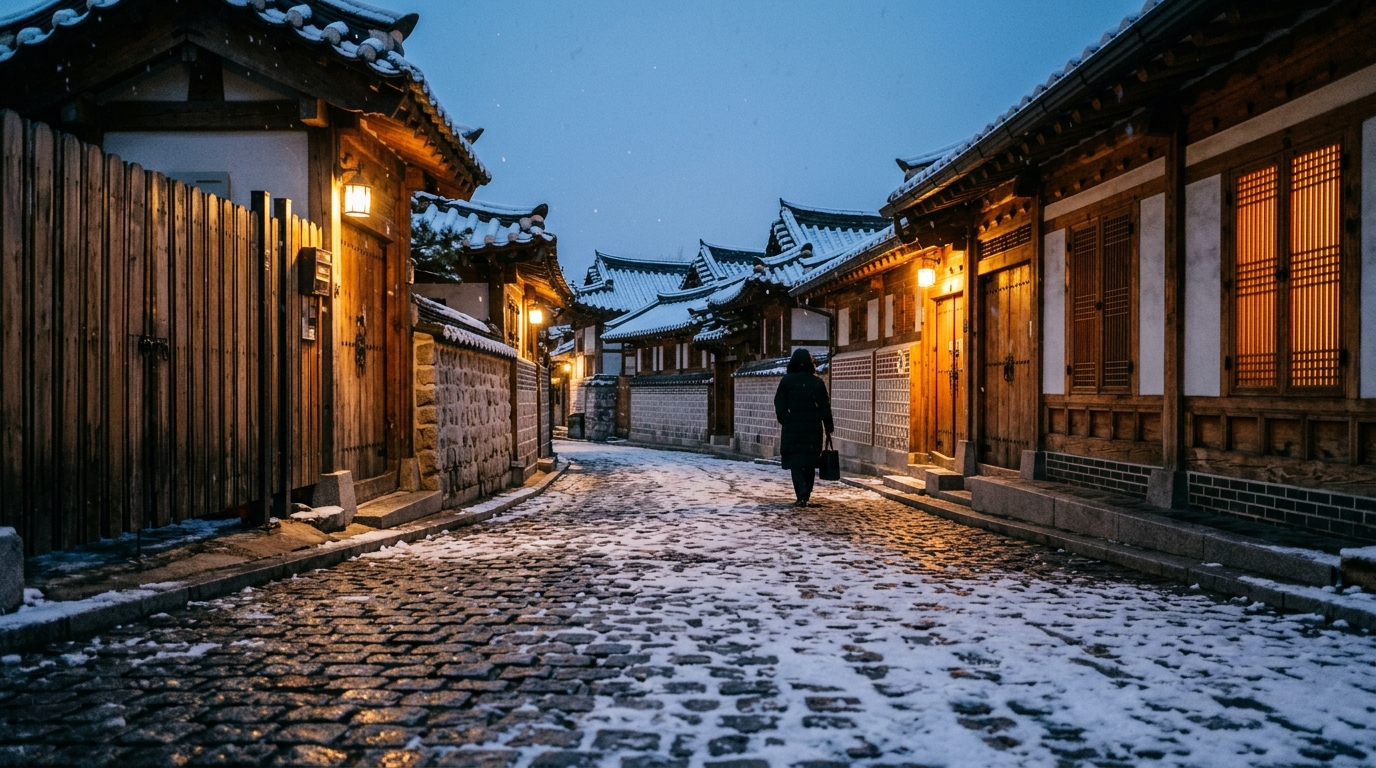
Snowfall in central Seoul can be unpredictable, but high-elevation areas and mountain passes in Gangwon-do get heavy snow packs. Hikers tackling trails like Bukhansan National Park need to prepare for icy path conditions and harsh mountain wind chill.
The Indoor-Outdoor Microclimate Challenge: −10°C Streets vs. +22°C Subways
One major surprise for visitors in Korea is the stark contrast between freezing outdoor air and blast-heated indoor spaces. While city streets drop well below freezing, public transit, shopping malls, and cafes maintain high indoor temperatures.
Seoul Metro subways, public buses, and commercial venues keep indoor temperatures between 18°C and 20°C. Subway seats also have built-in electric heating elements that warm up quickly, while underground shopping centers can feel warm enough for short sleeves.
In accommodations, from boutique hotels to traditional guesthouses, heating relies on ondol (온돌), a radiant sub-floor heating system powered by hot water pipes. To adjust room controls without overheating your sleeping area, consult our step-by-step guide on how Korean ondol heating thermostats work.
The primary packing secret for Korea's winter is choosing modular layers that can be shed within seconds upon entering heated buildings. Wearing a single bulky, non-zippered sweater over thick thermals leads to quick overheating indoors.
What to Wear & Pack: Complete Temperature Layering Guide
To remain comfortable across changing weather conditions and warm indoor environments, organize your clothing around real-feel temperature ranges.
Mild Chills (5°C to 10°C)
During early December or late February warm spells, heavy outerwear is rarely necessary. Breathable insulating base layers work best.
- Outerwear: Wool trench coats, fleece jackets, lightweight padded vests.
- Tops: Cashmere or knit sweaters, long-sleeve cotton crewnecks.
- Bottoms: Standard denim, slacks, or heavy cotton trousers.
- Footwear: Leather boots or standard walking sneakers with comfortable socks.
Moderate Freezing (0°C to 5°C)
At this range, standing outdoors for extended periods requires solid body heat retention.
- Outerwear: Mid-length down coats or thick wool overcoats. In Korea, stylish wool coat enthusiasts are playfully known as Eol-juk-ko (얼죽코)—slang for "freezing to death for wool coats."
- Tops: Lightweight thermal innerwear beneath a thick turtleneck or wool sweater.
- Bottoms: Fleece-lined trousers or thermal leggings layered under jeans.
- Accessories: A lightweight knit scarf and standard gloves.
Deep Freeze (Below 0°C to −10°C and lower)
When Siberian cold fronts descend, full protective coverage is necessary for sightseeing and walking tours.
- Outerwear: Full-length ankle-level down coats, known locally as "long padding" (롱패딩). For details on cultural norms surrounding these iconic jackets, read our breakdown of Korean long padding coat etiquette and styling.
- Inner Layers: Moisture-wicking thermal tops (e.g., Uniqlo Heattech, SPAO Warmtech) and bottom leggings.
- Bottoms: Wind-resistant pants or lined trousers over thermal tights.
- Accessories: Fleece-lined beanies covering ears, thick wool scarves, touch-screen gloves, and insulated wool socks.
Should You Buy Gear Before You Fly or Buy in Seoul?
Travelers arriving from warmer climates do not need to fill their luggage with heavy winter clothing. Seoul offers convenient, budget-friendly options for high-performance winter gear.
Major domestic fast-fashion brands produce technical thermal base layers that rival international brands in warmth and price:
- SPAO (스파오): Features their proprietary "Warmtech" (웜텍) series.
- TopTen (탑텐): Offers "OnAir" (온에어) thermal innerwear.
- Daiso (다이소): Sells single-use disposable heat packs (hot-pack / 핫팩) in adhesive and pocket-handheld styles for 500 to 1,000 KRW each.
| Item | Local Retailer | Price Range (KRW) | Price Range (USD approx.) | Notes |
|---|---|---|---|---|
| Thermal Top/Bottom | SPAO / TopTen | 12,900 – 29,900 KRW | $9.50 – $22.00 | Instant tax refunds at cashier |
| Adhesive Hot Packs | Daiso / Convenience Stores | 500 – 1,000 KRW | $0.40 – $0.75 | Stick onto base shirt, never direct to skin |
| Long Padding Coat | SPAO / Shoopen / Local Outlets | 79,900 – 159,000 KRW | $58.00 – $116.00 | High insulation, durable water repellent |
| Fleece-Lined Socks | Street Vendors / Daiso | 1,500 – 3,000 KRW | $1.10 – $2.20 | Available around subway stations |
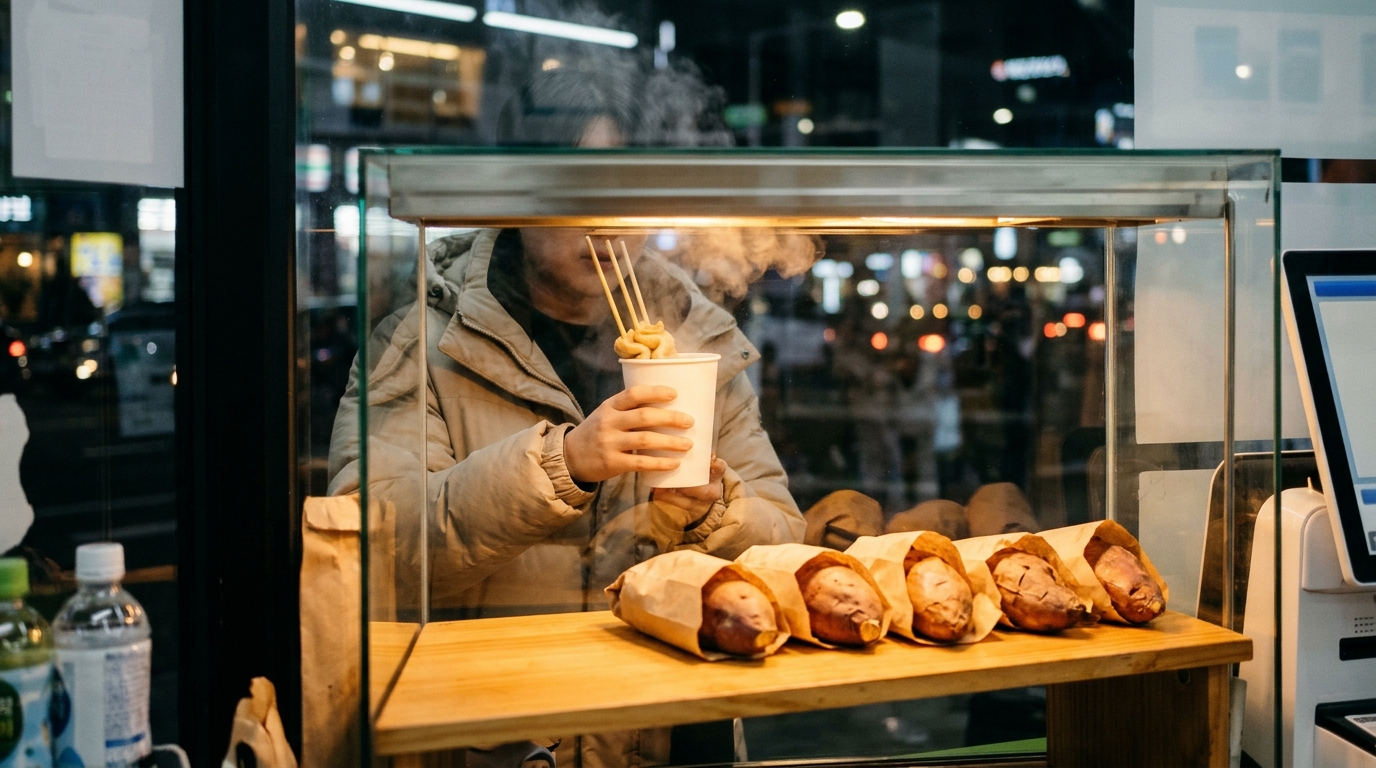
For extra warmth while touring night markets or historic sites, local street vendors sell hot broth and winter snacks. Popular options include bungeoppang (fish-shaped red bean pastries) and hotteok (sweet filled pancakes), detailed in our guide to Korean convenience store winter hot foods.
Practical Tips for Staying Warm and Safe
Navigating Korean winter comfortably comes down to a few practical habits during daily outings:
Remember that shoes must be taken off when entering traditional restaurants, tearooms, or guesthouses equipped with ondol floor heating. Slip-on insulated boots or shoes with quick-release laces make moving between indoors and outdoors much smoother throughout the day.
Frequently asked questions
Q. What does Samhan Saon mean in Korea?
Samhan Saon (삼한사온) translates to 'three cold days, four warm days.' It describes a traditional winter weather pattern on the Korean Peninsula driven by the Siberian High-Pressure system, where three days of intense sub-zero temperatures are followed by four relatively mild days.
Q. Why is fine dust worse on warmer winter days in Seoul?
During warm winter days, the strong Siberian winds abate, causing air pressure over Korea to drop. Stagnant atmospheric conditions trap air pollution and fine dust (PM2.5) from local and regional sources, creating hazy skies commonly referred to as the 'Samhan Sa-mi' pattern.
Q. What is the coldest month to visit Seoul during winter?
According to climate data from the Korea Meteorological Administration, January is the coldest month of the year in Seoul. Average high temperatures reach only 2.1°C while average lows drop to −5.5°C, with wind chill values regularly falling below −15°C.
Q. Should I bring a heavy coat or buy a long padding coat in Seoul?
Unless you already own a full-length down coat, it is often cheaper to purchase one upon arriving in Seoul. Local brands like SPAO and TopTen sell long padding jackets starting from 79,900 KRW, complete with immediate tax refunds for passport holders.
Q. How does indoor heating work in Korean accommodations?
Most Korean hotels and guesthouses use ondol (radiant sub-floor heating), which heats the room directly from the floor up. Indoor spaces, including public subways and cafes, are heavily heated to 18°C–20°C, making easily removable outer layers essential.