Korean Long Padding Coat Etiquette & Winter Outfit Guide
Key takeaways
Navigating Seoul's sub-zero winter requires balancing freezing outdoor winds with aggressively heated indoor spaces. Mastering Korean long padding coat etiquette—such as unzipping on heated subways and folding coats inside-out at BBQ restaurants—ensures you remain comfortable and culturally respectful throughout your stay.
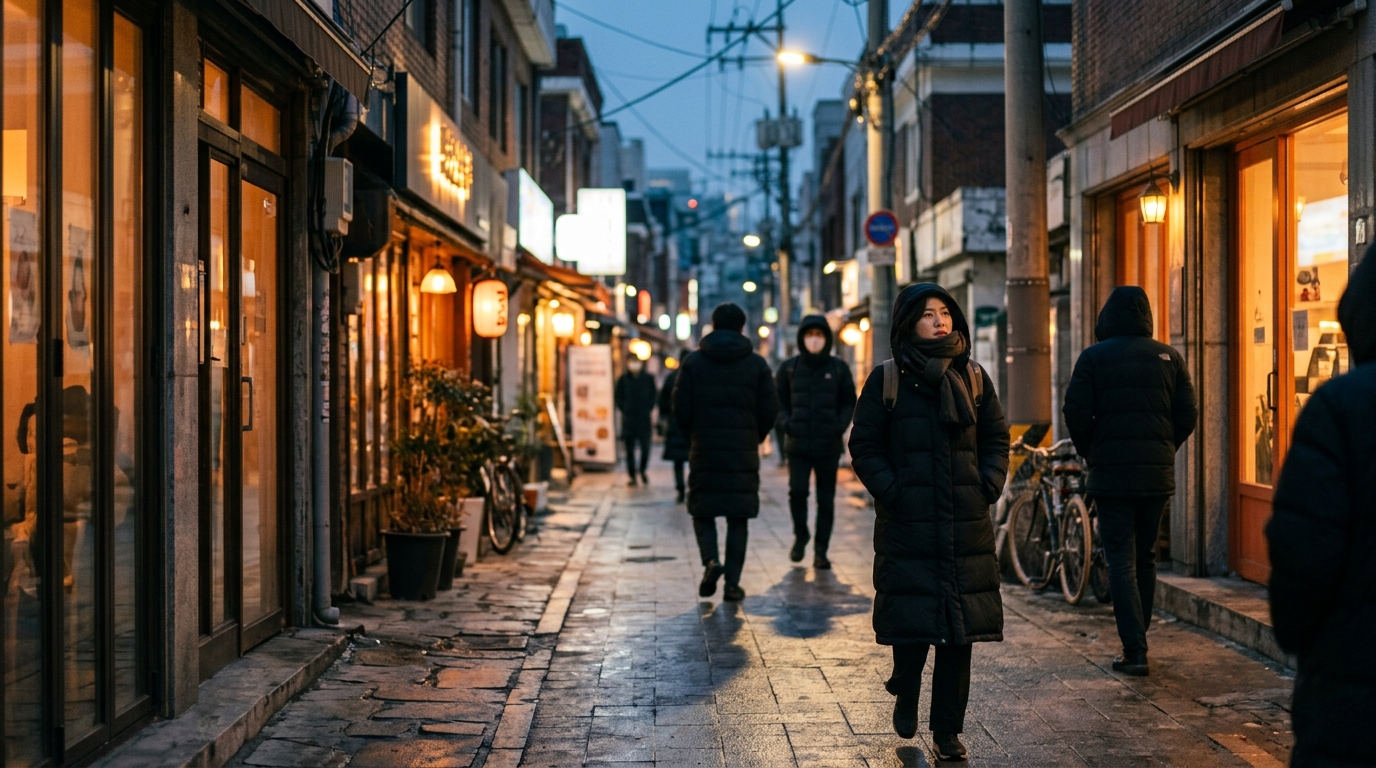
Seoul in midwinter gets bitterly cold. Ankle-length down jackets—known locally as "long padding" (롱패딩)—are everywhere. Far from being a short-lived fashion fad, these heavy coats serve as a everyday survival uniform against biting Siberian winds.
Wearing a full-length puffer in a dense urban environment comes with practical rules. Managing your coat on packed, heated subway cars and finding room for it in cozy restaurants requires knowing a few local customs.
What is Long Padding and Why is It Essential in Korea?
Long padding (롱패딩) refers to over-the-knee down or synthetic parkas designed to insulate the body against sudden cold snaps. Short puffers show up in youth street style, but the full-length coat remains the primary defense against severe sub-zero drafts.
Reporting by Korea JoongAng Daily traces the widespread adoption of long padding to the 2018 PyeongChang Winter Olympics. Seoul's average daily low temperatures reach -5.5°C in January and -3.2°C in February, yet Siberian wind chills regularly drop the real-feel temperature down to -15°C or lower. When the Siberian wind chill hits Seoul, dropping real-feel temperatures to -15°C or lower, long padding transforms from a fashion statement into vital survival gear.
Dark colors dominate the streets during winter. Charcoal, cream, and especially black make up an estimated 70% to 80% of outer layers in the capital, fitting the understated kkwanmku (꾸안꾸, effortlessly neat) look. The cylindrical black profile of these coats earned them the nickname "kimbap coats," after the popular seaweed rice rolls.
Matching your outfit to specific temperature ranges makes outdoor plans much more manageable.
| Temperature Range | Primary Outerwear | Essential Inner Layers | Recommended Accessories |
|---|---|---|---|
| 5°C to 10°C | Wool coat, heavy trench coat, fleece | Long-sleeve shirt, light sweater | Light scarf |
| 1°C to 4°C | Heavy wool coat, short puffer jacket | Thermal base layer, thick knit sweater | Beanie, light gloves |
| -5°C to 0°C | Long padding, heavy down parka | Thermal base layer, fleece/wool mid-layer | Thermal socks, scarf, gloves |
| -6°C and below | Windproof long padding (heavy fill) | Extra-warm thermals, fleece + wool layers | Neck warmer, heat-tech gloves, earmuffs |
How Do You Master the 3-Layer Korean Winter Dressing System?
Staying comfortable requires a flexible three-layer system: a snug moisture-wicking thermal base, a flexible fleece or knit mid-layer, and a windproof long padding coat on top. This setup lets you adapt quickly when moving between freezing streets and heavily heated buildings.
Indoor heating in South Korea is powerful. Buildings use traditional ondol (온돌) floor heating, and shops, cafes, and buses routinely set thermostats above 22°C. Wearing a single thick sweater underneath a heavy parka often leads to overheating the moment you step inside.
Locals use the slang term Eol-juk-ko (얼죽코)—short for "freeze to death even if I wear a wool coat"—to describe people who stick to tailored wool coats despite the cold. However, as noted in travel resources like EPICKOR Guide, wool coats rarely block sustained winter wind gusts during long days of sightseeing.
Korean Long Padding Coat Etiquette on Transit and When Dining
Managing long padding etiquette comes down to keeping your coat's physical bulk out of other people's space. Simple unwritten rules keep public transit pleasant and prevent mishaps at restaurants.
On the Seoul Metro, spatial awareness is vital during morning (8:00 AM–9:00 AM) and evening (6:00 PM–7:00 PM) rush hours. Padded coats take up extra room and create friction in packed cars. Additionally, seat surfaces on Lines 1 through 8 are electrically heated, reaching temperatures between 30°C and 35°C in winter. Reporting cited by Korea JoongAng Daily Seat Warmers Coverage noted over 500 passenger complaints in a single winter month regarding overheated subway seats. Always remove or unzip your padded jacket upon entering a heated train to avoid excessive sweating before stepping back into sub-zero air.
At Korean BBQ (고기집) or fried chicken spots, storing your coat properly keeps service paths clear and keeps synthetic fibers from absorbing grease smoke.
Handle your outerwear in dining venues using these standard practices:
- Use Drum Stool Storage: Most casual dining spots feature hollow metal or plastic drum stools with removable seat tops (의자 속 옷 보관). Lift the seat cushion to reveal an interior compartment.
- Fold Inside-Out: Fold your long padding coat into a tight rectangle with the exterior shell facing inward. This protects the outer fabric from touching lingering oil residue inside the drum.
- Request Outer Bags: If the venue uses traditional chairs without built-in storage, ask the staff politely for a large plastic protective bag by saying, "Osi-rang bag-u-ni iss-eo-yo?" or " 비닐봉지 있나요?" (Do you have a plastic bag?).
Lower Body Layering and Footwear Rules for Sub-Zero Days
Protecting your legs and feet is critical because biting winds funnel through high-rise building corridors. Leaving legs covered by a single layer of denim will result in deep chill within minutes.
Thermal tights underneath trousers are standard winter wear. Resources like LACHA Korea Guide recommend fleece-lined leggings, thermal long johns, or heat-tech tights to build an insulating air layer under trousers or wide-leg pants.
| Lower Body Combination | Cold Resistance Level | Best Activity Scenario | Comfort Indoors |
|---|---|---|---|
| Single Denim / Chino Jeans | Minimal (Above 5°C) | Short indoor trips, quick taxi rides | High |
| Jeans + Light Thermal Tights | Moderate (-5°C to 0°C) | City walking, urban sightseeing | Good |
| Wide Pants + Fleece Long Johns | Maximum (-10°C and below) | Outdoor markets, palace tours, hiking | Moderate |
| Fleece-Lined Tights + Wool Skirt | Moderate (-3°C to 2°C) | Cafe hopping, indoor shopping | High |
Standard mesh running shoes let winter wind right through. Choose leather boots, fleece-lined shoes, or padded winter sneakers paired with thick thermal socks. Good outer soles matter too: hilly sidewalks in neighborhoods like Bukchon, Itaewon, and Hongdae turn slippery when black ice forms after snow.
Where and How Should Visitors Buy Long Padding in Seoul?
If you arrive in Seoul without adequate winter outerwear, buying a long padding coat locally is quick, budget-friendly, and straightforward. Options span mass fast-fashion (SPA) stores, outdoor brands, and underground market arcades.
Major domestic fashion chains sell functional down and synthetic coats at reasonable prices. Typical price ranges across Seoul retail hubs include:
| Retail Category | Example Outlets / Brands | Average Price Range (KRW) | Key Features & Sizing Notes |
|---|---|---|---|
| Mass SPA Chains | SPAO, Topten, 8seconds, Uniqlo | 80,000 – 150,000 KRW ($60–$110 USD) | Standard functional designs, excellent insulation, trim Asian fit |
| Outdoor & Lifestyle | The North Face, Discovery, National Geographic | 250,000 – 550,000 KRW ($185–$410 USD) | High fill-power down, durable weatherproofing, trendy urban styling |
| Underground Malls | GoTo Mall (Express Bus Terminal), Gangnam Station | 40,000 – 90,000 KRW ($30–$68 USD) | Budget unbranded coats, cash discounts preferred, fixed return rules |
Frequently asked questions
Q. Is long padding still fashionable in Korea, or will I look outdated?
Long padding remains completely acceptable and widely worn in Korea as standard winter survival clothing. While short puffers trend among younger demographics, long padding is considered an essential, timeless winter uniform across all age groups.
Q. How do I store my long padding coat at Korean BBQ restaurants?
Fold your coat inside-out to protect the exterior fabric from grease, then store it inside the hollow drum stool beneath your chair or request a clear plastic bag from the restaurant staff.
Q. Where can tourists buy budget long padding immediately in Seoul?
Tourists can purchase affordable long padding for 80,000 to 150,000 KRW at popular domestic SPA chains like SPAO and Topten, or for 40,000 to 90,000 KRW at GoTo Mall inside Express Bus Terminal Station.
Q. How cold does winter get in Seoul?
January's average daily low temperature in Seoul is -5.5°C, but bitter wind chills frequently drop real-feel temperatures to between -15°C and -20°C.