Why Are There No Public Trash Cans in Korea? (And What to Do)
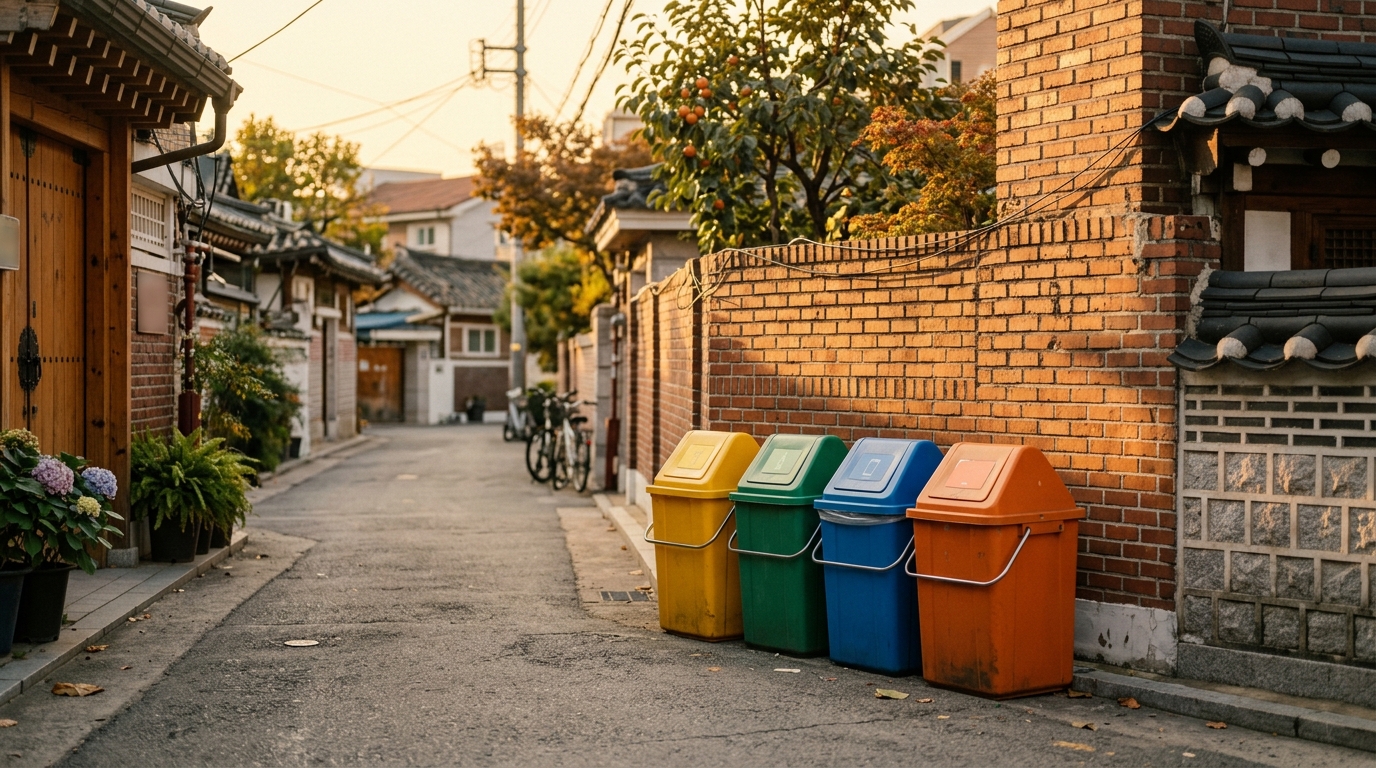
Key takeaways
Public trash cans in South Korea are rare due to a 1995 waste management law designed to stop illegal household dumping. Visitors can handle garbage on the go by using subway station disposal hubs, returning food packaging to street vendors, and purchasing district-specific bags for Airbnb stays. Additionally, major cities like Seoul are re-installing thousands of modern public bins across main tourist districts.
Finding public trash cans in Korea is one of the most unexpected hurdles first-time visitors encounter when exploring Seoul, Busan, or Jeju. You finish an iced Americano or a hot skewer of street food in Myeongdong, only to realize you have been walking for blocks without passing a single place to throw away your cup or packaging.
While the missing street bins can feel baffling in a metropolis of nearly 10 million people, South Korea's streets remain remarkably clean. Knowing the history behind this setup, where daily disposal bins are hidden, and how local waste sorting rules work will save you from carrying empty cup containers around all afternoon.
The Mystery Solved: Why Are Public Trash Cans in Korea So Hard to Find?
Public trash cans in Korea largely vanished following the 1995 nationwide implementation of the Volume-Based Waste Fee System, locally known as Jongnyangje (종량제).
Before 1995, South Korean cities maintained thousands of standard municipal waste bins across downtown districts. When the government introduced mandatory paid garbage bags to encourage recycling and lower landfill waste, an unintended side effect emerged: residents began bringing their private household trash out to public street bins to avoid purchasing official disposal bags. According to reporting by Korea JoongAng Daily, municipal governments responded to overflowing household waste on sidewalks by systematically removing public street bins altogether.
Between 1995 and 2023, the number of public street bins in Seoul plummeted by nearly 35%. City planners operated under the philosophy that keeping street bins sparse encouraged citizens to carry their personal waste home, which drastically reduced overall municipal garbage volume and elevated national recycling rates. While effective for environmental statistics, this system created ongoing confusion for international tourists unused to navigating cities without public waste infrastructure.
| Historical Era | Public Bin Policy | Street Litter Impact | Resident & Tourist Reality |
|---|---|---|---|
| Pre-1995 | Abundant municipal bins on street corners | Frequent bin overflows in residential areas | Easy waste disposal with low recycling rates |
| 1995–2022 | Mass removal of street bins to enforce Jongnyangje | Exceptionally clean streets, high carry-home habit | Severe confusion for tourists and high public inconvenience |
| 2023–2025 | Strategic re-introduction of high-visibility bins | Controlled public disposal in high-traffic zones | Modern design with smart sorting indicators |
How to Survive a Day Out in Seoul: Where Can You Dispose of Trash on the Go?
To handle waste while exploring Korean cities, skip the street corners and head straight for subway stations, convenience stores, or public parks.
Subway stations are your most reliable option for public waste disposal across South Korea. Nearly every metro station in Seoul, Busan, and Incheon features designated sorting stations located near ticket gates, restrooms, or platform stairwells. These setups feature separate slots for general waste (ilban sseureogi / 일반쓰레기) and plastic or paper recyclables (jaehwalyong / 재활용).
Convenience stores such as CU, GS25, Seven-Eleven, and Emart24 sit on almost every block. Their trash cans are intended for customer use, so buying a quick item like a bottle of water grants you polite access to their bins. Ask the staff or look for the disposal station near the instant ramen counter.
| Disposal Location | What You Can Dispose Of | Etiquette / Access Rules | Reliability for Tourists |
|---|---|---|---|
| Subway Stations | Paper, plastic bottles, cans, small general trash | Free access inside/outside gates | High (Available in almost every station) |
| Convenience Stores | Food wrappers, packaging from store purchases | Buy a small item or ask staff first | Moderate to High |
| Street Food Stalls | Wooden skewers, paper trays, food wrappers | Return directly to vendor after eating | High (At market stalls) |
| Public Parks | Separated recyclables, food waste, general waste | Follow park sorting indicators strictly | High (In large regional parks) |
| Public Restrooms | Small paper tissues and hand towels | Throw paper towels in bins, toilet paper in bowl | Moderate (Small bins only) |
What Are the Takeout Coffee & Street Food Rules Every Visitor Needs to Know?
South Korea strictly regulates food and beverage disposal in transit environments, meaning you cannot board public buses with open drink containers or unfinished takeaway snacks.
In January 2018, the Seoul Metropolitan Government banned passengers from carrying open takeaway drink cups, unsealed beverage containers, or liquid food onto city buses. Drivers can legally refuse boarding to anyone holding an open takeout coffee cup or boba tea. If you have a drink, finish it, throw it away, or seal it completely inside a bag before your bus arrives.
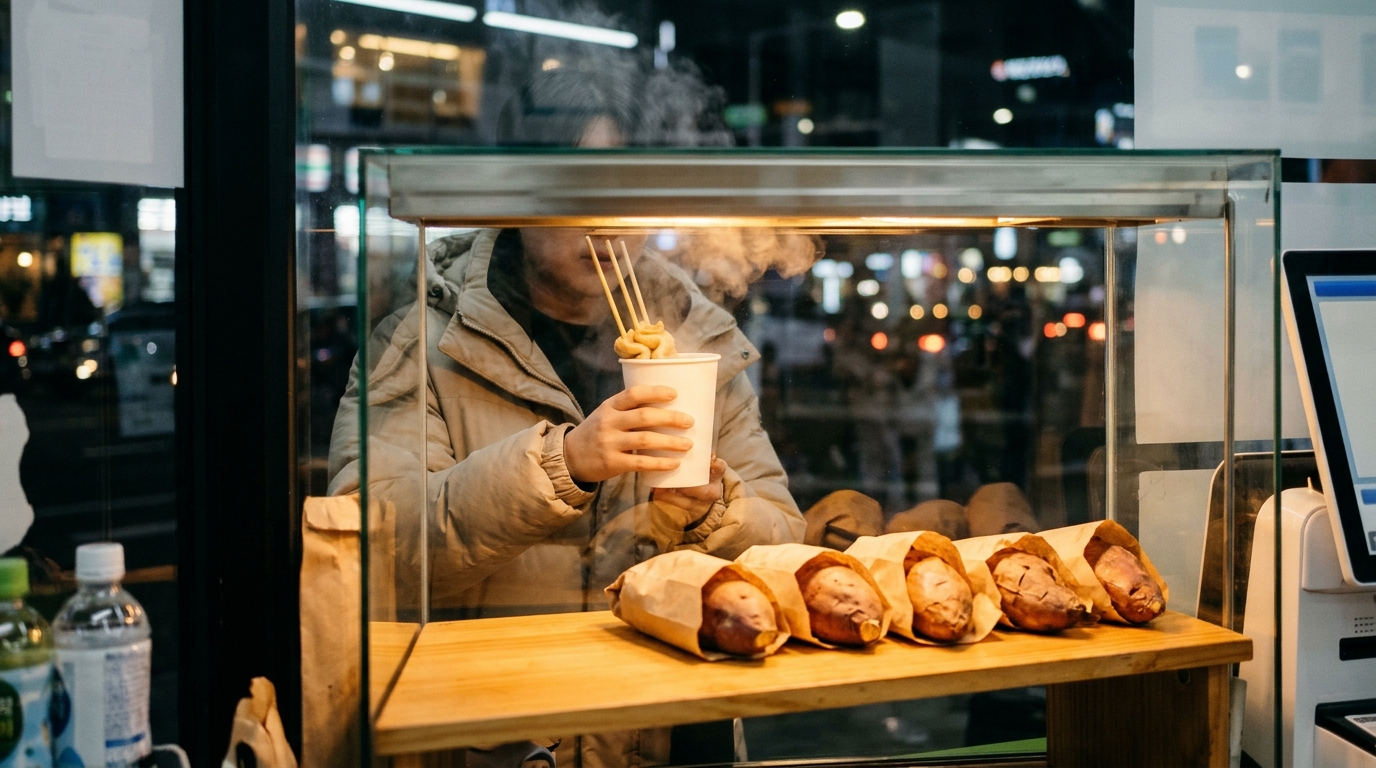
When enjoying street food in busy areas like Myeongdong, Hongdae, or Insadong, eat near the stall where you bought your snack. Street food vendors almost always keep waste bins behind their counters to collect used wooden skewers, paper cups, and wrappers from customers.
| Mode / Location | Food & Drink Policy | Garbage Disposal Option |
|---|---|---|
| Seoul City Bus | Open drinks & unsealed food strictly prohibited | No onboard bins; discard before boarding |
| Subway (Metro) | Eating discouraged; sealed items permitted | Platform and concourse trash stations |
| KTX / SRT Trains | Consumption permitted at seat | End-of-car vestibule waste bins |
| Street Markets | Eat near vendor stall | Hand trash back to vendor directly |
Staying in an Airbnb or Guesthouse? How Do You Handle Trash, Bags, and Recycling?
If you stay in a short-term residential rental or Airbnb, you must follow South Korea's residential waste sorting laws carefully to avoid leaving the property owner with steep fines.
Unlike hotels where staff handle garbage, private apartments require you to buy official volume-based trash bags called Jongnyangje Bongtu (종량제 봉투). These bags fund municipal waste collection and are color-coded by neighborhood. A general waste bag purchased in Mapo District (Mapo-gu) cannot be used or collected in Jung District (Jung-gu).
To buy official waste bags, visit a nearby convenience store or supermarket and ask the cashier for Jongnyangje Bongtu. Bags range from 3 liters to 20 liters and cost roughly ₩100 to ₩500 per bag. You do not need a Korean ID or local phone number to buy them.
According to municipal regulations outlined by The Soul of Seoul, failure to use standard authorized bags or throwing recyclable items into general waste carries administrative fines ranging from ₩100,000 up to ₩1,000,000 under South Korea's Wastes Control Act. Travelers should confirm specific neighborhood disposal rooms or scheduling rules directly with their host.
General Waste vs. Food Waste: Which Tricky Items Confuse Foreigners?
South Korea categorizes food waste (Eomsigmul Sseureogi / 음식물쓰레기) separately from general waste, processing organic food scraps into agricultural fertilizer or animal feed.
The fundamental rule for Korean waste separation is simple: if a farm animal can digest it, it belongs in food waste; if an animal cannot eat it, it is general waste. This distinction creates several counterintuitive rules when clearing table scraps at your accommodation.
Hard organic items like chicken bones, clam shells, eggshells, fruit pits, and coffee grounds contain no nutritional value for processing equipment and will clog machinery. Because of this, throw these items into general waste bags instead of food waste bins.
| Item Category | Correct Disposal Classification | Proper Bag / Bin Type |
|---|---|---|
| Fruit Peels & Soft Leftovers | Food Waste (Eomsigmul Sseureogi) | Yellow or orange Food Waste Bag |
| Chicken Bones & Meat Ribs | General Waste (Ilban Sseureogi) | Standard District Jongnyangje Bag |
| Eggshells & Shellfish Shells | General Waste (Ilban Sseureogi) | Standard District Jongnyangje Bag |
| Fruit Pits (Peach, Mango, Cherry) | General Waste (Ilban Sseureogi) | Standard District Jongnyangje Bag |
| Coffee Grounds & Tea Bags | General Waste (Ilban Sseureogi) | Standard District Jongnyangje Bag |
| Clear PET Bottles (Rinsed) | Recyclable Plastic (Jaehwalyong) | Transparent / Clear Bin |
Detailed city guidelines published by Seoul Explorer emphasize that foreign travelers should always drain excess liquid from food scraps before placing them into designated food waste bags to prevent leakage and odors.
The 2023–2025 City Update: Where Are Seoul's New Public Trash Cans Located?
Recognizing the inconvenience for tourists and commuters, the Seoul Metropolitan Government started a major policy shift to bring public street bins back to core tourism zones.
After public surveys showed over 73% of residents felt inconvenienced by the shortage of street bins, city authorities designed new high-visibility public trash cans. These updated units feature bright colors, bilingual text, and distinct shape-coded top entries for recyclables versus general waste.
The rollout targets major foot-traffic corridors including Gwanghwamun, Gangnam Station, Hongdae, Myeongdong, and Itaewon. Through 2025, visitors can spot these modern trash stations along main boulevard sidewalks, bus rapid transit median stops, and popular urban streams like Cheonggyecheon.
Frequently asked questions
Q. Can I throw my trash in a convenience store bin if I didn't buy anything there?
It is considered impolite to dump outside trash in convenience stores without making a purchase. Buying a small item like a bottle of water gives you courteous access to their indoor or entrance sorting bins.
Q. What do I do with street food skewers and paper cups in Myeongdong or Hongdae?
Hold onto your skewers and food wrappers until you finish eating, then return them directly to the street food vendor stall where you purchased the food.
Q. Where can I throw away my iced coffee cup before getting on the bus in Seoul?
Since open drinks are banned on Seoul city buses, dispose of your cup at a nearby subway station bin or hand it to the café where you purchased it before queuing at the bus stop.
Q. Do I need a Korean ID or phone number to buy trash bags at CU or GS25?
No ID or local phone number is required. Simply ask for Jongnyangje Bongtu (종량제 봉투) at the checkout counter and pay with cash or credit card.