How Korean Ondol Heating Works: Guesthouse Thermostats Guide
Key takeaways
Korean Ondol floor heating warms spaces through hydronic water pipes embedded beneath the floor slab. This guide explains how to operate Korean guesthouse boiler thermostats, translate button labels, optimize hot water settings, and avoid common winter heating mistakes.
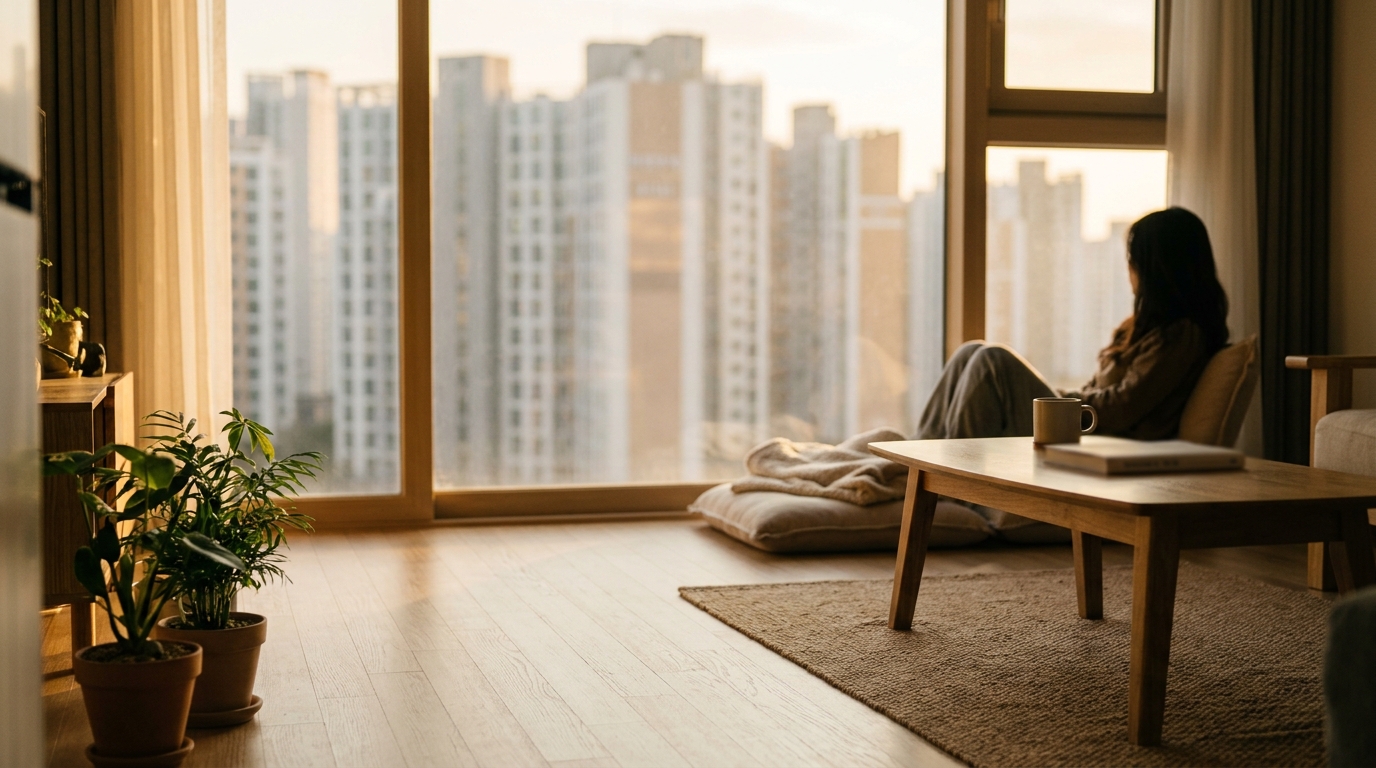
Korean Ondol (온돌) warms rooms from the ground up by circulating hot water through pipes installed under the floor slab. Western heating often relies on forced hot air blown from wall or ceiling registers, which dries out indoor air. In contrast, Ondol transfers heat directly into floor tiles, wood paneling, and living spaces through thermal radiation and conduction.
Most modern Korean apartments, guesthouses, and Airbnbs use compact gas or electric hydronic boilers controlled by a small wall-mounted digital thermostat. Taking a warm shower or turning on the heat triggers an internal three-way valve inside the boiler, directing hot water either to floor tubing or to the bathroom plumbing. Because hot water takes time to heat up heavy concrete slabs, radiant floors need 30 to 60 minutes to feel warm underfoot. Technical documentation from Korean boiler producers indicates that understanding this hydronic loop prevents high energy bills while maintaining indoor comfort.
Visitors staying in South Korea often wonder why room air feels cool while the floor is warm, or why shower water suddenly turns chilly. Because hot water prioritizes your shower through an internal three-way valve, floor heating temporarily pauses while the shower is running. This arrangement maintains solid tap pressure and steady bath temperatures without overloading the heating unit.
Decoding the Korean Boiler Thermostat: Key Buttons Translated
Most Korean boiler controls feature digital LCD screens with buttons labeled in Hangul. Learning four key terms allows foreign guests to operate panels from major manufacturers including Navien (나비엔), Rinnai (린나이), Kiturami (귀뚜라미), and Daewoo (대우).
Korean wall units primarily rely on two main heating modes: Room Air Temperature Mode (실온 - Sil-On) and Floor Pipe Water Temperature Mode (온돌 - Ondol). Guidance from the Checkmate Korea Boiler Guide notes that selecting between these modes depends on room insulation levels.
| Korean Term | Pronunciation | English Meaning | Primary Function & Usage |
|---|---|---|---|
| 전원 | Jeon-won | Power | Turns the boiler unit on or off |
| 실온 | Sil-on | Room Air Temp Mode | Measures ambient room air via sensor on the control panel |
| 온돌 | Ondol | Floor Pipe Water Temp | Measures temperature of liquid inside subterranean floor pipes |
| 온수 / 목욕 | Onsu / Mogyok | Hot Water / Bath Mode | Controls temperature of water coming out of taps and showers |
| 외출 | Oechul | Away / Outing Mode | Lowers heating baseline to prevent pipe freezing during absences |
| 예약 | Yeyak | Timer Mode | Sets boiler to cycle on/off automatically every 1–4 hours |
In Sil-On (실온) mode, the panel measures ambient air temperature through a small sensor inside the wall box. If mounted near a chilly window or cold hallway, the sensor can trigger continuous running and overheat the floor. Ondol (온돌) mode bypasses room air sensors and reads water temperature directly inside the floor pipes. On Kiturami control boxes, a dedicated Bath (목욕 - Mogyok) button activates maximum burner output on a 2.5-hour timer to support steady shower temperatures.
Step-by-Step: How to Turn On Floor Heating and Hot Shower Water
Operating a guesthouse controller requires turning on main power, picking your heating mode, and setting tap water controls separately. Following a clear setup order prevents cold showers and accidental overheating during winter stays.
Radiant heat builds gradually. Cranking the thermostat from 18°C up to 24°C will not speed up initial floor heating; it simply sets a higher final shutoff point. Setting your boiler's hot water supply (온수) to medium (40°C–43°C) ensures consistent tap water without wasting energy or overheating the floor.
The 'Away Mode' (외출) Trap and Winter Survival Mistakes to Avoid
Travelers often assume that pressing Away Mode (외출 - Oechul) while out sightseeing reduces gas consumption. Boiler service technicians and energy consumption studies show that engaging Away Mode during short 2-to-4-hour outings can actually increase overall heating bills.
Away Mode lowers floor pipe target temperatures to 10°C–15°C to avoid winter pipe freezes. Switching back to standard heating upon returning forces the boiler to run at peak capacity for hours to warm up cold concrete floor slabs. Standard host instructions suggest keeping the thermostat at an 18°C–20°C baseline in Sil-On mode during daily excursions.
| Mode / Action | Thermostat Setting | Energy Impact | Recommendation for Travelers |
|---|---|---|---|
| Short Absence (< 8 hrs) | Maintain 18°C–20°C (Sil-On) | Moderate / Efficient | Best practice for daily sightseeing in winter |
| Away Mode (외출) | Maintained at 10°C–15°C | High Reheat Energy | Use only when leaving for more than 24–48 hours |
| Complete Power Off | Unit powered down | Pipe Freeze Risk | Turning the boiler completely off during sub-zero winter temperatures risks freezing internal pipes, leading to costly structural repairs and lost hot water. |
| Maximum Temp Drive | Set to 28°C–30°C | Excessive Gas Usage | Avoid; floor takes time to cool down once overheated |
Winter outdoor temperatures in Seoul drop regularly between -10°C and -15°C. Unplugging or turning off power disables automatic freeze protection. If water trapped inside exterior lines freezes and bursts, building repairs can run into hundreds of thousands of Korean Won.
Staying in a Hanok: Traditional Ondol Tips for Travelers
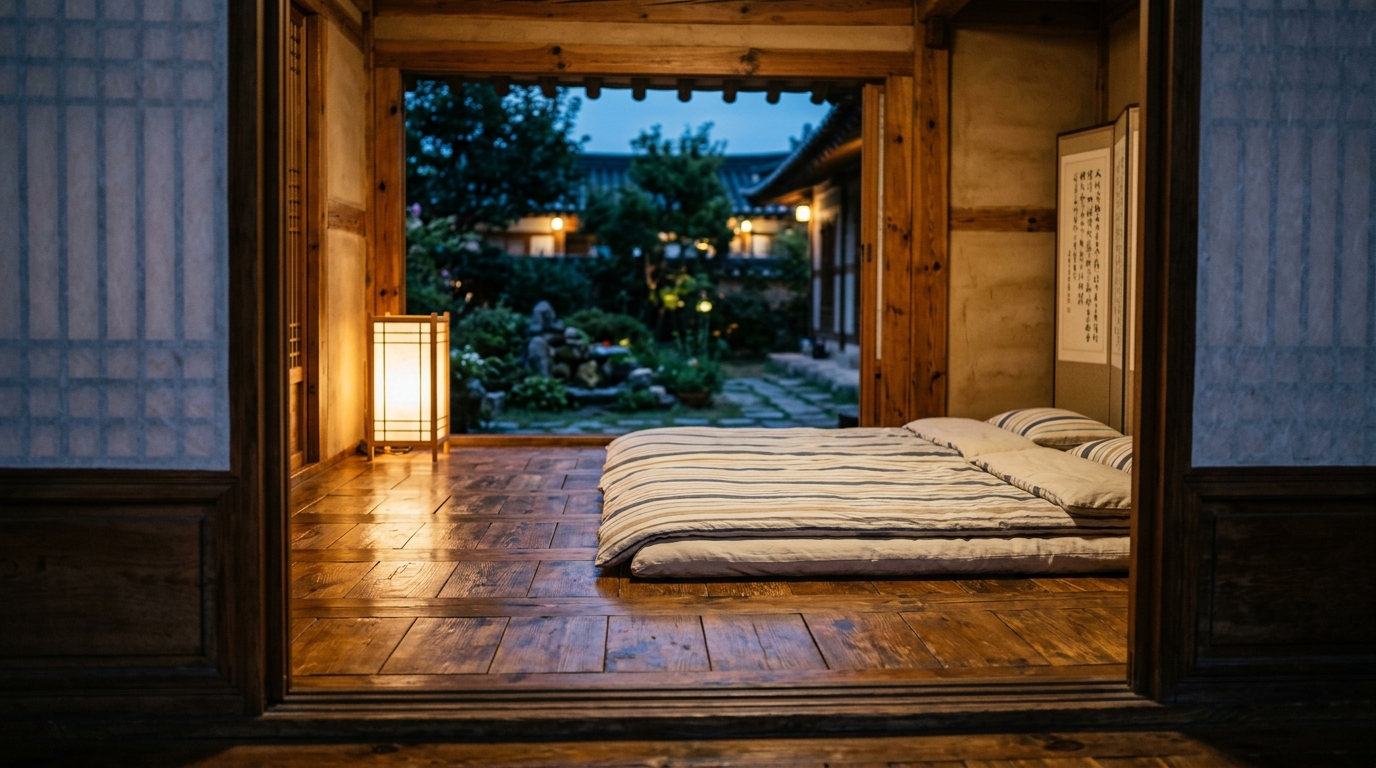
Staying in a traditional wooden Hanok (한옥) guesthouse offers direct exposure to historic Korean architecture, but operating floor heat in these homes differs from modern concrete apartments. Cultural travel guidance from iVisitKorea points out that classic Hanok construction uses exposed timber frames and paper-lined sliding doors (changhoji), which let in minor drafts.
Because cold air enters around wooden frames, thermostats set to Room Air Temp Mode (실온) can struggle to reach target air temperatures, running floor pipes constantly. In a Hanok stay, switch the controller to Floor Pipe Water Temperature Mode (온돌) with a water target of 50°C–55°C. This maintains consistent floor warmth regardless of drafty air higher in the room.
| Heating Feature | Modern Korean Apartment | Traditional Hanok Stay |
|---|---|---|
| Primary Insulation | Double-pane glass & concrete | Timber frame & paper window panels |
| Recommended Setting | Sil-On (실온) Air Temp Mode | Ondol (온돌) Water Temp Mode |
| Sleeping Arrangement | Elevated bed frame or floor mattress | Traditional padded floor futon (Yo / 요) |
| Heat Perception | Uniform room air temperature | Concentrated warm floor with cooler air |
When sleeping on a heated Ondol floor, lay out the thick padded mattress (Yo - 요) provided by your host. Prolonged direct body contact with bare heated floors can cause low-temperature burns (jeoon-sanghae - 저온상해), which occur when skin is exposed to moderate warmth (44°C–50°C) over several hours. Always consult a doctor or healthcare professional if you experience persistent skin irritation or thermal injury. Spreading out your futon mattress disperses heat evenly across the sleeping surface.
How Do You Get Hot Shower Water in Summer Without Heating the Floor?
During Korean summers, hot outdoor weather makes floor heating unnecessary, but guests still need hot water for showers. Korean boiler controllers manage this requirement with Hot Water Only mode (온수전용 - Onsu Jeonyong).
Selecting Hot Water Only mode turns off the floor loop entirely while keeping the internal three-way valve ready to ignite the burner whenever a shower tap opens. To turn on this mode, press the mode button (선택 or 난방) until only the water tap icon or 온수 indicator shows on screen, bypassing room heat targets completely. This provides steady 40°C–43°C hot water while keeping floor tiles cool throughout hot summer months.
Frequently Asked Questions (FAQ) About Korean Floor Heating
Why is the floor warm, but my shower water is ice cold?
Korean hydronic boilers use an internal three-way valve that temporarily diverts burner power to shower water when bathroom taps turn on. If shower water stays cold while floors are warm, domestic hot water mode (온수) on your thermostat might be turned off, set too low, or set to an inactive seasonal mode. Confirm that the hot water icon is visible on the wall panel and set to medium (40°C–43°C). Running kitchen and bathroom taps at the same time also drops water pressure and bath temperature.
Should I turn off the Korean boiler when I check out for the day?
When leaving your room for daily sightseeing, avoid turning off the boiler completely or using Away Mode (외출). Reheating cold concrete floor slabs takes 30 to 60 minutes of heavy burner activity. Instead, maintain baseline air temperature (실온) at 18°C–20°C. For final checkout in sub-zero winter weather (-10°C to -15°C in Seoul), leave main electrical power connected so the boiler's automatic freeze prevention remains active.
Why does my thermostat button say 목욕 (Bath)?
On Kiturami (귀뚜라미) brand thermostat panels, the Bath (목욕 - Mogyok) button acts as a high-output boost timer. Pressing Bath mode runs a 2.5-hour cycle that maximizes burner output and hot water delivery to keep tap pressure and temperature steady during long showers or tub filling. Once the 2.5-hour timer finishes, the system switches back to its prior setting.
Can I sleep directly on an ondol floor?
Sleeping directly on an unpadded heated floor is not advisable because of the risk of low-temperature burns (jeoon-sanghae - 저온상해). Skin contact with surfaces between 44°C and 50°C over several continuous hours can damage cutaneous tissue without immediate pain signals. Guests should always sleep on the thick padded futon mattress (Yo - 요) provided in traditional accommodations, and consult a medical professional if any skin damage occurs.
Frequently asked questions
Q. Why is my floor warm, but my shower water is ice cold?
Korean boilers use an internal three-way valve that prioritizes domestic hot water when taps are turned on. If shower water remains cold, ensure hot water mode (온수) is turned on at the wall control or set to medium/high temperature.
Q. Should I turn off the Korean boiler when I leave for the day?
No, turning off the boiler completely or using Away Mode (외출) for short daytime outings forces the system to consume more gas reheating cold floor slabs upon return. Set the thermostat to 18°C–20°C room temperature while away instead.
Q. How do I get hot shower water in summer without turning on floor heating?
Set your thermostat wall unit to Hot Water Only mode (온수전용 - Onsu Jeonyong) or turn off ambient room heating settings while keeping hot water enabled.
Q. Why does my Kiturami thermostat button say Bath (목욕)?
The Bath (목욕 - Mogyok) button on Kiturami boilers activates temporary maximum burner output for roughly 2.5 hours to provide continuous hot water pressure for showers and soaking tubs.