Seoul Coin Noraebang Guide: Prices, Remotes & Kiosks
Key takeaways
Seoul coin noraebang guide covering 2026 prices, automated kiosk payments, English remote controls, sound tuning hacks, and late-night curfew rules.
Stepping into a Seoul coin noraebang is one of the easiest ways for travelers and non-Korean speakers to enjoy Korean karaoke without facing language barriers. Unlike traditional noraebangs that cater to large groups with hourly room fees, coin-operated singing rooms let visitors pay per song or in short time increments through self-service kiosks. From belting out K-pop tracks in Hongdae to squeezing in a quick solo session in Gangnam, knowing how the kiosks, remotes, and pricing tiers work makes for a smooth visit.
What Is a Coin Noraebang?
A coin noraebang (코인노래방), frequently called kono (코노) by locals, is a self-service singing booth designed primarily for 1 to 3 people. The word noraebang literally translates to "singing room" (norae meaning song, and bang meaning room). Traditional noraebangs in Korea operate as large multi-room establishments catered to office parties and large social gatherings, where staff bill customers at the front desk after their session.
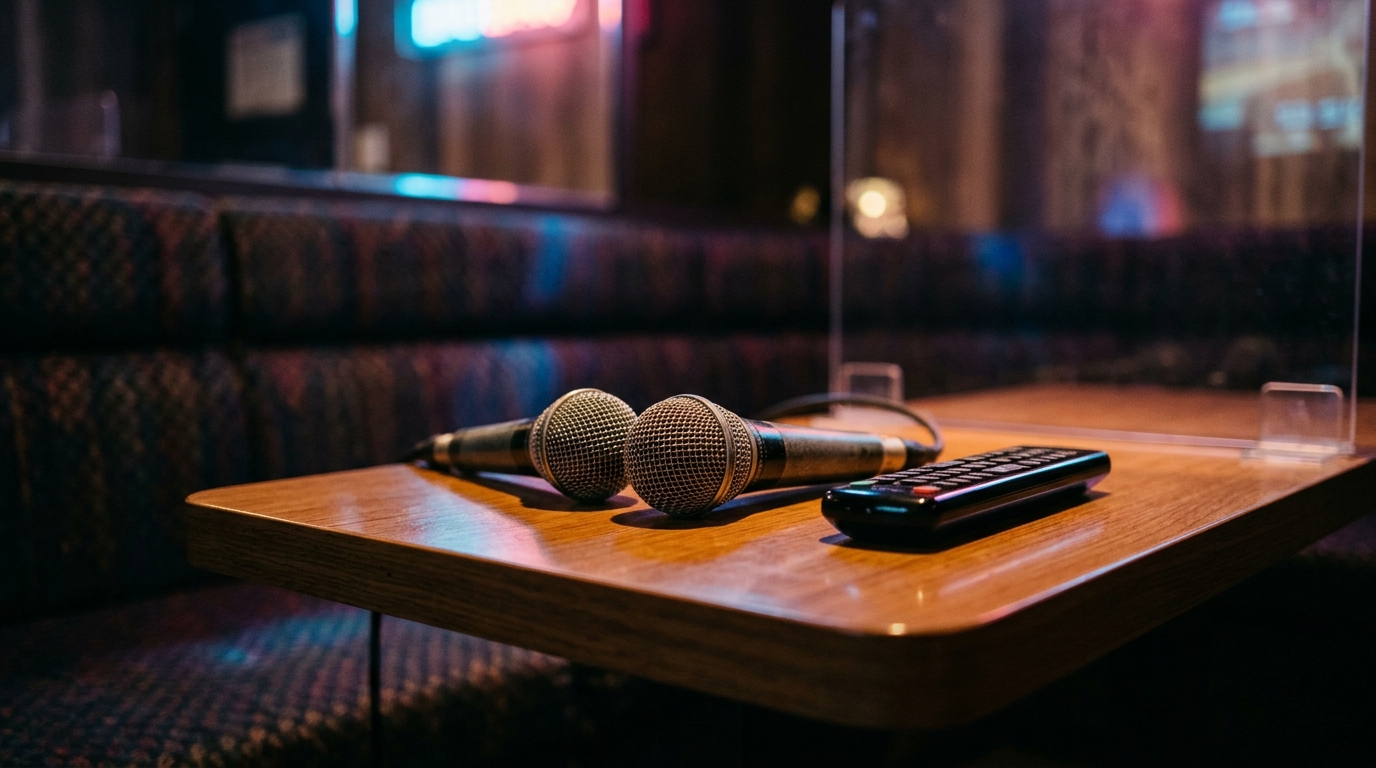
In contrast, coin noraebangs operate as automated micro-karaoke rooms. Visitors pick an individual booth, pay upfront using cash or card, and select a fixed count of songs or minutes. Each booth features soundproof walls, HD displays, dynamic lighting, multi-channel audio setups, and wireless mics complete with disposable sanitary covers.
How Much Does Coin Noraebang Cost in Seoul?
Coin singing rooms in Seoul offer some of the most affordable entertainment in the city. Venues operate under two distinct payment modes: pay-per-song (gok / 곡) or pay-per-time (bun / 분). Prices vary slightly depending on whether the business is located in a high-rent university entertainment district like Hongdae, Sinchon, or Gangnam versus a quiet residential neighborhood.
Pricing structure across major entertainment zones in Seoul shows consistent standards as of late 2026 according to venue operational listings collected by local lifestyle guides like Oneul Korea:
| Pricing Option | Standard Rate (KRW) | Approx. USD | Best Suited For |
|---|---|---|---|
| 1 Song | ₩500 | ~$0.38 | Quick 3-minute warm-up |
| 2–3 Songs | ₩1,000 | ~$0.75 | Casual visitors on a short break |
| 30 Minutes | ₩3,000 – ₩4,000 | ~$2.25 – $3.00 | Targeted practice or short duets |
| 60 Minutes | ₩5,000 – ₩8,000 | ~$3.75 – $6.00 | Dedicated solo or multi-person sessions |
| Mic Covers (Pair) | Free | Free | Sanitary barrier for microphones |
Choosing Between Song Mode and Time Mode
When inserting cash inside the booth or selecting options at the entry kiosk, you must choose between paying per song or by time:
- Pay-Per-Song (곡 Mode): Best if you want to sing full tracks without rushing. If you pause a song to chat, look up song numbers, or take a water break, your remaining count does not decrease. However, if you skip a song mid-track after starting it, that song count is lost.
- Pay-Per-Time (분 Mode): Ideal if you prefer singing only snippets, practicing choruses, or rapidly fast-forwarding through full tracks. Time counts down continuously from the moment the session activates.
Navigating the Automated Kiosk Without Korean Language Skills
Most modern coin noraebangs in Seoul operate 100% unstaffed or with minimal floor supervision. You will typically find a touchscreen kiosk (키오스크) located near the main entrance or inside the hallway.
Foreign Credit Card Troubleshooting and Cash Rules
While primary entry kiosks in high-tourist areas accept foreign Visa and Mastercard credit cards, smaller coin noraebangs or secondary card readers mounted inside individual room walls often reject foreign-issued credit cards due to local payment network restrictions. Always carry a few ₩1,000 and ₩5,000 physical banknotes as a reliable payment backup when visiting singing rooms.
Every venue features a cash exchange machine (지폐교환기) near the lobby. These machines accept ₩1,000, ₩5,000, and ₩10,000 banknotes to break them into smaller bills or ₩500 coins. Be aware that bill changers inside coin noraebangs will not accept ₩50,000 notes.
Using the Korean Noraebang Remote Control in English
Inside the booth, you will find a large, button-heavy remote control (리모컨) resting on the table or wall dock. Korea's two primary karaoke system manufacturers are TJ Media (TJ미디어) and KY Entertainment (금영엔터테인먼트). While their button layouts differ slightly, both utilize identical core mechanics for foreign language song searching.
Key Remote Control Button Map
To navigate the system smoothly without reading Korean, memorize these essential button functions:
- 한/영 (Han/Yeong): Switches the input language between Korean and English.
- 국가별 (Country / Search by Nation): Filters song databases by geographic region. Pressing this reveals menus for English (팝송 / Pop Songs), Japanese (J-POP), and Chinese songs.
- 시작 (Start / Play): Immediately begins the selected song.
- 예약 (Reserve): Queues the song next in line without interrupting the current track.
- 취소 (Cancel / Stop): Instantly stops the current song or clears an incorrect search query.
- 음정 (Pitch / Key Control): Adjusts the musical key up (▲) or down (▼) to match your vocal range.
- 템포 (Tempo): Increases or decreases the playback speed of the backing track.
- 우선예약 (Priority Reserve): Pushes your chosen song to the absolute top of the queue so it plays immediately after the current song finishes.
How to Search for English and International Songs
- Press the 한/영 button so English letters appear on the main display screen.
- Type the artist name or song title using the alphanumeric buttons on the lower half of the remote.
- Press the 검색 (Search) button to view matching results on the monitor.
- Highlight your song using the arrow keys and press 예약 (Reserve) to queue it, or 시작 (Start) to play it instantly.
If typing on the remote control feels slow, you can also press the 국가별 button, navigate to the 팝송 (Pop Song) category, and browse top global hits ranked by popularity or title order.
Sound Optimization Hacks: Mic, Echo, and Melody Tuning
Many visitors find that default karaoke settings drown out their voice or make their singing sound overly echoed. You can adjust the audio processor on the wall unit or remote control to match professional studio levels.
Removing the Guide Melody
By default, Korean karaoke machines play a loud synthesizer melody line over the instrumental track to help singers stay on pitch. However, this guide melody often clashes with actual singing voices.
To remove or reduce it:
- Locate the 멜로디 (Melody) button on the remote control or main wall unit.
- Press it repeatedly to cycle through settings: 표준 (Standard) → 작게 (Low) → 무멜로디 (Mute / Off).
- Setting the melody line to low or off leaves only the clean backing instrumentation, instantly making your vocals sound clearer and more prominent in the room mix.
Recommended Numerical Audio Balance
If your room's wall amplifier unit allows direct dial adjustments, set the knobs to these balanced ratios:
- Microphone Volume (마이크): 60% – 70% (Ensures your vocal signal is clear and strong)
- Music Volume (반주): 50% – 60% (Keeps backing instrumentation beneath the vocal level)
- Echo Level (에코): 30% – 40% (Reduces muddy room reverb so words remain intelligible)
Etiquette, Rules, and the 10 PM Late-Night Youth Curfew
To ensure a hassle-free visit, international tourists must keep several facility rules and legal restrictions in mind.
The 10:00 PM Youth Curfew Lockout
Under South Korean juvenile protection laws, individuals under 19 years of age (calculated by birth year) are legally prohibited from entering or remaining inside noraebang facilities between 10:00 PM and 9:00 AM.
In fully automated, unstaffed coin noraebangs, the central management software automatically locks the main entrance doors or disables room booking at 10:00 PM. Access after 10:00 PM requires scanning a native Korean Resident Registration Card or local mobile ID app at the door scanner. Because international passports and foreign credit cards are generally not recognized by these local ID verification scanners, foreign tourists without a Korean ID may be unable to enter unstaffed venues past 10:00 PM.
To avoid being locked out or having your session abruptly cut off, schedule your coin noraebang visits before 10:00 PM, or choose larger staffed venues where an employee can manually verify your physical passport at the door.
Essential Indoor Rules
Understanding these operational rules and remote settings makes visiting a coin noraebang in Seoul effortless. Once you master the keyboard controls and payment steps, you can enjoy one of Korea's most popular daily entertainment pastimes anywhere in the city.
Planning a full day out in Seoul? Explore practical transit and neighborhood guides through Seoul Tourism's official portal to find top entertainment districts nearby.
Frequently asked questions
Q. Do coin noraebangs in Seoul accept foreign credit cards?
Yes, primary entrance kiosks in popular tourist districts generally accept foreign Visa and Mastercard credit cards. However, smaller wall-mounted card readers inside individual booths often fail to process overseas cards. Carrying ₩1,000 and ₩5,000 banknotes as a cash backup is strongly recommended.
Q. Is it weird to go to a coin noraebang alone in Korea?
Not at all. Coin noraebangs in Korea were explicitly built to cater to solo visitors (*honnol* culture). Small single-person booths are common throughout Seoul, and local students and office workers frequently practice singing completely alone without any stigma.
Q. How do I find English songs on a Korean karaoke remote control?
Press the **한/영** (Korean/English) toggle button located on the remote keypad. This switches the input system to English letters. You can also press the **국가별** (Country) button and select **팝송** (Pop Songs) to browse global track lists.
Q. Can tourists enter a coin noraebang after 10 PM in Seoul?
Unstaffed automated venues lock their doors at 10:00 PM to enforce Korea's youth curfew law, requiring a Korean ID card scanner to open. Foreign tourists without a local ID should visit staffed venues where employees can manually verify physical passports after 10:00 PM.