Bukhansan Hiking Guide: Trails, Gear & Beginner Tips
Key takeaways
Bukhansan Hiking Guide: reach Baegundae Peak with free entry, choose between two main routes, and rent outdoor gear starting at ₩2,000 per day.
This Bukhansan Hiking Guide details reaching the summit of Baegundae Peak (백운대) at 836.5 meters (2,744 ft) in Bukhansan National Park with no entry fees or advance reservations. Having a clear plan makes it easy to handle Seoul’s highest granite peak safely. Foreign visitors can rent gear like sticky-rubber hiking boots for ₩2,000 per day near the trailhead. Below are public transit routes, trail breakdowns, regulations, and rental options for your trip.
Bukhansan at a Glance: Elevation, Rules & Entry Hours
Bukhansan National Park (북한산국립공원) sits along the northern edge of Seoul and Goyang-si, working as a major green space for the city. According to the Korea National Park Service, as of October 2026, the park holds the Guinness World Record for the highest number of visitors per unit area of a national park, hosting over 5 million hikers annually.
Most first-timers head for Baegundae Peak, the highest point in the park. To protect ecosystems and keep visitors safe, park authorities enforce strict entry hours. Night hiking is strictly prohibited.
Essential Park Regulations and Entry Controls
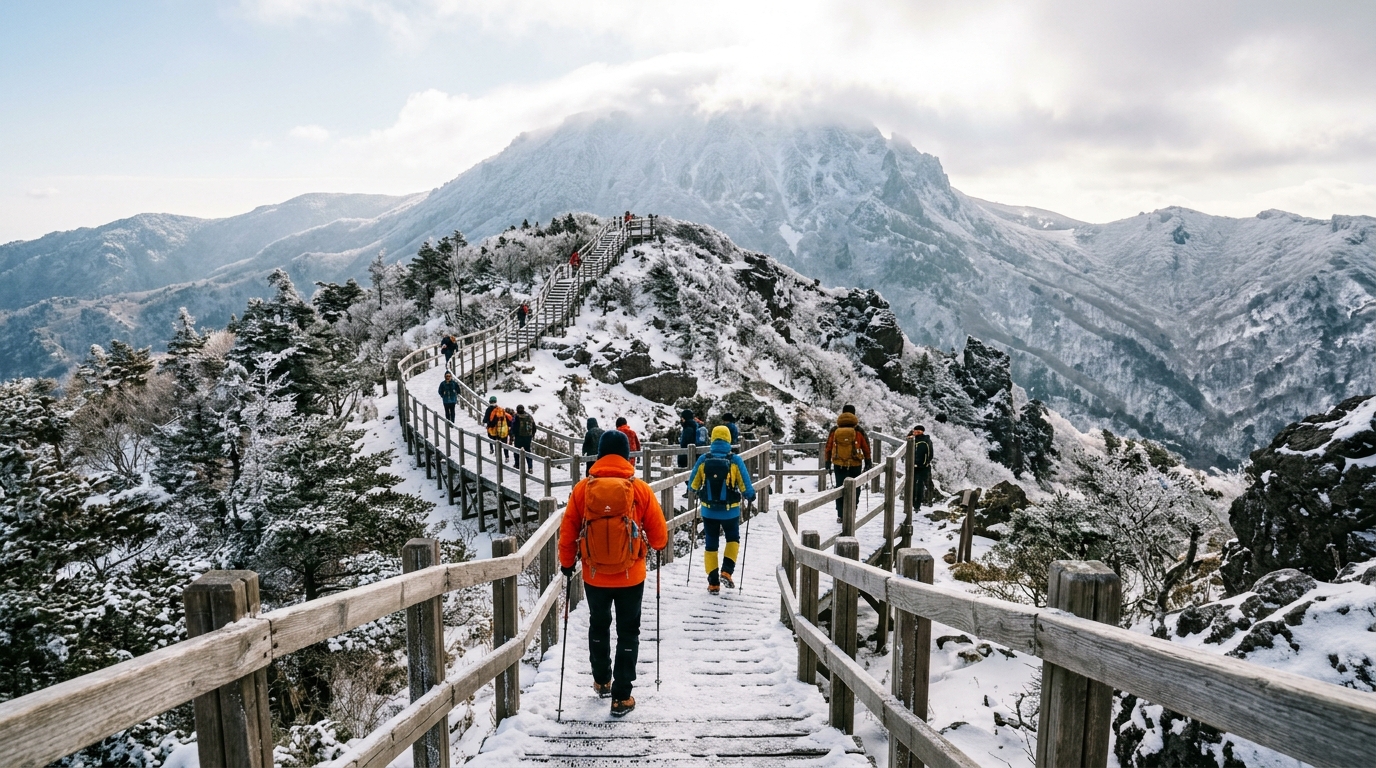
Rangers strictly monitor access gates. Arriving past 17:00 in summer or 16:00 in winter means rangers will turn you back from upper trailheads so everyone descends before dark. Early starts are essential in late autumn and winter when granite paths turn icy quickly. Check official park notices to verify current rule enforcement before traveling.
- No Alcohol Consumption: Under the Natural Parks Act, drinking alcohol inside national park boundaries is illegal, carrying fines up to ₩100,000.
- Strict Smoking Ban: Smoking, e-cigarettes, and open fires are completely banned on all trails.
- Pack-In, Pack-Out: Trails and summits have zero trash bins. Every piece of trash, including food scraps, must go back down with you.
- Wildlife Protections: Do not feed stray cats, birds, or wild boars to preserve natural wildlife behavior.
- Zero Amenities Upper Zone: Because no water taps or restrooms exist on the upper half of Bukhansan, hikers must carry at least 1 to 1.5 liters of water per person from the base.
Comparing the Trails: Which Route to Baegundae Peak Should You Choose?
Bukhansan features over 15 distinct routes, but hikers heading to Baegundae Peak usually pick between two options: the West Entrance (Bukhansanseong Course) or the East Entrance (Ui-dong / Baegundae Course).
| Trail Metric | Bukhansanseong Course (West) | Baegundae / Ui-dong Course (East) |
|---|---|---|
| Starting Point | Bukhansanseong Fortress Entrance | Bukhansan Ui Station / Doseonsa Temple |
| One-Way Distance | 3.4 km (2.1 miles) | 2.1 km (1.3 miles) from Doseonsa |
| Average Ascent Time | 2 hours 40 minutes | 1 hour 30 minutes |
| Difficulty Level | Moderate (Gradual incline) | Steep (Shorter, continuous stair climb) |
| Scenery Highlights | Valley streams, historic gates, valley temples | Rapid summit access, steep granite ridges |
| Public Transit | Subway Line 3 (Gupabal) + Bus | Ui-Sinseol Light Rail Line (Bukhansan Ui) |
Bukhansanseong Course (West Entrance)
Starting near Goyang-si at the fortress entrance, the Bukhansanseong Course (북한산성코스) is the most balanced route up the peak. It begins as a wide valley road before turning into stone steps and dirt paths. Along the way, you pass historical sites like Daeseomun Gate and Borisa Temple. Spreading the elevation gain over 3.4 kilometers makes this route easier on your knees.
Baegundae Course via Ui-dong (East Entrance)
The Ui-dong path serves as the direct route from the eastern side. Hikers set out near Bukhansan Ui Station and head past Doseonsa Temple (도선사). The eastern route is the fastest path to the summit, making it ideal for time-conscious travelers. Expect a continuous steep climb over granite blocks, wooden stairs, and stone steps that demands decent cardiovascular fitness.
Renting Hiking Boots & Gear for ₩2,000 at the Seoul Hiking Tourism Center
Traveling in South Korea without heavy outdoor gear is not a problem. The Seoul Metropolitan Government runs the Seoul Hiking Tourism Center (Bukhansan Branch) near Bukhansan Ui Station specifically to support foreign passport holders on day trips.
Located a 5-minute walk from Exit 2 of Bukhansan Ui Station, the facility provides gear rentals, travel guidance in multiple languages, lockers, lounge space, and showers. You can review service details on the Seoul Hiking Tourism Guide.
Rental Process for Foreign Visitors
If steep cables sound unappealing, center staff can point you toward gentle valley routes on the Bukhansan Dulle-gil trail.
How to Get to Bukhansan Trailheads via Public Transit
Reaching the trailheads on public transport is cheap and direct, but one navigation issue trips up many foreign visitors.
Transit to the West Entrance (Bukhansanseong)
- Take Seoul Subway Line 3 (Orange Line) to Gupabal Station (구파발역).
- Leave via Exit 1 and walk straight to the bus stop.
- Board Bus 704, Bus 34, or weekend express Bus 8772.
- Ride for approximately 12 to 15 minutes and alight at the Bukhansanseong Entrance (북한산성입구) stop.
- Follow the crowd of hikers up the commercial street lined with outdoor gear shops and restaurants toward the park gate.
Transit to the East Entrance (Ui-dong)
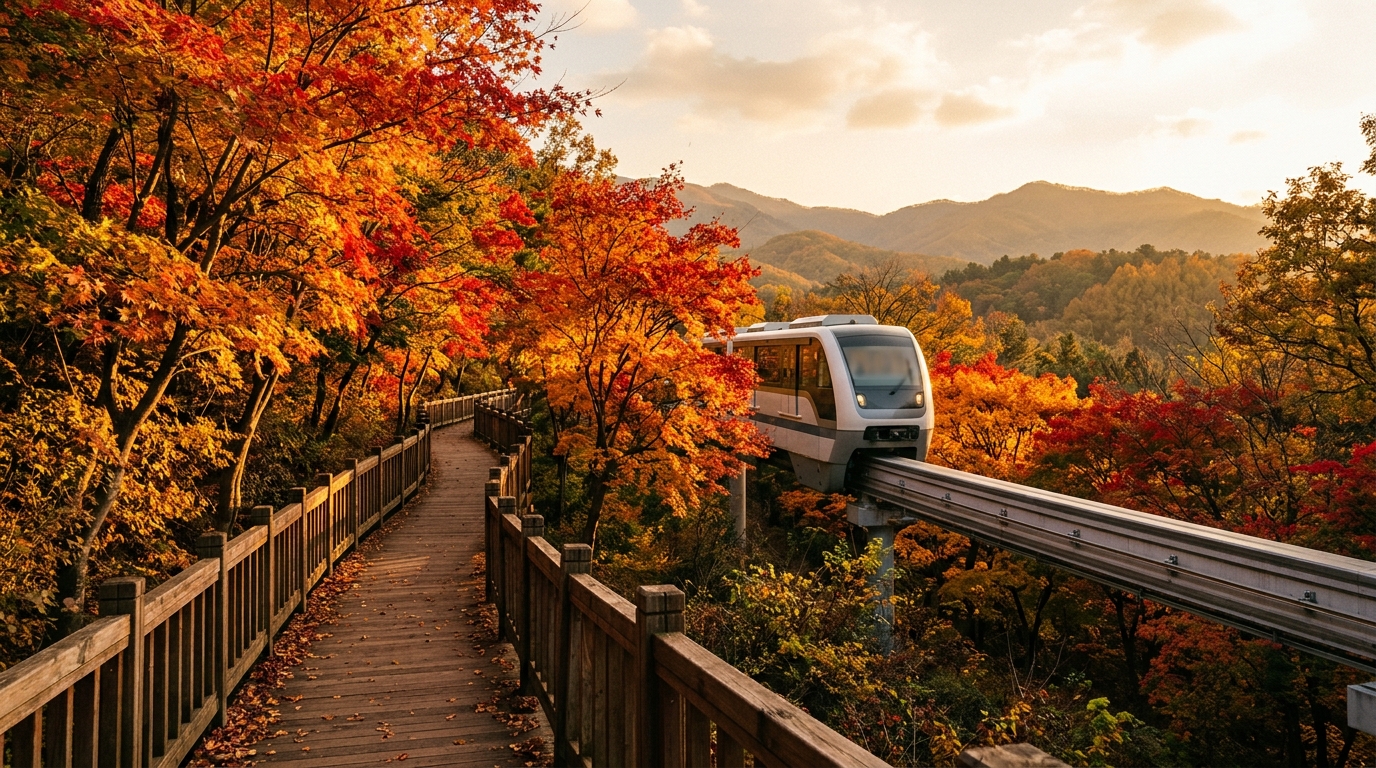
- Take the Ui-Sinseol Light Rail Transit Line (connects at Sinseol-dong Station on Line 1/2 or Sungshin Women's University Station on Line 4) to its northern terminus, Bukhansan Ui Station (북한산우이역).
- Take Exit 2 for the Seoul Hiking Tourism Center or Exit 1 to walk toward the trailhead.
- Walk 2.5 km up the paved road to Doseonsa Temple, or use local shared transit to bypass the paved incline.
Local Transit Trick: Shared Taxis to Bypass Paved Incline
Walking from Bukhansan Ui Station to Doseonsa Temple adds 2.5 km—about 35 to 45 minutes—of continuous concrete incline before you hit the real trail.
To save energy for the summit climb, hikers frequently hop into local shared taxis (often called "Squirrel Taxis"). Sitting outside Bukhansan Ui Station Exits 1 and 2, these regular cabs run continuous shuttles to the Doseonsa Temple parking lot. Passengers split the fare—usually ₩2,000 to ₩3,000 per person when filled with four people—and get dropped right at the upper trailhead gate.
How to Master the Summit Trail: Cables, Photo Queues, and Upper Route Realities
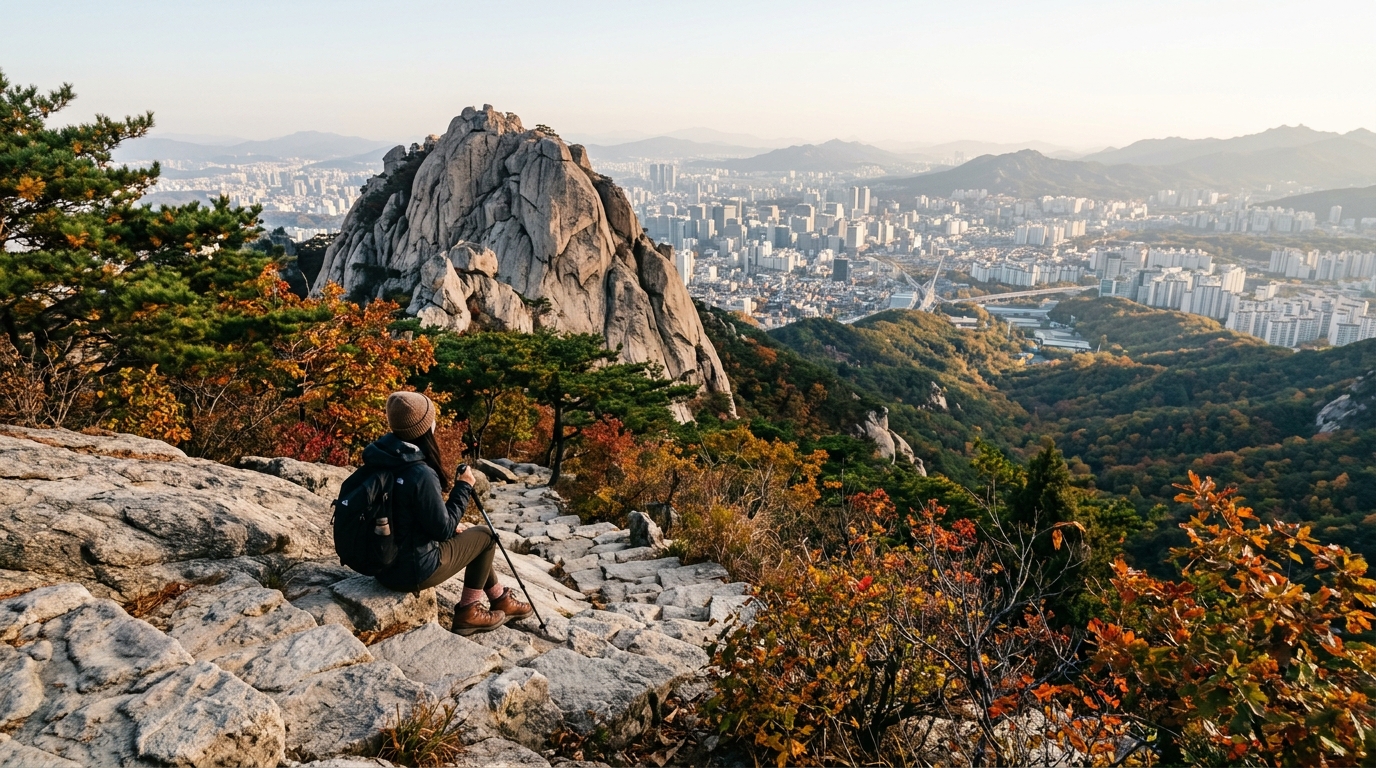
The final 200-meter climb to Baegundae Peak takes steady footwork. Unlike dirt paths, Bukhansan’s upper summit ridge consists of exposed granite bedrock set at steep angles.
Granite Slabs and Cable Rail Safety
The Korea National Park Service maintains steel cable handrails anchored directly into the rock to help hikers scale the steep slabs.
- Grip Shoes: Regular sneakers with smooth rubber soles slip easily on polished granite. Sticky-rubber boots from the rental center give crucial traction.
- Hiking Gloves: Holding cold steel cables or coarse rock for 20 minutes can chafe hands. Work gloves or hiking gloves help immensely.
- Single-File Passing: Yield to downhill traffic at narrow bottlenecks and keep one hand on the cable line.
Summit Flag Photo Line Etiquette
Reaching the summit platform brings you to the South Korean flag standing on the peak boulder.
Because the rock area is small, hikers form a single-file line to take pictures. On clear weekends and during peak autumn foliage, waiting for a photo at the flagpole can take 30 to 60 minutes. If standing in line is not a priority, lower granite ledges nearby offer wide views of Seoul and surrounding ridges without the wait.
Summit Food Culture
Eating on the summit rocks is a classic part of Korean mountain trips. While some bring fast food, wrapped gimbap (seaweed rice rolls) remains the traditional favorite. You can buy fresh rolls near Gupabal or Bukhansan Ui stations in the morning for around ₩3,000 to ₩4,000. All wrappers and leftovers must be carried back down to protect park grounds.
Frequently asked questions
Q. How difficult is hiking Bukhansan for beginners?
Hiking Bukhansan to Baegundae Peak is moderately difficult for beginners. While trails are well-marked, the final 300 meters require climbing steep, bare granite rock faces using wire cable handrails. Standard physical fitness, steady footwork, and proper grippy hiking boots are necessary to ascend safely.
Q. Do I need to pay or make a reservation to hike Bukhansan?
No entry fee or advance reservation is required to hike Bukhansan National Park. Entrance to the park and Baegundae Peak is 100% free (₩0) year-round. Hikers only need to respect daily opening control hours (04:00–17:00 in summer, 04:00–16:00 in winter).
Q. Can tourists rent hiking boots in Seoul?
Yes, foreign passport holders can rent hiking boots for ₩2,000 per day at the Seoul Hiking Tourism Center near Bukhansan Ui Station Exit 2. The center also rents outdoor clothing (₩3,000) and trekking poles (₩1,000) from 09:00 to 18:00, closed Mondays.
Q. Is Google Maps good for hiking in Korea?
No, Google Maps does not provide functional turn-by-turn walking or hiking directions in South Korea due to national geographic data laws. Visitors should download Naver Map or KakaoMap, which offer precise subway line transfers, bus stops, and mountain trail navigation.
Q. What happens if I start hiking too late?
If you arrive after trail entry control cutoff hours (17:00 in summer, 16:00 in winter), park rangers will block entrance to upper trailheads. Night hiking is strictly illegal in South Korean national parks, and violators face fines up to ₩100,000.