Hwadamsup Ticket Booking Guide for Foreigners: Passport Rules
Key takeaways
Foreign tourists can complete Hwadamsup ticket booking on-site by presenting a physical passport at the main ticket office, bypassing domestic Korean phone verification requirements. General admission costs ₩11,000 for adults as of October 2026, while monorail passes are sold separately at platform kiosks. This guide details foreign passport walk-in rules, monorail sector strategies, and transit options from Seoul.
Completing a Hwadamsup ticket booking as an international tourist is straightforward once you understand the official foreign passport walk-in policy, despite online domestic phone verification barriers. Overseas travelers without a Korean mobile carrier or Alien Registration Card (ARC) can buy general entry passes in person at the main ticket booth by presenting a physical passport. Located in Gwangju, Gyeonggi-do, this celebrated eco-botanic garden is famous for its autumn leaf displays, pine groves, and scenic monorail rides.
Because Hwadamsup limits daily visitors to preserve its natural ecosystem, online reservation slots sell out quickly during peak foliage season. Understanding how on-site passport ticketing works alongside platform kiosk monorail sales ensures a smooth visit without gate issues.
What Is Hwadamsup and Why Is It So Popular?
Hwadamsup (화담숲, Hwadam Botanic Garden) is an expansive, carefully maintained arboretum inside Gonjiam Resort in Gwangju, Gyeonggi-do, operated by the LG Evergreen Foundation. The name "Hwadam" means "talking comfortably and peacefully," reflecting the garden's philosophy of harmony between humans and nature. Spanning 165,265 square meters, the park houses over 4,300 plant species across 16 thematic zones, including Korea's largest pine garden, a white birch forest, a moss garden, and an extensive maple collection with over 48 varieties.
While nature lovers visit year-round for spring azaleas and lush summer greenery, peak visitor volume occurs from late October through mid-November during autumn leaf season. Thousands travel from Seoul to walk its low-incline barrier-free boardwalks or ride monorail cars gliding through golden and crimson canopy tunnels. Because the park enforces strict daily capacity limits to prevent overcrowding and preserve plant health, securing entry requires using specific ticketing channels.
Hwadamsup Ticket Booking for Foreigners Without a Korean Phone Number
International tourists visiting Korea cannot complete online Hwadamsup ticket booking on the official website or the domestic NOL app because these platforms require identity verification via a Korean mobile number (NICE verification service) or a local ARC. Attempts to check out with foreign credit cards or non-verified mobile accounts result in system errors.
To accommodate international visitors, Hwadamsup operates an official foreign passport walk-in exemption. Foreign passport holders who cannot complete online mobile verification are permitted to purchase general admission tickets directly at the main ticket window on the day of their visit.
According to official Hwadamsup ticketing guidelines, on-site ticket purchasing for foreigners works on a first-come, first-served basis. When you arrive at the main entrance, walk past the self-service online pickup kiosks straight to the staffed ticketing window. Present one physical foreign passport for each ticket requested. Digital photocopies or smartphone photos of passports are routinely turned away by staff, so bring the physical document.
For foreign residents living in Korea who possess an ARC and a local mobile carrier contract, pre-booking online via the Hwadamsup website remains the standard route. Short-term travelers relying on eSIMs, roaming plans, or foreign credit cards should rely exclusively on the physical passport walk-in policy.
How Do Hwadamsup Online Reservation Queues and Cancellation Slots Work?
For foreign residents or travelers with access to a domestic Korean phone number and bank card, booking online requires navigating a digital queuing system during high-demand release windows. Hwadamsup opens autumn peak period reservations annually in mid-September. On opening day, tens of thousands of users attempt to access the system simultaneously, creating online queue wait times that can stretch for hours.
When accessing the online booking portal, the system assigns a queue number automatically. Do not refresh the browser page while waiting in line. Refreshing or navigating away resets your session token, placing your device at the very back of the digital queue.
If initial online slots sell out, cancellation tickets frequently reappear on the system. Per official policy, automated cancellation drops occur periodically as users adjust schedules prior to entry deadlines. Checking the booking portal late at night or early in the morning often reveals single or small-group openings from timed-out reservations.
How Much Does Hwadamsup Cost? Ticket Prices & Fees
Visiting Hwadamsup involves two distinct costs: general admission to enter the garden grounds and an optional monorail pass for visitors who prefer not to walk the uphill sectors. Prices remain fixed across seasons, though peak autumn dates require exact arrival time slots.
As of October 2026, official ticket pricing for general admission and monorail sectors is structured as follows:
| Ticket Type | Target Audience | Price (KRW) | Details / Inclusions |
|---|---|---|---|
| General Admission | Adults (19–64) | ₩11,000 | Full access to all 5km walking trails |
| General Admission | Seniors (65+) & Teens (13–18) | ₩9,000 | Requires passport/ID verification |
| General Admission | Children (24 mos – 12 yrs) | ₩7,000 | Free under 24 months (proof required) |
| Monorail: Sector 1 | All Ages (Station 1 → 2) | ₩5,000 | Uphill section; ~5-minute ride |
| Monorail: Sector 2 | All Ages (Station 1 → 3) | ₩7,000 | Uphill + Mid-ridge section; ~10-minute ride |
| Monorail: Full Loop | All Ages (Station 1 → 1) | ₩9,000 | Complete circuit; ~20-minute ride |
Admission tickets grant access to the entire 5-kilometer walking route, which takes approximately 2 to 2.5 hours on foot. Monorail tickets are completely separate and must be purchased individually at platform kiosks using major credit cards or international Visa/Mastercard.
Hwadamsup Monorail Booking: Rules, Kiosks & Strategy
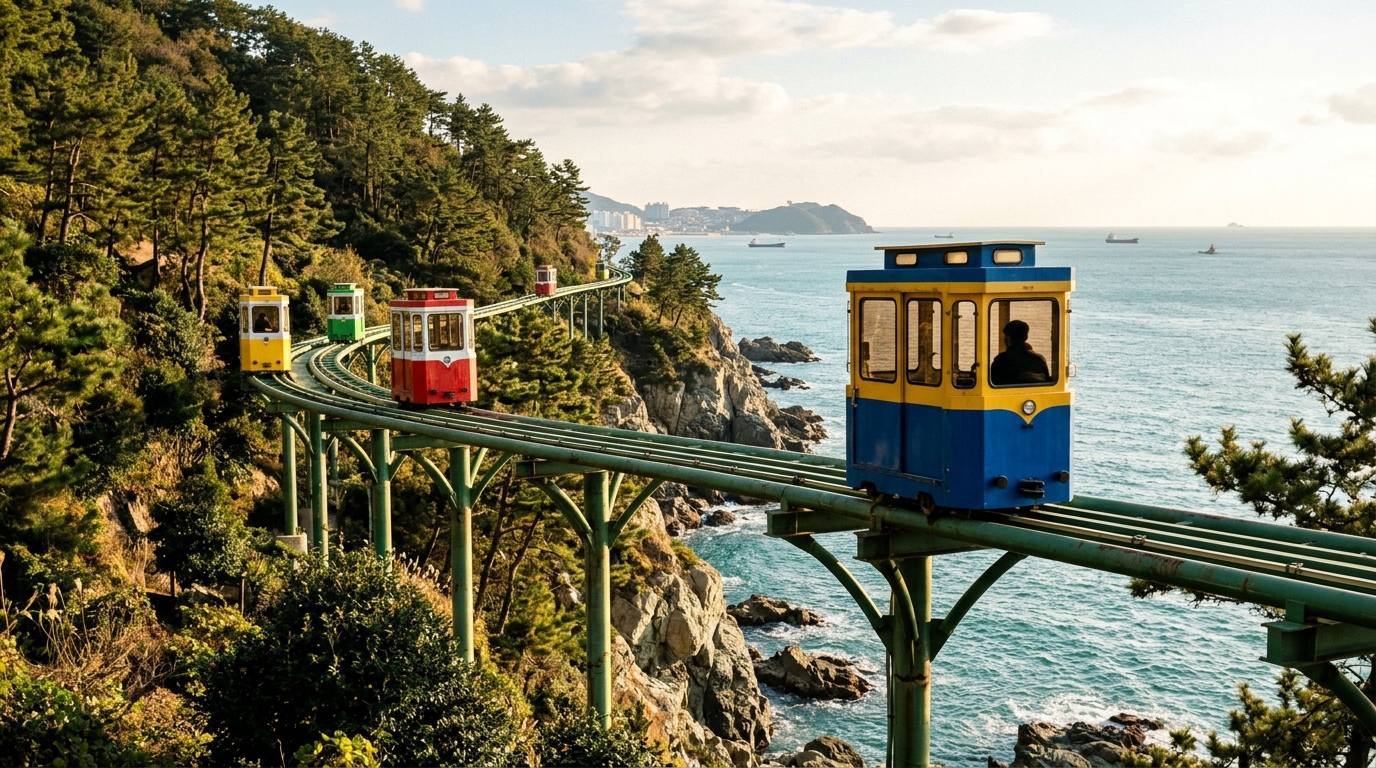
The Hwadamsup monorail is a 1.2-kilometer automated track system designed to transport visitors along the elevated slopes of the garden. Understanding how monorail ticketing operates prevents common visitor mistakes, as discussed across traveler community discussions on Reddit.
The Strict No Re-Boarding Rule
Purchasing a Full Loop monorail ticket (₩9,000) does NOT work like a hop-on, hop-off sightseeing bus. Once you disembark at Station 2 or Station 3 to photograph scenery or explore a walking trail, your Full Loop ticket immediately expires. You cannot re-board a subsequent monorail train using the same pass.
If you step off at an intermediate station and decide later that you want to ride again, you must purchase a brand-new single-sector ticket from the automated touch-screen kiosk on that specific platform.
Recommended Monorail Strategy: Sector 1 Ride + Downhill Walk
For the best balance of scenic photography and manageable physical exertion, experienced travelers follow a hybrid strategy:
- Purchase General Admission at the main entrance gate window using your foreign passport.
- Buy a Sector 1 Monorail Ticket (₩5,000) at the Station 1 kiosk near the entrance.
- Ride the Monorail to Station 2, which covers the steepest uphill section of the mountain slope.
- Disembark at Station 2 and walk downhill along the gentle wooden deck trail back toward the exit, passing through the Birch Forest, Maple Garden, and Healing Forest.
This approach eliminates the steep uphill climb while allowing you to enjoy the most scenic botanical displays on foot at your own pace.
What Is the Best Walking Route and Photography Spot Inside the Park?
Navigating Hwadamsup on foot lets visitors experience its 16 thematic botanical zones. The main walking path is designed as a continuous, barrier-free loop with wooden boardwalks. To capture autumn views without missing key gardens, visitors can follow this sequence from the lower entrance to the exit:
- Lower Pond & Entrance Bridge: Right after entering, cross the wooden bridge overlooking the lotus pond and traditional Hanok buildings. This spot offers high-contrast photography of crimson foliage reflecting on the water.
- Moss Garden & Birch Forest: Located along the lower-to-middle trail segment. Lush green moss creates a distinct natural contrast against the stark white bark of over 1,000 white birch trees.
- Pine Grove: Positioned near the top ridge around Station 2, this section represents Korea's largest pine garden, featuring thousands of naturally shaped pine trees.
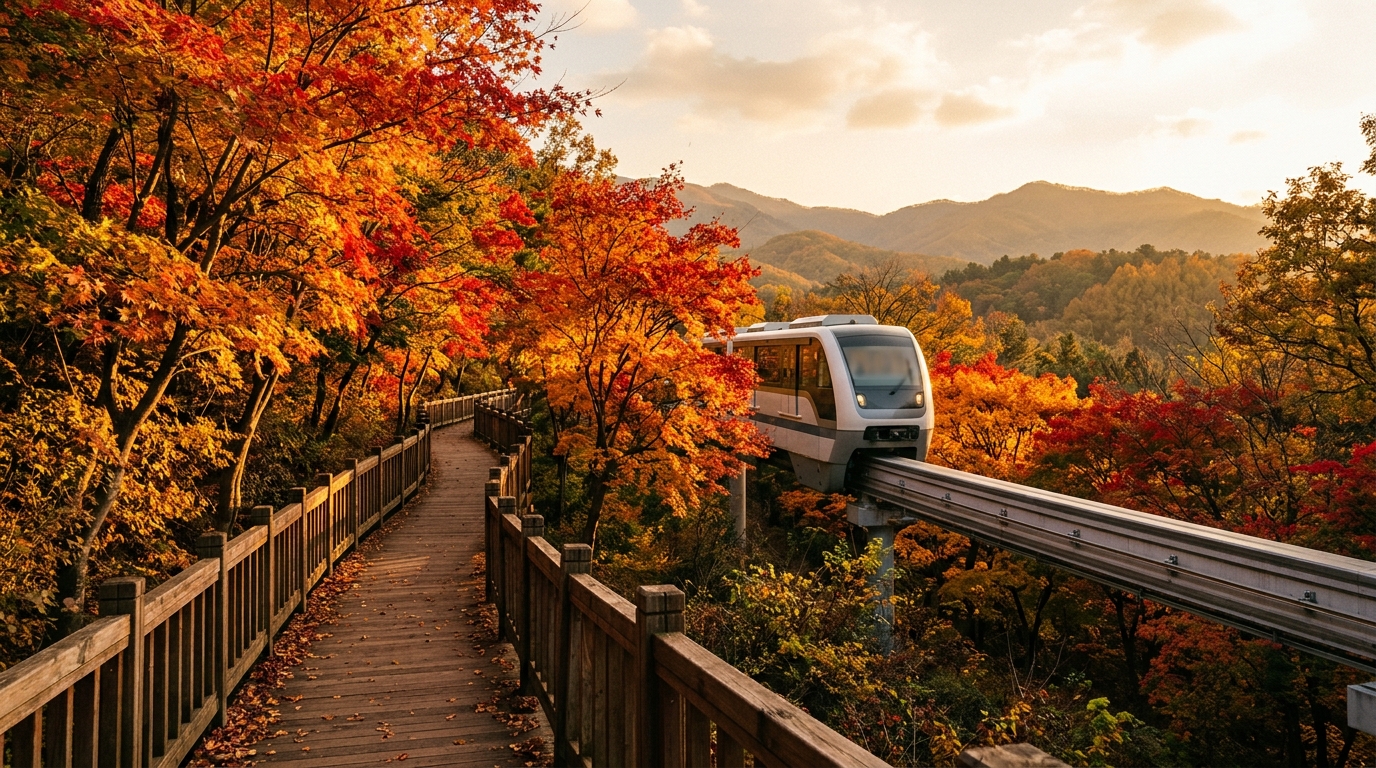
- Maple Garden & Elevated Viewpoints: As you begin the downhill walk from Station 2 toward Station 3, you pass through the maple collection containing 48 distinct species. Footbridges crossing above the monorail track offer famous photo angles of the red monorail passing through bright autumn canopy tunnels.
- Bonsai & Traditional Korean Garden: Located past Station 3, this zone features artfully sculpted bonsai trees alongside miniature traditional Korean stone structures.
What Dining Options and Food Rules Apply Inside Hwadamsup?
To preserve the botanical environment and manage waste, Hwadamsup prohibits outside food, picnic lunches, bento boxes, and alcohol within garden grounds. Security personnel conduct routine bag checks at the main entry gate before admitting visitors. Bottled water in plastic containers and infant formula are the only consumable exemptions permitted past the turnstiles.
For visitors seeking food and beverages during or after their walk, the park provides dedicated internal dining and refreshment facilities:
- Hanok Tea House (Traditional Cafe): Located along the lower section of the walking trail, serving traditional Korean teas, coffee, and ice cream in a traditional wooden building setting.
- Exit Plaza Tavern (Hanok Pajeon Restaurant): Situated next to the scenic lower pond near the exit gate. This popular eatery serves freshly made haemul pajeon (seafood scallion pancakes), bindaetteok (mung bean pancakes), acorn jelly (dotorimuk), and traditional Korean rice wine (makgeolli).
- Gonjiam Resort Dining Area: Located directly outside the garden gates, featuring western cafes, Korean restaurants, and convenience stores.
- Gonjiam Town Specialties: Local restaurants along the main road leading from Gonjiam Station are famous for Gonjiam so-meori gukbap (beef head meat rice soup), a classic regional dish popular after outdoor hiking.
How to Get to Hwadamsup from Seoul via Public Transport
Hwadamsup is located roughly 40 kilometers southeast of central Seoul. Traveling to the garden via public transportation is affordable and efficient using a combination of the Seoul Metropolitan Subway network and local feeder buses or taxis, as outlined in Epickor's Korea travel guides.
Total transit time from Gangnam Station in central Seoul to the Hwadamsup entrance is approximately 75 to 90 minutes. Gyeonggang Line trains operate at 15-to-20-minute intervals throughout the day.
Should You Book a Hwadamsup Day Tour Package from Seoul?
For international travelers who prefer to avoid managing subway transfers, local bus timing, and foreign passport ticket lines on their own, booking an organized day tour package is an alternative option. Third-party travel platforms like Klook offer full-day tour itineraries originating from major Seoul transit hubs such as Hongdae, Myeongdong, or Dongdaemun.
These group tour packages handle round-trip bus transportation directly to Hwadamsup and typically package the garden visit with other regional sights in Gyeonggi-do, such as Gwangmyeong Cave or hands-on cultural activities like ice cream making. Joining an organized tour removes the need to navigate Gonjiam Station transfer connections or arrange local taxis, making it suitable for short-term visitors, families traveling with young children, or seniors seeking direct point-to-point transit.
Key Rules, Seasonal Dates, and Accessibility Guidelines
To protect natural flora and maintain safety along narrow boardwalks, Hwadamsup enforces strict park regulations. Security officers check bags at the gate before entry.
Accessibility Features
One of Hwadamsup's most notable features is its universal design. The entire main walking route consists of smooth, rubberized or wooden deck paths constructed with an incline under 8%. There are no mandatory stair steps along the primary trail loop, making it accessible for parents pushing strollers and visitors using manual or electric wheelchairs. Disabled restrooms are located at the entrance, Station 2, and the exit plaza.
Seasonal Autumn Dates
For the 2026 autumn season, peak leaf viewing runs from October 23, 2026 through November 15, 2026. Reservations for this period opened on September 16, 2026. During this window, operating hours are extended from 8:30 AM to 6:00 PM (last admission at 5:00 PM). Because autumn weekends witness heavy vehicle congestion along Route 3 near Gonjiam, using public transit or arriving before 9:00 AM is recommended.
Common Visitor Mistakes to Avoid
- Waiting in the wrong line: Do not wait in line at the automated ticket pickup machines if you need to buy a passport walk-in ticket. Go straight to the staffed ticket counter.
- Relying on digital passport photos: Park staff require physical passports to issue walk-in entry tickets for foreign nationals.
- Assuming monorail tickets are hop-on/hop-off: Stepping off at Station 2 cancels the remainder of a Full Loop pass. Always buy single-sector tickets if you plan to walk parts of the route.
- Bringing a picnic lunch: Outside meals and picnic blankets are confiscated at entry bag checks. Eat at the traditional pajeon (scallion pancake) restaurant located inside the exit plaza instead.
- Missing the last shuttle back to Gonjiam Station: Local Bus 9 operates on 30-to-45-minute intervals in the late afternoon. Keep an eye on bus schedules or use Kakao T / Uber to pre-order a taxi from the resort parking lot.
Frequently asked questions
Q. Can foreign tourists buy Hwadamsup tickets without a Korean phone number?
Yes. Foreign tourists without a domestic Korean mobile number or ARC can buy Hwadamsup general admission tickets on-site at the main ticket window by presenting an original physical foreign passport. On-site walk-in tickets are sold on a first-come, first-served basis.
Q. Is the monorail ticket included in the Hwadamsup admission fee?
No, monorail tickets are not included in general admission. General admission grants access to the walking trails (₩11,000 for adults as of Oct 2026). Monorail tickets cost an additional ₩5,000 to ₩9,000 depending on the sector and are purchased at platform kiosks.
Q. Can I get off the monorail and re-board later with a Loop ticket?
No. Full Loop monorail tickets do not permit re-boarding once you disembark at an intermediate station. If you step off at Station 2 or 3 to explore, your pass becomes invalid, and you must purchase a new single-sector ticket to ride again.
Q. How do I get to Hwadamsup from Seoul using public transportation?
Take the Shinbundang Line from Seoul to Pangyo Station, transfer to the Gyeonggang Line, and ride to Gonjiam Station Exit 1. From Exit 1, take Gwangju Bus 9 or a 10-minute taxi to Gonjiam Resort/Hwadamsup, taking around 80 minutes total.
Q. Are strollers and wheelchairs allowed in Hwadamsup?
Yes. The entire 5km walking circuit at Hwadamsup is constructed with low-incline wooden boardwalks free of mandatory stairs. Strollers and wheelchairs can navigate the complete trail smoothly from entry to exit.