Seoul Lantern Festival Guide: Best Walkways & Viewing Tips
Key takeaways
The Seoul Lantern Festival features illuminated art along Cheonggyecheon Stream and Gwanghwamun Square every winter from mid-December to early January. Free to attend without tickets, the 1.2 km walkway connects with seasonal food stalls at Gwanghwamun Market and ice skating at Seoul Plaza.
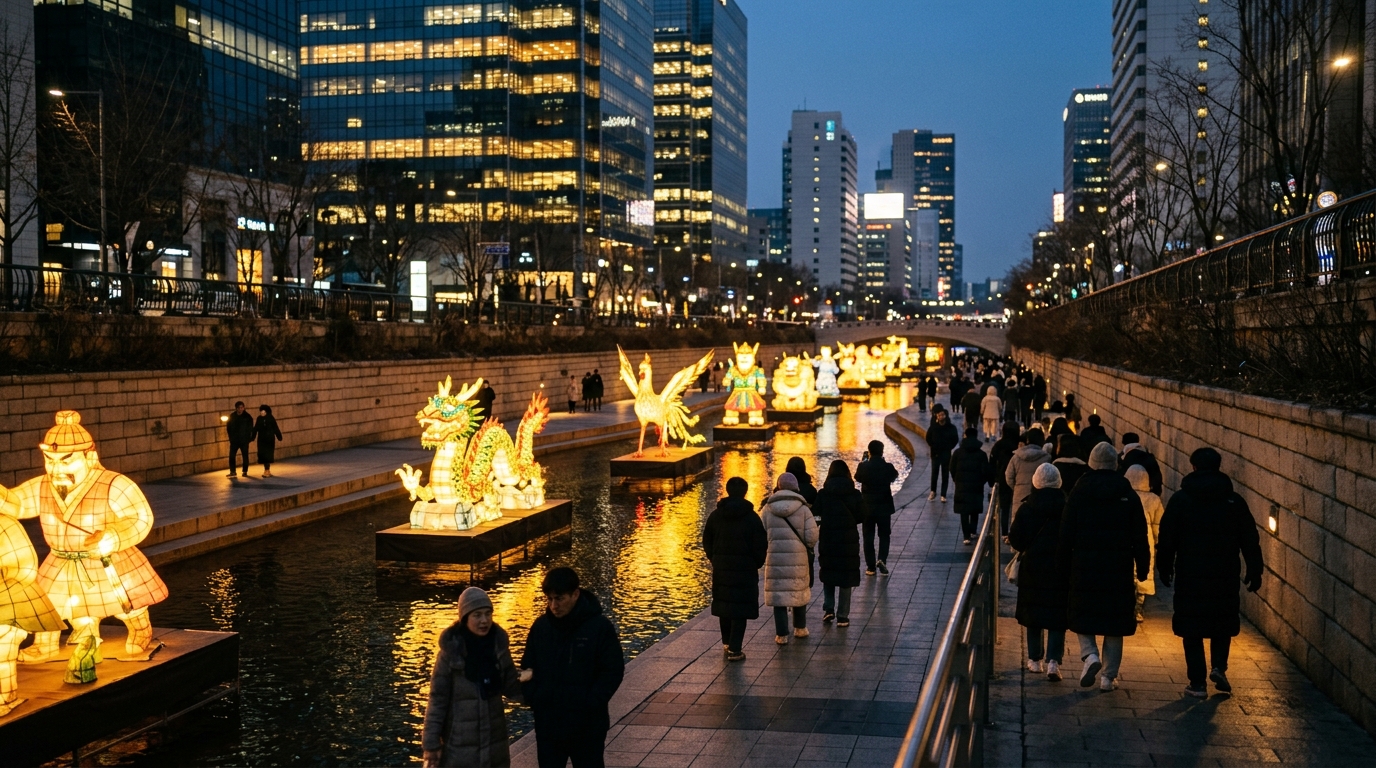
Every winter, the Seoul Lantern Festival fills downtown Seoul with illuminated art along the sunken pathway of Cheonggyecheon Stream. The free public event features hundreds of light displays, LED art installations, and festive seasonal markets. This Seoul Lantern Festival Guide details practical walking routes, low-stress subway options to avoid peak crowds, winter weather prep, and key logistics for visiting.
What Is the Seoul Lantern Festival?
The Seoul Lantern Festival (서울빛초롱축제) is an annual winter event featuring large illuminated sculptures displayed along Cheonggyecheon Stream and Gwanghwamun Square. Held as part of the broader Seoul Winter Festa celebration, the lights operate every evening from mid-December through early January between 18:00 and 22:00.
City tourism figures on Visit Seoul show that the event draws millions of local and overseas visitors annually. Artwork ranges from pop-culture figures like full-scale Pokemon structures to traditional Korean themes such as mythical haetae guardians and floating paper lanterns. Because the stream bed sits below street level, walking along the water provides a sunken urban view against downtown skyscrapers.
Seoul Lantern Festival vs. Lotus Lantern Festival: What Is the Difference?
Travelers often confuse the winter Seoul Lantern Festival with the Lotus Lantern Festival, but they are distinct events held at different times of the year. The winter showcase focuses on modern LED art and holiday markets along Cheonggyecheon, while the spring celebration centers on historical Buddhist traditions and a large street parade.
Comparing the two events helps clarify what to expect:
| Feature | Seoul Lantern Festival (서울빛초롱축제) | Lotus Lantern Festival (Yeondeunghoe / 연등회) |
|---|---|---|
| Season | Winter (Mid-December to Early January) | Spring (April/May around Buddha's Birthday) |
| Primary Location | Cheonggyecheon Stream & Gwanghwamun Square | Jongno Street, Jogyesa Temple & Bongeunsa |
| Main Attraction | Stationary illuminated sculptures along water | Night parade with thousands of hand-held lanterns |
| Cultural Background | Modern urban winter light festival | UNESCO Intangible Cultural Heritage Buddhist tradition |
| Operating Hours | Daily 18:00 – 22:00 (Extended to 23:00 on weekends) | Fixed single weekend event schedule |
| Admission | Free walk-in access | Free street viewing; temple craft workshops cost nominal fees |
As noted in cultural travel overview guides on The Soul of Seoul, visitors wanting to see traditional parade processions should schedule for spring, whereas those seeking winter illuminations should plan for December.
Essential Event Details: Dates, Hours, and Location
The festival stretches across a continuous downtown zone connecting Gwanghwamun Square, Cheonggye Plaza, and the bridges along Cheonggyecheon Stream. Installations turn on every evening at dusk.
| Key Metric | Event Parameter Details |
|---|---|
| Dates | Mid-December to Early January annually (dates confirmed each autumn) |
| Light-Up Hours | 18:00 – 22:00 daily (Extended to 23:00 on Saturdays, Sundays, and public holidays) |
| Admission Fee | Free (0 KRW) |
| Main Hub | Cheonggye Plaza (청계광장) at the start of Cheonggyecheon Stream |
| Walking Distance | Approximately 1.2 to 1.5 kilometers (one-way) |
| Language Support | Multilingual English, Chinese, and Japanese signboards across all zones |
How to Get There: Best Subway Exits & Crowd Hacks
Seoul's subway network provides direct access to the stream, but choosing the wrong station exit can result in long wait times in crowded queues. Gwanghwamun Station Exit 5 lands directly at Cheonggye Plaza, making it the most congested subway exit during peak evening hours.
To skip the heaviest foot traffic, use nearby stations located within a 3- to 5-minute walk from the water:
Tapping through turnstiles using T-money, Cashbee, or Climate Cards allows quick transit entry (foreign contactless credit cards cannot be tapped directly at gates, though they can be used at station machines to purchase transit passes or single-journey tickets). Taking a taxi into downtown during festival hours is generally inefficient due to traffic restrictions along Sejong-daero.
Step-by-Step Walking Route: Navigating the 4 Theme Zones
Following a west-to-east path along the stream path allows visitors to see the entire exhibition without missing sections. The layout divides into four clear thematic zones:
Walking the 1.2 km path takes roughly 45 to 60 minutes. To make a full loop, walk east along the lower stream path, take the stairs up at Samilgyo Bridge, and walk back west along the upper street level to view the lights from above.
Winter Survival Hacks: Staying Warm and Finding Restrooms
Nighttime temperatures in Seoul regularly fall below -5°C (23°F) during December and January. Because Cheonggyecheon is lower than street level, winds along the water can make conditions feel noticeable colder. Planning ahead for cold weather keeps the walk comfortable.
Where to Find Warm Restrooms
There are no public restrooms directly down along the water path. To use a bathroom, exit up the stairs to street level and visit neighboring commercial or municipal buildings.
| Location Name | Walking Distance from Stream | Key Amenities |
|---|---|---|
| Seoul Finance Center (SFC) | 1-minute walk from Cheonggye Plaza | Indoor dining, heated public restrooms, underground arcade |
| Young Poong Bookstore (Jongno Branch) | Direct access at Gwangtonggyo Bridge | Restrooms, heating, coffee shops, massive seating areas |
| KT Gwanghwamun Building | 2-minute walk from Zone 1 | Public restrooms, indoor cafe areas, lobby warming space |
| Seoul City Hall (Citizen Hall) | 3-minute walk from Cheonggye Plaza | Free public restrooms, indoor cultural exhibits, resting seats |
Dress in warm layers, insulated footwear, gloves, and a long down coat (long-padding / 롱패딩). Steps and walkway stones near the water can become slick if snow falls, so watch your footing.
Combining Your Trip: Gwanghwamun Market & Seoul Winter Festa
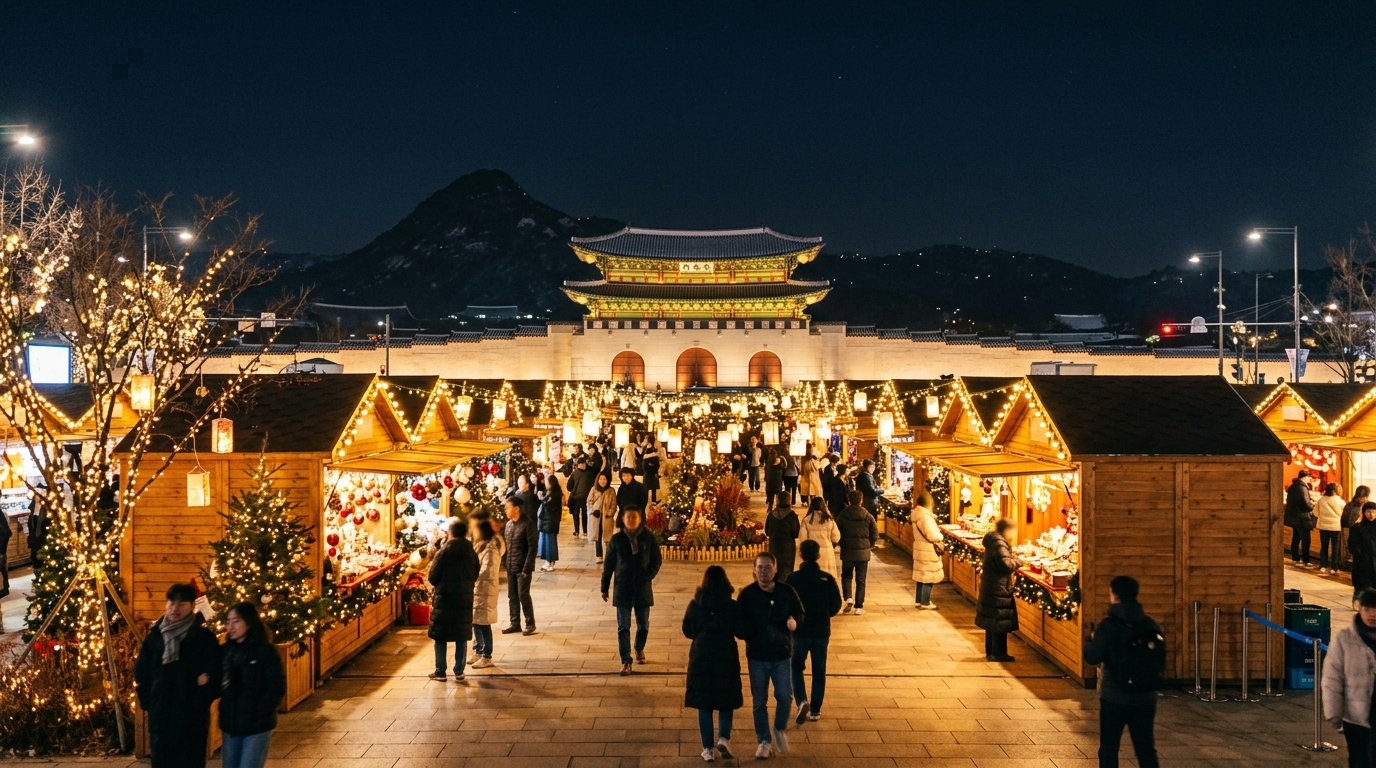
The lantern course sits in the middle of the broader Seoul Winter Festa (서울윈터페스타), a municipal event connecting several downtown locations into a single winter festival footprint.
Reporting from The Korea Times notes that the festival area links several nearby public spaces:
- Gwanghwamun Market (광화문광장 마켓): Set up on Gwanghwamun Square right beside Cheonggye Plaza. The outdoor market consists of wooden stalls selling seasonal crafts, winter gear, and hot street foods such as eomuk (fish cake soup), hotteok (sweet filled pancakes), and warm mulled wine.
- Seoul Light Gwanghwamun (서울라이트 광화문): Media light shows projected onto the outer wall of Gyeongbokgung Palace's main gate and adjacent structures during the evening.
- Seoul Plaza Ice Skating Rink (서울광장 야외스케이트장): Located five minutes south on foot at City Hall Plaza, where visitors can rent skates for 1,000 KRW per hour.
Market stalls at Gwanghwamun Market accept major international credit cards (Visa, Mastercard, American Express), so carrying cash is not strictly necessary.
Accessibility and Stroller Advice
Visitors using strollers or wheelchairs need to note ramp locations along Cheonggyecheon. Sidewalks along the upper street level are flat, but access to the lower water path relies on specific access points.
Frequently asked questions
Q. Is the Seoul Lantern Festival free to attend?
Yes, admission is completely free. Visitors can walk in without tickets, online reservations, or local registration.
Q. What is the difference between the winter Seoul Lantern Festival and the Lotus Lantern Festival?
The Seoul Lantern Festival is a winter light display along Cheonggyecheon Stream running from December to January. The Lotus Lantern Festival (Yeondeunghoe) is a traditional spring Buddhist event featuring a street parade in April or May.
Q. Where is the best place to start walking, and how long does it take?
Starting at Cheonggye Plaza near Gwanghwamun provides the standard entry point. Walking the 1.2 km path to Samilgyo Bridge takes about 45 to 60 minutes at a relaxed pace.
Q. Can I bring a baby stroller or wheelchair to the festival?
Ramps into the lower stream path are located at Cheonggye Plaza and Samilgyo Bridge. Intermediate bridges have stairs only, so visiting during weekday off-peak hours is recommended for stroller users.
Q. Can I pay with international credit cards at the Christmas market stalls?
Yes, vendors at the Gwanghwamun Market accept major foreign credit cards including Visa, Mastercard, and American Express.