Seoul Winter Festa Guide: Christmas Markets, Lights & Rinks
Key takeaways
Seoul Winter Festa (Seoul Winta) connects Christmas markets, paper lantern displays, media facades, and ice skating across downtown landmarks like Gwanghwamun Square and Cheonggyecheon Stream. Running annually from mid-December through early January, general admission to outdoor illuminations is free, while the Seoul Plaza Ice Rink costs ₩1,000 KRW. International visitors can navigate using public subways and access on-site walk-in tickets without needing a local Korean phone number.
Every year from mid-December through early January, central Seoul transforms into a citywide festival called the Seoul Winter Festa (서울윈터페스타), commonly called Seoul Winta. Organized as a unified mega-festival by the Seoul Metropolitan Government, the event connects seven sub-festivals across six downtown landmarks: Gwanghwamun Square, Cheonggyecheon Stream, Seoul Plaza, Dongdaemun Design Plaza (DDP), Bosingak Pavilion, and Sejong-daero. Drawing over 10 million visitors annually, it features European-style Christmas market chalets, traditional Korean Hanji paper lanterns, 3D media facades, and a popular ₩1,000 KRW outdoor ice rink.
Getting around this multi-site layout requires a little practical preparation. Here is a clear guide covering event locations, daily schedules, walk-in ticketing for international travelers, winter packing tips, and local payment details.
What is Seoul Winter Festa and How is the Mega-Festival Laid Out?
Seoul Winter Festa connects Seoul's core historical and cultural downtown districts into a continuous 4-kilometer walking route. Instead of remaining inside a single venue, visitors can stroll smoothly between individual sub-events spanning central Seoul.
Official details from VisitKorea and the official Seoul Winta portal show that main illuminations run daily from 18:00 to 22:00 or 23:00 throughout the festival period. Most outdoor walking zones offer open, ticket-free public access.
To help organize your visit, the main festival hubs break down by location and attraction type:
| Location | Sub-Festival / Main Attraction | Primary Highlight | Entrance Fee | Nearest Subway Station |
|---|---|---|---|---|
| Gwanghwamun Square (광화문광장) | Gwanghwamun Market & Seoul Light Gwanghwamun | Christmas chalets, media facade light shows | Free | Gwanghwamun Stn (Line 5, Exit 2/9) |
| Cheonggyecheon Stream (청계천) | Seoul Lantern Festival (서울빛초롱축제) | Traditional & modern floating Hanji lanterns | Free | Gwanghwamun Stn (Line 5) / Euljiro 1-ga (Line 2) |
| Seoul Plaza (서울광장) | Seoul Plaza Ice Rink (서울광장 야외스케이트장) | Outdoor ice skating rink & giant Christmas tree | ₩1,000 KRW | City Hall Stn (Line 1/2, Exit 5) |
| DDP (동대문디자인플라자) | Seoul Light DDP (서울라이트 DDP) | 220-meter curved building media facade mapping | Free | Dongdaemun History & Culture Park Stn (Line 2/4/5) |
| Bosingak Pavilion (보신각) | Midnight Bell Ringing Ceremony (제야의 종) | New Year's Eve countdown and bell ringing | Free | Jonggak Stn (Line 1, Exit 4) |
What to See and Eat at Gwanghwamun Christmas Market and Seoul Light?
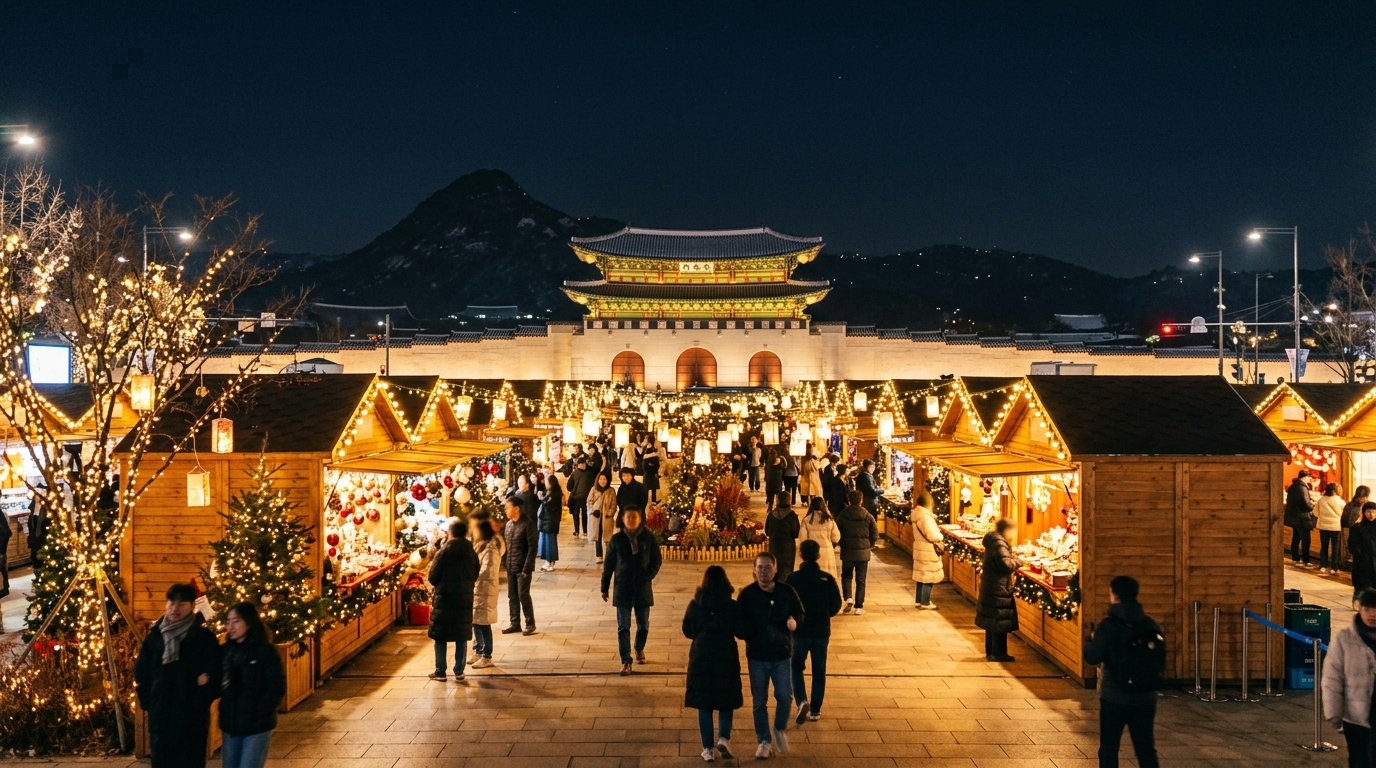
Gwanghwamun Square forms the centerpiece of Seoul Winter Festa, hosting the Gwanghwamun Christmas Market framed by media facade light projections cast against Gwanghwamun Gate and the Sejong Center for the Performing Arts. Built with wooden chalets, the market area features artisan crafts, handcrafted seasonal ornaments, winter wear, and hot snacks.
Visitors can stroll lit pathways, take photos near oversized holiday sculptures, and try regional street foods or international treats. Food stalls sell hot eomuk (어묵 / fish cake skewers in warm broth), sweet cinnamon hotteok (호떡 / griddled pancakes), roasted chestnuts, and spiced hot cider. Official Gwanghwamun Market vendor stalls accept foreign Visa and Mastercard credit cards, but food vendors serve non-alcoholic warm spiced beverages rather than traditional alcoholic mulled wine due to municipal safety regulations.
How to Experience the Cheonggyecheon Lantern Festival?
Located right beside Gwanghwamun Square, the Seoul Lantern Festival (서울빛초롱축제) lights up the sunken Cheonggyecheon Stream for about 1 kilometer from Cheonggye Plaza down to Gwango Bridge. Dozens of hand-crafted Korean Hanji (traditional mulberry paper) lanterns float along the water or rest on stone walkways, displaying historical figures, folklore, fairytales, and animated characters.
Walking along the lower stream path offers a calm atmosphere shielded from street-level wind. Because the stone walkways along the water are narrow, safety staff direct pedestrian traffic during busy peak hours.
How Can Foreign Tourists Ice Skate at Seoul Plaza for ₩1,000 KRW?
Just a 10-minute walk south of Gwanghwamun Square in front of City Hall, the Seoul Plaza Ice Skating Rink costs ₩1,000 KRW (about $0.75 USD) per 1-hour session. As noted by VisitSeoul official portal guidance, the price covers both skate rental and a safety helmet. The rink operates daily from mid-December through early February, setting up outdoor skating right under the central city Christmas tree.
While residents often reserve tickets online, foreign travelers can run into system barriers requiring a Korean mobile number or local card. Fortunately, event organizers set aside dedicated walk-in tickets for on-site purchase.
| Operating Parameter | Seoul Plaza Ice Rink Details |
|---|---|
| Ticket Price | ₩1,000 KRW per session (1 hour) — includes skate & helmet rental |
| Hours of Operation | Sunday–Thursday: 10:00 – 21:30 (7 sessions/day) <br> Friday, Saturday & Holidays: 10:00 – 23:00 (9 sessions/day) |
| Mandatory Gear | Helmets (free rental provided) and gloves (must bring or buy for ₩1,500 KRW) |
| Locker Cost | ₩500 – ₩1,000 KRW cash (100-won / 500-won coins) |
| Walk-in Quota | ~300 tickets held per session for on-site purchase |
Where to Watch DDP Light Shows and the New Year's Eve Bell Ringing?
To view digital art, take the subway east to Dongdaemun Design Plaza (DDP) for Seoul Light DDP. The futuristic building's 220-meter curved aluminum exterior serves as a massive projection screen each evening. High-powered digital projectors cast synchronized light art, visual patterns, and ambient soundscapes against the facade.
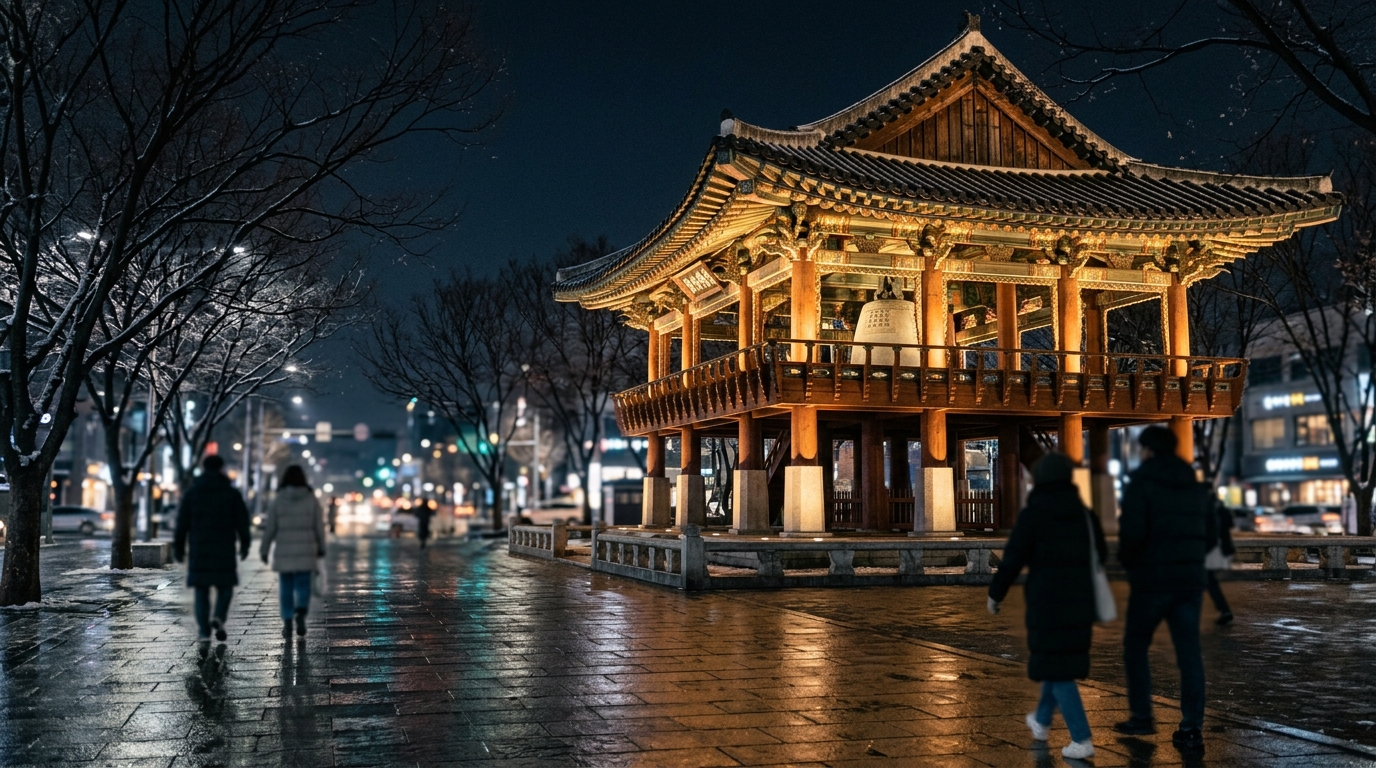
On December 31st, celebrations shift to Bosingak Pavilion (보신각) near Jonggak Station. Dating back to the Joseon Dynasty, the annual Midnight Bell Ringing Ceremony (제야의 종 타종행사) features public representatives ringing the large bronze bell 33 times at midnight, accompanied by nearby outdoor performances and street celebrations.
What is the Best 2-Hour Winter Festa Walking Itinerary with Indoor Warming Stops?
Walking outdoors in sub-zero winter temperatures gets cold fast without planned indoor breaks. This 2-hour walking route connects three primary festival sites while building in heated stops along the way.
How Should International Visitors Prepare for Sub-Zero Weather and Payments?
Central Seoul winter night temperatures routinely drop below -10°C (14°F), making disposable hand warmers from local convenience stores and thermal base layers essential gear for outdoor light walking tours. Biting wind chill often hits open stretches along Sejong-daero and Cheonggyecheon Stream.
To stay comfortable outdoors, wear synthetic or wool thermal layers beneath a long down jacket (long padding / 롱패딩). Grab disposable heat packs—known locally as hot packs (핫팩)—at local convenience stores (GS25, CU, Seven-Eleven, or Emart24) for roughly ₩1,000–₩2,000 KRW each. Slip warmers into pockets and use adhesive warmers inside winter boots.
For market purchases and local transportation, keep a mix of payment options handy:
| Payment Method | Where It Works | Where It Fails / Limitations | Recommended Traveler Strategy |
|---|---|---|---|
| Foreign Credit Cards (Visa / Mastercard) | Official Christmas market chalets, major retail shops, restaurants | Small independent street food carts, coin lockers | Primary payment method for markets and dining |
| T-money Transit Card | Subways, city buses, Seoul Plaza Ice Rink, convenience stores | Independent food vendors, artisan market stalls | Essential for seamless public transit and quick rink admission |
| Korean Won Cash (KRW) | All vendors, coin lockers, small street food carts, emergency backup | None (accepted everywhere) | Carry ₩20,000–₩30,000 KRW in small ₩1,000 and ₩5,000 bills |
Public transit during the festival is straightforward. Official transit notices detailed on Seoul Winta Facebook notices confirm that while regular subway service stops between 00:00 and 00:30, Seoul Metro extends operating hours until around 02:00 AM on New Year's Eve (December 31st) for late countdown crowds around Bosingak and Gwanghwamun. Downtown taxis fill up fast after light displays turn off at 22:00, so subways remain your best bet.
Frequently asked questions
Q. Is the Seoul Winter Festa free to enter?
Yes, walking through the illuminated festival grounds, viewing media facade projections, and exploring lantern streams across Gwanghwamun Square, Cheonggyecheon, DDP, and Seoul Plaza is completely free. The only paid attraction is the outdoor Seoul Plaza Ice Skating Rink, which costs ₩1,000 KRW per 1-hour session.
Q. Where is the main Seoul Christmas Market located?
The primary Christmas market chalets are located in Gwanghwamun Square (광화문광장). Designed in a European Santa Village style, the market features timber booths selling handcrafted seasonal ornaments, winter crafts, hot street snacks, and warm non-alcoholic beverages.
Q. How can foreign tourists buy ice rink tickets without a local Korean phone number?
Foreign tourists can purchase tickets directly at the on-site Seoul Plaza ticket counter. Municipal organizers reserve approximately 300 walk-in tickets per hourly session specifically for visitors who cannot access the online Korean mobile booking system.
Q. Can I pay with a foreign credit card at the Christmas Market stalls?
Yes, official Gwanghwamun Christmas Market chalets accept international Visa and Mastercard credit cards. However, carrying around ₩20,000 KRW in small cash notes is recommended for independent street food carts or coin lockers.
Q. How cold does central Seoul get during the festival?
Evening temperatures in central Seoul from mid-December through early January routinely drop between -5°C and -15°C (23°F to 5°F). Visitors should wear heavy winter coats, thermal base layers, gloves, and carry disposable heat packs (hot packs) purchased from local convenience stores.