Haeundae Light Festival Busan: Dates, Hours & Entry
Key takeaways
The Haeundae Light Festival Busan is a free annual winter illumination event along Haeundae Beach and Gunam-ro. Operating nightly, the festival features lighted sand wave displays, media art sculptures, and traditional market food. Visitors can reach the grounds via Haeundae Subway Station Exit 3 or 5 using Naver Map or KakaoMap.
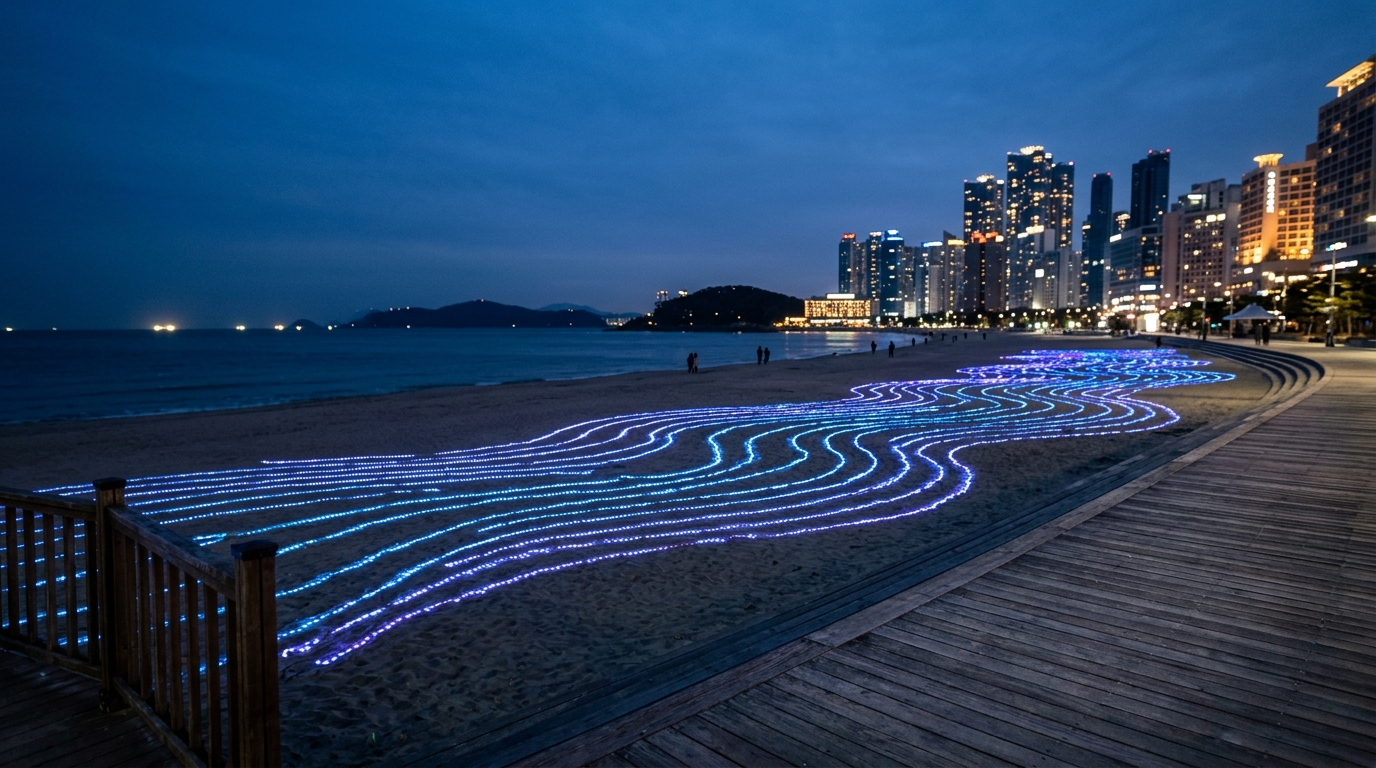
The Haeundae light festival Busan brings a massive night illumination to the beach front along South Korea's main southern coast every winter. Spanning over 180 meters across the sand, the signature blue LED wave carpet lights up the dark shore every evening. You can walk right in without buying a ticket or booking ahead. This guide outlines what to expect, from current seasonal dates and local transit routes to photo spots and winter prep.
Busan gets plenty of attention for summer beach trips, but Haeundae District (Haeundae-gu, 해운대구) pulls in millions of winter visitors between late November and January. The layout pairs large LED setups, interactive digital displays, sculptures, and street performances along the coastal strip.
What Is the Haeundae Light Festival? (Location, Background & Layout)
The Haeundae Light Festival (Haeundae Bit Chukje, 해운대 빛축제) is an annual winter event run by Haeundae District alongside the Haeundae Light Festival Organizing Committee. Started to support cold-season tourism along the waterfront, it now ranks among South Korea's largest winter illumination events alongside Seoul's Cheonggyecheon Lantern Festival.
The event spans four connected sections from the subway station down to the ocean edge:
- Zone 1: Gunam-ro Pedestrian Square (Gunam-ro, 구남로): The central walkway running from Haeundae Subway Station to the sand. It houses themed arches, interactive digital displays, backdrop setups, and weekend activity booths.
- Zone 2: Haeundae Beach Sand Area (Haeundae Haesuyongjang, 해운대해수욕장): The main display. Millions of small LED lights cover the open sand in moving wave patterns set to background music.
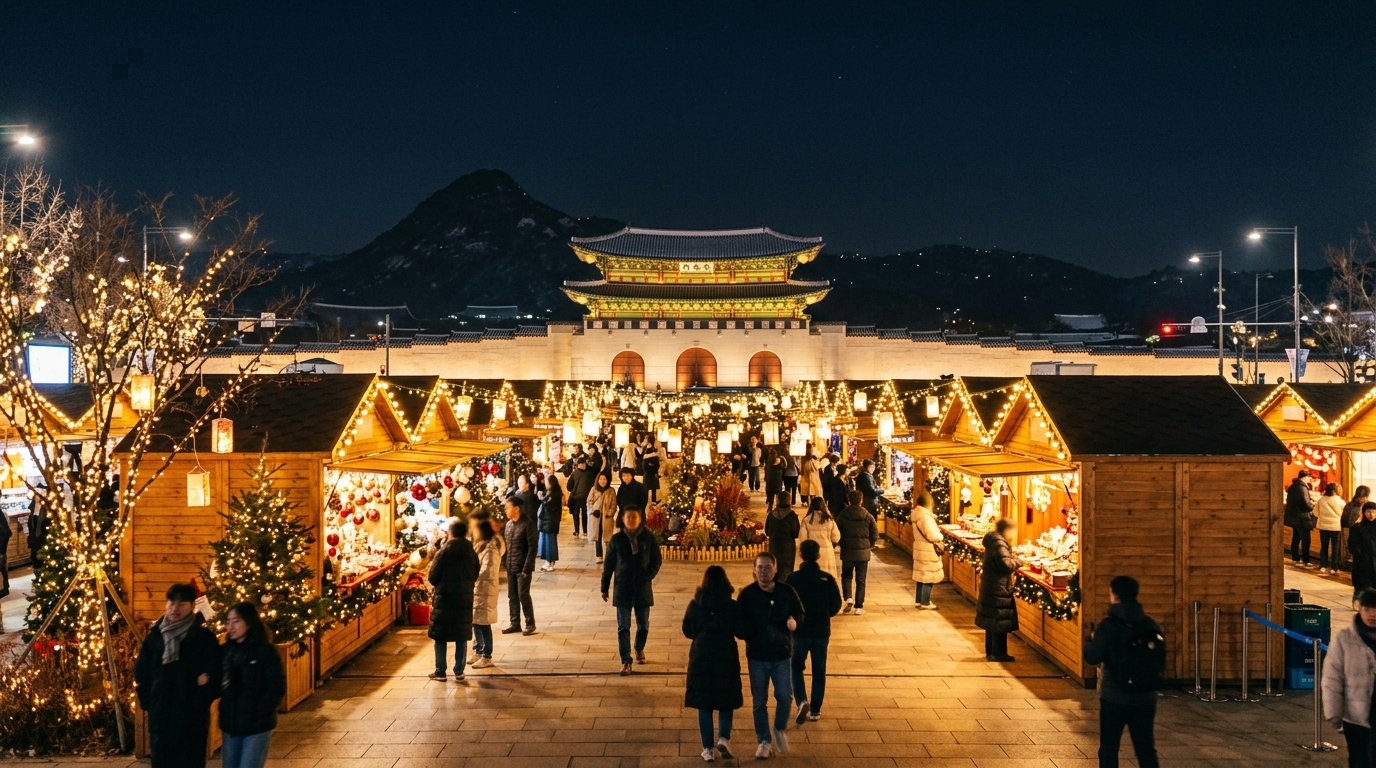
- Zone 3: Haeundae Traditional Market (Haeundae Jeontong Sijang, 해운대 전통시장): A covered food street running parallel to Gunam-ro, lined with red lanterns and warm food stalls.
- Zone 4: Haeundae Hot Spring Street (Haeundae Oncheon-gil, 해운대 온천길): The historic street behind the main square, decorated with retro light fixtures.
Festival Dates, Operating Hours & Best Times to Visit
Official opening dates adjust slightly each year around calendar shifts. The grounds usually light up in late November or mid-December and run into January or early February. Displays operate every night, including Christmas Eve, Christmas Day, New Year's Eve, and Korean Lunar New Year (Seollal, 설날).
According to official schedules published by Busan Metropolitan City and Visit Busan, operating hours follow a fixed nightly schedule across recent seasons:
| Festival Edition | Start Date | End Date | Daily Illumination Hours | Interactive Booth Hours |
|---|---|---|---|---|
| 11th Edition (2024–2025) | Dec 14, 2024 | Feb 2, 2025 | 17:30 – 24:00 KST | 18:00 – 22:00 KST |
| 12th Edition (2025–2026) | Nov 29, 2025 | Jan 18, 2026 | 18:00 – 23:00 KST | 18:00 – 22:00 KST |
| 13th Edition (2026–2027) | Nov 28, 2026 | Jan 10, 2027 | 18:00 – 23:00 KST | 18:00 – 22:00 KST |
The installations turn on at 18:00 KST sharp and shut down at 23:00 KST to curb energy use and keep quiet hours for nearby residents. Interactive booths along Gunam-ro—including wish-card stations and craft tables—wrap up an hour earlier at 22:00 KST.
For balanced photos, head to the beach front around 17:30 KST. That gives you time to watch sunset during twilight (roughly 17:45 KST in winter) just before the lights switch on at 18:00 KST. Arriving early at blue hour captures both the vibrant blue ocean backdrop and the brilliant glow of the LED ground installations without harsh camera sensor noise.
Fridays through Sundays get crowded between 19:00 and 21:00 KST. If you want quieter paths and open photo angles, visit on a Tuesday or Wednesday after 21:00 KST.
How to Get to Haeundae Beach by Subway, Bus & Navigation Apps
Reaching Haeundae Beach by transit is simple, but mapping requires one key adjustment before you head out.
Coming straight from Gimhae International Airport (PUS)? Take the Busan-Gimhae Light Rail to Sasang Station, transfer to Subway Line 2, and travel to Haeundae Station (around 75 minutes). Airport Limousine Bus Line 1 also runs to the Haeundae Beach bus stop in about 60 minutes for roughly 9,500 KRW.
City bus routes 1001 (Express), 139, 141, 31, and 39 stop near Haeundae Station or Haeundae Beach. Taxis from Busan Station take 30 to 45 minutes depending on traffic and run between 18,000 KRW and 25,000 KRW on the meter.
Must-See Illuminations & Top Photo Zone Spots
While artistic themes rotate each season, core display points return every winter. Keeping an eye out for these main features helps when planning your route.
1. The 180-Meter Blue LED Ocean Wave Carpet
Stretching across the sand in Zone 2, this setup serves as the central anchor. Millions of blue, teal, white, and purple lights line the beach to mimic incoming waves. A raised wooden boardwalk along the sand gives a clear view over the illuminated field toward the water.
2. The Grand Media Art Christmas Tree & Giant Earth Sphere
Where Gunam-ro meets the beach boardwalk in Zone 1, a tower standing 10 to 18 meters high displays moving digital snow, holiday art, and wave graphics. Next to it, a lighted globe sculpture draws regular photo groups.
3. Light Tunnels & Wishing Zones
Along Gunam-ro Pedestrian Square, lit arches line the walkway. Designated areas let visitors write New Year wishes on paper cards (Sowon-ji, 소원지) and tie them to illuminated wire frames along the path.
Practical Visitor Tips: Payments, Dress Code & Market Food
Staying warm and handling payments smoothly makes for a better visit along the cold shoreline.
Payments: Credit Cards vs Cash Needs
Card payments are standard across South Korea. Foreign credit cards (Visa, Mastercard, American Express) work at shops, convenience stores, and cafes around Haeundae. Tourist cards like WOWPASS or NAMANE also clear subway turnstiles and store terminals without friction.
If you head into Haeundae Traditional Market (Zone 3), keep some Korean Won (KRW) cash handy. While brick-and-mortar stores take cards, small street food carts often prefer cash for snacks running 2,000 KRW to 5,000 KRW.
Dressing for Coastal Winter Winds
Winter temperatures in Busan hover between 0°C and 8°C (32°F to 46°F)—milder than Seoul, but coastal winds push the real-feel temperature lower. Cold sea gusts coming off the water quickly penetrate basic jackets, making windproof outer layers essential for an enjoyable evening walk.
Street Food Pairings at Haeundae Traditional Market
After taking photos on the beach, head into Zone 3 (Haeundae Traditional Market) for hot food options:
- Hotbar & Eomuk (핫바 / 어묵): Fried fishcake skewers served with a cup of hot broth (Eomuk-guk, 어묵국). Broth comes free with a skewer purchase (around 1,500 – 3,000 KRW).
- Ssiat Hotteok (씨앗호떡): Busan's sweet pancake filled with brown sugar, cinnamon, and mixed seeds (around 2,000 KRW).
- Dwaeji Gukbap (돼지국밥): A traditional local dinner option consisting of rich pork bone broth served with pork slices and rice (around 9,000 – 11,000 KRW per bowl).
How to Spend the Ultimate Haeundae Winter Evening
You can pair the light festival with nearby coastal spots for a full evening outing.
According to travel updates from Visit Korea, combining Haeundae's night lights with a nearby bathhouse visit offers a practical way to enjoy winter travel in the city.
If you want to add another night view, head toward Gwangalli Beach for the Gwangalli Marvelous Drone Light Show, which runs over Gwangan Bridge (Gwangandaegyo, 광안대교) on Saturday evenings.
Frequently asked questions
Q. Is the Haeundae Light Festival free to enter?
Yes, admission to the Haeundae Light Festival is 100% free with no entrance fees, tickets, or advance bookings required. Visitors can freely walk through all four festival zones, including Gunam-ro Pedestrian Square and the main Haeundae Beach sand area.
Q. What time do the lights turn on at Haeundae Beach?
The illuminations turn on daily at 18:00 KST sharp and switch off at 23:00 KST. Interactive experience booths along Gunam-ro operate slightly shorter hours, closing at 22:00 KST each night.
Q. How do I get to Haeundae Light Festival from Busan Station?
Take Busan Subway Line 1 from Busan Station to Seomyeon Station, then transfer to Line 2 toward Jangsan and get off at Haeundae Station (Station 203). Take Exit 3 or Exit 5 and walk 400 meters straight down Gunam-ro Boulevard to reach the illuminated beach.
Q. Can I use foreign credit cards at the Haeundae Light Festival?
Yes, foreign credit cards like Visa and Mastercard are accepted at nearby stores, restaurants, and cafes around Haeundae Beach. However, carrying physical Korean Won (KRW) cash or a T-money card is recommended for buying street food at Haeundae Traditional Market.
Q. What should I wear to Haeundae Beach in winter?
Dress in heavy thermal layers with a windproof down coat or heavy jacket to block cold ocean breezes off the sea. Gloves, scarves, warm beanies, and disposable thermal hand warmers (hotpacks) purchased at local convenience stores are highly recommended.