How to Use Fog Lights and Maintain a Safe Following Distance in Fog and Autumn Rain
 AI-generated image
Key takeaways
In autumn fog or rain, use low beams and fog lights instead of high beams, and turn off rear fog lights as soon as fog clears to avoid blinding drivers behind you. Follow legal speed reduction rules and maintain ample braking distance using highway dashed line markers.
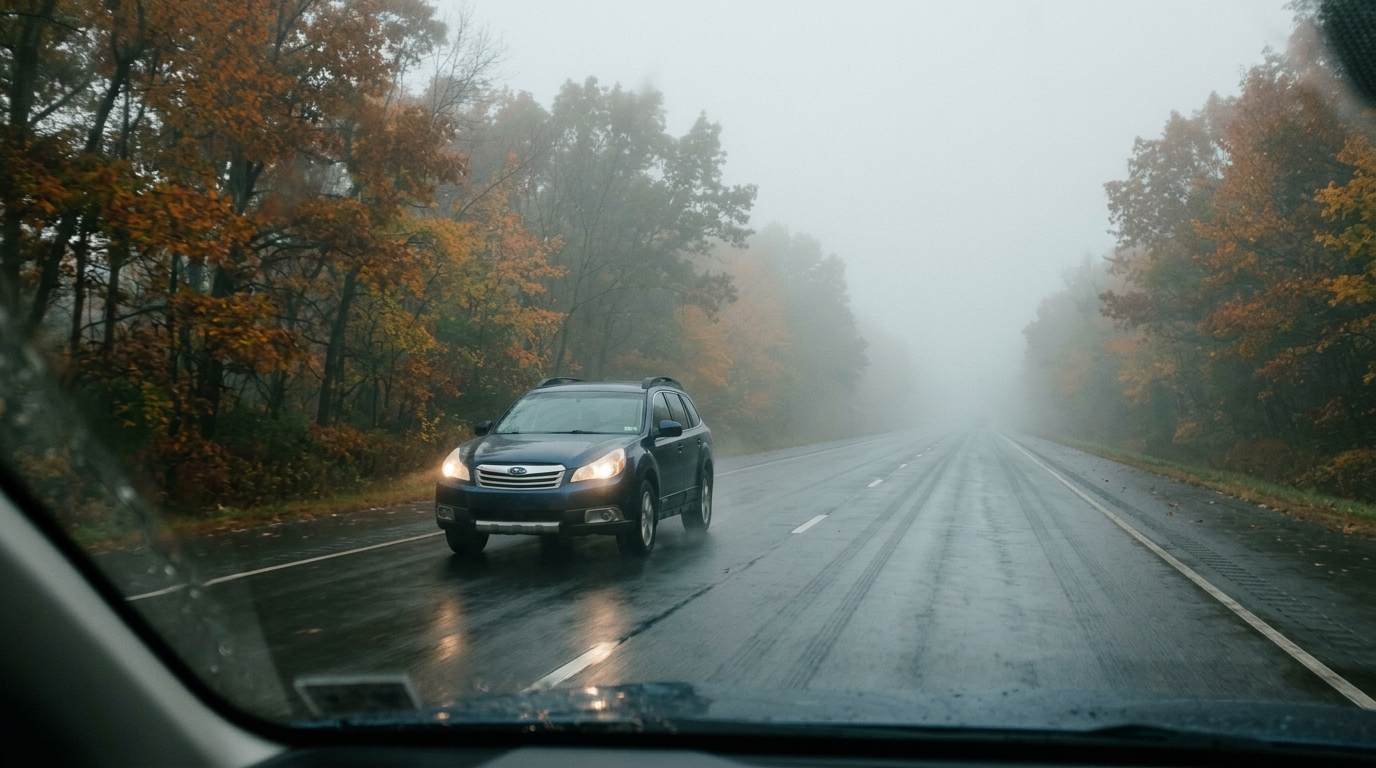
Have you ever panicked on a foggy autumn morning commute because you couldn't see ahead clearly? According to KoRoad (Road Traffic Authority) statistics, the fatality rate for traffic accidents on foggy days is 8.8 per 100 crashes—about 5.5 times higher than on clear days (1.6 deaths). Looking at pedestrian accidents alone, the fatality rate surges to 25.0 deaths per 100 crashes, which is 8.3 times higher. Furthermore, 40.5% of all fog-related accidents occur during the morning commute between 6:00 AM~8:00 AM. In severe weather where visibility is compromised, proper lighting operation and driving at reduced speeds are essential. According to reports such as Ins Journal, lack of visibility in autumn bad weather is cited as a major cause of large multi-vehicle pileups.
How to Operate Fog Lights and Distinguish Dashboard Icons
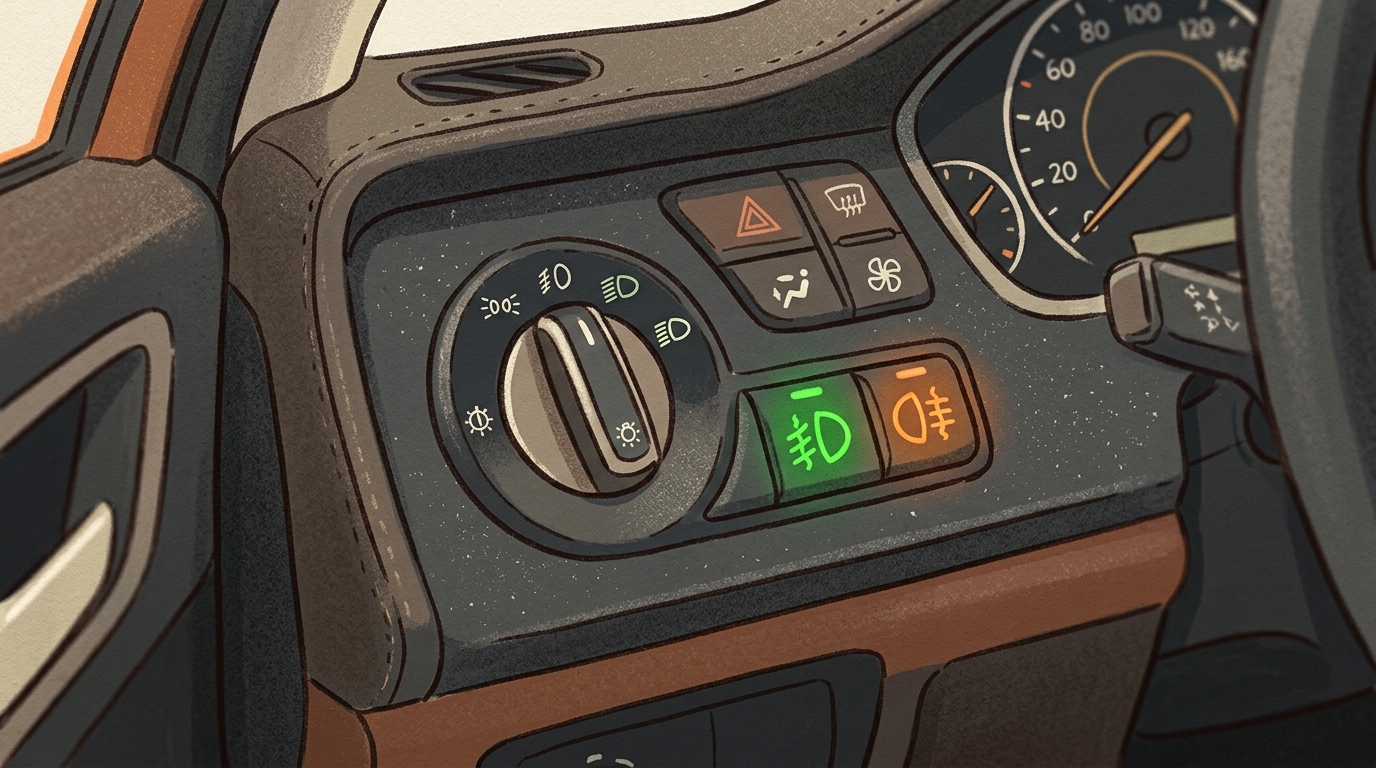
Fog lights are lighting devices that spread light low and wide to help make the road surface and lane markings clearly visible in dense fog or rain. The switch is usually located on the left multi-function lever of the steering wheel or on the lower-left button panel of the driver's seat.
You can easily distinguish between front and rear fog lights by looking at the color of the dashboard indicator light and the direction of the light rays.
- Front Fog Lights: A green (or white) icon. Light rays project downward to the left from the light symbol, overlaid with a vertical wavy line.
- Rear Fog Lights: An amber (yellow) icon. Light rays project horizontally to the right from the light symbol, overlaid with a vertical wavy line.
 AI-generated image
| Category | Front Fog Lights | Rear Fog Lights |
|---|---|---|
| Dashboard Color | Green or White | Amber (Yellow) |
| Light Projection Direction | Diagonal downward to the left | Horizontal to the right |
| Primary Role | Securing short-range road surface and lanes | Indicating position to prevent rear-end collisions |
| Usage on Clear Days | Relatively low glare | Strictly prohibited (blinds drivers behind) |
2 Common Lighting Mistakes When Driving in Foggy and Rainy Weather
The first and most common mistake is turning on high beams to see better. When the air is filled with water vapor particles due to fog or autumn rain, switching on high beams causes the light to hit the water droplets and bounce back in all directions—a phenomenon known as "whiteout." This actually blinds your view with a wall of white, making it even more dangerous. In this situation, turn off high beams and use low beams together with fog lights to illuminate the road surface ahead.
The second mistake is relying solely on AUTO lights or failing to switch off rear fog lights after the fog clears. During daytime fog or heavy rain, AUTO light sensors may misinterpret the surroundings as bright enough and fail to turn on headlights and taillights. Without realizing it, your vehicle becomes an invisible "stealth car." Conversely, leaving rear fog lights on during clear weather causes severe glare that blinds drivers behind you. The official Kixx Engine Oil guide also advises that rear fog lights should only be used when visibility is extremely limited and switched off immediately once you clear the fog.
Speed Reduction Standards and How to Calculate Safe Following Distance
Article 19 of the Enforcement Rules of the Road Traffic Act in South Korea specifies legal speed reduction standards during severe weather. For specific standards or fine inquiries regarding individual cases, it is best to check directly with the relevant police department.
- 20% Speed Reduction: When the road surface is wet from rain or covered with less than 20 millimeters of snow.
- 50% Speed Reduction: In heavy fog, torrential rain, or heavy snow where visibility is within 100 meters.
When the road surface is wet, tire traction drops, extending braking distance by 40%~60% or more compared to normal conditions. If visibility drops below 100m on a road with an 80 km/h speed limit, you should reduce your speed to below 40 km/h and maintain a safe distance of at least 120m.
If it is difficult to estimate distance while driving, use the white dashed lines on highways as a guide. Adding one dashed line (approx. 8m) and the gap between them (approx. 12m) equals roughly 20m per section. The rule of thumb is to maintain a gap of at least 6~8 dashed line sections between you and the vehicle ahead. According to related media reports from NewsPim, keeping distance using dashed line intervals when visibility is poor helps prevent multi-vehicle pileups.
Interior Moisture Management and Maintenance Tips for Clear Visibility
When temperatures drop and autumn rain falls, windshields easily fog up due to the temperature difference between inside and outside. Check these tips to keep your view clear:
- Turn on Air Conditioning (A/C) and Switch to Fresh Air Mode: The A/C system acts as a dehumidifier. Even when turning on the heater, press the A/C button and set air circulation to fresh air mode to control interior humidity and temperature.
- Activate Window Defrost and Heating Wires: Turn on the front windshield defrost button (Front) and the rear/side mirror heating wire button (Rear).
- Remove Oil Film and Check Wiper Condition: Oil film (grease) on the glass surface causes light to smudge severely. Clean it with a dedicated remover and replace wipers that chatter or leave streaks.
- Check Tire Wear and Air Pressure: To lower the risk of hydroplaning on wet roads, check tread depth and maintain proper tire pressure to preserve braking performance.
Frequently asked questions
Q. Should I rely on AUTO lights during heavy daytime fog or rain?
During daytime, AUTO light sensors may perceive the surroundings as bright enough and fail to activate headlights and taillights. Because this prevents drivers behind from seeing your vehicle, it is safer to turn on headlights and fog lights manually.
Q. Why do high beams make visibility worse in fog?
The intense light from high beams reflects off tiny water droplets in fog, causing diffuse reflection (whiteout). This creates a wall of white light that blocks your view, so you should use low beams and fog lights instead.
Q. Is it safe to keep rear fog lights on all night?
No. Rear fog lights are extremely bright and cause severe glare for drivers behind you on clear nights. You should turn them off immediately as soon as visibility improves.
Q. Are there legal penalties for failing to reduce speed in rain or fog?
Failing to obey speed reduction duties under Article 19 of the Enforcement Rules of the Road Traffic Act during an accident can lead to disadvantages in fault determination or speeding penalties. Please consult relevant authorities for precise legal applications.