Busan Fireworks Festival Guide: Best Viewing Spots & Travel Tips
Key takeaways
The Busan Fireworks Festival takes place annually at Gwangalli Beach, featuring a 60-minute fireworks show over Gwangandaegyo Bridge. Foreign tourists can buy reserved seats through platforms like KKday or Klook, or watch for free from locations like Igidae Coastal Park and Dongbaekseom Island. To skip major post-show transit queues, walk inland to Suyeong Station instead of waiting at Gwangan Station.
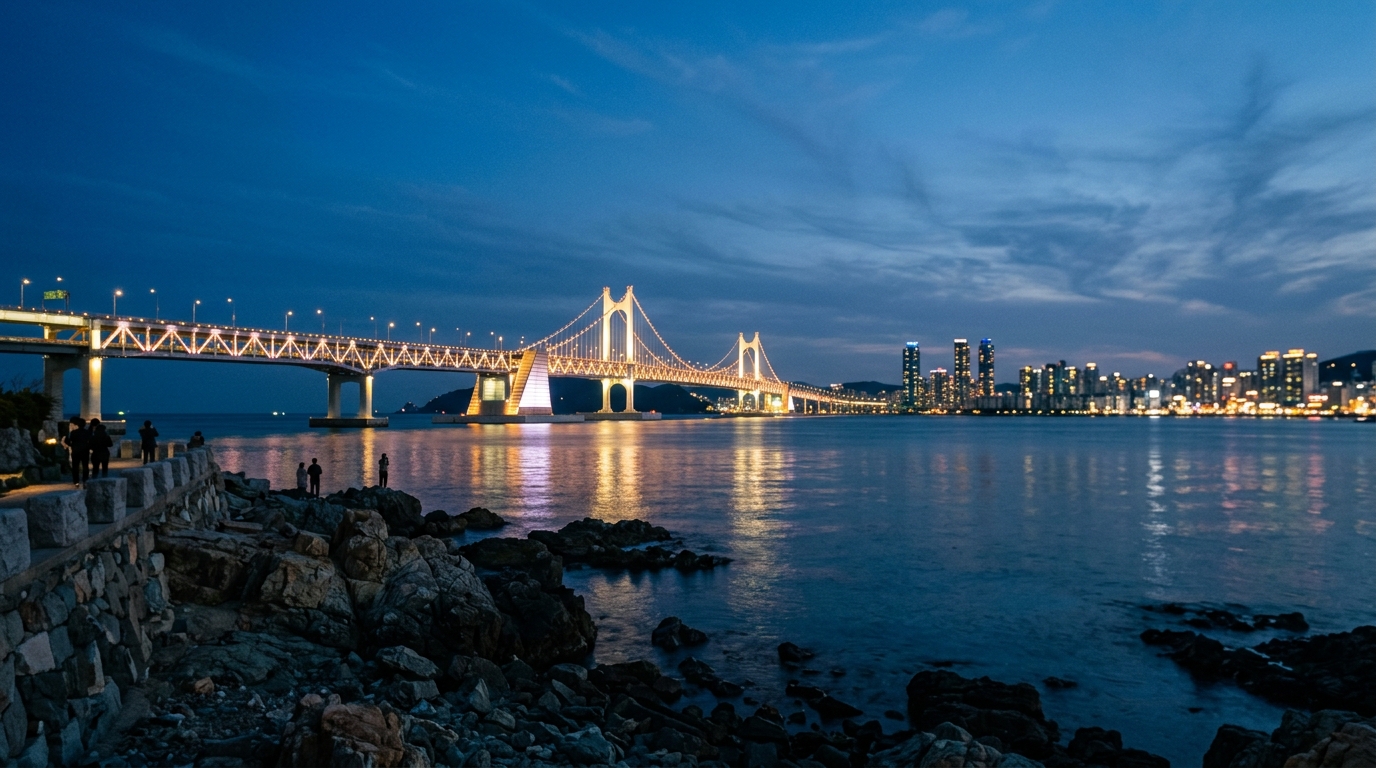
Every autumn, over one million spectators head to Busan for the Busan Fireworks Festival (부산불꽃축제), one of East Asia's largest pyrotechnic displays. Staged along Gwangalli Beach (광안리해수욕장) with the illuminated Gwangandaegyo Bridge (광안대교) in the background, the show pairs massive multi-point fireworks with laser sequences and synchronized music. Getting a good view requires planning ahead because beach areas fill up hours before sunset and local transit quickly becomes heavily congested.
As of late 2026, the 21st Busan Fireworks Festival is scheduled for Saturday, November 7, 2026. This guide breaks down strategic viewing locations, foreign ticket booking methods, transit routes, cold-weather prep, and practical advice for international visitors.
What Time Does the Busan Fireworks Festival Start?
The main fireworks display runs from 19:00 to 20:00 (7:00 PM to 8:00 PM), following pre-show street performances and radio broadcasts that start at 14:00. Paid seating gates open in the afternoon and close strictly at 18:00, after which entry is barred even for valid ticket holders.
If you want free space on Gwangalli Beach, plan to arrive by 13:00 or 14:00. Ocean barges anchored in the bay start launching smaller preliminary fireworks and lighting displays around 18:00 to warm up the crowd before the main event.
| Time Slot | Activity / Schedule Item | Logistics & Arrival Advice |
|---|---|---|
| 14:00 – 18:00 | Preshoow entertainment, busking, & radio broadcasts | Prime time to arrive for free sand seating on Gwangalli Beach. |
| 16:00 | Paid seating gates open | Reserved seat holders can begin entering designated zones. |
| 18:00 | Ticket gate cutoff & preliminary countdown fireworks | Paid gates close permanently; late arrivals forfeit entry without refund. |
| 19:00 – 20:00 | Main Pyrotechnic & Laser Light Show | 60-minute multi-point display across Gwangandaegyo Bridge & sea barges. |
| 20:00 – 21:30 | Staggered crowd dispersal & safety controls | Subway stations implement controlled entry queues to manage density. |
Paid Reserved Seats vs. Free Beach Viewing: Which Option Is Best?
Paid reserved seats guarantee chairs or tables on Gwangalli Beach without an all-day wait, while free beach viewing saves money but requires arriving 5 to 6 hours early. Choosing between them depends on your budget, group size, and comfort with sitting on cold sand.
Official tickets come in two tiers: R Seats (a table and chair set) priced at 100,000 KRW (~$75 USD) and S Seats (a single plastic chair) priced at 70,000 KRW (~$52 USD). According to official event organizers, paid seats occupy central beach positions directly facing the middle of Gwangandaegyo Bridge.
| Feature / Option | Paid R Seat | Paid S Seat | Free Beach Area |
|---|---|---|---|
| Cost (KRW / USD) | 100,000 KRW (~$75 USD) | 70,000 KRW (~$52 USD) | Free (0 KRW) |
| Seating Type | Table + individual chair | Standalone chair | Sand (must bring picnic mat) |
| Recommended Arrival | 16:00 – 17:30 | 16:00 – 17:30 | 12:00 – 14:00 |
| View Directness | Direct dead-center view | Frontal view | Central to peripheral view |
| Restroom Access | Reserved portalets nearby | Reserved portalets nearby | High-demand public beach restrooms |
How Can Foreigners Buy Tickets Without a Korean Phone Number or ID?
Foreign visitors can purchase official festival tickets through global travel platforms like KKday and Klook, bypassing the local Korean identity verification (NICE/I-PIN) required on domestic portals like Interpark or Yes24. Domestic sites require a locally registered SIM connected to an alien registration card or Korean ID, making direct purchases tricky for tourists.
To secure seats as an overseas visitor, follow these steps:
What Are the Top Busan Fireworks Festival Viewing Spots?
Outside Gwangalli Beach, top viewing spots include Igidae Coastal Park, Dongbaekseom Island, Marine City, and Hwangnyeongsan Mountain. Each location gives a distinct angle on the Gwangandaegyo Bridge display along with different crowd levels and transit options.
Gwangalli Beach offers full audio-visual immersion with live music, but off-site spots let travelers watch the fireworks without dealing with heavy beach crowding.
| Viewing Spot | Distance to Bridge | Crowd Density | Unique View / Advantage | Transit Access |
|---|---|---|---|---|
| Gwangalli Beach (광안리해수욕장) | 0 km (Direct) | Extreme | Full central view with synchronized audio | Gwangan Station (Line 2) |
| Igidae Coastal Park (이기대수변공원) | ~3.5 km South | Moderate | Side-angle view across the ocean bay | Local Bus 20, 22, or 27 |
| Dongbaekseom Island (동백섬) | ~4.0 km East | Moderate–High | Panoramic skyline framing Haeundae | Dongbaek Station (Line 2) |
| Marine City Promenade (마린시티) | ~3.0 km East | High | Urban skyscraper reflections along sea wall | Dongbaek Station (Line 2) |
| Hwangnyeongsan Mountain (황령산) | ~5.0 km North | Low–Moderate | High-elevation bird's-eye city view | Taxi / Car to observatory |
| Millak Waterfront Park (민락수변공원) | ~1.2 km East | High | Close angled view with nearby food vendors | Minlak Station (Line 2) |
1. Gwangalli Beach (광안리해수욕장)
This is the main festival venue directly facing Gwangandaegyo Bridge. It is the only location where spectators hear the synchronized soundtrack played live through beach speakers. For visitors who want the complete audio-visual experience with dead-center views, Gwangalli Beach remains the ultimate location despite intense crowds.
2. Igidae Coastal Park (이기대수변공원)
Located along the rocky cliffs south of Gwangalli, Igidae provides a side view looking north toward the bridge. Fireworks launched from ocean barges and the bridge deck frame Busan's skyline in the background. Selecting a viewing spot along Igidae Coastal Park or Dongbaekseom Island provides a panoramic view of the Gwangandaegyo Bridge while bypassing the intense beach crowds.
3. Dongbaekseom Island & Marine City (동백섬 / 마린시티)
At the western end of Haeundae Beach, Dongbaekseom Island offers elevated coastal trails facing the bridge's eastern flank. Nearby, the Marine City promenade shows fireworks exploding beside illuminated high-rise buildings. Transit info for Dongbaekseom and Haeundae can be verified through regional travel guides.
4. Hwangnyeongsan Mountain Observatory (황령산 봉수대)
Photographers looking for wide landscape shots can head to the summit observatory on Hwangnyeongsan Mountain for a bird's-eye view of Busan's skyline and both sides of Gwangandaegyo Bridge. Public transit does not go all the way to the top, so plan to take a taxi or walk up the paved trail.
What Should You Wear and Pack for Coastal Autumn Weather?
November evenings in Busan usually drop between 5°C and 10°C (40°F to 50°F), with damp ocean breezes making it feel colder. Sitting still on cold ground or plastic chairs for hours means thermal prep is essential.
Because standing on ocean sand for hours rapidly saps body heat, bringing an insulated picnic mat and chemical hand warmers is crucial for comfort.
How Do You Navigate Transport and Avoid Post-Show Crowd Bottlenecks?
To avoid massive post-show bottlenecks at Gwangan Station (Busan Subway Line 2), walk 20 to 25 minutes inland to neighboring stations like Suyeong Station (Lines 2 & 3) or Namcheon Station (Line 2). Right after the 20:00 finale, over 500,000 people try entering Gwangan Station at once, triggering crowd management controls that can delay subway entry by up to two hours.
Detailed safety strategies and local subway maps are outlined in the Busan event survival guide.
What Transit, Payment, and Etiquette Rules Should Foreigners Know?
Foreign credit cards (Visa and Mastercard) work at standard stores and restaurants across Busan, but street food stalls near Gwangalli Beach run almost exclusively on Korean Won (KRW) cash or local bank transfers. Withdraw cash from an international ATM (marked "Global ATM") before heading into the beach area.
Transit Cards & Mobile Apps
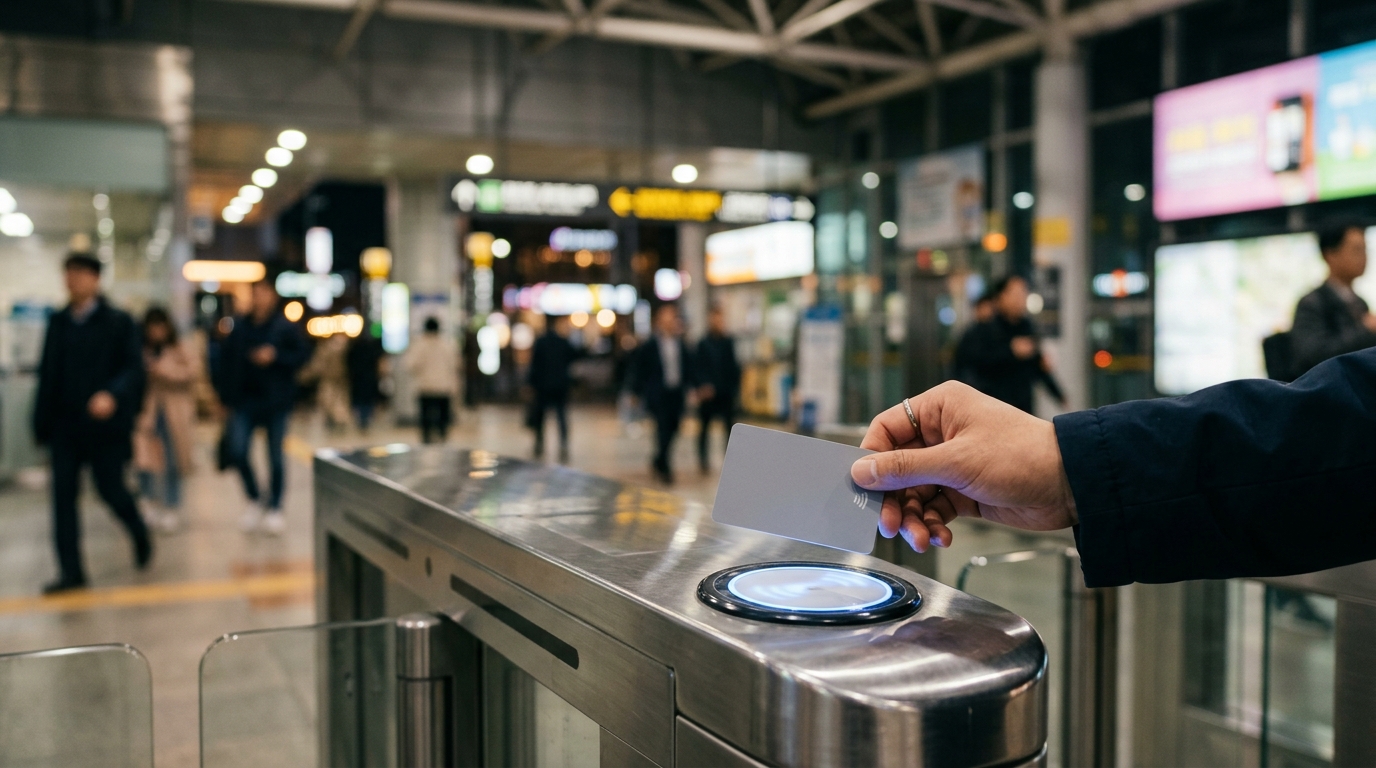
Buses and subways in Busan require a reloadable transit card such as T-money, Cashbee, or NAMANE. Top up your card with at least 10,000 KRW before arriving, as station reload machines get long lines after the show. For walking directions, download KakaoMap or Naver Map, as Google Maps does not offer full turn-by-turn walking or transit guidance in South Korea.
Day Trip Feasibility from Seoul
Taking the KTX high-speed train from Seoul to Busan takes about 2.5 hours each way, but trying a single-day trip just for the fireworks is risky. The main show ends at 20:00, and getting through crowds back to Busan Station (부산역) takes up to two hours. Missing the last northbound KTX trains (which leave Busan Station between 22:30 and 23:00) happens often to day-trippers. Booking accommodation in Busan early is strongly recommended.
Local Beach Etiquette & Trash Management
Temporary trash bins are setup along major street exits behind the beach. Spectators are expected to carry out their trash and sort it into designated recycling and general waste bins. Smoking is prohibited across the entire sand area and promenade at Gwangalli Beach under city ordinances.
Frequently asked questions
Q. Is it worth buying a paid seat for the Busan Fireworks Festival?
Paying 70,000 to 100,000 KRW for an S or R seat saves you from waiting on the sand for six hours. It provides a chair directly facing the bridge, provided you enter before the strict 18:00 gate cutoff.
Q. How do foreign tourists buy Busan Fireworks Festival tickets without a Korean phone number?
International visitors can buy ticket vouchers on global platforms like Klook or KKday. These services accept international credit cards and do not require Korean identity verification (NICE).
Q. Can I see the fireworks clearly from Haeundae or Dongbaekseom Island?
Yes, Dongbaekseom Island and Marine City offer clear views of Gwangandaegyo Bridge and the fireworks, making them solid alternatives to the dense crowds on Gwangalli Beach.
Q. How cold does it get at Gwangalli Beach during the festival in November?
Evening temperatures usually range between 5°C and 10°C (40°F to 50°F). Combined with coastal winds, wearing thermal base layers, a windproof jacket, and bringing chemical hand warmers and a mat is recommended.