Why Are Pink Seats Always Empty on Seoul Subways?
Key takeaways
Pink seats on the Seoul subway are courtesy seats (*baeryeoseok*) dedicated to pregnant women, which locals leave vacant even on crowded trains so early-stage expecting mothers can sit without confrontation. While there are no legal fines for sitting in them, strong social customs discourage non-pregnant riders from occupying them. Pregnant foreign tourists are fully entitled to use these seats anytime.
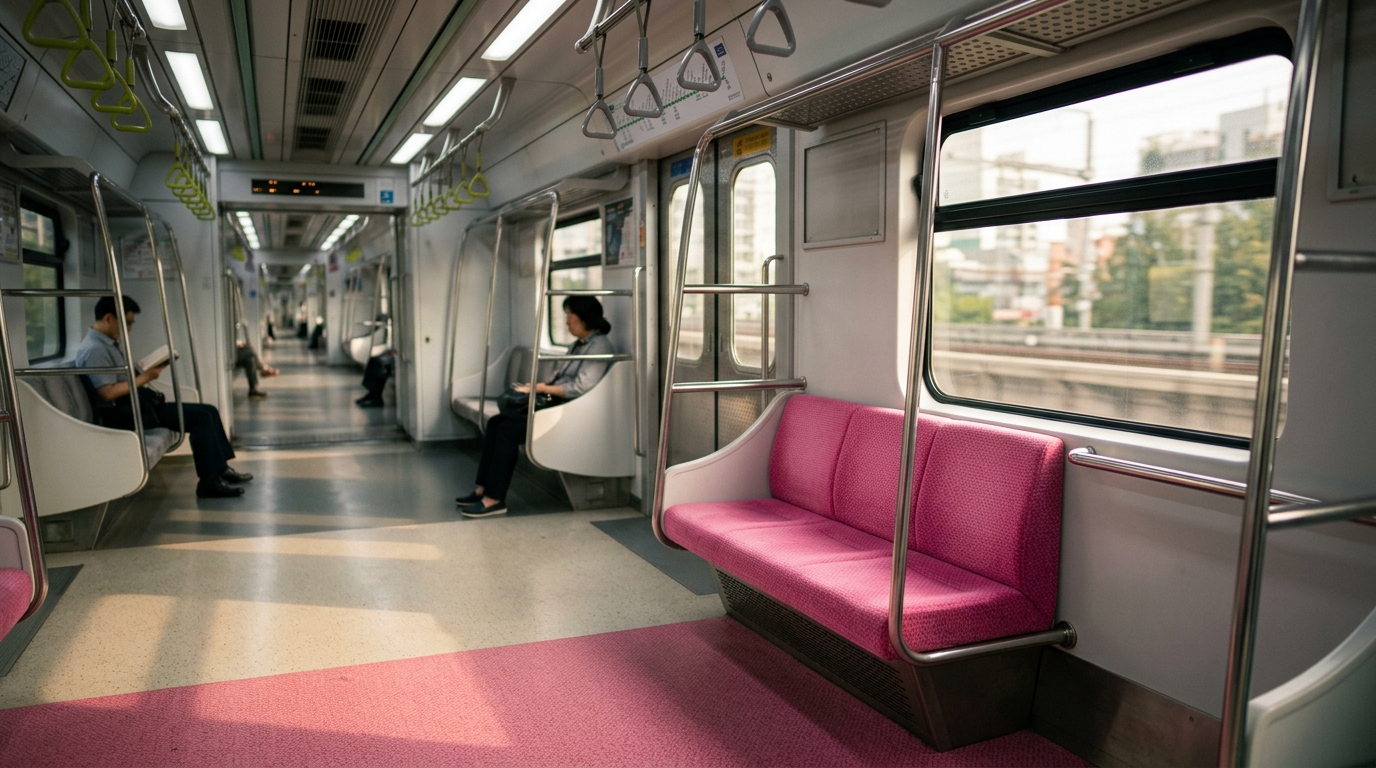
Standing in a packed Seoul subway car during morning rush hour, foreign visitors often spot a single bright magenta seat sitting completely vacant while dozens of tired commuters squeeze together in the aisle.
This contrast is intentional. Known as imsanbu baeryeoseok (임산부 배려석), these pink seats exist specifically to protect and support pregnant riders. Understanding the social expectations, legal reality, and transit etiquette surrounding them makes getting around South Korea much easier. Official public transit guidelines are available on the VisitSeoul Transit Etiquette Guide.
What Are Pink Seats on the Seoul Subway?
Pink seats on the Seoul Subway are designated courtesy spots for pregnant women, particularly those in early stages when their condition is not physically obvious. Seoul Metro and local transit agencies installed them across the network, using bright pink upholstery, matching floor carpet indicators, and overhead signs.
In Korean, the name imsanbu baeryeoseok (임산부 배려석) translates directly to "pregnant woman consideration seats." Unlike general bench seating, one or two pink seats sit at the end of standard long rows in every subway car.
The system addresses a specific issue: early pregnancy. During the first trimester, expecting mothers face severe fatigue and nausea without displaying a visible baby bump. Painting the seat bright pink and building a social expectation that it remains open allows pregnant women to sit down immediately without explaining themselves to strangers.
Why Do Koreans Keep Pink Seats Empty Even on Packed Trains?
Koreans leave pink seats empty on packed trains so early-stage pregnant riders can sit down immediately without needing to ask someone to stand up.
If non-pregnant riders sat in these spots intending to move when a pregnant rider boarded, the system would break down. Early-stage pregnant women often hesitate to approach strangers, point out their bag badges, or request a seat. Keeping the seat vacant 24/7 removes that burden entirely.
Several factors keep local commuters standing:
- Protecting Invisible Needs: Expecting mothers receive a pink plush tag (imsanbu baeryeotag) from public health centers to attach to their bags. On crowded trains, these tags are hard to see, making an open seat the most reliable solution.
- Fear of Public Disapproval: In high-density transit environments, sitting in a pink seat often brings cold looks or direct verbal corrections from older passengers.
- Digital Scrutiny: Community boards and social media sometimes feature photos of non-pregnant passengers in pink seats. The fear of being photographed and shamed online keeps most commuters standing.
Is It Illegal to Sit in a Pink Seat? Fines vs Social Rules
No law forbids sitting in a pink seat on the Seoul subway, and riders face no legal fine or monetary penalty under South Korean law for using one. The policy depends on voluntary civic etiquette rather than legal enforcement.
Official transit policy classifies pink seats as baeryeoseok (consideration seats) rather than jiyeongseok (statutory reserved seats). Station staff and transit police cannot issue fines or citations to non-pregnant riders who sit there.
Even without legal penalties, using the seats creates social friction and prompts thousands of passenger complaints annually. As detailed in resources like Explore's Korea Subway Courtesy Guide, transit authorities routinely balance public convenience against voluntary courtesy.
Despite occasional proposals for sensor badges or smart gates, Seoul Metro maintains voluntary public courtesy as its standard policy.
Pink Seats vs. Elderly Priority Seats (Noyakjaseok): What’s the Difference?
Pink seats are individual consideration spots along the main bench rows, while elderly priority seats (noyakjaseok, 노약자석) occupy separate three-seat sections at the far ends of each carriage. These end seats serve seniors, individuals with disabilities, injured passengers, and adults carrying infants.
Understanding the difference matters because social expectations for noyakjaseok are far stricter.
| Feature | Pink Courtesy Seats (Baeryeoseok) | Elderly Priority Seats (Noyakjaseok) |
|---|---|---|
| Primary User | Pregnant women (especially early pregnancy) | Seniors (65+), disabled, injured, ill passengers |
| Location | Ends of main 6-seater/7-seater middle benches | Dedicated 3-seater blocks at carriage far ends |
| Visual Marking | Bright pink upholstery, pink floor carpet, pink badge sign | Darker seats, overhead icons of cane, wheelchair, baby |
| Social Strictness | Left empty by most; non-pregnant seated riders face glares | Strictly sacred; young healthy riders must never sit here |
| Enforcement | Voluntary civic etiquette (0 KRW fine) | Voluntary civic etiquette, but immediate vocal scolding |
Healthy commuters rarely sit in noyakjaseok, even on late-night trains that are otherwise empty. Occupying an elderly priority seat as a healthy adult is considered one of the biggest social faux pas in Korean daily life.
Can Pregnant Foreign Tourists Use the Pink Seat in Seoul?
Yes, pregnant foreign tourists can sit in pink courtesy seats anywhere on the Seoul subway network without restrictions. Local residency or a South Korean government health badge is not required.
Local pregnant residents carry an official government keychain badge issued by Korean neighborhood health centers (bogeonso). However, foreign visitors who are pregnant can sit down without concern. If you are in your first trimester and not visibly pregnant, sitting in these seats remains entirely permitted.
If another passenger looks unsure, saying "Imsanbu-eyo" (임산부예요 — "I am pregnant") politely clears up any confusion.
Seoul Subway Etiquette Pink Seats vs. City Bus Courtesy Seats
While subway pink seats are kept vacant around the clock, city bus customs are more flexible. On municipal buses (ganseon, jiseon, and maeul buses), passengers frequently sit in pink seats when the bus gets crowded, provided they remain ready to yield when a pregnant passenger boards.
A few practical factors explain this difference:
- Safety While Moving: Buses brake suddenly and navigate busy traffic, making standing riskier than on a train.
- Fewer Available Seats: A city bus offers far fewer seats than a multi-car subway train, so leaving seats empty reduces overall capacity.
- Visibility: Bus drivers and passengers can easily see who enters through the front door.
| Transit Mode | Pink Seat Custom | What to Do as a Tourist |
|---|---|---|
| Seoul Subway | Kept vacant 24/7 by almost all commuters | Leave empty unless you are pregnant |
| Seoul City Bus | Seated passengers yield when needed | Sit if empty, but look up at every bus stop to yield |
| KTX / SRT Trains | Assigned reserved seating by ticket | Sit only in your designated ticketed seat number |
| Metropolitan Express Bus | Assigned reserved seating by ticket | Fasten seatbelt and stay in assigned seat |
Essential Seoul Subway Rules and Transit Guide for Visitors
Navigating the transit system efficiently requires knowing payment options, current fares, and basic train courtesy. You can find detailed breakdowns on Daily Hangul's Korean Subway Etiquette Breakdown.
Fares and Transit Cards for Tourists
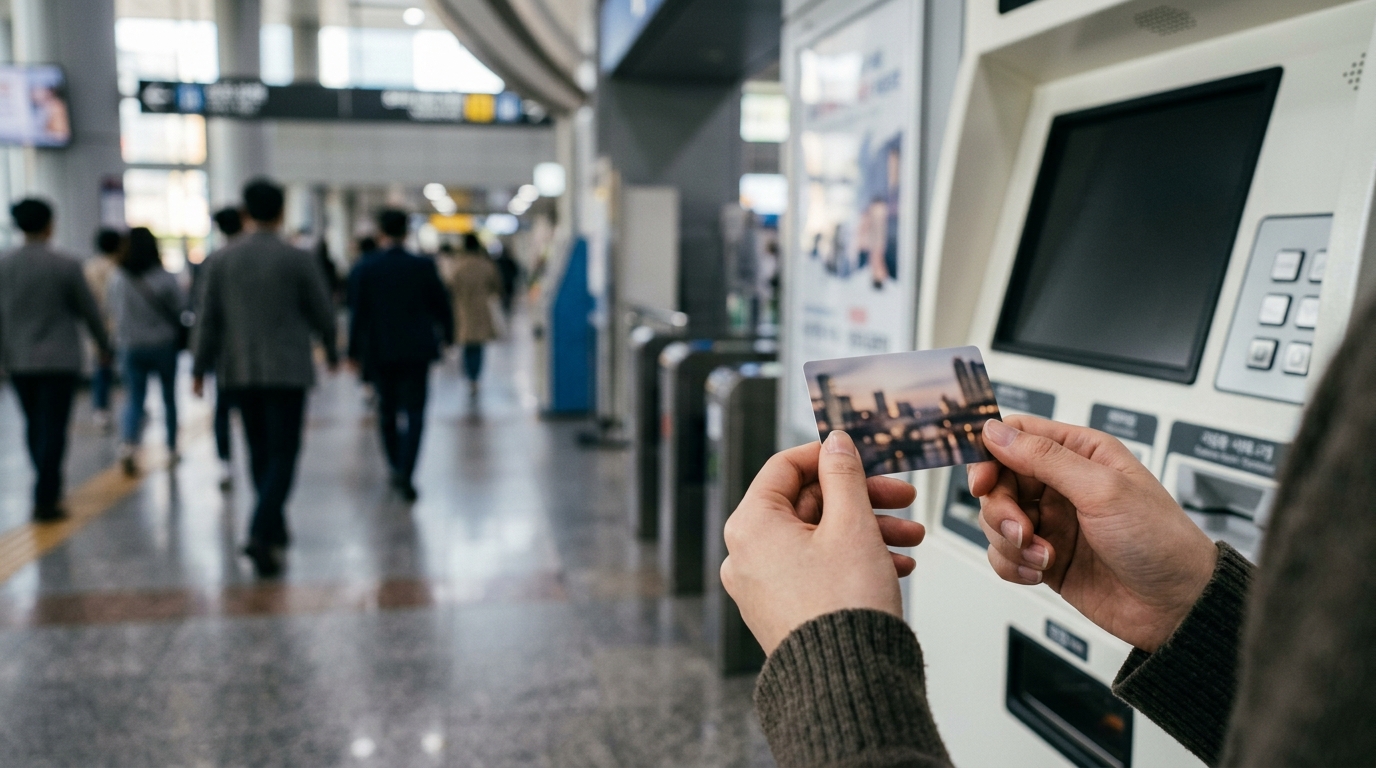
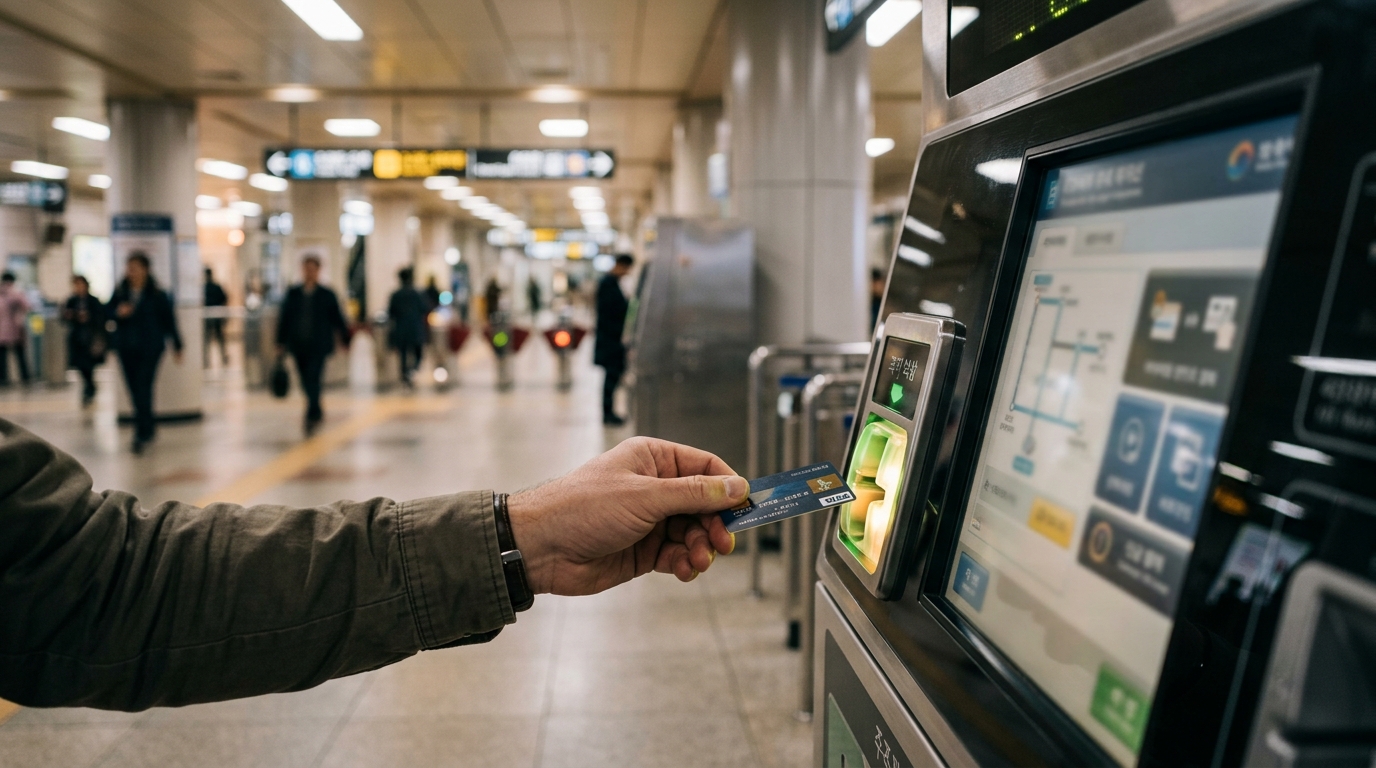
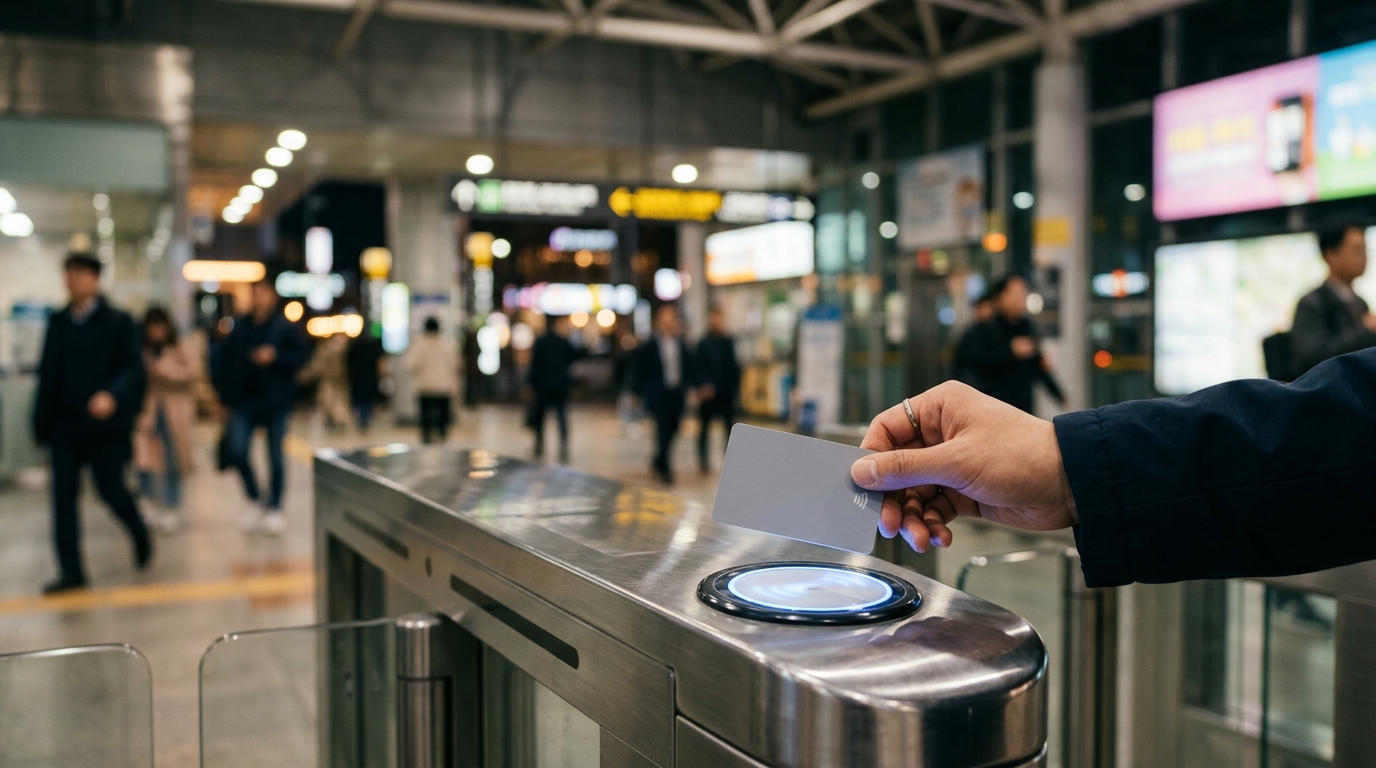
As of 2026, the basic adult fare for the Seoul Metropolitan Subway is 1,550 KRW for distances up to 10 km when using a physical rechargeable transit card. Direct contactless tapping with foreign Visa or Mastercard credit cards is not supported at subway turnstiles, so international visitors need a local physical card.
| Payment Option | Best Suited For | Cost & Pricing Structure (as of 2026) |
|---|---|---|
| T-money Card | Standard tourists staying 3+ days | Card purchase: 2,500–5,000 KRW; top up cash as needed |
| Short-Term Climate Pass | High-frequency travelers within Seoul | 1-Day: 5,000 KRW / 3-Day: 10,000 KRW / 7-Day: 20,000 KRW |
| Single-Use Ticket | One-off emergency transit trips | Base fare + 100 KRW surcharge + 500 KRW refundable deposit |
Step-by-Step Guide: Buying and Using Transit Cards
General Etiquette Rules on Seoul Trains
Here are standard customs to follow onboard:
Frequently asked questions
Q. Will I get fined for sitting in a pink seat on a Seoul subway?
No, there is zero legal fine or monetary penalty under South Korean law for sitting in a pink seat. However, occupying the seat as a non-pregnant passenger violates strong local social rules and may attract public disapproval or complaints.
Q. Can I sit in a pink seat if the subway train is completely packed?
Most local commuters choose to stand even on jam-packed trains to keep the seat open for expecting mothers whose pregnancy may not be visually obvious. While not illegal, sitting there as a non-pregnant rider goes against established transit manners.
Q. Can pregnant foreign tourists use the pink seat without a Korean badge?
Yes, any pregnant visitor is fully entitled to use the pink seat on Seoul subways regardless of nationality. You do not need an official Korean government maternity badge to sit there.
Q. What is the difference between pink seats and elderly priority seats?
Pink seats (*baeryeoseok*) are consideration seats on main row benches for pregnant women. Seats at the far ends of the car (*noyakjaseok*) are strictly reserved for senior citizens, disabled, and injured riders, and healthy commuters should never sit in them.
Q. Do foreign credit cards work directly at Seoul subway turnstiles?
No, foreign credit cards with contactless features do not work directly at turnstiles. Visitors must buy a physical prepaid T-money card or Climate Pass and load it with Korean Won cash.