Foreign Card Transit Kiosks in Korea: What Works in Seoul
Key takeaways
Seoul Metro kiosks across 273 stations accept overseas credit and debit cards for single-journey tickets and Climate Card passes with a 3.7% processing fee. Standard T-money card reloads still require cash KRW, and direct contactless turnstile tapping with foreign cards is not yet available.
What Is the Reality of Paying for Seoul Public Transit with a Foreign Credit Card?
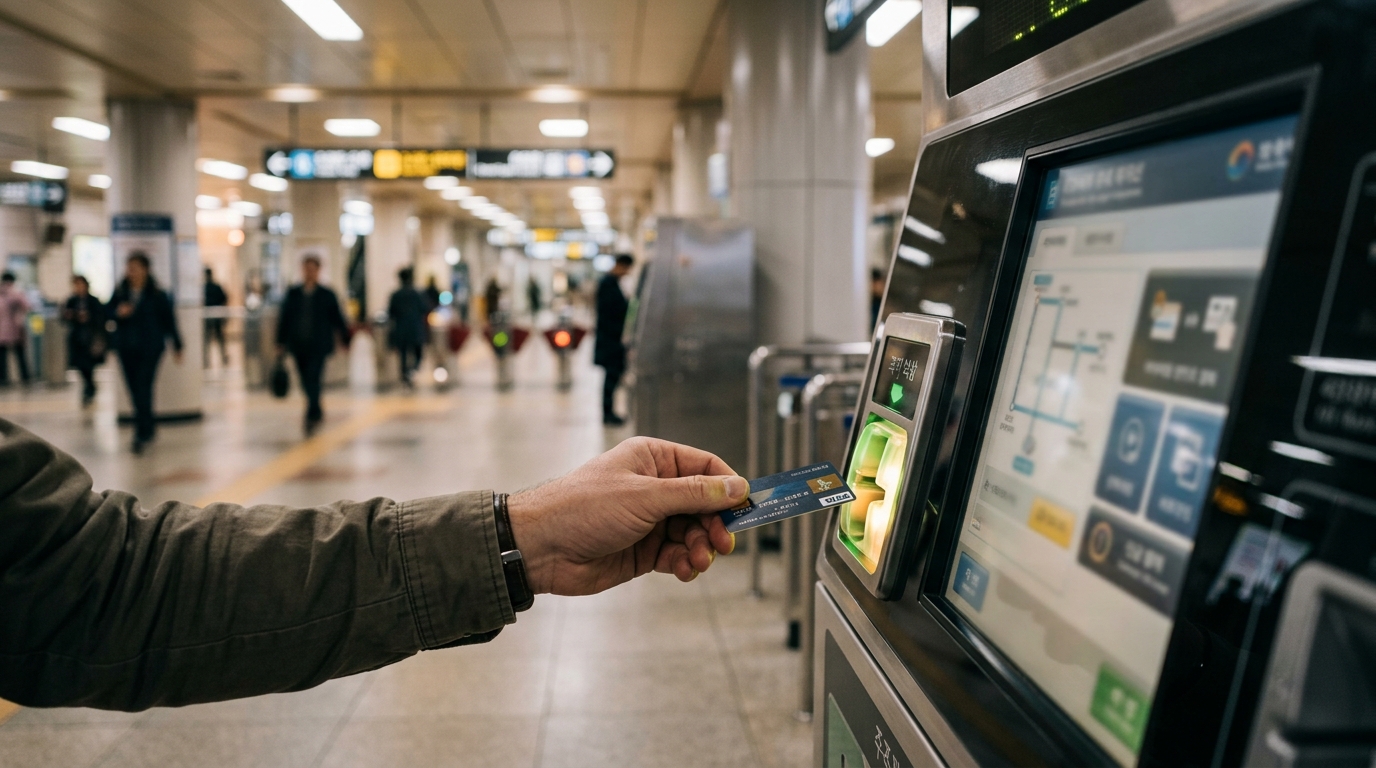
Tapping an overseas credit card directly on a Seoul subway turnstile still will not work, but purchasing tickets with foreign cards at station kiosks is now possible. Seoul Metro upgraded roughly 440 machines across 273 stations on Lines 1 through 8 in March 2026, eliminating the old requirement that forced international travelers to carry cash just to ride the train.
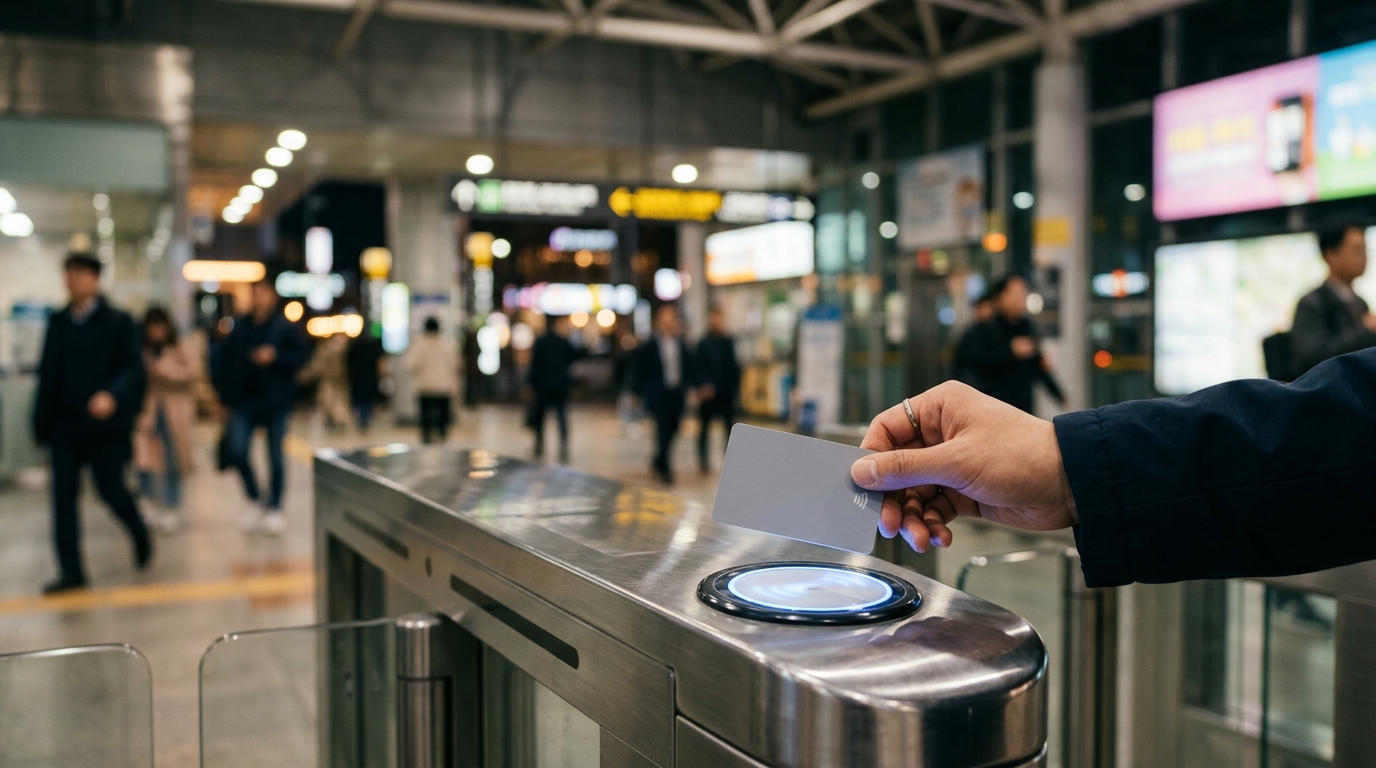
Before these upgraded machines were installed, arriving at Incheon International Airport (ICN) or Gimpo Airport (GMP) meant finding an ATM or currency exchange desk before doing anything else. Older ticket machines rejected non-Korean credit cards instantly. While the updated kiosks solve that issue at station machines, direct open-loop turnstile tapping remains under development, with official plans targeting a full rollout between 2027 and 2030. Visitors should understand what these kiosks can and cannot handle before arriving at the gate.
What Works at Seoul Subway Kiosks (And Why Does T-Money Top-Up Fail)?
Seoul subway kiosks accept foreign credit or debit cards for single-ride tickets and short-term Climate Cards, but they reject those same cards when you try to reload a standard prepaid T-money card. Standard T-money balance reloads require cash Korean Won due to local settlement rules and financial regulations.
Knowing the difference between buying a pass and reloading a stored-value balance saves time at the station. Single-journey tickets and Climate Card passes (Gihu Donghaeng Kadeu, 기후동행카드) clear as direct retail merchant transactions. International card networks process these sales without difficulty.
Reloading a standard T-money card (Timoni, 티머니) works differently because it transfers stored cash value onto an anonymous chip. Korean banking regulations require financial institutions to verify local bank settlement protocols for anonymous stored-value top-ups. Because international card networks do not link directly with local prepaid card settlement clearinghouses, foreign credit cards fail when attempting standard T-money balance reloads at station kiosks.
| Transaction Type | Can You Use a Foreign Credit Card? | Payment Location / Machine | Applicable Surcharge |
|---|---|---|---|
| Single-Journey Ticket | Yes | New Seoul Metro Kiosks (Lines 1–8) | 3.7% Service Fee |
| Climate Card (Pass Purchase / Top-Up) | Yes | New Seoul Metro Kiosks (Lines 1–8) | 3.7% Service Fee |
| Standard T-Money Balance Reload | No (Cash Only) | Station Kiosks & Convenience Stores | N/A (Cash Only) |
| WOWPASS Stored Value Reload | Yes | Dedicated WOWPASS Airport/Hotel Machines | Bank Exchange Margin |
| CHECK iN SEOUL Card Top-Up | Yes | Companion Mobile Application | Standard App Gateway Fee |
Understanding the Fees: Is the 3.7% Kiosk Surcharge Worth Paying?
Using an international credit or debit card at Seoul Metro kiosks incurs a mandatory 3.7% service fee, but for most visitors buying short-term passes, this fee is lower than foreign ATM withdrawal costs or currency exchange markups.
According to official guidance reported by Korea JoongAng Daily, the 3.7% transaction charge applies automatically at checkout to cover gateway and settlement clearing fees. On a 1-day Climate Card priced at ₩5,000, the fee adds ₩185, bringing the total to ₩5,185 (around $3.85 USD). On a 7-day pass costing ₩20,000, the fee comes to ₩740.
Withdrawing cash from a local "Global ATM" usually carries a flat local charge between ₩3,600 and ₩4,800, plus whatever foreign withdrawal fees your card issuer charges. Paying 3.7% directly at the station kiosk is generally much cheaper for small purchases than making cash withdrawals.
| Payment Method | Upfront Surcharge / Margin | Convenience Level | Primary Drawback |
|---|---|---|---|
| Kiosk Card Payment (Single/Climate) | 3.7% fixed service fee | High (Direct card insert at station) | Limited to single tickets & Climate Cards |
| Global ATM Cash Withdrawal | ₩3,600–₩4,800 flat fee + home bank fee | Moderate (Requires finding Global ATM) | High fixed fee for small cash amounts |
| Airport Currency Exchange Booth | 3%–8% exchange spread | Moderate (Long airport queues) | Poor exchange rates for cash currency |
| WOWPASS Kiosk Reload | Built into FX exchange rate | High (Kiosks at major stations) | Requires issuing a separate card |
Climate Card vs. Standard T-money: Which Transit Pass Suits Your Route?
The Climate Card offers unlimited travel within Seoul's city limits, while T-money acts as a pay-as-you-go card valid across public transit systems nationwide, including regional buses and KTX trains.
The Seoul Metropolitan Government reintroduced the Climate Card (Gihu Donghaeng Kadeu, 기후동행카드) as a dedicated pass for visitors. Physical cards cost ₩3,000 at station customer service centers or convenience stores and can be loaded with multi-day passes using a foreign card at updated station kiosks. It covers Seoul Subway Lines 1–9, the Ui-Sinseol Line, the Sillim Line, and city buses.
Geographic restrictions apply. The Climate Card is valid primarily within Seoul city limits and is explicitly excluded on most regional subway sections in Gyeonggi-do province and Incheon. You can take the AREX All-Stop train into Incheon International Airport from Seoul with a Climate Card, but you cannot tap onto an AREX train at Incheon Airport toward Seoul unless starting from designated stations.
| Pass Feature | Climate Card (기후동행카드) | Standard T-money Card (티머니) |
|---|---|---|
| Initial Physical Card Cost | ₩3,000 | ₩3,000 – ₩5,000 |
| Top-Up Payment Method | Foreign Credit Card (at Kiosk) or Cash | Cash KRW Only |
| Fare Model | Unlimited rides for 1, 2, 3, 5, or 7 days | Pay-per-ride distance base fare |
| Pass Pricing Options | 1D: ₩5,000 / 2D: ₩8,000 / 3D: ₩10,000 / 5D: ₩15,000 / 7D: ₩20,000 | N/A (Base fare ~₩1,550/ride) |
| Coverage Area | Seoul city subway lines & buses only | Nationwide (Seoul, Busan, Jeju, KTX, Taxis) |
| Incheon Airport Access | Drop-off allowed on AREX All-Stop; Pick-up restricted | Full access on AREX Express & All-Stop |
What Are the Best Alternative Cashless Solutions for Korea Travel?
Travelers who prefer to avoid carrying cash altogether can choose hybrid tourist passes like WOWPASS, NAMANE, or the CHECK iN SEOUL card, which accept foreign credit card top-ups through mobile apps or dedicated kiosks. Apple Pay support remains limited and cannot be tapped at subway gates.
As explained in official travel updates on VisitKorea and reported by The Korea Times, foreign visitors can pick from several alternative cashless tools:
- WOWPASS Card: A specialized tourist card operating as a dual shopping and T-money pass. Orange WOWPASS machines in subway stations and hotels let travelers load funds using foreign credit cards or cash.
- CHECK iN SEOUL Card: A visitor-focused transit card that lets travelers load transit funds directly through an English mobile app using an overseas credit card.
- NAMANE Card: A customizable card that allows personal photos on the front face and features a dual wallet (Transit Wallet and Pay Wallet) reloadable in their app using a credit card.
- Apple Pay Limitations: Apple Pay works at major retail chains like Seven-Eleven, Olive Young, and Hyundai Department Store when linked to an overseas Visa or Mastercard, but Apple Pay cannot be used at Korean subway turnstiles or bus card readers due to local NFC protocol incompatibilities.
Step-by-Step Kiosk Guide: How to Buy Seoul Transit Passes with Overseas Cards
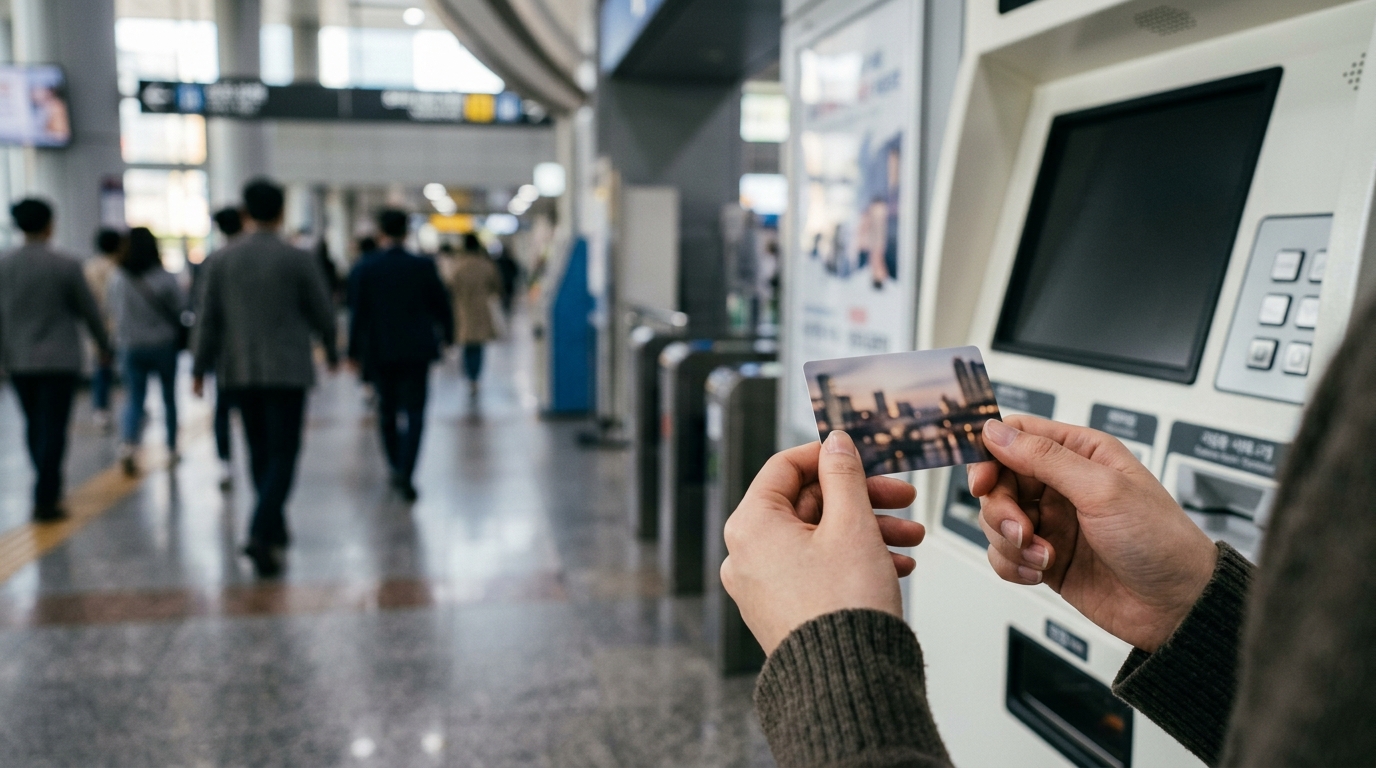
To purchase transit passes or single-journey tickets using an international card, find an upgraded Seoul Metro ticket machine, switch the language to English, select your pass, insert your physical card into the IC chip reader, and approve the 3.7% service charge.
Frequently asked questions
Q. Can I tap my foreign Visa or Mastercard directly at the Seoul subway turnstile?
No, open-loop contactless tapping with overseas credit cards is not supported at Korean subway gates or bus readers. Direct gate-tapping infrastructure for foreign cards is scheduled for phased rollout between 2027 and 2030.
Q. Why did the subway kiosk reject my foreign card when loading T-money?
Korean banking regulations restrict foreign credit cards from adding stored cash value to anonymous prepaid T-money cards. Kiosks and convenience store counters strictly require cash Won for T-money reloads.
Q. Is the 3.7% surcharge on foreign card transactions at station kiosks worth paying?
Yes, for most tourists buying single tickets or Climate Cards, the 3.7% fee adds less than ₩1,000 ($0.75 USD) and avoids higher ATM withdrawal fees and currency exchange spreads.
Q. Can I top up a T-money card with a credit card at CU or GS25 convenience stores?
No, convenience store counters in South Korea accept cash Korean Won only for T-money balance top-ups. Credit card transactions are permitted for store merchandise, but not for transit card balance loading.
Q. What alternative cashless transit options exist for international visitors in Korea?
Travelers can use WOWPASS or NAMANE cards, which feature separate wallets reloadable via foreign cards at dedicated kiosks or apps, or the CHECK iN SEOUL card, which supports international credit card top-ups via its mobile app.