The Secret to Shaving 0.01 Seconds in the 100m: Sprint Starting Block Techniques
 AI-generated image
Key takeaways
To shave 0.01 seconds in the 100m sprint, properly setting up starting blocks according to body type is essential. The key to lowering race times lies in generating powerful ground reaction force immediately after the gun and maintaining a low torso posture in the drive phase for the first 10-30 meters.
In the 100-meter sprint, victory, defeat, and new world records are decided by hundredths of a second (0.01s). While top speed often gets all the attention, the real deciding factor begins at the starting line on the starting blocks. As sports science has advanced over the decades, starting techniques designed to convert a stationary athlete into an explosive acceleration machine have evolved dramatically.
A Matter of 0.01 Seconds: Why Are Starting Blocks Crucial in the 100m Sprint?
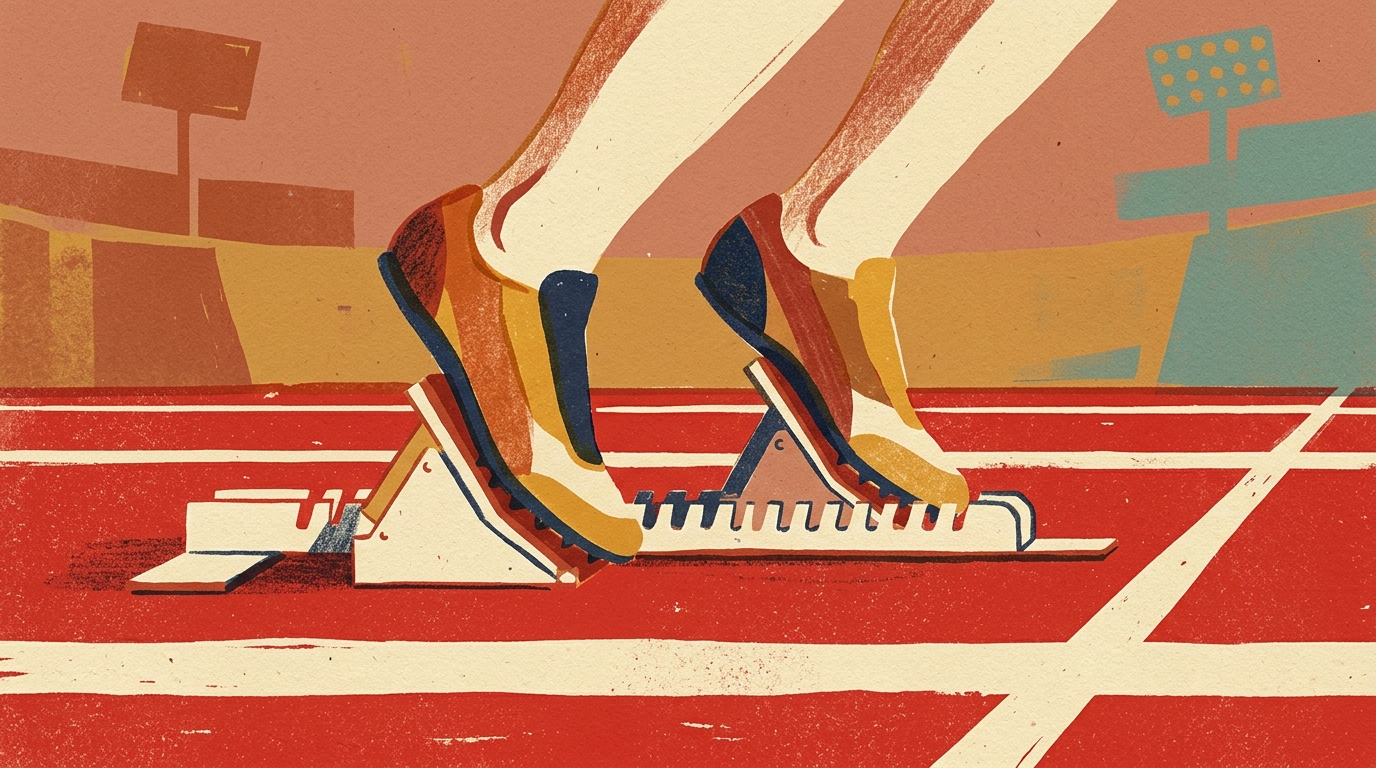
The starting block is an anchoring device that transfers resultant ground reaction forces equal to 3~4 times an athlete's body weight (with horizontal propulsion reaching 1.5~2 times body weight) directly into the track. Unlike standing starts, pushing forcefully off the block pads maximizes ground reaction force and biomechanical momentum.
According to World Athletics (WA) regulations, any reaction time under 0.100 seconds after the gun fires is ruled a false start, resulting in disqualification. This threshold is based on the physiological limit of human auditory reaction speed. Ultimately, sprinters cannot rely on guessing the gun; instead, they require explosive technique to drive forward the instant they hear the shot.
Usain Bolt's 9.58-second world record set at the 2009 Berlin World Athletics Championships, as well as Kim Kuk-young's South Korean record of 10.07 seconds mentioned in Wikipedia's 100m record information, were both supported by meticulously dialed-in starting block setups.
 AI-generated image
3 Types of Starting Block Setups Based on Body Type and Pad Angles
The key to setting up starting blocks is customizing the distance from the start line to the front and rear feet (measured in foot lengths) according to individual body proportions. Depending on height and leg length, setups are generally categorized into three main styles.
Foot pad spacing and knee angles vary across each type, directly impacting the horizontal acceleration generated upon takeoff.
| Type | Foot Spacing (Start Line~Front / Front~Rear) | Knee Joint Angle (Front / Rear) | Key Characteristics & Suitable Athletes |
|---|---|---|---|
| Bunch Start | 1.5 foot lengths / Less than 1 foot length (25~30cm) | Approx. 90° / Approx. 110~120° | Advantageous for shorter, explosive sprinters; fast initial block exit speed |
| Medium Start | 1.5~2 foot lengths / 1.5 foot lengths (40~50cm) | Approx. 90° / Approx. 120~130° | The most standard and biomechanically stable setup adopted by most sprinters |
| Elongated / Long Start | 1.5~2 foot lengths / 2+ foot lengths (50cm+) | Approx. 80~90° / Approx. 130~140° | Ideal for taller sprinters with longer legs; facilitates smooth transition into the drive phase |
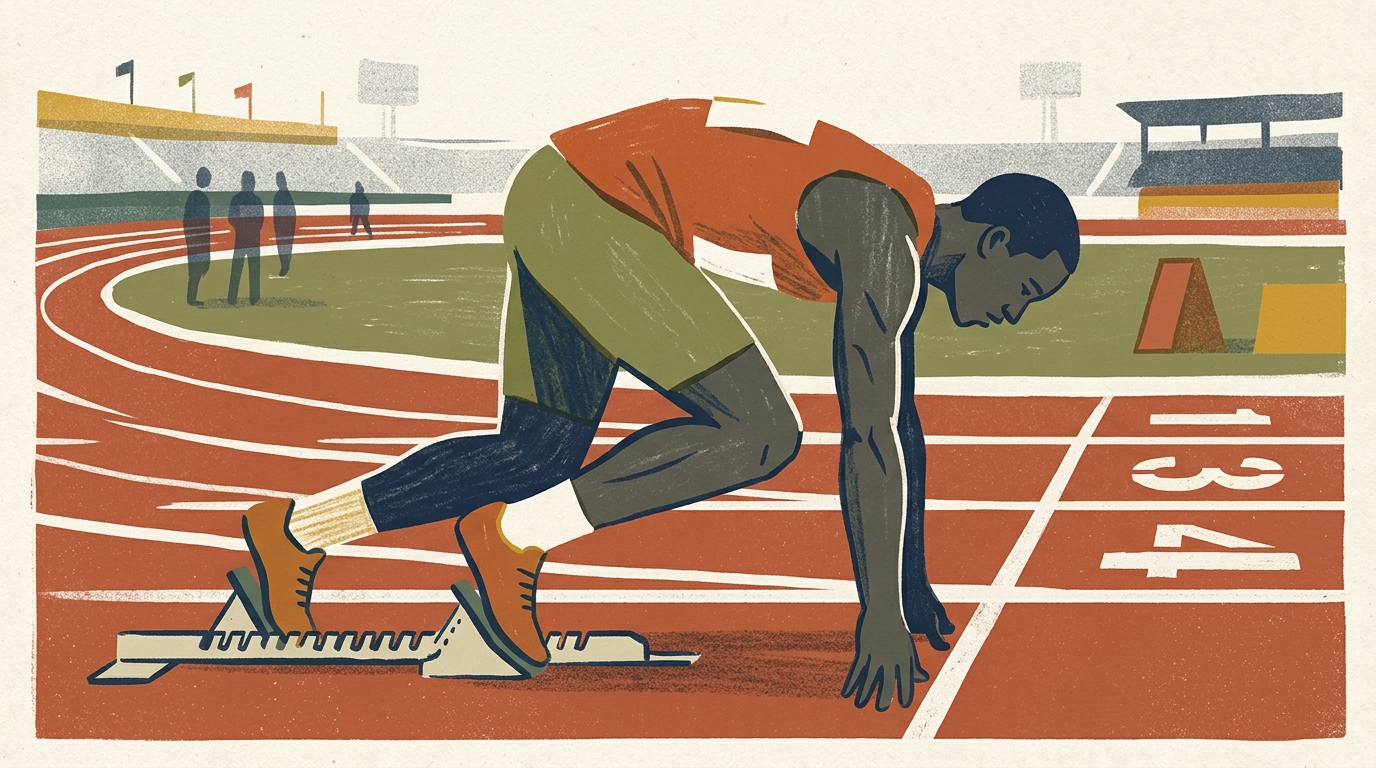
In the "Set" position, joint torque and propulsive force reach their maximum when the front knee forms an angle of roughly 90 degrees and the rear knee around 120~130 degrees. Pad inclination is typically set at 45~50 degrees, and the entire sole of the foot must rest firmly against the pad to prevent force leakage.
The 3-Step Starting Secret of Elite Sprinters and the Drive Phase
Exploding off the blocks requires mastering the three-step sequence coordinated with commands and seamlessly connecting into the "Drive Phase." A ScienceTimes sports science report also highlights torso angle during force application as a record-breaking factor.
- On Your Marks: Place hands slightly wider than shoulder-width just behind the start line, pressing both feet firmly against the block pads. Take deep breaths to stabilize breathing and heart rate.
- Set: Raise hips 10~15 cm higher than the shoulder line, shifting body weight slightly forward. Hold your breath and brace your core muscles.
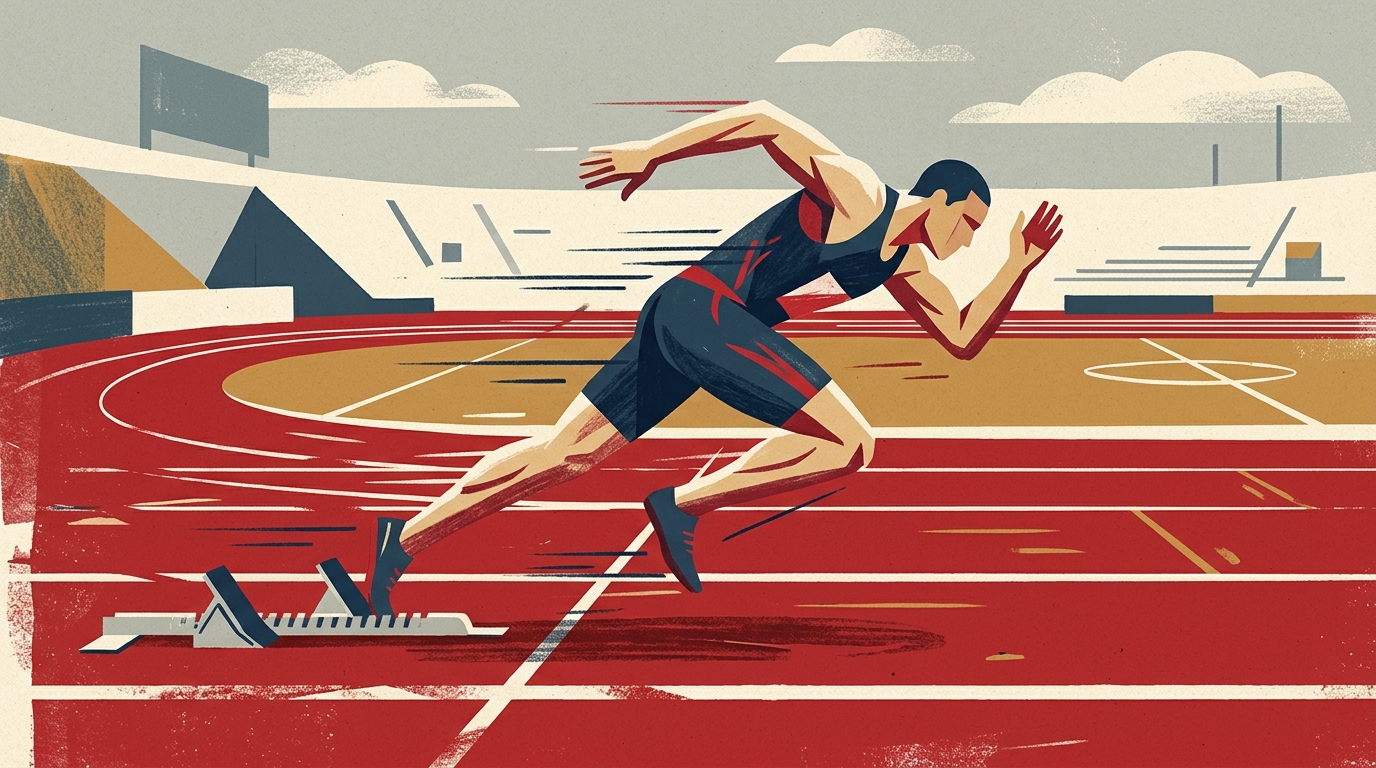
- Gun Break & Drive: At the sound of the gun, drive hard off the rear block pad while pushing through the ground with the front foot. Keep eyes focused on the ground 1~2 meters ahead and push forward with the torso leaning forward at approximately 45 degrees.
 AI-generated image
Popping your head up immediately after leaving the blocks creates severe air resistance and dissipates horizontal drive upward. Maintaining a low posture and forcefully pushing the ground backward during the initial 10~30m drive phase is essential to building max velocity for the entire 100m race.
Latest Sprinting Trends and Practical Tips
Modern international track and field trends focus less on raw reaction time and more on maximizing Ground Reaction Force (GRF) efficiency to maintain acceleration right out of the blocks. As of current competition standards in September 2026, top Asian sprinters are fine-tuning their block position measurements down to the millimeter.
These principles apply equally to students preparing for physical entrance exams or police physical tests. When wearing track spikes, pin lengths should be selected based on polyurethane vs. dirt tracks for optimal grip. Even when using regular athletic shoes, practicing consistent foot placement in the center of the block pads is essential.
Regularly checking starting blocks and precisely measuring knee angles creates the decisive edge when 0.01 seconds decides the winner.
Frequently asked questions
Q. How do sprinters determine front and rear foot positions on starting blocks?
Typically, the "Medium Start" is used as the baseline: 1.5 to 2 foot lengths from the start line to the front pad, and 1.5 foot lengths between front and rear pads. Positions that yield a front knee angle of 90 degrees and a rear knee angle of 120-130 degrees in the "Set" position generate the most power.
Q. Why does leaving before the starter's gun result in immediate disqualification?
World Athletics rules state that the human neurological response threshold to an auditory cue is 0.100 seconds. Reacting in under 0.100 seconds after the gun is classified as anticipating the shot rather than reacting to it, leading to instant disqualification.
Q. Why shouldn't sprinters raise their head immediately after exiting the starting blocks?
Raising the torso too quickly scatters horizontal propulsion upward and causes a sharp increase in aerodynamic drag. Staying low at a 45-degree angle during the 10-30m drive phase allows runners to smoothly transition into top speed.