Korea Army Academy at Yeongcheon (KAAY) Transfer Guide: Eligibility, Benefits, and Key Differences vs. OCS
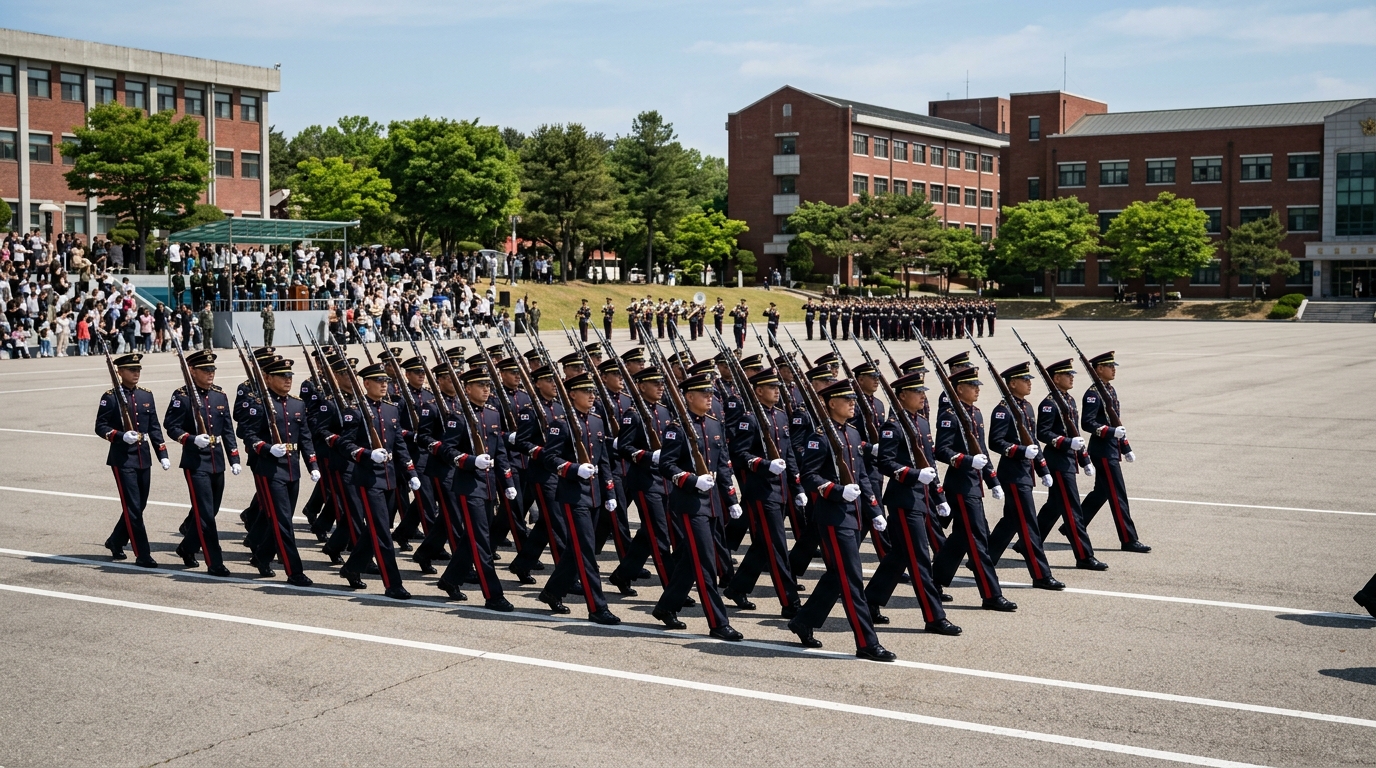 AI-generated image
Key takeaways
The Korea Army Academy at Yeongcheon (KAAY) is a transfer military academy where cadets complete 3rd and 4th-year university coursework before commissioning as Second Lieutenants. It offers full tuition coverage and monthly stipends for 2 years. Unlike Officer Candidate School (OCS), the 2 years spent as a cadet count toward pay step seniority (starting at 2nd pay step). Anyone who has completed 2 years of university or earned 80 credits via the Academic Credit Bank System is eligible to apply.
The Korea Army Academy at Yeongcheon (KAAY) is a specialized educational institution where students transfer directly into the 3rd-year university curriculum and commission as ROK Army Second Lieutenants upon graduation. During the two-year program, cadets receive 100% state-funded tuition along with a monthly living stipend as they prepare for leadership in the military officer corps.
Even as rapid increases in enlisted pay have sparked debate surrounding officer applicant rates, KAAY remains a highly practical path that solves both degree completion and career building at once. Here is a comprehensive guide covering eligibility criteria, admission steps, tips for using the Academic Credit Bank System, and a detailed comparison with Officer Candidate School (OCS).
What is the KAAY transfer program?
The KAAY transfer program is South Korea's only transfer military academy system, allowing community college graduates or students who have completed two years at a 4-year university to complete their 3rd and 4th-year cadet training and commission as Army Second Lieutenants.
Over two years, cadets balance academic major coursework with rigorous military education. While enrolled, they receive full financial coverage for tuition plus a monthly living allowance. Upon graduation, officers hold dual bachelor's degrees—their general academic degree alongside a Bachelor of Military Science.
[2026 Guide] KAAY transfer eligibility and selection process
Unmarried men and women aged 19 to 25 as of the matriculation date are eligible to apply. Academic prerequisites require applicants to have completed (or be scheduled to complete) two years at a 4-year university or hold (or be scheduled to earn) an associate degree from a community college.
Detailed requirements and selection stages are structured as follows:
- Age requirement: 19~25 years old (Discharged veterans may extend eligibility up to age 28 depending on their length of service)
- Education requirement: Completed (or expecting to complete) 2 years at a 4-year university, graduated (or expecting to graduate) from a community college, or earned (or expecting to earn) an Associate Degree via the Academic Credit Bank System (80+ credits)
- Selection stages:
- Stage 1 (Document Screening): College transcripts + High school GPA (Bonus points for certified English test scores)
- Stage 2 (Written Exam): English evaluation & Officer Selection Tool test
- Stage 3 (Aptitude & Health): Interview, physical fitness test, medical examination, and personality assessment
Detailed annual schedules, such as the 64th class regular cadet recruitment, along with required document forms, can be found directly in the KAAY Eligibility Guide.
 AI-generated image
KAAY vs. Officer Candidate School (OCS): Key differences compared
The primary distinctions lie in training duration, mandatory service commitment, and the initial pay step scale upon commissioning.
While OCS candidates undergo a short 16~17 week training program after earning a 4-year degree, KAAY cadets undergo two full years of academy life. These two cadet years translate into official military experience, creating a distinct advantage in starting status after commissioning.
| Category | KAAY (Transfer Academy) | Officer Candidate School (OCS) |
|---|---|---|
| Application Timing | Upon completion (or pending completion) of 2nd year of college or associate degree | Upon graduation (or pending graduation) from a 4-year university |
| Training Duration | 2 years (3rd & 4th-year cadet program) | Approx. 16~17 weeks (short-term training) |
| Mandatory Service | 6 years | 3 years |
| Financial Aid | 100% state tuition coverage for 2 years + monthly stipend | Self-funded (except military scholarship recipients) |
| Starting Pay Step | Starts at 2nd Lieutenant 2nd Pay Step (50% of cadet period credited) | Starts at 2nd Lieutenant 1st Pay Step |
| Degrees Earned | Dual degrees (Bachelor's in Major + Bachelor of Military Science) | University Bachelor's Degree |
KAAY graduates receive official credit for 50% of their two-year cadet training, allowing them to draw salaries at the 2nd pay step immediately upon commissioning as Second Lieutenants. If you need a more detailed side-by-side analysis between commissioning tracks, consider reviewing the ROTC vs. Military Academy Comparison guide.
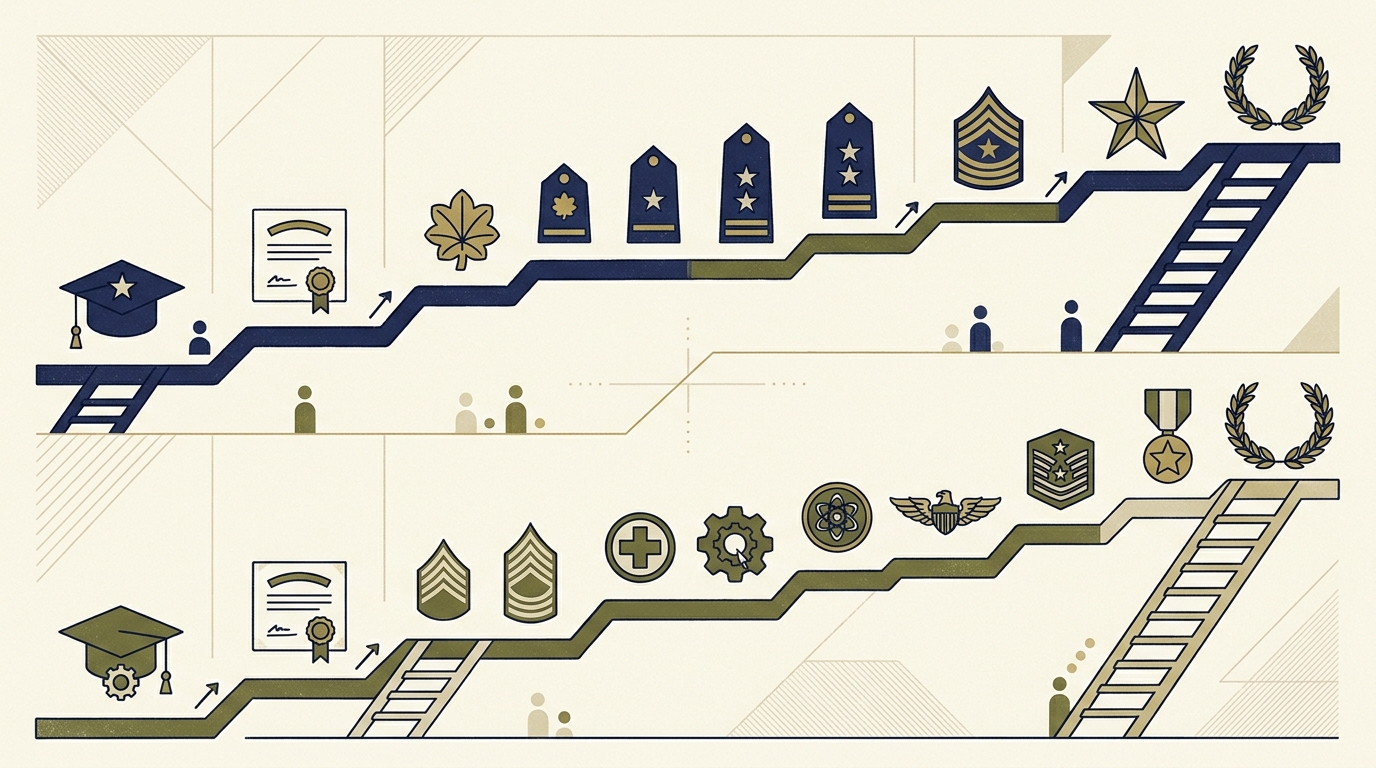 AI-generated image
How non-majors and high school graduates can qualify for KAAY using the Academic Credit Bank System
Even applicants with low college GPAs, high school diplomas, or college dropouts can fulfill KAAY transfer requirements in a short timeframe by utilizing the Academic Credit Bank System.
By combining online coursework, national certifications, and Self-Study Degree System exams, students can efficiently accumulate the 80 credits needed for an associate degree in just 1 to 1.5 years.
- GPA Improvement & Management: If previous university grades are unfavorable, earning a high GPA through the Credit Bank System can boost your score during Stage 1 document screening.
- Accelerated Credit Accumulation: High school graduates can complete all 80 credits in as little as 18 months to satisfy transfer eligibility.
- Dedicated Prep Time for Written & Fitness Tests: Because coursework is delivered 100% online, applicants have ample time to focus on written exams (English & Officer Selection Tool) and physical fitness tests.
Which track should you choose if your goal is a career military officer?
For those seriously considering long-term service and promotion within the military, KAAY holds a clear advantage due to its comprehensive two-year cadet training and solid alumni network.
OCS is well-suited for individuals looking to fulfill a relatively short 3-year service obligation before transitioning back to civilian careers. In contrast, KAAY's 6-year mandatory service allows officers to build deep military expertise. The two years of military education and strong alumni ties provide tangible competitive edges during long-term service reviews and promotion boards.
Additional details regarding officer selection can also be found in the OCS Recruitment Guide, making it easier to evaluate which path best aligns with your career goals.
Frequently asked questions
Q. Can applicants with low college grades, high school diplomas, or college dropouts apply to KAAY?
Yes. Even if you have low grades, a high school diploma, or dropped out of college, you can qualify by earning at least 80 credits (an Associate Degree equivalent) through the Academic Credit Bank System.
Q. Does the 2-year cadet period at KAAY count toward salary pay step seniority after commissioning?
Yes. 50% (1 year) of the 2-year cadet training period is credited as active service. Unlike standard officers who start at the 1st pay step, KAAY graduates begin at the 2nd pay step for Second Lieutenants.
Q. Which track is better for a long-term military career: KAAY or OCS?
KAAY offers a clear advantage for long-term service and promotions, as cadets complete two full years of military science education and build a strong alumni network within the officer corps.
Q. What are the age limits for KAAY transfer admissions and military veterans?
Unmarried men and women aged 19 to 25 as of the admission date are eligible. Discharged veterans can extend the age limit up to 28 depending on their period of prior service.