What Are SMRs and Gas Turbines? Next-Gen Power Tech & Doosan Enerbility
Key takeaways
Small modular reactors (SMRs) and power-generation gas turbines are next-generation technologies designed to solve the power shortages driven by AI data centers. SMRs provide carbon-free baseload power through integrated structures and passive safety systems, while gas turbines stabilize the grid with rapid startup capabilities. Doosan Enerbility leads the global energy supply chain through its proprietary gas turbine development and its position as an SMR manufacturing foundry.
A massive transformation is underway across the power grid landscape. As electricity demand skyrockets due to the expansion of AI infrastructure and data centers, gas turbines that rival aircraft jet engines and building-sized small modular reactors have emerged as compelling solutions.
At the heart of this global energy supply chain transition is Korean power equipment supplier Doosan Enerbility. Here is a breakdown of the operating principles of Small Modular Reactors (SMRs) and power-generation gas turbines, their differences from traditional large-scale power plants, and how these two technologies combine in the age of AI data centers.
Two Pillars of Next-Gen Energy: What Are SMRs and Gas Turbines?
SMRs and power-generation gas turbines divide the responsibilities: SMRs handle 24/7 uninterrupted "baseload power," while gas turbines take on "peak power" to respond instantly to sudden shifts in electricity consumption.
The critical factors in grid restructuring are supply stability and response speed. An SMR is a compact reactor that drastically reduces the large footprint and long construction schedules of traditional nuclear power plants. On the other hand, a power-generation gas turbine is a large heat engine that generates electricity with high efficiency by combusting natural gas or hydrogen.
How Do SMRs Work, and What Are Their 3 Key Differences From Large Reactors?
An SMR (Small Modular Reactor) is a compact nuclear reactor with an electrical output of 300 MWe or less. It features an integrated structure where core components of traditional reactors—such as the reactor pressure vessel, steam generators, pressurizer, and main coolant pumps—are consolidated inside a single pressure vessel.
Heat generated by uranium fission inside the reactor heats the primary coolant, which then passes through steam generators to produce high-pressure steam. This steam drives a turbine to generate electricity. Compared to traditional large-scale nuclear reactors, SMRs offer three major advantages:
- Integrated Structure & Passive Safety System: By eliminating major interconnecting piping, leak risks are significantly reduced. Even during a complete loss of external power, gravity and natural circulation automatically cool the reactor.
- Factory Fabrication & Modular Assembly: Standardized components are manufactured in advance at factories and shipped to the site for assembly. Consequently, construction timelines that used to take over five years are reduced to just 2~3 years.
- Flexible Siting & Fewer Cooling Water Constraints: Unlike traditional nuclear plants that strictly require large coastal sites, SMRs can be installed inland or close to major electricity demand centers.
| Feature | Traditional Large Reactor (GW-scale) | Small Modular Reactor (SMR) |
|---|---|---|
| Electrical Output | 1,000 MWe or higher | 300 MWe or less (70~100 MWe per module) |
| System Structure | Loop-type (Reactor vessel and steam generators connected by piping) | Integrated (Core components contained within a single vessel) |
| Safety System | Active (Requires emergency generators and pumps) | Passive (Emergency cooling driven by gravity and natural circulation) |
| Construction Method | Direct on-site construction (Takes 5~7 years) | Factory module fabrication + on-site assembly (Takes 2~3 years) |
| Siting Requirements | Large coastal land with abundant cooling water | Inland sites, industrial parks, near AI data centers |
How Do Gas Turbines Work, and What Powers Their Ultra-High-Temperature Heat Resistance?
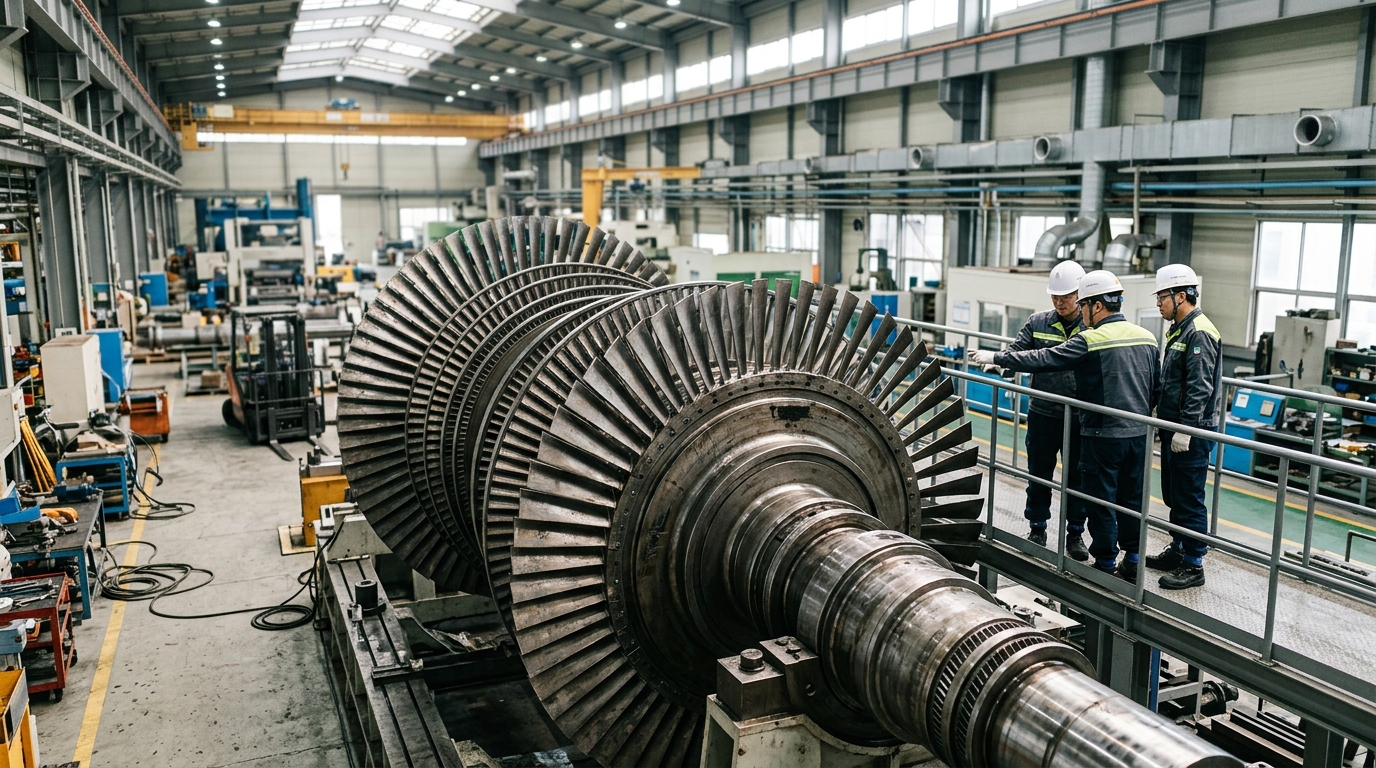
Power-generation gas turbines draw in and compress massive volumes of air, then burn fuel inside the combustion chamber. The expanding hot, high-pressure gas—reaching temperatures of 1,500°C~1,600°C or higher—drives turbine blades to generate electricity.
The core operating process follows the Brayton Cycle. When combined with a Heat Recovery Steam Generator (HRSG) that captures high-temperature exhaust gas to drive a secondary steam turbine—a setup known as Combined Cycle Gas Turbine (CCGT)—power generation efficiency climbs above 60%.
The most challenging hurdle in gas turbine engineering lies in ultra-high-temperature heat-resistant materials and cooling technology. Because temperatures exceeding 1,500°C surpass the melting point of standard steel, single-crystal superalloy casting technology, complex internal 3D cooling passages, and film cooling techniques are indispensable.
AI Data Centers and Zero-Carbon Grids: The Complementary Roles of SMRs and Gas Turbines
Meeting the relentless energy demand of AI data centers—which must operate 24 hours a day, 365 days a year—requires a balanced synergy between continuously running SMRs and gas turbines that cushion the variability of renewable energy.
According to major research institutions like BloombergNEF (BNEF), global data center power demand growth is projected to reach up to 325 GW between 2023 and 2033. Because renewable sources like solar and wind fluctuate heavily based on weather, they cannot guarantee grid stability on their own.
Thus, SMRs that deliver a constant supply of electricity serve as the underlying "baseload," while gas turbines capable of starting within 15 minutes adjust grid frequency and voltage during demand peaks or dips in renewable output. Looking ahead, gas turbines will transition toward hydrogen co-firing and 100% hydrogen firing, forming a core column of carbon-neutral power grids.
| Power Source | 24/7 Continuous Operation | Load Response Speed | Power Density per Area | Carbon Emissions |
|---|---|---|---|---|
| SMR (Nuclear) | Very High (Baseload) | Moderate (Adjusts over days) | Very High | Carbon-Free (0) |
| Gas Turbine (CCGT) | High (When fuel is supplied) | Extremely Fast (Within minutes) | High | Low Carbon (0 with hydrogen transition) |
| Solar / Wind | Low (Weather dependent) | Impossible (Output curtailment only) | Very Low | Carbon-Free (0) |
At the Heart of K-Energy: Doosan Enerbility's Global Foundry and Gas Turbine Prowess
Doosan Enerbility positioned South Korea as the 5th country in the world to independently develop a large-scale power-generation gas turbine. It also serves as a premier manufacturing foundry for core equipment commissioned by leading global SMR developers.
According to Doosan Enerbility's official performance announcement, following the commercialization of its independently developed H-class (ultra-high temperature over 1,500°C) large gas turbine, the company successfully completed hydrogen co-firing demonstrations. Furthermore, in partnership with major U.S. SMR developers, it expanded its manufacturing footprint by breaking ground on a dedicated SMR forging and machining facility in October 2026.
As of October 2026, Doosan Enerbility signed a supply contract for 380MW-class large gas turbines tied to an AI data center power grid project in the United States and secured the main contract for the O Mon 3 Combined Cycle Power Plant project in Vietnam.
| Business Area | Core Tech & Facilities | Major Orders & Global Partnerships (As of 2026) |
|---|---|---|
| SMR Foundry | Heavy forging equipment, ultra-high pressure welding, module machining | Manufacturing primary equipment for NuScale Power & TerraPower; ground broken on dedicated SMR plant |
| Gas Turbines | H-class large turbines, ultra-high temperature single-crystal blades, 3D printing | Commercial supply to Korea Southern & Midland Power; turbine supply to U.S. AI data center grid |
| Large Nuclear | Reactor pressure vessels, steam generators, turbine generators | Won 5.6 trillion KRW order for Czech Dukovany NPP; supplying primary equipment for Shin-Hanul Units 3 & 4 |
Technical Challenges and Future Outlook for Next-Gen Power Tech
For SMRs and next-generation gas turbines to establish a firm foothold in the global market, regulatory and technological hurdles must be addressed in tandem.
SMRs are moving past demonstration phases into factory mass production models, while gas turbines are evolving into carbon-free power generators by integrating hydrogen and ammonia combustion technologies.
This post was prepared to provide objective engineering information on power technologies and industry trends, and does not contain investment advice or recommendations to buy or sell specific stocks.
Frequently asked questions
Q. How exactly do SMRs differ from traditional large-scale nuclear reactors?
SMRs are small nuclear reactors with an electrical output of 300 MWe or less, featuring an integrated design that consolidates key equipment like the reactor and steam generator into a single vessel. Factory fabrication followed by on-site assembly shortens construction schedules and offers flexible siting.
Q. Why are SMRs considered safer than traditional large nuclear reactors?
SMRs feature passive safety systems that cool the reactor using gravity and natural circulation even during a total loss of external power, maintaining a safe state without human intervention.
Q. Why is the technical barrier to entry so high for power-generation gas turbines?
They require high-precision engineering technologies, such as manufacturing single-crystal superalloy turbine blades that withstand extreme temperatures exceeding 1,500°C to 1,600°C and designing complex 3D internal cooling channels.
Q. Why are both SMRs and gas turbines needed in the AI data center power supply chain?
Because AI data centers require uninterrupted 24/7 power, SMRs provide a solid baseload foundation while gas turbines respond instantly to sudden load fluctuations to maintain power grid stability.
Q. Is Doosan Enerbility an SMR developer or a manufacturer?
Doosan Enerbility possesses proprietary large gas turbine technology while also functioning as a global SMR manufacturing foundry that fabricates core equipment for original SMR technology developers like NuScale Power.